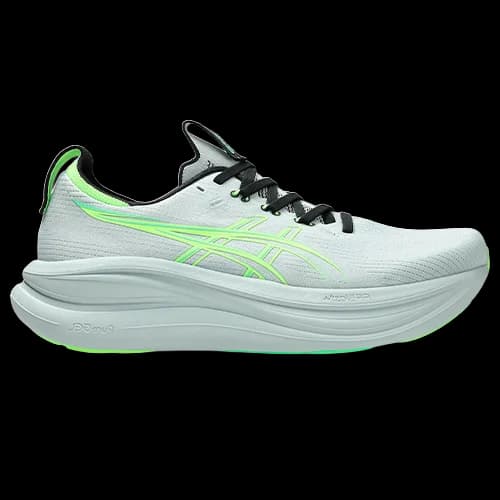
ASICS Gel-Nimbus 28 review
The lightest Gel-Nimbus yet: same tall geometry as the 27 on paper, but a firmer, snappier ride that sits lower under the heel than the spec sheet says.
- Drop
- 8 mm
- Heel stack
- 43.5 mm
- Forefoot
- 35.5 mm
- Weight
- 280 g
- Support
- Neutral
- Plate
- None
Our verdict
Premium comfort with a quicker step.
The Gel-Nimbus 28 is a high-stack neutral trainer that lost weight and gained snap, without turning into a bouncy super-foam shoe. It suits neutral runners who want one plush but controlled pair for easy days, long runs and the odd faster finish, and it works especially well if you land midfoot.
Strong points
- About 7 percent lighter than the Gel-Nimbus 27
- Firmer, snappier ride that handles uptempo efforts
- Very smooth heel-to-toe transition
- Standard, 2E and 4E widths
Weak points
- Measured drop far below the 8 mm listed, tougher for heavy heel strikers
- Modest energy return, little bounce
- Thin tongue and low toe box, not for narrow feet
- Neutral: no guidance for a marked inward roll
Who it fits
- You land midfoot or on the forefoot
- You want comfort that isn’t mushy
- Your week mixes easy, long and a few faster miles
- Your feet need a wide or extra-wide fit
Who should skip it
- You land hard on your heel and like a classic high drop
- You need real stability
- Your feet are narrow or your instep is sensitive
- You want bounce
Shoe profile
Where the Gel-Nimbus 28 sits among the 395 shoes in our catalogue, and what changed from the Gel-Nimbus 27.
| Axis | Gel-Nimbus 28 | Gel-Nimbus 27 | Change |
|---|---|---|---|
| Cushioning | 87 | 87 | = |
| Lightness | 33 | 10 | +23 |
| Stability | 30 | 30 | = |
| Drop | 45 | 45 | = |
| Response | 20 | 20 | = |
Fig. 1 · How to read it. Each axis runs from 0 at the centre to 100 at the edge. Cushioning, lightness and drop are the shoe’s rank in the catalogue from listed figures; stability and response are scored from the support type, the plate, the rocker and the intended use. The dotted grey line is the catalogue median. Source: Strideprint catalogue (cat).
Where it sits in the catalogue
Weight280 g, heavier than 67% of shoes
Drop8 mm, higher than 45% of shoes
Heel stack43.5 mm, higher than 87% of shoes
Forefoot stack35.5 mm, higher than 81% of shoes
How it feels
Written from 3 published tests. We quote measurements, not impressions we did not have.
Deep foam, firmer than it looks. FF Blast Plus with a PureGEL heel on a tall stack; firmer and snappier than its height suggests, per Doctors of Running.
Neutral, with a stiff, steady chassis. Neutral, with no stability system, but a stiff forefoot and rigid platform resist twisting: fine for a mild wobble, not a strong roll.
Smooth roll, modest spring. A very smooth heel-to-toe transition and capable of uptempo work, though energy return of 44.2 and 45.9 percent keeps it efficient, not lively.
Deep foam, firmer than it looks. The midsole pairs FF Blast Plus with a PureGEL insert in the heel, on a stack height ASICS lists at 43.5 mm at the heel and 35.5 mm at the forefoot for the men’s shoe. The geometry carries over from the Nimbus 27.
On the run, Doctors of Running found it firmer and snappier than its height suggests. RunRepeat’s durometer reading puts the foam a touch softer than the 27, so the firmer feel is more about how the shoe is built and how it rolls than about the foam itself.
Neutral, with a stiff, steady chassis. There is no stability system, and Fleet Feet lists it as neutral. RunRepeat measured a stiff forefoot and a rigid platform under torsion, which keeps the shoe from twisting under a tired stride.
That structure is helpful for a mild, occasional wobble. It is not a substitute for a guidance shoe if your foot rolls in strongly.
Smooth roll, modest spring. Runner’s World Germany praise the very smooth heel-to-toe transition, and Doctors of Running found it capable of uptempo work. The lighter build helps: RunRepeat measured it about 7 percent lighter than the 27.
The limit is rebound. RunRepeat’s energy return figures sit well below the bouncier foams, so it feels efficient rather than lively.
Read more
Deep foam, firmer than it looks. The midsole pairs FF Blast Plus with a PureGEL insert in the heel, on a stack height ASICS lists at 43.5 mm at the heel and 35.5 mm at the forefoot for the men’s shoe. The geometry carries over from the Nimbus 27.
On the run, Doctors of Running found it firmer and snappier than its height suggests. RunRepeat’s durometer reading puts the foam a touch softer than the 27, so the firmer feel is more about how the shoe is built and how it rolls than about the foam itself.
Neutral, with a stiff, steady chassis. There is no stability system, and Fleet Feet lists it as neutral. RunRepeat measured a stiff forefoot and a rigid platform under torsion, which keeps the shoe from twisting under a tired stride.
That structure is helpful for a mild, occasional wobble. It is not a substitute for a guidance shoe if your foot rolls in strongly.
Smooth roll, modest spring. Runner’s World Germany praise the very smooth heel-to-toe transition, and Doctors of Running found it capable of uptempo work. The lighter build helps: RunRepeat measured it about 7 percent lighter than the 27.
The limit is rebound. RunRepeat’s energy return figures sit well below the bouncier foams, so it feels efficient rather than lively.
Which runs it’s for
| Run | Fit | Why | Source |
|---|---|---|---|
| Easy runs | Made for it | Its core job: protective and comfortable on everyday mileage. | Doctors of Running, Runner’s World Germany |
| Long runs | Made for it | Testers used it for long runs; the stiff, steady platform helps late in the run. | Doctors of Running |
| Recovery runs | Made for it | Deep stack and a smooth roll for the day after a hard session. | Runner’s World Germany |
| Tempo | Can do | Handles uptempo finishes better than the 27, but the modest rebound keeps it a trainer. | Doctors of Running, RunRepeat |
| Marathon race | Can do | Fine for a comfort-first marathon. Runners chasing a time will want something lighter and springier. | RunRepeat |
| Light trail | Not for it | A road shoe, with limited grip on slippery surfaces. | Doctors of Running, Runner’s World Germany |
Source: Doctors of Running, Runner’s World Germany, RunRepeat
What the tests say
Reviewers agree the Gel-Nimbus 28 is lighter, smoother and more dynamic than the 27, without becoming bouncy. The main question they raise is how low it actually sits at the heel.
| Test | Type | Our reading | In one sentence | Source |
|---|---|---|---|---|
| Doctors of Running | Review | Mixed | Doctors of Running give mostly A minus or A grades, with fit at B plus: a firmer, snappier premium daily trainer. | Read |
| RunRepeat | Lab | Positive | RunRepeat scores it 86 out of 100: a clear step forward that cuts weight and adds comfort, though the upper sits close. | Read |
They agree
- More dynamic than the Nimbus 27Doctors of Running found it firmer and snappier than its height suggests, and Runner’s World Germany found it more dynamic than the previous version.
- A real drop below the listed 8 mmDoctors of Running felt it closer to 5 or 6 mm, and RunRepeat measured about 5 mm.
- Roomy, with a low ceilingDoctors of Running and Runner’s World Germany describe generous width, while Doctors of Running flag lace bite and RunRepeat measured a low toe box.
They split
- Where the firmer feel comes fromDoctors of Running describe a firmer ride, yet RunRepeat measured the foam slightly softer than on the 27, which points to the build rather than the foam.
How it’s built
The Nimbus 27’s FF BLAST PLUS and PureGEL midsole under a new knit upper, with less, more segmented Hybrid ASICSGRIP rubber: most of the weight saving comes from the top and the outsole.
The Nimbus 27 midsole, FF Blast Plus with PureGEL, under a new knit upper with a 1.5 mm tongue, and less, more segmented Hybrid ASICSGRIP rubber 3.3 mm thick, which is where the weight saving comes from.
| # | Part | Measure |
|---|---|---|
| 1 | UpperEngineered knit | Breathability 64 BR |
| 2 | Tongue | 1.5 mm |
| 3 | Heel | Stiffness 4 / 5 |
| 4 | MidsoleFF BLAST PLUS and PureGEL | Hardness 38.8 AC |
| 5 | InsoleOrthoLite X-55 | 5.4 mm |
| 6 | OutsoleHybrid ASICSGRIP | 3.3 mm |
Fig. 3 · Side profile. Stack heights to scale (listed: 43.5 mm heel, 35.5 mm forefoot; measured: 3.3 mm outsole); the split between the two foams is not measured and is drawn at mid-height. Dashed: insole, hidden. Sources: Doctors of Running, RunRepeat, Runner’s World Germany, Fleet Feet. BR: RunRepeat’s breathability scale (not a score out of 100).
Upper. A knit material replaces the jacquard mesh of the 27. Runner’s World Germany found it lighter, airier and stretchier around the toes than over the midfoot; Doctors of Running note a toe guard that slightly tapers the front. RunRepeat measured breathability at 64, a little below average, with moisture building on longer runs.
Tongue. A stretchy knit tongue only 1.5 mm thick, with a finger-loop tab and lace loops meant to ease pressure. RunRepeat found it comfortable; Doctors of Running got lace bite from it when the laces were tight.
Heel. The same stiff, rounded counter as the 27, 4 out of 5 in RunRepeat’s test, behind plenty of padding. Doctors of Running found the top of the heel tilts forward into the Achilles tendon, though less than on the GT-2000 14.
Midsole. Unchanged from the 27 according to ASICS: FF BLAST PLUS foam, 38.8 AC on RunRepeat’s durometer against 39.3 AC before, with a PureGEL insert at the rear. The platform is very rigid, 20.5 Nm in RunRepeat’s torsion test against a 14.4 Nm average, and Runner’s World Germany credit the rocker shape under heel and forefoot for the smooth roll.
Insole. An OrthoLite X-55 insole, 5.4 mm thick, a full millimetre above RunRepeat’s average.
Outsole. Hybrid ASICSGRIP, mixing ASICSGRIP and AHAR rubber, in fewer and more segmented pieces with flex grooves through the forefoot and wide areas of exposed foam. Grip is disputed: 0.99 on wet concrete in RunRepeat’s test, an excellent figure, while Doctors of Running slipped slightly on wet winter roads.
Read more
The Nimbus 27’s FF BLAST PLUS and PureGEL midsole under a new knit upper, with less, more segmented Hybrid ASICSGRIP rubber: most of the weight saving comes from the top and the outsole.
1. Upper. A knit material replaces the jacquard mesh of the 27. Runner’s World Germany found it lighter, airier and stretchier around the toes than over the midfoot; Doctors of Running note a toe guard that slightly tapers the front. RunRepeat measured breathability at 64, a little below average, with moisture building on longer runs.
2. Tongue. A stretchy knit tongue only 1.5 mm thick, with a finger-loop tab and lace loops meant to ease pressure. RunRepeat found it comfortable; Doctors of Running got lace bite from it when the laces were tight.
3. Heel. The same stiff, rounded counter as the 27, 4 out of 5 in RunRepeat’s test, behind plenty of padding. Doctors of Running found the top of the heel tilts forward into the Achilles tendon, though less than on the GT-2000 14.
4. Midsole. Unchanged from the 27 according to ASICS: FF BLAST PLUS foam, 38.8 AC on RunRepeat’s durometer against 39.3 AC before, with a PureGEL insert at the rear. The platform is very rigid, 20.5 Nm in RunRepeat’s torsion test against a 14.4 Nm average, and Runner’s World Germany credit the rocker shape under heel and forefoot for the smooth roll.
5. Insole. An OrthoLite X-55 insole, 5.4 mm thick, a full millimetre above RunRepeat’s average.
6. Outsole. Hybrid ASICSGRIP, mixing ASICSGRIP and AHAR rubber, in fewer and more segmented pieces with flex grooves through the forefoot and wide areas of exposed foam. Grip is disputed: 0.99 on wet concrete in RunRepeat’s test, an excellent figure, while Doctors of Running slipped slightly on wet winter roads.
Durability. About average. RunRepeat measured 1.0 mm of outsole wear on a 3.3 mm layer, and rated the toe box and heel lining 3 out of 5. After 55 miles Doctors of Running saw forefoot wear and worried about the rearmost heel rubber, so they expect average durability.
Durability. About average. RunRepeat measured 1.0 mm of outsole wear on a 3.3 mm layer, and rated the toe box and heel lining 3 out of 5. After 55 miles Doctors of Running saw forefoot wear and worried about the rearmost heel rubber, so they expect average durability.
Specs, listed and measured
Every figure carries its source.
Drop, mm
Heel stack, mm
Forefoot stack, mm
Weight (men’s), g
| Spec | Listed | Measured |
|---|---|---|
| Drop |
|
|
| Heel stack |
|
|
| Forefoot stack |
|
|
| Weight, US M9 |
|
|
| Support |
| – |
| Plate |
| – |
| Surface |
| – |
| Release year |
| – |
Fig. 4 · Listed vs measured. Bars start at zero. Sources: Doctors of Running, RunRepeat.
Lab measurements
| Spec | Measured |
|---|---|
| Midsole hardness |
|
| Torsional rigidity |
|
| Energy return (heel) |
|
| Heel counter stiffness |
|
| Traction coefficient |
|
| Breathability |
|
| Spec | Measured |
|---|---|
| Toe box width |
|
| Toe box height |
|
| Outsole thickness |
|
| Insole thickness |
|
| Tongue thickness |
|
| Flex force |
|
BR: RunRepeat’s breathability scale (not a score out of 100).
Sizing and fit
Order your usual size, and loosen the top eyelets if you feel pressure on the instep.
Length
True to size
Widths
standard, wide, and extra wide
Toe room
Opinions differ. RunRepeat measured a 72.5 mm toe box only 22.7 mm high and warns that the upper sits closer than average. Doctors of Running felt mild rubbing from a tapering toe guard, while Runner’s World Germany found plenty of room.
Doctors of Running, RunRepeat, Runner’s World Germany
Full sizing notes from testers
Doctors of Running and RunRepeat both call it true to size. Width is normal to slightly wide according to Doctors of Running, and Runner’s World Germany found generous room in the toe and ball of the foot.
The weak spot is the top of the foot. Doctors of Running report lace bite from the thin tongue when the laces are pulled tight, and RunRepeat measured a toe box height below average. Runners with a high instep should try it on, and keep the lacing relaxed over the top.
Fleet Feet stocks the men’s shoe in regular (D), wide (2E) and extra wide (4E). Availability of each width varies by country, so check with your retailer.
Doctors of Running, RunRepeat, Fleet Feet, Runner’s World Germany
Vs Gel-Nimbus 27
Same listed geometry, very different feel: lighter, firmer underfoot, snappier and lower through the heel.
| Gel-Nimbus 28 | Gel-Nimbus 27 | |
|---|---|---|
| Support | Neutral | Neutral |
| Drop | 8 mm | 8 mm |
| Heel stack | 43.5 mm | 43.5 mm |
| Forefoot | 35.5 mm | 35.5 mm |
| Weight | 280 g | 306 g |
Stay with the Nimbus 27 if you land heavily on your heel and liked its calmer, deeper feel, or if a thin tongue tends to hurt the top of your foot. Move to the 28 if you land midfoot, want a lighter shoe, or found the 27 slow when you picked up the pace.
Listed figures. Source: Strideprint catalogue (cat).
Version history: Gel-Nimbus 27 to Gel-Nimbus 28
Lighter. Doctors of Running call it the lightest Nimbus so far. RunRepeat measured about 7 percent less weight than the 27, and Runner’s World Germany report a saving of more than 20 g. (Doctors of Running, RunRepeat, Runner’s World Germany)
New knit upper. A knit upper replaces the previous jacquard mesh, with a reworked collar and tongue. (Doctors of Running, Runner’s World Germany)
Redesigned outsole. The rubber is repositioned and segmented. Doctors of Running still found grip slightly below average on wet roads because coverage is sparse. (Doctors of Running, Runner’s World Germany)
A different ride on the same stack. Doctors of Running describe it as an entirely different shoe: firmer, snappier and lower-feeling than the 27, despite unchanged midsole heights. (Doctors of Running)
Alternatives compared
Each one fixes one thing the Gel-Nimbus 28 does not do.
| ASICS Gel-Nimbus 28 | 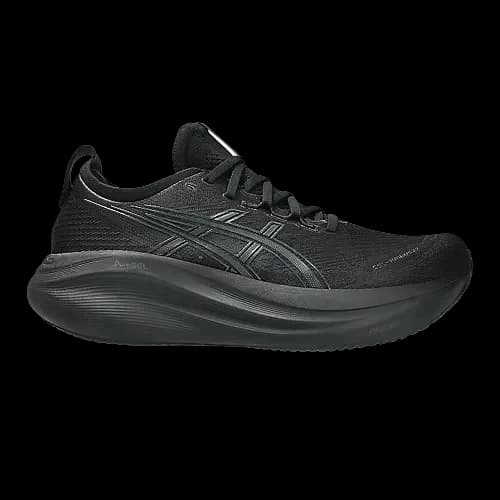 ASICS Gel-Nimbus 27 ASICS Gel-Nimbus 27 | 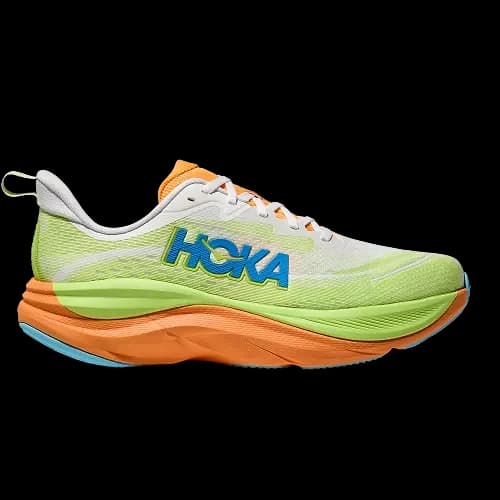 Hoka Skyflow Hoka Skyflow | 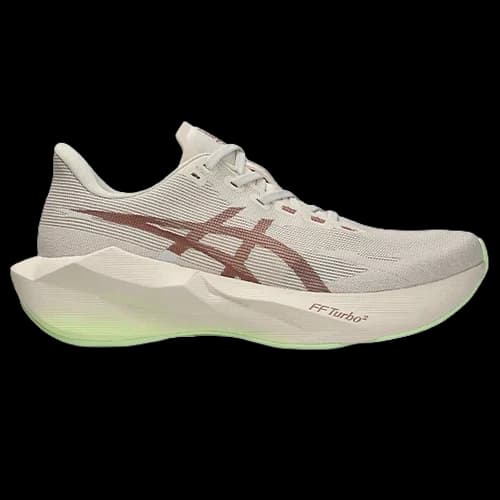 ASICS Novablast 6 ASICS Novablast 6 | 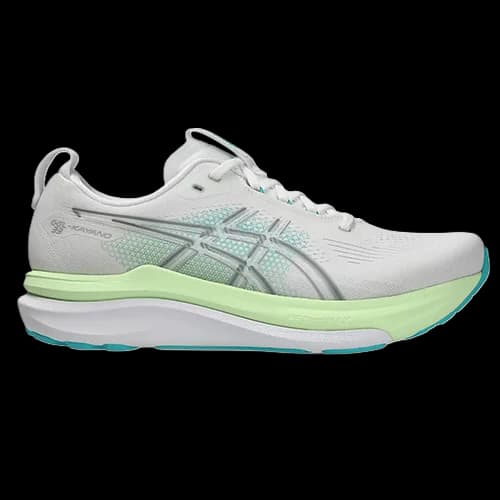 ASICS Gel-Kayano 33 ASICS Gel-Kayano 33 | |
|---|---|---|---|---|---|
| Pick it for | This page | Higher drop | Lower drop | Lighter | More stable |
| Drop | 8 mm | 8 mm | 5 mm | 8 mm | 8 mm |
| Heel stack | 43.5 mm | 43.5 mm | 39 mm | 41.5 mm | 39 mm |
| Weight | 280 g | 306 g | 283 g | 249 g | 298 g |
| Support | Neutral | Neutral | Neutral | Neutral | Stability |
Questions runners ask
Is the ASICS Gel-Nimbus 28 a stability shoe?
No. The Gel-Nimbus 28 is a neutral trainer, listed as neutral by Fleet Feet, with no guidance system. Its platform is stiff and resists twisting, which helps a mildly unsteady stride, but runners with a marked inward roll are better served by a stability model such as the Gel-Kayano.
What is the real drop of the Gel-Nimbus 28?
ASICS lists 8 mm (43.5 mm heel, 35.5 mm forefoot, men’s). Doctors of Running felt it closer to 5 or 6 mm, and RunRepeat’s lab measured 5.2 mm. In practice the Nimbus 28 rides flatter than its spec, which suits midfoot strikers and asks a little more of the calves for heel strikers.
Nimbus 27 or Nimbus 28: which should I choose?
Choose the Nimbus 28 if you land midfoot, want a lighter shoe or like to pick up the pace now and then. Stay with the Nimbus 27 if you land heavily on your heel and prefer a deeper, calmer feel, since reviewers found the 28 firmer and lower-feeling on the same listed stack.
Does the Gel-Nimbus 28 fit true to size?
Yes, according to Doctors of Running and RunRepeat. The width is normal to slightly wide, with good toe room, but the toe box is low and the tongue is thin. If you have a high instep, try it on and keep the laces loose over the top of the foot.
Does the Gel-Nimbus 28 come in wide and extra wide?
Yes. Fleet Feet lists the men’s Gel-Nimbus 28 in regular (D), wide (2E) and extra wide (4E). Width availability differs between countries and retailers, so check stock locally before ordering.
How do I avoid lace bite in the Gel-Nimbus 28?
Doctors of Running report pressure on the top of the foot from the thin tongue when the laces are tight, and suggest keeping them looser. Skipping an eyelet over the sore spot is a common lacing fix. If pressure persists, a model with a thicker tongue may simply suit you better.
Sources
- Doctors of Running, ASICS Gel Nimbus 28 Review (Matt Klein, December 2025). Accessed Oct 9, 2026.
- RunRepeat, ASICS Gel Nimbus 28 lab review. Accessed Oct 9, 2026.
- Fleet Feet, Men’s ASICS Gel-Nimbus 28. Accessed Oct 9, 2026.
- Runner’s World Germany, Asics Gel-Nimbus 28 im Test. Accessed Oct 9, 2026.
- Strideprint, Strideprint running shoe catalogue (ranks computed on 2026-10-11). Accessed Oct 11, 2026.
- cat: Strideprint catalogue, 395 shoes
How we review. We read published tests, brand and retailer pages and lab measurements, cross-check the figures and flag where they disagree. We did not test this shoe ourselves. Last updated October 13, 2026.