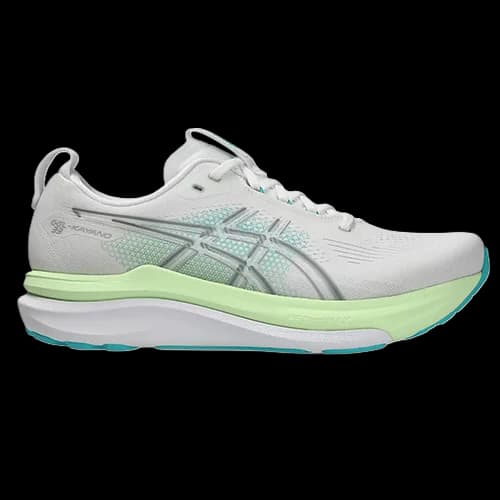
ASICS Gel-Kayano 33 review
ASICS’s flagship stability shoe, rebuilt around a softer two-layer midsole and a new support system that guides more quietly than before.
- Drop
- 8 mm
- Heel stack
- 39 mm
- Forefoot
- 31 mm
- Weight
- 298 g
- Support
- Stability
- Plate
- None
Our verdict
Softer, calmer, and divisive.
The Gel-Kayano 33 trades ASICS’s old guidance system for a two-layer midsole and a broad base that steadies the foot without shoving it. It suits heavier runners and walkers with a mild to moderate inward roll who run easy, and reviewers split sharply on whether the redesign is an improvement.
Strong points
- The softest Kayano RunRepeat has measured, with a plush step-in
- Broad, planted base that both labs rate as very stable
- Guidance feels less intrusive than on older Kayanos
- Offered from narrow to extra-wide
- True to size for nearly every tester
- Outstanding grip on wet and dry roads in RunRepeat’s traction test
Weak points
- Heavy: about 298 g in a men’s US 9
- Little energy return, flat once the pace rises
- Doctors of Running found the heel transition clunky
- Arch support judged too light for a marked inward roll
Who it fits
- Your foot rolls in a little, or moderately
- Older Kayanos felt too pushy
- Easy runs and lots of walking
- You are a heavier runner
Who should skip it
- You need firm support under the arch
- You want any kind of pace
- Your toes need height
Shoe profile
Where the Gel-Kayano 33 sits among the 395 shoes in our catalogue, and what changed from the Gel-Kayano 32.
| Axis | Gel-Kayano 33 | Gel-Kayano 32 | Change |
|---|---|---|---|
| Cushioning | 52 | 64 | −12 |
| Lightness | 14 | 14 | = |
| Stability | 85 | 85 | = |
| Drop | 45 | 45 | = |
| Response | 6 | 6 | = |
Fig. 1 · How to read it. Each axis runs from 0 at the centre to 100 at the edge. Cushioning, lightness and drop are the shoe’s rank in the catalogue from listed figures; stability and response are scored from the support type, the plate, the rocker and the intended use. The dotted grey line is the catalogue median. Source: Strideprint catalogue (cat).
Where it sits in the catalogue
Weight298 g, heavier than 86% of shoes
Drop8 mm, higher than 45% of shoes
Heel stack39 mm, higher than 52% of shoes
Forefoot stack31 mm, lower than 49% of shoes
How it feels
Written from 5 published tests. We quote measurements, not impressions we did not have.
Soft on the step-in, firmer on the run. Soft FF Blast Max over a firmer base: plush on the step-in per RunRepeat, firm underway per RTINGS and Doctors of Running.
Guided, not blocked. A broad base and firmer lower foam steady the foot without a hard post; one test finds too little help under the inner midfoot.
Comfort first, pace never. Energy return is below average, 50.0 percent in the heel and 56.6 in the forefoot, and the heel landing divides testers.
Soft on the step-in, firmer on the run. The midsole now stacks a soft FF Blast Max layer over a firmer FF Blast Plus base, with PureGEL in the heel. Fleet Feet lists 39 mm at the heel and 31 mm at the forefoot for the men’s shoe.
How that feels depends on who you ask. RunRepeat measured the foam at 32.8 on the AC scale, softer than the Kayano 32. RTINGS rates the forefoot very firm, and Doctors of Running found the top layer compresses fast and leaves a firm, slightly dead feel once you are running.
Guided, not blocked. ASICS replaced the 4D Guidance System with a new FluidSupport setup. RunRepeat describes stability that comes from a broad platform and the firmer lower foam. RTINGS also rates the planted base as very stable.
Doctors of Running see it differently in one area: good heel stability, but too little support under the inner midfoot. For a runner whose foot rolls in a little, that may be plenty. For a marked inward roll, it may not be.
Comfort first, pace never. RunRepeat measured energy return of 50.0 percent at the heel and 56.6 percent at the forefoot, below average. RTINGS found very little rebound at the heel.
The heel is a point of debate. RunRepeat notes a slightly larger heel rocker than before, while Doctors of Running found the landing abrupt because of the flared heel and the lack of a bevel.
Read more
Soft on the step-in, firmer on the run. The midsole now stacks a soft FF Blast Max layer over a firmer FF Blast Plus base, with PureGEL in the heel. Fleet Feet lists 39 mm at the heel and 31 mm at the forefoot for the men’s shoe.
How that feels depends on who you ask. RunRepeat measured the foam at 32.8 on the AC scale, softer than the Kayano 32. RTINGS rates the forefoot very firm, and Doctors of Running found the top layer compresses fast and leaves a firm, slightly dead feel once you are running.
Guided, not blocked. ASICS replaced the 4D Guidance System with a new FluidSupport setup. RunRepeat describes stability that comes from a broad platform and the firmer lower foam. RTINGS also rates the planted base as very stable.
Doctors of Running see it differently in one area: good heel stability, but too little support under the inner midfoot. For a runner whose foot rolls in a little, that may be plenty. For a marked inward roll, it may not be.
Comfort first, pace never. RunRepeat measured energy return of 50.0 percent at the heel and 56.6 percent at the forefoot, below average. RTINGS found very little rebound at the heel.
The heel is a point of debate. RunRepeat notes a slightly larger heel rocker than before, while Doctors of Running found the landing abrupt because of the flared heel and the lack of a bevel.
Which runs it’s for
| Run | Fit | Why | Source |
|---|---|---|---|
| Easy runs | Made for it | Its natural pace. Reviewers agree it is happiest on relaxed daily miles. | Doctors of Running, RTINGS, Runnea |
| Recovery runs | Made for it | Soft step-in, stable base, nothing asked of your legs. | Doctors of Running, RunRepeat |
| Walking | Made for it | Doctors of Running rate it better for walking and standing than for running effort. | Doctors of Running |
| Long runs | Can do | Fine at a steady, slow pace. The weight shows late in a long run. | RTINGS, Runnea |
| Marathon race | Can do | Runnea lists the marathon at slow paces. For a time goal, RTINGS finds it too heavy and dull. | RTINGS, Runnea |
| Tempo | Not for it | Low energy return in both labs. Keep a lighter pair for faster sessions. | RunRepeat, RTINGS |
Source: Doctors of Running, RTINGS, Runnea, RunRepeat
What the tests say
Published tests agree the Kayano 33 is heavy, cushioned and built for slow miles, with guidance that is quieter than before. They part ways on whether the redesign is a step forward: RunRepeat and Runnea are enthusiastic, Doctors of Running is not.
| Test | Type | Our reading | In one sentence | Source |
|---|---|---|---|---|
| Doctors of Running | Review | Mixed | Both Doctors of Running testers grade it B minus: clunky heel, dull foam, fine for walking, a step back from the 32. | Read |
| RunRepeat | Lab | Positive | RunRepeat scores it 86 out of 100: a modern update that keeps what made the series known, despite weak energy return. | Read |
| RTINGS | Lab | Mixed | RTINGS gives 6.4 out of 10: a dependable stability trainer for regular mileage, held back by weight and weak rebound. | Read |
| Runnea | Review | Positive | Runnea is clearly positive: stable for pronators and comfortable over 160 km, but limited rebound rules out speed work. | Read |
They agree
- Heavy for the categoryRunRepeat weighed it at 298 g and RTINGS at 295.9 g, in line with the 298 g Doctors of Running list for a men’s US 9.
- Not built for speedRunRepeat and RTINGS both measured little rebound from the midsole, and Runnea rules it out for interval work.
- Guidance that steps backRunRepeat, Runner’s World Germany and Runnea all describe support that works without the blocked feeling of older Kayanos.
- True to sizeDoctors of Running, RunRepeat, RTINGS and Runnea all found the length right in the usual size.
They split
- Is the redesign a success?RunRepeat calls it the most comfortable Kayano yet and Runnea is just as positive. Doctors of Running found the ride firm under load and the heel abrupt, and call it a step back from the 32.
- How much support it givesRunnea pitches it at pronators of medium to strong build. RunRepeat thinks a severe inward roll may need more, and Doctors of Running find the midfoot support too light.
- Soft or firm underfootRunRepeat measured the softest foam of any Kayano. RTINGS rates the forefoot very firm, and Doctors of Running felt the top foam compress quickly into a firm ride.
How it’s built
A dual-layer stability build: FF BLAST MAX on top, firmer FF BLAST PLUS underneath forming the FluidSupport system, PureGEL at the rear, and a thick Hybrid ASICSGRIP outsole.
A dual-layer stability build: soft FF Blast Max over a firmer FF Blast Plus frame, PureGEL at the rear, a very rigid platform, and a 4.0 mm Hybrid ASICSGRIP outsole.
| # | Part | Measure |
|---|---|---|
| 1 | UpperEngineered mesh | Breathability 69 BR |
| 2 | Tongue | 4.2 mm |
| 3 | Heel | Stiffness 4 / 5 |
| 4 | MidsoleFF BLAST MAX, FF BLAST PLUS, FluidSupport and PureGEL | Hardness 32.8 AC |
| 5 | Insole | 5.2 mm |
| 6 | OutsoleHybrid ASICSGRIP | 4.0 mm |
Fig. 3 · Side profile. Stack heights to scale (listed: 39 mm heel, 31 mm forefoot; measured: 4 mm outsole); the split between the two foams is not measured and is drawn at mid-height. Dashed: insole, hidden. Sources: Fleet Feet, Doctors of Running, RunRepeat, Runner’s World Germany. BR: RunRepeat’s breathability scale (not a score out of 100).
Upper. A new dual-layer engineered mesh upper, light and stretchy over the forefoot and thicker around the rear, per Doctors of Running. RunRepeat scored breathability 69, a respectable result for year-round running.
Tongue. Thicker than on the Kayano 32, 4.2 mm against 2.5 mm, and semi-gusseted. Punched eyelets remain only at the top and bottom, with fabric loops for the other six, which RunRepeat found eases pressure on the instep but may wear sooner.
Heel. A rigid counter, 4 out of 5 in RunRepeat’s test but a little softer than on earlier Kayanos, which the lab sees as good news for sensitive Achilles tendons. The finger-loop tab is built into the collar.
Midsole. FF BLAST MAX runs full length on top, measured at 32.8 AC, over a firmer FF BLAST PLUS frame. Doctors of Running describe FluidSupport as the soft layer sitting inside that frame, with extra material on the inner side of the heel. PureGEL stays at the rear. The platform is very rigid: 20.1 Nm in RunRepeat’s torsion test, among the stiffest it has measured.
Insole. Thick and cushioned, 5.2 mm, which RunRepeat links to slower drying. A Doctors of Running tester got a better lockdown and more room by swapping it for a flat insole.
Outsole. Hybrid ASICSGRIP combines ASICSGRIP and AHAR Plus rubber, now with pill-shaped lugs set straight on exposed foam under the central forefoot. It is 4.0 mm thick and scored 0.93 in RunRepeat’s traction test, among the grippiest road shoes the lab has tested, though Runner’s World Germany found grip fading on slippery ground.
Read more
A dual-layer stability build: FF BLAST MAX on top, firmer FF BLAST PLUS underneath forming the FluidSupport system, PureGEL at the rear, and a thick Hybrid ASICSGRIP outsole.
1. Upper. A new dual-layer engineered mesh upper, light and stretchy over the forefoot and thicker around the rear, per Doctors of Running. RunRepeat scored breathability 69, a respectable result for year-round running.
2. Tongue. Thicker than on the Kayano 32, 4.2 mm against 2.5 mm, and semi-gusseted. Punched eyelets remain only at the top and bottom, with fabric loops for the other six, which RunRepeat found eases pressure on the instep but may wear sooner.
3. Heel. A rigid counter, 4 out of 5 in RunRepeat’s test but a little softer than on earlier Kayanos, which the lab sees as good news for sensitive Achilles tendons. The finger-loop tab is built into the collar.
4. Midsole. FF BLAST MAX runs full length on top, measured at 32.8 AC, over a firmer FF BLAST PLUS frame. Doctors of Running describe FluidSupport as the soft layer sitting inside that frame, with extra material on the inner side of the heel. PureGEL stays at the rear. The platform is very rigid: 20.1 Nm in RunRepeat’s torsion test, among the stiffest it has measured.
5. Insole. Thick and cushioned, 5.2 mm, which RunRepeat links to slower drying. A Doctors of Running tester got a better lockdown and more room by swapping it for a flat insole.
6. Outsole. Hybrid ASICSGRIP combines ASICSGRIP and AHAR Plus rubber, now with pill-shaped lugs set straight on exposed foam under the central forefoot. It is 4.0 mm thick and scored 0.93 in RunRepeat’s traction test, among the grippiest road shoes the lab has tested, though Runner’s World Germany found grip fading on slippery ground.
Durability. Built for high mileage. The outsole lost 1.1 mm in RunRepeat’s wear test, about average, but the 4.0 mm layer leaves plenty to wear through. The dual-layer mesh scored 3 out of 5 and the heel lining 4 out of 5. Doctors of Running saw only mild heel abrasion after 40 miles and expect moderate durability overall.
Durability. Built for high mileage. The outsole lost 1.1 mm in RunRepeat’s wear test, about average, but the 4.0 mm layer leaves plenty to wear through. The dual-layer mesh scored 3 out of 5 and the heel lining 4 out of 5. Doctors of Running saw only mild heel abrasion after 40 miles and expect moderate durability overall.
Specs, listed and measured
Every figure carries its source.
Drop, mm
Heel stack, mm
Forefoot stack, mm
Weight (men’s), g
| Spec | Listed | Measured |
|---|---|---|
| Drop |
|
|
| Heel stack |
|
|
| Forefoot stack |
|
|
| Weight, US M9 |
|
|
| Support |
| – |
| Plate |
| – |
| Surface |
| – |
| Release year |
| – |
Fig. 4 · Listed vs measured. Bars start at zero. Sources: Fleet Feet, RunRepeat, RTINGS, Runner’s World Germany, Doctors of Running.
Lab measurements
| Spec | Measured |
|---|---|
| Midsole hardness |
|
| Torsional rigidity |
|
| Energy return (heel) |
|
| Heel counter stiffness |
|
| Traction coefficient |
|
| Breathability |
|
| Spec | Measured |
|---|---|
| Toe box width |
|
| Toe box height |
|
| Outsole thickness |
|
| Insole thickness |
|
| Tongue thickness |
|
| Flex force |
|
BR: RunRepeat’s breathability scale (not a score out of 100).
Sizing and fit
Take your usual size; the open questions are toe room and width, not length.
Length
True to size
Widths
standard, wide, and extra wide
Toe room
Toe room is decent but not uniform. RunRepeat measured a 72.4 mm toe box that may feel slightly tapered, with comfortable height at 28.6 mm. Runner’s World Germany found plenty of space, while RTINGS scores toe box height lower.
RunRepeat, RTINGS, Runner’s World Germany
Full sizing notes from testers
Doctors of Running, RunRepeat, RTINGS and Runnea all report a true-to-size fit. RunRepeat’s readers agree in its sizing poll.
Toe room divides testers. Runner’s World Germany found the forefoot roomy enough for medium to wider feet. Doctors of Running describe a slightly tapered toe box that is not ideal for broad feet, and RTINGS warns that taller toes may touch the top. Doctors of Running also found the shoe a little warm.
Widths are the answer for most of these cases. RunRepeat and Fleet Feet list narrow, standard, wide and extra-wide versions for men. In Europe, Runnea mentions a Wide version; extra-wide availability varies by country.
Doctors of Running, RunRepeat, RTINGS, Runner’s World Germany, Runnea, Fleet Feet
Vs Gel-Kayano 32
A full overhaul rather than a refresh: new support system, new foam stack, a plusher feel and a lower measured heel.
| Gel-Kayano 33 | Gel-Kayano 32 | |
|---|---|---|
| Support | Stability | Stability |
| Drop | 8 mm | 8 mm |
| Heel stack | 39 mm | 40 mm |
| Forefoot | 31 mm | 32 mm |
| Weight | 298 g | 298 g |
Keep the Kayano 32 if you liked its more structured guidance or need more help under the arch: Doctors of Running rated the 32 their stability shoe of 2025 and see the 33 as a step back. Move to the 33 if older Kayanos felt too corrective and you mostly run easy or walk.
Listed figures. Source: Strideprint catalogue (cat).
Version history: Gel-Kayano 32 to Gel-Kayano 33
FluidSupport replaces 4D Guidance. The support system is new, designed to guide more gradually. Most reviewers find it less intrusive. (RunRepeat, Runnea)
Two-layer midsole. Soft FF Blast Max on top, firmer FF Blast Plus underneath. (RunRepeat, Fleet Feet)
Lower measured heel. RunRepeat measured 36.8 mm at the heel against 39.9 mm on the Kayano 32. (RunRepeat)
New tongue and lacing. RunRepeat measured a thicker tongue, 4.2 mm against 2.5 mm, and found new fabric lace loops. (RunRepeat)
Alternatives compared
Each one fixes one thing the Gel-Kayano 33 does not do.
| ASICS Gel-Kayano 33 | 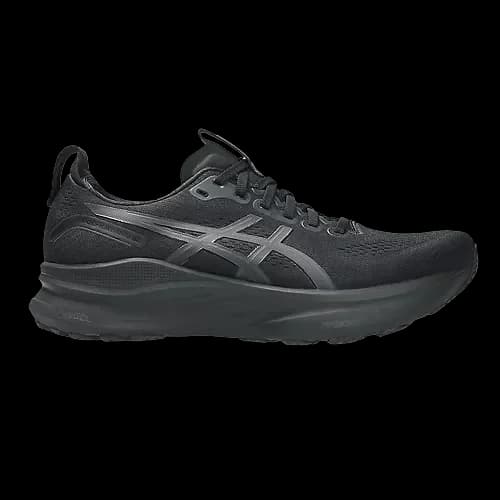 ASICS Gel-Kayano 32 ASICS Gel-Kayano 32 | 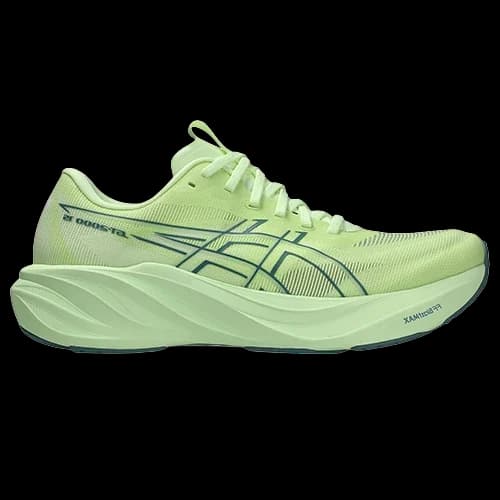 ASICS GT-2000 15 ASICS GT-2000 15 | 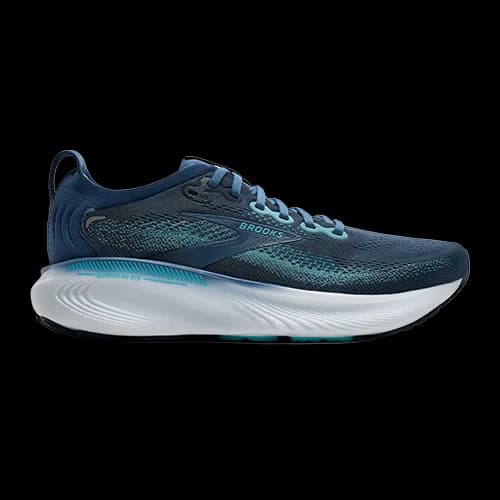 Brooks Adrenaline GTS 25 Brooks Adrenaline GTS 25 | 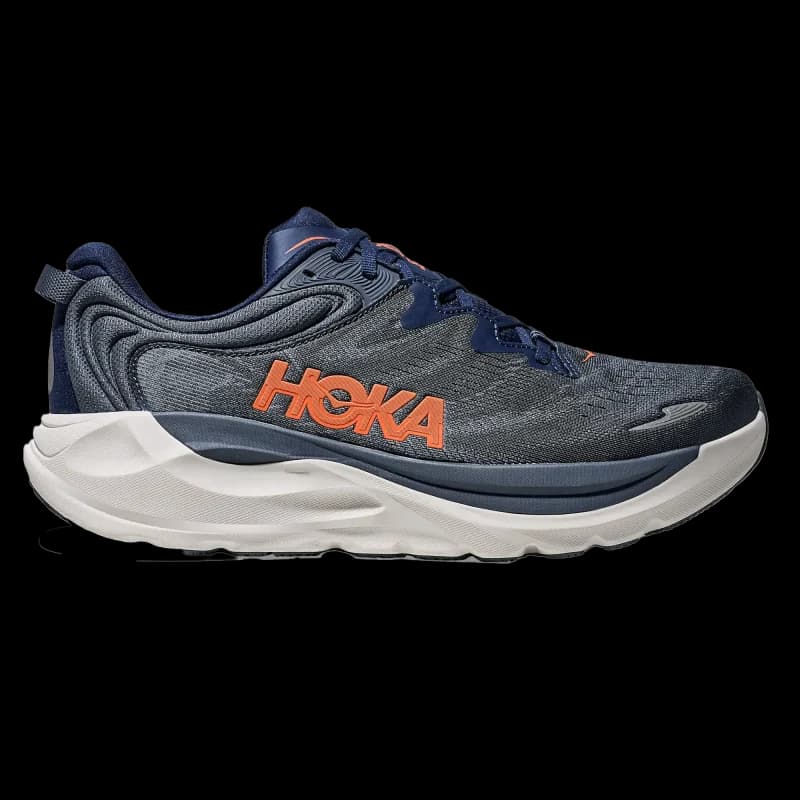 Hoka Gaviota 6 Hoka Gaviota 6 | |
|---|---|---|---|---|---|
| Pick it for | This page | More stable | Lighter | Higher drop | Lower drop |
| Drop | 8 mm | 8 mm | 8 mm | 10 mm | 6 mm |
| Heel stack | 39 mm | 40 mm | 37 mm | 37 mm | 39 mm |
| Weight | 298 g | 298 g | 249 g | 301 g | 283 g |
| Support | Stability | Stability | Stability | Stability | Stability |
Questions runners ask
Is the ASICS Gel-Kayano 33 true to size?
Yes. Doctors of Running, RunRepeat, RTINGS and Runnea all found the length right in the usual size. The debate is about volume: some testers found the toe box slightly tapered or low over the toes, so broad or tall-toed feet should look at the wide version.
Kayano 32 or Kayano 33: which should I choose?
Choose the Kayano 33 if older Kayanos felt too corrective and you want a plusher step-in for easy miles and walking. Keep or look for the Kayano 32 if you need firmer support under the arch: Doctors of Running preferred the 32, while RunRepeat and Runnea prefer the 33.
Is the Kayano 33 good for flat feet or overpronation?
The Kayano 33 is designed for runners whose foot rolls inward, and reviewers place it best for a mild to moderate roll. RunRepeat and Doctors of Running both doubt it is enough for a marked one. Flat feet do not always mean overpronation, so check how your foot actually moves first. It is a guidance shoe, not a treatment.
Is the Kayano 33 good for heavy runners?
Reviewers think so. RunRepeat names heavier runners with a mild inward roll among its best matches, and Runner’s World Germany found the cushioning well suited to heavier runners. The broad base helps; the weight of the shoe, about 298 g, is the trade-off.
Does the Kayano 33 come in wide?
Yes. RunRepeat and Fleet Feet list narrow, standard, wide and extra-wide versions for men. In Europe, Runnea mentions a Wide version; extra-wide availability varies by country and retailer.
Is the Kayano 33 good for walking?
Yes, and arguably better than for running. Doctors of Running found it works best at walking and easy paces, where the soft top layer and stable base shine and the heel transition matters less.
Sources
- Doctors of Running, ASICS Gel-Kayano 33 Review (Matt Klein, Bach Pham, May 2026). Accessed Oct 9, 2026.
- RunRepeat, ASICS Gel Kayano 33 lab review. Accessed Oct 9, 2026.
- RTINGS, ASICS GEL-KAYANO 33 review. Accessed Oct 9, 2026.
- Runner’s World Germany, Asics Gel-Kayano 33 im Test. Accessed Oct 9, 2026.
- Runnea, ASICS Gel Kayano 33 review. Accessed Oct 9, 2026.
- Fleet Feet, Men’s ASICS Gel-Kayano 33. Accessed Oct 9, 2026.
- i-run.fr · Surface, listed
- cat: Strideprint catalogue, 395 shoes
How we review. We read published tests, brand and retailer pages and lab measurements, cross-check the figures and flag where they disagree. We did not test this shoe ourselves. Last updated October 12, 2026.