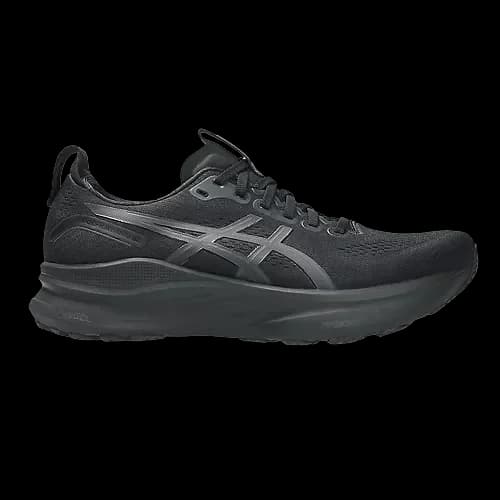
ASICS Gel-Kayano 32 review
The 2025 version of ASICS’s flagship stability shoe: a lower 8 mm drop, a snugger knit upper and a firm, very stable ride built for easy miles.
- Drop
- 8 mm
- Heel stack
- 40 mm
- Forefoot
- 32 mm
- Weight
- 298 g
- Support
- Stability
- Plate
- None
Our verdict
Firm, steady, and lower at the heel.
The Gel-Kayano 32 keeps the 4D Guidance System and a wide, walled base, and drops to 8 mm for the first time. Testers find it very stable, true to size and smoother at the heel than the 31, but firmer and heavier than a premium trainer usually feels. It suits easy and long runs, walking and long days on your feet, not fast running.
Strong points
- Very stable: 97 for stability at RunRepeat and 8.5 out of 10 at RTINGS, from a wide base and raised sidewalls
- Smoother heel transition than the Kayano 31
- True to size for testers and for 143 RunRepeat readers
- Tough outsole: only 0.7 mm lost in RunRepeat’s wear test, and Runnea praise its durability
- Strong grip: 1.04 in RunRepeat’s traction test
- Offered in wide and extra-wide for men
Weak points
- Heavy: 298 g in a men’s US 9, and 11 of the 37 stability road shoes weighed in that size in our catalogue are heavier, so it sits in the heavier third
- Firmer than expected for a premium stability shoe
- Very little energy return: 49.3 percent at the forefoot in RunRepeat’s lab
- Snug knit upper that suits normal to narrow feet best
Who it fits
- Your foot rolls in a little, or moderately
- You land midfoot and found older Kayanos too heel-heavy
- You walk a lot or stand all day
- You are a heavier runner
Who should skip it
- You want a soft, plush ride
- You want any kind of pace
- Your feet are wide in the standard width
Shoe profile
Where the Gel-Kayano 32 sits among the 395 shoes in our catalogue, and what changed from the Gel-Kayano 31.
| Axis | Gel-Kayano 32 | Gel-Kayano 31 | Change |
|---|---|---|---|
| Cushioning | 64 | 64 | = |
| Lightness | 14 | 10 | +4 |
| Stability | 85 | 85 | = |
| Drop | 45 | 84 | −39 |
| Response | 6 | 6 | = |
Fig. 1 · How to read it. Each axis runs from 0 at the centre to 100 at the edge. Cushioning, lightness and drop are the shoe’s rank in the catalogue from listed figures; stability and response are scored from the support type, the plate, the rocker and the intended use. The dotted grey line is the catalogue median. Source: Strideprint catalogue (cat).
Where it sits in the catalogue
Weight298 g, heavier than 86% of shoes
Drop8 mm, higher than 45% of shoes
Heel stack40 mm, higher than 64% of shoes
Forefoot stack32 mm, higher than 52% of shoes
How it feels
Written from 5 published tests. We quote measurements, not impressions we did not have.
Protective, but firmer than you might expect. Tall at 40 mm in the heel but firm: 41.3 AC in RunRepeat’s lab, and every test describes protection rather than plushness.
Guided by the base, not a post. No post: a wide base, sidewalls and 4D foam do the guiding, and both labs rate it among the most stable shoes they test.
Smooth at the heel, flat at pace. A smoother heel than the 31 and an early forefoot rocker, but only 49.3 percent energy return in RunRepeat’s lab.
Protective, but firmer than you might expect. ASICS lists 40 mm at the heel and 32 mm at the forefoot, a tall build that ranks 7th of the 40 stability road shoes in our catalogue for heel height. RunRepeat measured 39.9 mm at the heel and RTINGS 41.7 mm.
The feel is firm. RunRepeat measured 41.3 on the AC scale, firmer than the 35.5 average, and RTINGS scores heel and forefoot as firm. Doctors of Running and Fleet Feet describe a solid, protective ride rather than a plush one.
Guided by the base, not a post. There is no medial post. Doctors of Running trace the stability to a wide sole, sidewalls on both sides, a geometry that stiffens as the foot tips in or out, and the softer 4D foam that helps the arch spring back.
The result scores high in both labs: 97 for stability at RunRepeat, 8.5 out of 10 at RTINGS. The platform is very rigid too, 20.2 Nm in RunRepeat’s torsion test, against a 14.4 average.
Smooth at the heel, flat at pace. Doctors of Running found the heel transition much improved over the 31, thanks to a rearfoot that compresses more and a small bevel. The forefoot is stiff, with an early rocker that rolls you forward.
Speed is another story. RunRepeat measured 49.3 percent energy return at the forefoot, well below the 61.4 average, and RTINGS scores energy return 1.5 out of 10.
Read more
Protective, but firmer than you might expect. ASICS lists 40 mm at the heel and 32 mm at the forefoot, a tall build that ranks 7th of the 40 stability road shoes in our catalogue for heel height. RunRepeat measured 39.9 mm at the heel and RTINGS 41.7 mm.
The feel is firm. RunRepeat measured 41.3 on the AC scale, firmer than the 35.5 average, and RTINGS scores heel and forefoot as firm. Doctors of Running and Fleet Feet describe a solid, protective ride rather than a plush one.
Guided by the base, not a post. There is no medial post. Doctors of Running trace the stability to a wide sole, sidewalls on both sides, a geometry that stiffens as the foot tips in or out, and the softer 4D foam that helps the arch spring back.
The result scores high in both labs: 97 for stability at RunRepeat, 8.5 out of 10 at RTINGS. The platform is very rigid too, 20.2 Nm in RunRepeat’s torsion test, against a 14.4 average.
Smooth at the heel, flat at pace. Doctors of Running found the heel transition much improved over the 31, thanks to a rearfoot that compresses more and a small bevel. The forefoot is stiff, with an early rocker that rolls you forward.
Speed is another story. RunRepeat measured 49.3 percent energy return at the forefoot, well below the 61.4 average, and RTINGS scores energy return 1.5 out of 10.
Which runs it’s for
| Run | Fit | Why | Source |
|---|---|---|---|
| Easy runs | Made for it | Its home ground: every test places it on relaxed daily miles. | Doctors of Running, RTINGS, Runnea |
| Long runs | Made for it | Doctors of Running and Runnea like it for long, steady runs. | Doctors of Running, Runnea |
| Recovery runs | Made for it | Stable and protective, which RTINGS rates well for recovery jogs. | RTINGS |
| Walking | Made for it | Doctors of Running and Fleet Feet both recommend it for walking and standing. | Doctors of Running, Fleet Feet |
| Marathon race | Can do | Fine for marathon training at moderate pace, says Runnea; RTINGS finds it too heavy to race one. | RTINGS, Runnea |
| Tempo | Not for it | Low energy return in both labs. Keep a lighter pair for faster sessions. | RunRepeat, RTINGS |
Source: Doctors of Running, RTINGS, Runnea, Fleet Feet, RunRepeat
What the tests say
Tests agree the Kayano 32 is very stable, true to size and built for slow miles, with a firmer, heavier feel than its premium status suggests. They differ on the details: how firm it really is, how well it breathes and what the drop measures.
| Test | Type | Our reading | In one sentence | Source |
|---|---|---|---|---|
| Doctors of Running | Review | Positive | Doctors of Running grade the overall design A minus: a smoother, very stable Kayano, held back by weight and a firmer ride than hoped. | Read |
| RunRepeat | Lab | Positive | RunRepeat scores it 86 out of 100: a top stability trainer for slow, comfortable miles, not for anyone chasing energy return. | Read |
| RTINGS | Lab | Mixed | RTINGS rates it a solid daily and long-run trainer for overpronators, but heavy and flat for racing. | Read |
| Runnea | Review | Positive | Runnea rate it 8.5 out of 10 after about 300 km: stable without aggressive correction and very durable, if heavy. | Read |
They agree
- Very stableRunRepeat gives it 97 for stability and RTINGS 8.5 out of 10; Doctors of Running grade its moderate stability A.
- Heavy and slowRunRepeat weighed it at 295 g and RTINGS at 300.2 g, and both measured little rebound. Runnea also calls it heavy.
- Firm underfootDoctors of Running and Fleet Feet both describe a firmer, stiffer ride than expected, and both labs back it with firm readings.
- True to sizeDoctors of Running, Fleet Feet and RunRepeat’s readers found the length right; RTINGS measured it slightly long but sees no need to size down.
They split
- How much drop it really hasASICS lists 8 mm, as Doctors of Running and Fleet Feet report. RunRepeat measured 9.3 mm and RTINGS 9.1 mm, while Runnea still lists 10 mm.
- Does the upper breathe?Runnea found it well ventilated. RunRepeat measured breathability slightly below average, and one of three Fleet Feet testers found it lacking.
- How durable the outsole isRunRepeat measured low wear and Runnea expect 700 to 800 km. Doctors of Running saw early wear on the exposed foam after about 48 km and expect average durability.
How it’s built
A classic Kayano build: FF BLAST PLUS ECO foam with the 4D Guidance System and PureGEL in the heel, a stretch knit upper, and a thick, durable rubber outsole.
FF Blast Plus Eco with 4D Guidance and PureGEL, a snug stretch knit, a very stiff heel counter, and a 4.5 mm outsole that barely wore in RunRepeat’s test.
| # | Part | Measure |
|---|---|---|
| 1 | UpperEngineered stretch knit | Breathability 72 BR |
| 2 | Tongue | 2.5 mm |
| 3 | Heel | Stiffness 5 / 5 |
| 4 | MidsoleFF BLAST PLUS ECO, 4D Guidance System and PureGEL | Hardness 41.3 AC |
| 5 | Insole | 4.9 mm |
| 6 | OutsoleHybrid ASICSGRIP | 4.5 mm |
Fig. 3 · Side profile. Stack heights to scale (listed: 40 mm heel, 32 mm forefoot; measured: 4.5 mm outsole); the split between the two foams is not measured and is drawn at mid-height. Dashed: insole, hidden. Sources: Doctors of Running, RunRepeat, Fleet Feet, Runnea. BR: RunRepeat’s breathability scale (not a score out of 100).
Upper. A stretch knit returns after the mesh of the 31, per Fleet Feet. It holds the foot snugly and gives in height, says Doctors of Running. RunRepeat scored breathability 72, a little under the 75 average.
Tongue. Gusseted, with padding on the sides, per Doctors of Running. RunRepeat measured only 2.5 mm of padding in the middle, far thinner than the 5.8 mm average.
Heel. A very stiff counter, 5 out of 5 at RunRepeat, offset by thicker collar padding. Doctors of Running warn very heel-sensitive runners, and Fleet Feet found the big knit pull tab could rub.
Midsole. FF BLAST PLUS ECO in a slightly firmer setup than before, per RunRepeat, measured at 41.3 AC. The 4D Guidance System adds a softer foam on the inner side, and PureGEL sits in the heel. Torsional rigidity is very high at 20.2 Nm.
Insole. A removable 4.9 mm insole, slightly thicker than average, per RunRepeat. Doctors of Running found the liner comfortable enough to run sockless.
Outsole. Thicker than on the 31, 4.5 mm against 4.0 mm, and it scored 1.04 for grip in RunRepeat’s test. Doctors of Running found it good on dry roads, with some slipping on wet pavement.
Read more
A classic Kayano build: FF BLAST PLUS ECO foam with the 4D Guidance System and PureGEL in the heel, a stretch knit upper, and a thick, durable rubber outsole.
1. Upper. A stretch knit returns after the mesh of the 31, per Fleet Feet. It holds the foot snugly and gives in height, says Doctors of Running. RunRepeat scored breathability 72, a little under the 75 average.
2. Tongue. Gusseted, with padding on the sides, per Doctors of Running. RunRepeat measured only 2.5 mm of padding in the middle, far thinner than the 5.8 mm average.
3. Heel. A very stiff counter, 5 out of 5 at RunRepeat, offset by thicker collar padding. Doctors of Running warn very heel-sensitive runners, and Fleet Feet found the big knit pull tab could rub.
4. Midsole. FF BLAST PLUS ECO in a slightly firmer setup than before, per RunRepeat, measured at 41.3 AC. The 4D Guidance System adds a softer foam on the inner side, and PureGEL sits in the heel. Torsional rigidity is very high at 20.2 Nm.
5. Insole. A removable 4.9 mm insole, slightly thicker than average, per RunRepeat. Doctors of Running found the liner comfortable enough to run sockless.
6. Outsole. Thicker than on the 31, 4.5 mm against 4.0 mm, and it scored 1.04 for grip in RunRepeat’s test. Doctors of Running found it good on dry roads, with some slipping on wet pavement.
Durability. RunRepeat’s wear test removed only 0.7 mm of rubber, better than the 1.1 mm average, and Runnea expect 700 to 800 km. Doctors of Running saw light wear on the exposed foam after about 48 km and call durability average.
Durability. RunRepeat’s wear test removed only 0.7 mm of rubber, better than the 1.1 mm average, and Runnea expect 700 to 800 km. Doctors of Running saw light wear on the exposed foam after about 48 km and call durability average.
Specs, listed and measured
Every figure carries its source.
Drop, mm
Heel stack, mm
Forefoot stack, mm
Weight (men’s), g
| Spec | Listed | Measured |
|---|---|---|
| Drop |
|
|
| Heel stack |
|
|
| Forefoot stack |
|
|
| Weight, US M9 |
|
|
| Support |
| – |
| Plate |
| – |
| Surface |
| – |
| Release year |
| – |
Fig. 4 · Listed vs measured. Bars start at zero. Sources: Doctors of Running, RunRepeat, RTINGS, Runnea.
Lab measurements
| Spec | Measured |
|---|---|
| Midsole hardness |
|
| Torsional rigidity |
|
| Energy return (forefoot) |
|
| Heel counter stiffness |
|
| Traction coefficient |
|
| Breathability |
|
| Spec | Measured |
|---|---|
| Toe box width |
|
| Toe box height |
|
| Outsole thickness |
|
| Insole thickness |
|
| Tongue thickness |
|
| Flex force |
|
BR: RunRepeat’s breathability scale (not a score out of 100).
Sizing and fit
Take your usual size; the knit upper is snug, so broad feet should look at the wide versions.
Length
True to size
Widths
standard, wide, and extra wide
Toe room
Average room. RunRepeat measured a 73.9 mm toe box, close to the 73.2 average, and 27.5 mm of height. Doctors of Running describe a tapered front that stretches with wear.
Doctors of Running, RunRepeat
Full sizing notes from testers
Doctors of Running and Fleet Feet found it true to size, and 143 RunRepeat readers agree. RTINGS measured it a touch long but sees no reason to size down.
The stretch knit is snugger than on the Kayano 30 and 31, according to Doctors of Running, who rate it best for normal to narrow feet. A Fleet Feet tester with high-volume feet still found the step-in comfortable, but another felt the oversized heel tab rub.
RunRepeat and RTINGS list standard, wide and extra-wide for men, and narrow, standard and wide for women. Availability of the wider versions varies by country.
Doctors of Running, RunRepeat, RTINGS, Fleet Feet
Vs Gel-Kayano 31
A careful update rather than a rebuild: lower drop, smoother heel, a snugger knit upper and a thicker outsole, on the same foam and guidance system.
| Gel-Kayano 32 | Gel-Kayano 31 | |
|---|---|---|
| Support | Stability | Stability |
| Drop | 8 mm | 10 mm |
| Heel stack | 40 mm | 40 mm |
| Forefoot | 32 mm | 30 mm |
| Weight | 298 g | 305 g |
Keep the Kayano 31 if you like a higher drop or found its roomier fit easier on a broad foot. Move to the 32 if the 31’s heel felt clunky or you land closer to the midfoot. Doctors of Running suggest easing into the lower drop if you have worn Kayanos for years.
Listed figures. Source: Strideprint catalogue (cat).
Version history: Gel-Kayano 31 to Gel-Kayano 32
Drop from 10 to 8 mm. Fleet Feet explain that ASICS added 2 mm of foam under the forefoot. RunRepeat measured 9.3 mm against 11.5 mm on the 31. (RunRepeat, Fleet Feet)
Smoother heel. A new rearfoot geometry and a small bevel fix the clunky landing Doctors of Running found on the 31. (Doctors of Running)
Knit upper is back. An engineered stretch knit replaces the 31’s mesh, with a snugger fit and more collar padding. (Doctors of Running, Fleet Feet)
Thicker outsole. RunRepeat measured 4.5 mm of rubber against 4.0 mm, with less wear in its test; weight stayed the same in its lab. (RunRepeat)
Alternatives compared
Each one fixes one thing the Gel-Kayano 32 does not do.
| ASICS Gel-Kayano 32 | 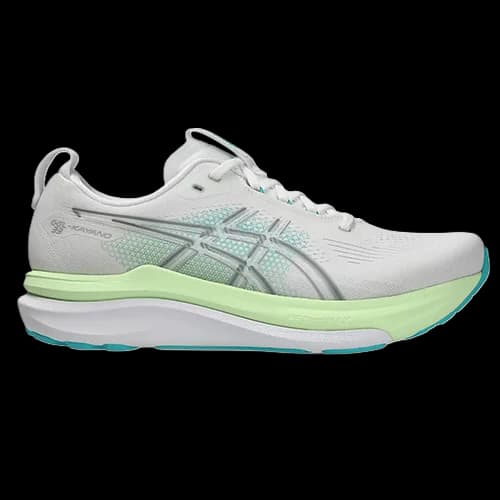 ASICS Gel-Kayano 33 ASICS Gel-Kayano 33 | 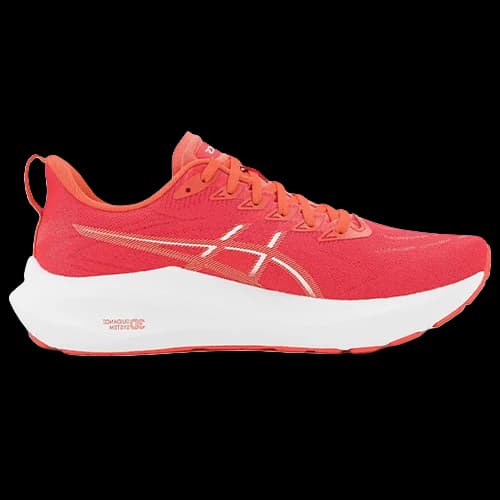 ASICS GT-2000 13 ASICS GT-2000 13 | 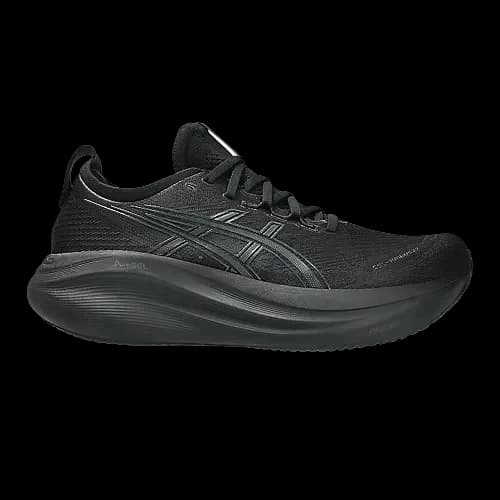 ASICS Gel-Nimbus 27 ASICS Gel-Nimbus 27 | 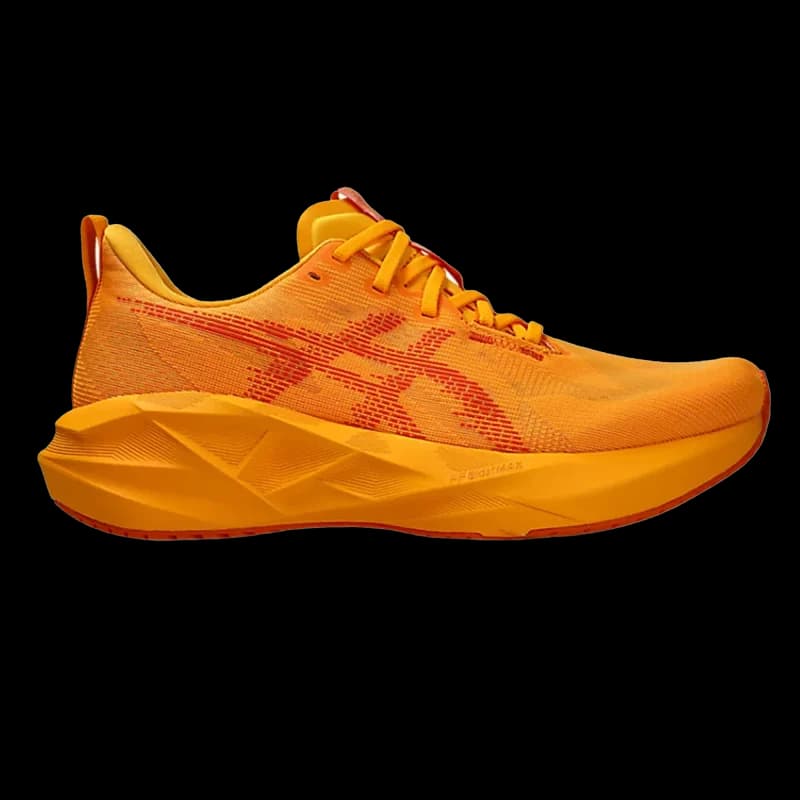 ASICS Novablast 5 ASICS Novablast 5 | |
|---|---|---|---|---|---|
| Pick it for | This page | Softer | Lighter | Softer | Faster |
| Drop | 8 mm | 8 mm | 8 mm | 8 mm | 8 mm |
| Heel stack | 40 mm | 39 mm | 36.5 mm | 43.5 mm | 41.5 mm |
| Weight | 298 g | 298 g | 275 g | 306 g | 252 g |
| Support | Stability | Stability | Stability | Neutral | Neutral |
Questions runners ask
Is the ASICS Gel-Kayano 32 true to size?
Yes. Doctors of Running, Fleet Feet and 143 RunRepeat readers found it true to size, and RTINGS, which measured it slightly long, sees no need to size down. The knit upper is snug, so broad feet should try the wide version.
Kayano 31 or Kayano 32: what changed?
The drop falls from 10 to 8 mm, the heel transition is smoother, the knit upper is snugger and the outsole is thicker. The foam and the 4D Guidance System carry over. Doctors of Running see the 32 as a clear step forward at the heel.
Kayano 32 or Kayano 33?
The 33 replaces 4D Guidance with FluidSupport, adds a softer FF Blast Max layer and sits lower at the heel in RunRepeat’s lab, with slightly gentler guidance. Choose the 32 if you want firmer, more structured support; the 33 if you want a softer step-in.
Is the Kayano 32 good for flat feet or overpronation?
It is designed for runners whose foot rolls inward: Runnea place it at mild to moderate overpronation, RunRepeat at heavier runners with light to marked pronation. The guidance comes from the base, not a post. Flat feet do not always mean overpronation, so check how your foot actually moves first. It is a guidance shoe, not a treatment.
Is the Kayano 32 good for heavy runners?
Reviewers think so. RTINGS, RunRepeat and Runnea all name heavier runners among its best matches. The wide, firm platform helps; the weight of the shoe, about 298 g in a men’s US 9, is the trade-off.
Is the Kayano 32 good for walking?
Yes. Doctors of Running rate it good for walking and standing, and Fleet Feet recommend it to people on their feet all day. Its stability and smooth heel matter more there than its weight.
Sources
- Doctors of Running, ASICS Gel-Kayano 32 Review (Matt Klein, June 2025). Accessed Oct 13, 2026.
- RunRepeat, ASICS Gel Kayano 32 lab review. Accessed Oct 13, 2026.
- RTINGS, ASICS GEL-KAYANO 32 review. Accessed Oct 13, 2026.
- Fleet Feet, ASICS GEL-Kayano 32 review: smooth, solid support. Accessed Oct 13, 2026.
- Runnea, ASICS Gel Kayano 32 review. Accessed Oct 13, 2026.
- RunRepeat, ASICS Gel Kayano 33 lab review. Accessed Oct 13, 2026.
- Strideprint, Strideprint running shoe catalogue (ranks computed on 2026-10-13). Accessed Oct 13, 2026.
- i-run.fr · Support and Surface, listed
- cat: Strideprint catalogue, 395 shoes
How we review. We read published tests, brand and retailer pages and lab measurements, cross-check the figures and flag where they disagree. We did not test this shoe ourselves. Last updated October 13, 2026.