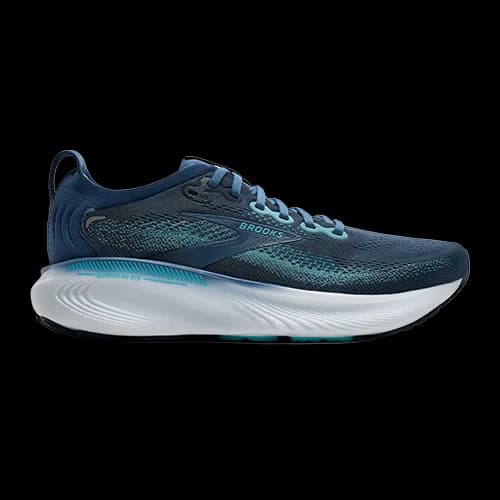
Brooks Adrenaline GTS 25 review
Brooks’ best-known guidance shoe lowers its drop from 12 to 10 mm and adds foam. Reviewers agree it is steady and heavy, and cannot agree on whether it feels soft or firm.
- Drop
- 10 mm
- Heel stack
- 37 mm
- Forefoot
- 27 mm
- Weight
- 301 g
- Support
- Stability
- Plate
- None
Our verdict
Quiet guidance for easy miles.
The Adrenaline GTS 25 is a traditional guidance trainer with GuideRails, a lower 10 mm drop and a smoother heel than the GTS 24. It suits heel strikers whose foot rolls in a little or a lot, on easy and moderate runs and walks, more than runners who want pace or very long distances.
Strong points
- Steady heel and midfoot guidance that stays discreet
- Smoother landing than the GTS 24
- Very durable outsole in the lab
- Four widths listed, from narrow to extra wide
Weak points
- Heavy next to recent rivals
- Little energy return: flat when you pick up the pace
- Forefoot can firm up on runs past 8 to 10 miles
- Stiff, padded heel counter: try it on if the back of your foot is sensitive
Who it fits
- You land on your heel and roll in
- You found the GTS 24 a little abrupt on landing
- You are new to running or walk a lot
- You need a specific width
Who should skip it
- Your foot rolls outward
- You want a lively shoe
- Your long runs go well past 15 km
- You land on your forefoot
Shoe profile
Where the Adrenaline GTS 25 sits among the 395 shoes in our catalogue, and what changed from the Adrenaline GTS 24.
| Axis | Adrenaline GTS 25 | Adrenaline GTS 24 | Change |
|---|---|---|---|
| Cushioning | 33 | 52 | −19 |
| Lightness | 12 | 26 | −14 |
| Stability | 85 | 85 | = |
| Drop | 84 | 98 | −14 |
| Response | 6 | 6 | = |
Fig. 1 · How to read it. Each axis runs from 0 at the centre to 100 at the edge. Cushioning, lightness and drop are the shoe’s rank in the catalogue from listed figures; stability and response are scored from the support type, the plate, the rocker and the intended use. The dotted grey line is the catalogue median. Source: Strideprint catalogue (cat).
Where it sits in the catalogue
Weight300.5 g, heavier than 88% of shoes
Drop10 mm, higher than 84% of shoes
Heel stack37 mm, lower than 58% of shoes
Forefoot stack27 mm, lower than 78% of shoes
How it feels
Written from 3 published tests. We quote measurements, not impressions we did not have.
More foam, judged differently. DNA Loft v3, 37 mm heel and 27 mm forefoot, measured at 34.5 AC: softer than before, though some testers still feel a firm ride.
Guidance at the heel and midfoot. GuideRails on both sides, stronger inside, and a medial post guide a foot that rolls in, subtly, at heel and midfoot.
Steady, not quick. Steady rather than quick: 52.1 percent heel energy return, weight as the main drawback, and a smooth roll forward that does not push you.
More foam, judged differently. Brooks added DNA Loft v3 cushioning, 2.5 mm at the heel and 3.5 mm at the forefoot according to Fleet Feet, so the stack height is now 37 mm at the heel and 27 mm at the forefoot for a 10 mm drop, as Believe in the Run and Fleet Feet list it.
RunRepeat measured the foam at 34.5 on the AC scale, a big step down in firmness from the previous version. Doctors of Running call it soft but unresponsive. Believe in the Run and Fleet Feet still describe a firm, traditional stability feel, so expect protection rather than plushness.
Guidance at the heel and midfoot. GuideRails on the medial and lateral sides, far more pronounced on the inside, and a medial post do the work. Doctors of Running rate it a moderate stability shoe with excellent medial stability at the heel and midfoot, consistent over their test miles, and a slight medial bias at the forefoot.
RunRepeat call the support subtle rather than intrusive. That is the point of the Adrenaline: it guides a foot that rolls in without feeling like a brace.
Steady, not quick. RunRepeat measured 52.1 percent energy return at the heel and list weight as the main drawback. Fleet Feet keep it for daily miles and long runs without pace. It rolls forward smoothly; it does not push you.
Read more
More foam, judged differently. Brooks added DNA Loft v3 cushioning, 2.5 mm at the heel and 3.5 mm at the forefoot according to Fleet Feet, so the stack height is now 37 mm at the heel and 27 mm at the forefoot for a 10 mm drop, as Believe in the Run and Fleet Feet list it.
RunRepeat measured the foam at 34.5 on the AC scale, a big step down in firmness from the previous version. Doctors of Running call it soft but unresponsive. Believe in the Run and Fleet Feet still describe a firm, traditional stability feel, so expect protection rather than plushness.
Guidance at the heel and midfoot. GuideRails on the medial and lateral sides, far more pronounced on the inside, and a medial post do the work. Doctors of Running rate it a moderate stability shoe with excellent medial stability at the heel and midfoot, consistent over their test miles, and a slight medial bias at the forefoot.
RunRepeat call the support subtle rather than intrusive. That is the point of the Adrenaline: it guides a foot that rolls in without feeling like a brace.
Steady, not quick. RunRepeat measured 52.1 percent energy return at the heel and list weight as the main drawback. Fleet Feet keep it for daily miles and long runs without pace. It rolls forward smoothly; it does not push you.
Which runs it’s for
| Run | Fit | Why | Source |
|---|---|---|---|
| Easy runs | Made for it | RunRepeat score it highly for daily running; every test places it here. | Doctors of Running, RunRepeat |
| Walking | Made for it | Doctors of Running and Fleet Feet both recommend it for walking. | Doctors of Running, Fleet Feet |
| Recovery runs | Made for it | Steady and undemanding on tired legs. | Fleet Feet |
| Long runs | Can do | Fleet Feet see it on long, unhurried runs; Doctors of Running felt the forefoot firm up past 8 to 10 miles. | Doctors of Running, Fleet Feet |
| Tempo | Not for it | Low energy return and a heavy build. | Doctors of Running, RunRepeat |
Source: Doctors of Running, RunRepeat, Fleet Feet
What the tests say
Reviewers agree on the steady guidance, the smoother heel and the weight. They split on how the foam feels, from soft to almost hard.
| Test | Type | Our reading | In one sentence | Source |
|---|---|---|---|---|
| Doctors of Running | Review | Mixed | Doctors of Running grade it B: the best heel transition of any Adrenaline and good stability, but a midsole that feels dead. | Read |
| RunRepeat | Lab | Positive | RunRepeat scores it 86 out of 100: comfortable and stable with small positive changes, but heavy and low on energy return. | Read |
| Believe in the Run | Review | Mixed | Believe in the Run’s testers split: one recommends it for new runners and easy miles, the other finds the midsole almost hard. | Read |
They agree
- A smoother heel transitionDoctors of Running and RunRepeat both credit the lower 10 mm drop and the new heel bevel with an easier landing than the GTS 24.
- Little reboundRunRepeat measured modest energy return, Doctors of Running call the midsole unresponsive and Fleet Feet describe a relaxed ride with little pop.
- Heavy for a modern trainerRunRepeat say it still feels heavy as rivals get lighter; Doctors of Running list 10.6 oz (301 g) for a men’s US 9.
- A shoe for beginners, walkers and easy paceDoctors of Running, Believe in the Run and Fleet Feet all recommend it for new runners, walking and unhurried daily miles.
They split
- Soft or firmRunRepeat measured foam about 27 percent softer than the GTS 24 and call it comfort-focused. One Believe in the Run tester found it close to hard, and Fleet Feet describe a firm, supportive feel.
- DurabilityRunRepeat measured outstanding outsole wear resistance; Doctors of Running saw outsole wear and a firmer midsole after 100 miles.
How it’s built
A traditional guidance build: a full-length DNA Loft v3 midsole with GuideRails and a medial post, a thick rubber outsole with flex grooves and a heavily padded engineered mesh upper.
A full-length DNA Loft v3 midsole with GuideRails and a medial post, a 4.1 mm rubber outsole with flex grooves, and a heavily padded engineered mesh upper with a 12.5 mm tongue.
| # | Part | Measure |
|---|---|---|
| 1 | UpperEngineered mesh | Breathability 66 BR |
| 2 | Tongue | 12.5 mm |
| 3 | Heel | Stiffness 4 / 5 |
| 4 | MidsoleDNA Loft v3 with GuideRails | 34.5 AC |
| 5 | Insole | 4.9 mm |
| 6 | Outsole | 4.1 mm |
Fig. 3 · Side profile. Stack heights to scale (listed: 37 mm heel, 27 mm forefoot; measured: 4.1 mm outsole); the split between the two foams is not measured and is drawn at mid-height. Dashed: insole, hidden. Sources: Fleet Feet, Doctors of Running, RunRepeat, Believe in the Run. BR: RunRepeat’s breathability scale (not a score out of 100).
Upper. Fleet Feet describe an engineered mesh meant to breathe while holding the foot. Doctors of Running found it thicker than before but very secure, and one Fleet Feet tester found it warm.
Tongue. Not gusseted and very thick: RunRepeat measured 12.5 mm of padding, 3.4 mm more than on the GTS 24. A dual lace loop pulls it from both sides to keep it centred, though Doctors of Running still saw it slip a little.
Heel. A new knit cuff runs into a finger-loop pull tab. RunRepeat rated the heel counter 4 out of 5 for stiffness, and one Fleet Feet tester found the stretchy collar sat high enough to rub the ankle.
Midsole. Nitrogen-infused DNA Loft v3, softened for this version. GuideRails rise on both sides, firmer and more prominent on the medial side, and Doctors of Running also describe a medial post. RunRepeat measured the heel of the midsole at 100.7 mm wide, broader than before, which steadies the softer foam.
Insole. Removable and of standard thickness, 4.9 mm in RunRepeat’s lab, and it can be swapped for another insole without trouble.
Outsole. Redesigned with rounder shapes and flex grooves throughout, with rubber kept on the zones stability runners wear most. RunRepeat measured a 4.1 mm rubber layer, and Believe in the Run found the grip good on wet roads.
Read more
A traditional guidance build: a full-length DNA Loft v3 midsole with GuideRails and a medial post, a thick rubber outsole with flex grooves and a heavily padded engineered mesh upper.
1. Upper. Fleet Feet describe an engineered mesh meant to breathe while holding the foot. Doctors of Running found it thicker than before but very secure, and one Fleet Feet tester found it warm.
2. Tongue. Not gusseted and very thick: RunRepeat measured 12.5 mm of padding, 3.4 mm more than on the GTS 24. A dual lace loop pulls it from both sides to keep it centred, though Doctors of Running still saw it slip a little.
3. Heel. A new knit cuff runs into a finger-loop pull tab. RunRepeat rated the heel counter 4 out of 5 for stiffness, and one Fleet Feet tester found the stretchy collar sat high enough to rub the ankle.
4. Midsole. Nitrogen-infused DNA Loft v3, softened for this version. GuideRails rise on both sides, firmer and more prominent on the medial side, and Doctors of Running also describe a medial post. RunRepeat measured the heel of the midsole at 100.7 mm wide, broader than before, which steadies the softer foam.
5. Insole. Removable and of standard thickness, 4.9 mm in RunRepeat’s lab, and it can be swapped for another insole without trouble.
6. Outsole. Redesigned with rounder shapes and flex grooves throughout, with rubber kept on the zones stability runners wear most. RunRepeat measured a 4.1 mm rubber layer, and Believe in the Run found the grip good on wet roads.
Durability. Reports differ. RunRepeat measured only 0.5 mm of outsole wear, rated the heel padding above its lab average and the toe box 3 out of 5. Doctors of Running, after 100 miles, rate it average: they had started to wear through the outsole pieces and the forefoot foam had firmed up.
Durability. Reports differ. RunRepeat measured only 0.5 mm of outsole wear, rated the heel padding above its lab average and the toe box 3 out of 5. Doctors of Running, after 100 miles, rate it average: they had started to wear through the outsole pieces and the forefoot foam had firmed up.
Specs, listed and measured
Every figure carries its source.
Drop, mm
Heel stack, mm
Forefoot stack, mm
Weight (men’s), g
| Spec | Listed | Measured |
|---|---|---|
| Drop |
|
|
| Heel stack |
|
|
| Forefoot stack |
|
|
| Weight, US M9 |
|
|
| Support |
| – |
| Plate |
| – |
| Surface |
| – |
| Release year |
| – |
Fig. 4 · Listed vs measured. Bars start at zero. Sources: Doctors of Running, RunRepeat.
Lab measurements
| Spec | Measured |
|---|---|
| Midsole hardness |
|
| Energy return (heel) |
|
| Torsional rigidity |
|
| Heel counter stiffness |
|
| Traction coefficient |
|
| Breathability |
|
| Spec | Measured |
|---|---|
| Toe box width |
|
| Toe box height |
|
| Outsole thickness |
|
| Insole thickness |
|
| Tongue thickness |
|
| Flex force |
|
BR: RunRepeat’s breathability scale (not a score out of 100).
Sizing and fit
Take your usual size; the toe box tapers slightly, and the widths cover most feet.
Length
True to size
Widths
standard, wide, and extra wide
Toe room
Toe room is moderate. RunRepeat measured 72.8 mm wide and 26.6 mm high and would like a little more room for long runs; Doctors of Running note a slight taper at the toes.
Doctors of Running, RunRepeat
Full sizing notes from testers
Doctors of Running, RunRepeat and Fleet Feet all call it true to size. Doctors of Running note a thicker upper with a slight taper at the toes and a stiff, padded heel counter; one Believe in the Run tester had trouble dialling in lace tension around the padded tongue.
RunRepeat measured a toe box of 72.8 mm, close to average, and list four widths: narrow, normal, wide and extra wide. Which of these are offered in Europe varies by retailer.
Doctors of Running, RunRepeat, Believe in the Run, Fleet Feet
Vs Adrenaline GTS 24
Lower drop, more cushioning and a real heel bevel. Smoother at the back, slightly heavier, same guidance.
| Adrenaline GTS 25 | Adrenaline GTS 24 | |
|---|---|---|
| Support | Stability | Stability |
| Drop | 10 mm | 12 mm |
| Heel stack | 37 mm | 39 mm |
| Forefoot | 27 mm | 27 mm |
| Weight | 301 g | 284 g |
Keep the GTS 24 if you like its higher, 12 mm drop, land firmly on your heel and want the slightly lighter shoe. Choose the GTS 25 if the 24 felt abrupt or firm at the heel, or if a lower drop suits your calves after a gradual switch.
Listed figures. Source: Strideprint catalogue (cat).
Version history: Adrenaline GTS 24 to Adrenaline GTS 25
Drop goes from 12 to 10 mm. Brooks added more foam at the forefoot than at the heel. RunRepeat measured about 13 mm on the GTS 24 and 10.2 mm on the GTS 25. Even so, 35 of the 49 road stability shoes in our catalogue have a lower drop. (RunRepeat, Believe in the Run, Fleet Feet, Strideprint)
Softer midsole in the lab. RunRepeat measured the midsole about 27 percent softer than the previous version. (RunRepeat)
Real heel bevel. Doctors of Running see it as the first Adrenaline with a proper bevel, which smooths the heel landing. (Doctors of Running)
Better grip, more weight. RunRepeat measured better forefoot traction and a little more weight than last year. (RunRepeat)
New padded collar. A padded ankle cuff now runs into the heel pull tab. (Believe in the Run)
Alternatives compared
Each one fixes one thing the Adrenaline GTS 25 does not do.
| Brooks Adrenaline GTS 25 | 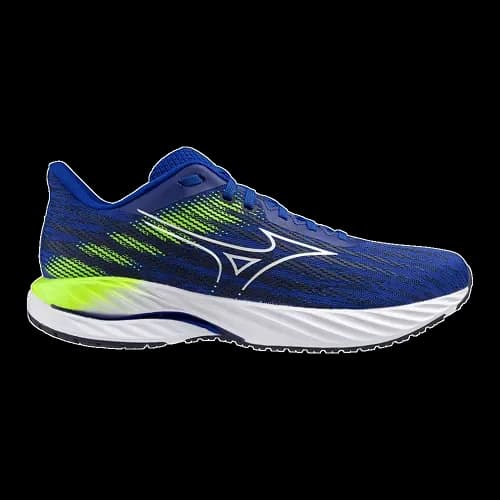 Mizuno Wave Inspire 21 Mizuno Wave Inspire 21 | 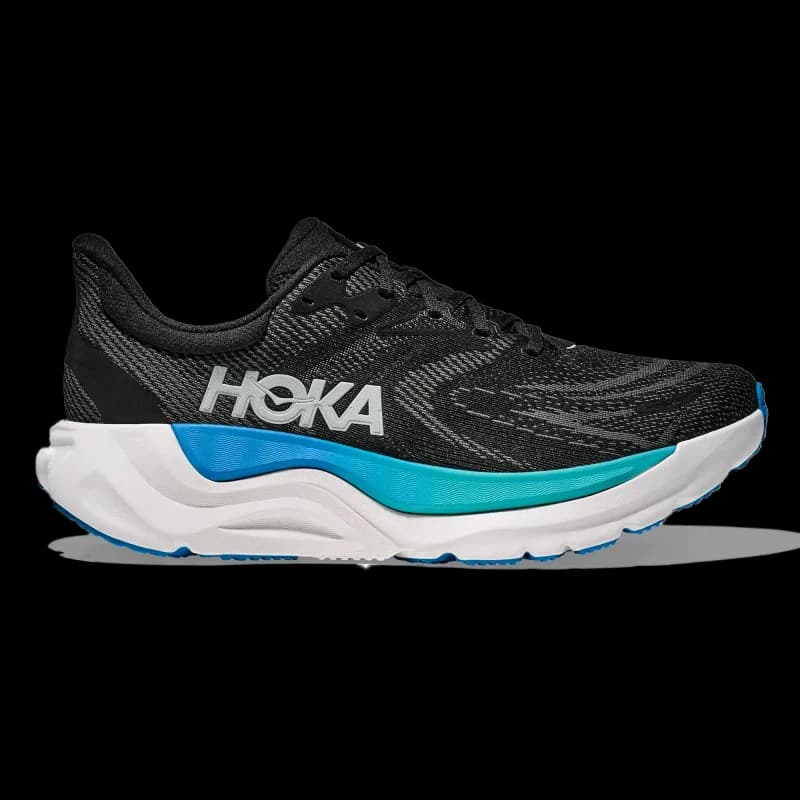 Hoka Arahi 8 Hoka Arahi 8 | 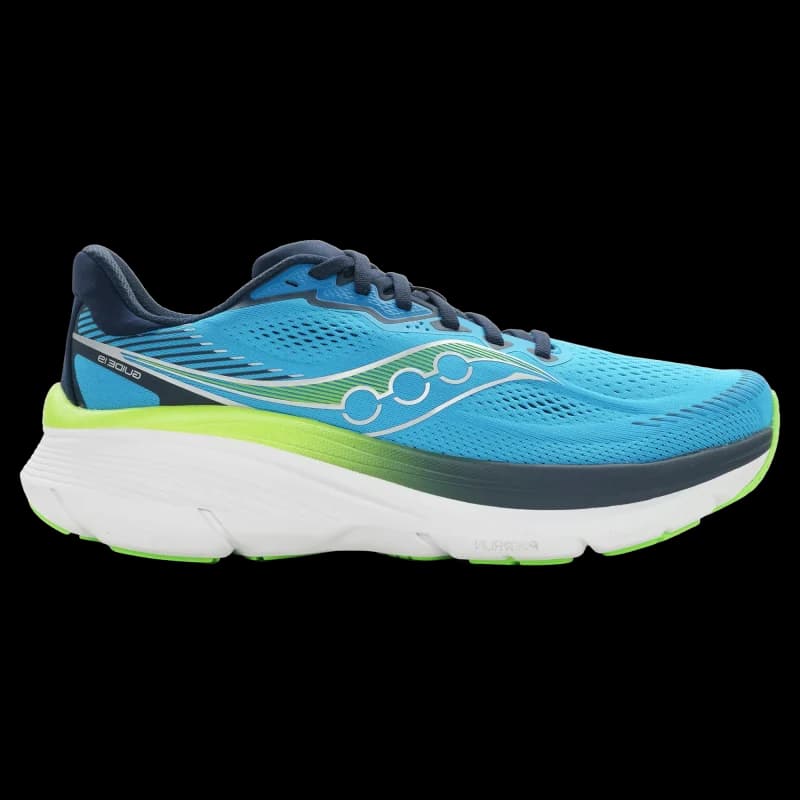 Saucony Guide 19 Saucony Guide 19 | 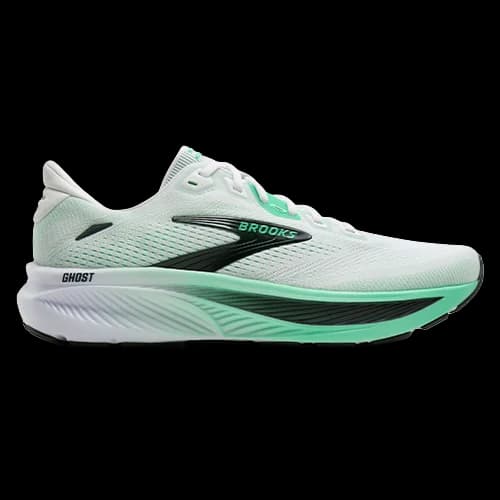 Brooks Ghost 18 Brooks Ghost 18 | |
|---|---|---|---|---|---|
| Pick it for | This page | Higher drop | Lighter | Lower drop | Less stable |
| Drop | 10 mm | 12 mm | 8 mm | 6 mm | 10 mm |
| Heel stack | 37 mm | 38 mm | 41 mm | 37 mm | 36 mm |
| Weight | 301 g | 292 g | 264 g | 258 g | 289 g |
| Support | Stability | Stability | Stability | Stability | Neutral |
Questions runners ask
What is the difference between the Adrenaline GTS 24 and GTS 25?
The GTS 25 lowers the drop from 12 to 10 mm, adds DNA Loft v3 foam and gets a proper heel bevel for a smoother landing. RunRepeat measured softer foam and better grip, with a little more weight. The GuideRails support is unchanged.
Does the Adrenaline GTS 25 fit true to size?
Yes. Doctors of Running, RunRepeat and Fleet Feet all report a true-to-size fit. The toe box tapers slightly and the counter at the back is stiff and padded, so try it on first if that area is sensitive.
Is the Adrenaline GTS 25 available in wide and extra wide?
RunRepeat list narrow, normal, wide and extra wide. Availability varies by country and retailer, so check the exact width before you settle on a size.
Is the Adrenaline GTS 25 good for flat feet?
Flat feet do not always mean the foot rolls in when you run. If yours does, the Adrenaline’s GuideRails and medial post guide the heel and midfoot. It is a comfort and guidance shoe, not a treatment, so persistent pain is a matter for a health professional.
Adrenaline GTS 25 or Ghost 18?
Both are Brooks daily trainers with a 10 mm drop. Choose the Adrenaline if your foot rolls in and you want guidance; choose the Ghost 18 if your stride is neutral and you would rather not carry the extra structure.
Is the Adrenaline GTS 25 good for walking?
Yes. Doctors of Running and Fleet Feet both recommend it for walking, and its steady ride and durable outsole suit long days on your feet.
Sources
- Doctors of Running, Brooks Adrenaline GTS 25 Review (Matt Klein, September 2025). Accessed Oct 9, 2026.
- RunRepeat, Brooks Adrenaline GTS 25 lab review. Accessed Oct 9, 2026.
- Believe in the Run, Brooks Adrenaline GTS 25 Review (May 2025). Accessed Oct 9, 2026.
- Fleet Feet, Brooks Adrenaline GTS 25 Review: The Anniversary Edition. Accessed Oct 9, 2026.
- Strideprint, Strideprint running shoe catalogue (ranks computed on 2026-10-11). Accessed Oct 11, 2026.
- brooksrunning.com · Drop, Weight, US M9, Support, Plate, and Surface, listed
- cat: Strideprint catalogue, 395 shoes
How we review. We read published tests, brand and retailer pages and lab measurements, cross-check the figures and flag where they disagree. We did not test this shoe ourselves. Last updated October 12, 2026.