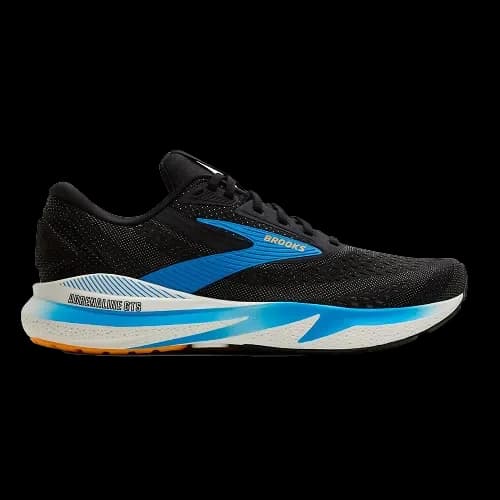
Brooks Adrenaline GTS 24 review
Brooks’s best-known stability shoe: GuideRails, a 12 mm drop and a firmer, protective ride for daily miles, with a much smoother heel than before.
- Drop
- 12 mm
- Heel stack
- 39 mm
- Forefoot
- 27 mm
- Weight
- 284 g
- Support
- Stability
- Plate
- None
Our verdict
Support you stop noticing.
The Adrenaline GTS 24 is a steady, high-drop daily trainer that guides the heel and midfoot without feeling like a correction. It fits heel strikers who roll in a little or a lot, and it suits midfoot or forefoot strikers far less, mostly because of that steep drop.
Strong points
- GuideRails and a medial post steady the heel and midfoot
- Smoothest heel transition of recent Adrenalines
- Narrow to extra-wide versions
- Built for daily mileage, with above-average expected durability
Weak points
- Very high drop, a poor match for midfoot and forefoot strikers
- Cushioned but slightly firm, not plush
- Late forefoot rocker, no reward for speed
- Stiff heel counter
Who it fits
- Heel strikers who roll in
- Runners who like a high drop
- Daily miles at easy and steady paces
- Feet that need a specific width
Who should skip it
- Midfoot and forefoot strikers
- Runners who want plush
- Speed sessions
- A sensitive back of the foot
Shoe profile
Where the Adrenaline GTS 24 sits among the 395 shoes in our catalogue, and what changed from the Adrenaline GTS 23.
| Axis | Adrenaline GTS 24 | Adrenaline GTS 23 | Change |
|---|---|---|---|
| Cushioning | 52 | 24 | +28 |
| Lightness | 26 | 24 | +2 |
| Stability | 85 | 85 | = |
| Drop | 98 | 98 | = |
| Response | 6 | 6 | = |
Fig. 1 · How to read it. Each axis runs from 0 at the centre to 100 at the edge. Cushioning, lightness and drop are the shoe’s rank in the catalogue from listed figures; stability and response are scored from the support type, the plate, the rocker and the intended use. The dotted grey line is the catalogue median. Source: Strideprint catalogue (cat).
Where it sits in the catalogue
Weight283.5 g, heavier than 74% of shoes
Drop12 mm, higher than 98% of shoes
Heel stack39 mm, higher than 52% of shoes
Forefoot stack27 mm, lower than 78% of shoes
How it feels
Written from 2 published tests. We quote measurements, not impressions we did not have.
Protective, a touch firm. Protective, slightly firm DNA Loft v3, 39 mm heel and 27 mm forefoot stack: more cushioned than earlier Adrenalines, but stable rather than soft.
Guided at the heel, free at the toes. GuideRails and a medial post guide heel and midfoot, with a near-neutral forefoot: good when the foot rolls in early in the stride.
Smooth, not snappy. Smooth rather than snappy: the new heel bevel gives a very smooth transition, but the forefoot rocker comes late, so it suits steady paces.
Protective, a touch firm. The midsole is Brooks’s nitrogen-infused DNA Loft v3. Doctors of Running calls the result cushioned but slightly firm and more shock-absorbing than responsive, an improvement on earlier Adrenalines that still leans stable rather than soft.
There is more of it than before. RunRepeat measured a 39.0 mm heel against 34.1 mm on the GTS 23, and Doctors of Running lists a stack height of 39 mm at the heel and 27 mm at the forefoot. That ranks ninth for heel height among the 40 road stability shoes in our catalogue.
Guided at the heel, free at the toes. Brooks combines GuideRails, raised foam sidewalls on the medial and lateral sides, with a medial post: a denser section of foam running from the heel into the midfoot, which Doctors of Running and RunRepeat both describe. Doctors of Running note that few mainstream brands still use one. Doctors of Running feel a stiff, centered heel and midfoot and a forefoot that is borderline neutral.
That makes it a good match when the inward roll happens early in the stride, right after the foot lands. Fleet Feet notes Brooks positions it for both overpronators and neutral runners who want extra steadiness.
Smooth, not snappy. The headline change is a new bevel at the outside of the heel. Doctors of Running calls the heel transitions the smoothest of any recent Adrenaline and says the 12 mm drop feels much lower than it is.
Toe-off is less inspired: the forefoot rocker comes late, so the shoe rolls well at steady paces but does not reward pushing. At 283 g in a men’s US 9, it is neither heavy nor light for its category.
Read more
Protective, a touch firm. The midsole is Brooks’s nitrogen-infused DNA Loft v3. Doctors of Running calls the result cushioned but slightly firm and more shock-absorbing than responsive, an improvement on earlier Adrenalines that still leans stable rather than soft.
There is more of it than before. RunRepeat measured a 39.0 mm heel against 34.1 mm on the GTS 23, and Doctors of Running lists a stack height of 39 mm at the heel and 27 mm at the forefoot. That ranks ninth for heel height among the 40 road stability shoes in our catalogue.
Guided at the heel, free at the toes. Brooks combines GuideRails, raised foam sidewalls on the medial and lateral sides, with a medial post: a denser section of foam running from the heel into the midfoot, which Doctors of Running and RunRepeat both describe. Doctors of Running note that few mainstream brands still use one. Doctors of Running feel a stiff, centered heel and midfoot and a forefoot that is borderline neutral.
That makes it a good match when the inward roll happens early in the stride, right after the foot lands. Fleet Feet notes Brooks positions it for both overpronators and neutral runners who want extra steadiness.
Smooth, not snappy. The headline change is a new bevel at the outside of the heel. Doctors of Running calls the heel transitions the smoothest of any recent Adrenaline and says the 12 mm drop feels much lower than it is.
Toe-off is less inspired: the forefoot rocker comes late, so the shoe rolls well at steady paces but does not reward pushing. At 283 g in a men’s US 9, it is neither heavy nor light for its category.
Which runs it’s for
| Run | Fit | Why | Source |
|---|---|---|---|
| Easy runs | Made for it | Built as a daily stability trainer for easy and steady paces. | Doctors of Running |
| Long runs | Can do | Durable and steady, but firm; Doctors of Running would not pick it for maximum cushioning over long distances. | Doctors of Running, RunRepeat |
| Walking | Made for it | Doctors of Running lists walkers among its best users. | Doctors of Running |
| Tempo | Not for it | The forefoot rocker comes a little late for faster running. | Doctors of Running |
| Intervals | Not for it | Too heavy and heel-focused for quick turnover. | Doctors of Running |
Source: Doctors of Running, RunRepeat
What the tests say
Doctors of Running and RunRepeat agree the Adrenaline GTS 24 is a steady, slightly firm, high-drop trainer for heel strikers who want support every day.
| Test | Type | Our reading | In one sentence | Source |
|---|---|---|---|---|
| Doctors of Running | Review | Positive | Doctors of Running call it one of the best-transitioning Adrenalines in a long time, despite a low-volume fit that needs careful lacing. | Read |
| RunRepeat | Lab | Positive | RunRepeat scores it 85 out of 100 and sees a solid stability shoe for heel strikers, even if the midsole feels firm. | Read |
They agree
- Made for heel strikersDoctors of Running centre its support at the heel and midfoot, and RunRepeat names heel strikers who need reliable support as the runners it suits best.
- Cushioned but slightly firmDoctors of Running describe DNA Loft v3 as cushioned but slightly firm, and RunRepeat’s durometer reading backs that up.
- Built to lastBoth expect above-average durability for daily mileage.
- A stiff heel counterBoth flag a stiff counter, worth trying on if a firm cup bothers you.
They split
- How the drop feelsRunRepeat measured 13.5 mm and warns it may be a dealbreaker for midfoot and forefoot strikers, while Doctors of Running found the new heel bevel makes the 12 mm drop feel much lower.
How it’s built
A posted stability build: a DNA Loft v3 midsole with GuideRails and a medial post, a thick rubber outsole and a multi-layer engineered mesh upper.
A posted stability build: a DNA Loft v3 midsole with GuideRails and a medial post, a 4.0 mm rubber outsole and a multi-layer engineered mesh upper with a non-gusseted tongue.
| # | Part | Measure |
|---|---|---|
| 1 | UpperEngineered mesh | Breathability 4 / 5 |
| 2 | Tongue | 9.1 mm |
| 3 | Heel | Stiffness 4 / 5 |
| 4 | MidsoleDNA Loft v3, GuideRails and medial post | 44.1 AC |
| 5 | Insole | 5.0 mm |
| 6 | Outsole | 4.0 mm |
Fig. 3 · Side profile. Stack heights to scale (listed: 39 mm heel, 27 mm forefoot; measured: 4 mm outsole); the split between the two foams is not measured and is drawn at mid-height. Dashed: insole, hidden. Sources: runningwarehouse.com, Doctors of Running, RunRepeat, Fleet Feet.
Upper. Several layers of engineered mesh with oversized ventilation holes, partly backed for comfort and longevity according to RunRepeat. The upper fits securely with a little stretch, but Doctors of Running found the volume low and the midfoot hard to lock down.
Tongue. Moderately thick and plush, which helps against lace bite, but it moves from semi-gusseted on the GTS 23 to non-gusseted. RunRepeat call that a downgrade despite the dual tongue loops, and Doctors of Running needed a lace lock to secure the midfoot.
Heel. RunRepeat rated the heel counter 4 out of 5 for stiffness, a common choice in shoes built for heel strikers. A new bevel at the back outer edge of the heel smooths the landing.
Midsole. Fleet Feet present it as the first Adrenaline with nitrogen-infused DNA Loft v3, an EVA-based foam that RunRepeat measured at 44.1 AC, on the firm side, with 54.6 percent energy return. A section of firmer foam forms the medial post, and GuideRails raise the midsole walls on both sides.
Insole. Removable and 5.0 mm thick, slightly thicker than in most stability shoes RunRepeat has tested.
Outsole. Redesigned with slightly less rubber while still covering the main impact zones, with several flex grooves that keep the forefoot flexible. RunRepeat measured a 4.0 mm rubber layer, and Doctors of Running found the grip good on wet roads and smooth trails.
Read more
A posted stability build: a DNA Loft v3 midsole with GuideRails and a medial post, a thick rubber outsole and a multi-layer engineered mesh upper.
1. Upper. Several layers of engineered mesh with oversized ventilation holes, partly backed for comfort and longevity according to RunRepeat. The upper fits securely with a little stretch, but Doctors of Running found the volume low and the midfoot hard to lock down.
2. Tongue. Moderately thick and plush, which helps against lace bite, but it moves from semi-gusseted on the GTS 23 to non-gusseted. RunRepeat call that a downgrade despite the dual tongue loops, and Doctors of Running needed a lace lock to secure the midfoot.
3. Heel. RunRepeat rated the heel counter 4 out of 5 for stiffness, a common choice in shoes built for heel strikers. A new bevel at the back outer edge of the heel smooths the landing.
4. Midsole. Fleet Feet present it as the first Adrenaline with nitrogen-infused DNA Loft v3, an EVA-based foam that RunRepeat measured at 44.1 AC, on the firm side, with 54.6 percent energy return. A section of firmer foam forms the medial post, and GuideRails raise the midsole walls on both sides.
5. Insole. Removable and 5.0 mm thick, slightly thicker than in most stability shoes RunRepeat has tested.
6. Outsole. Redesigned with slightly less rubber while still covering the main impact zones, with several flex grooves that keep the forefoot flexible. RunRepeat measured a 4.0 mm rubber layer, and Doctors of Running found the grip good on wet roads and smooth trails.
Durability. Above average. RunRepeat measured just 0.8 mm of outsole wear and scored the heel padding 4 out of 5 and the ventilated toe box 3 out of 5. Doctors of Running saw no major outsole wear after 40 miles and expect more miles than from a typical trainer.
Durability. Above average. RunRepeat measured just 0.8 mm of outsole wear and scored the heel padding 4 out of 5 and the ventilated toe box 3 out of 5. Doctors of Running saw no major outsole wear after 40 miles and expect more miles than from a typical trainer.
Specs, listed and measured
Every figure carries its source.
Drop, mm
Heel stack, mm
Forefoot stack, mm
Weight (men’s), g
| Spec | Listed | Measured |
|---|---|---|
| Drop |
|
|
| Heel stack |
|
|
| Forefoot stack |
|
|
| Weight, US M9 |
|
|
| Support |
| – |
| Plate |
| – |
| Surface |
| – |
| Release year |
| – |
Fig. 4 · Listed vs measured. Bars start at zero. Sources: Fleet Feet, RunRepeat, Doctors of Running.
Lab measurements
| Spec | Measured |
|---|---|
| Midsole hardness |
|
| Torsional rigidity |
|
| Heel counter stiffness |
|
| Traction coefficient |
|
| Breathability |
|
| Toe box width |
|
| Spec | Measured |
|---|---|
| Toe box height |
|
| Outsole thickness |
|
| Insole thickness |
|
| Tongue thickness |
|
| Flex force |
|
Sizing and fit
Take your usual size, but lace it snug: the low-volume toe box can let the foot slide forward.
Length
True to size
Widths
standard, wide, and extra wide
Toe room
Toe room is modest. Doctors of Running find the toe box slightly tapered and low in volume, so the shoe feels short until laced, and RunRepeat measured 73.7 mm wide and 25.4 mm high.
Doctors of Running, RunRepeat
Full sizing notes from testers
Doctors of Running found it mostly true to size, running slightly short because of the lower volume. The forefoot tapers at first before opening into a slightly wide area under the ball of the foot. RunRepeat measured 73.7 mm across the toe box.
The tongue is not gusseted, and Doctors of Running needed a heel-lock (lace lock) lacing to stop the foot sliding forward. If you have long toes or sit between sizes, try a half size up.
The width range is the strength here: narrow, standard, wide (2E) and extra-wide (4E) for men, according to Fleet Feet.
Doctors of Running, RunRepeat, Fleet Feet
Vs Adrenaline GTS 23
More foam, a newer DNA Loft v3 midsole and a reshaped heel make the GTS 24 noticeably smoother than the GTS 23, with the same GuideRails support.
| Adrenaline GTS 24 | Adrenaline GTS 23 | |
|---|---|---|
| Support | Stability | Stability |
| Drop | 12 mm | 12 mm |
| Heel stack | 39 mm | 36 mm |
| Forefoot | 27 mm | 24 mm |
| Weight | 284 g | 286 g |
If you prefer feeling closer to the road, the lower GTS 23 is the more grounded of the two.
Listed figures. Source: Strideprint catalogue (cat).
Version history: Adrenaline GTS 23 to Adrenaline GTS 24
Nitrogen-infused DNA Loft v3 foam. Brooks upgraded the midsole to its newer DNA Loft v3, with a recycled RoadTack rubber outsole. (Fleet Feet)
Taller stack. RunRepeat measured the heel at 39.0 mm, up from 34.1 mm on the GTS 23. (RunRepeat)
Bevelled heel. A new bevel at the outside of the heel smooths the landing, so the 12 mm drop feels lower. (Doctors of Running)
Slightly heavier. RunRepeat weighed 291 g against 286 g for the GTS 23, a difference you will hardly feel. (RunRepeat)
Alternatives compared
Each one fixes one thing the Adrenaline GTS 24 does not do.
| Brooks Adrenaline GTS 24 | 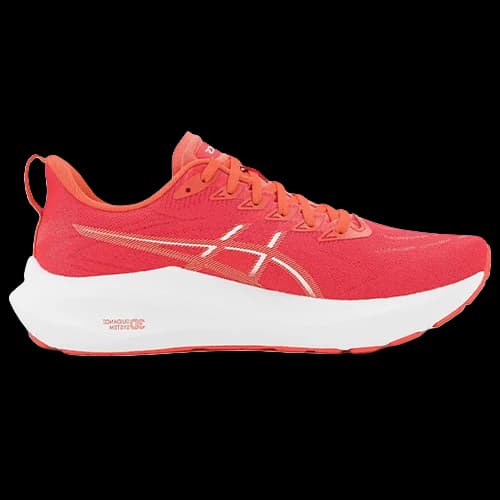 ASICS GT-2000 13 ASICS GT-2000 13 | 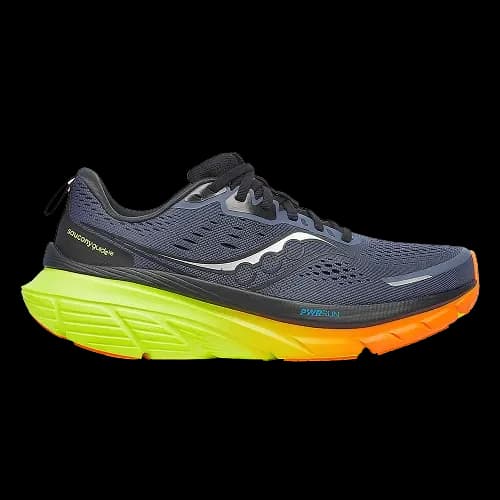 Saucony Guide 18 Saucony Guide 18 | 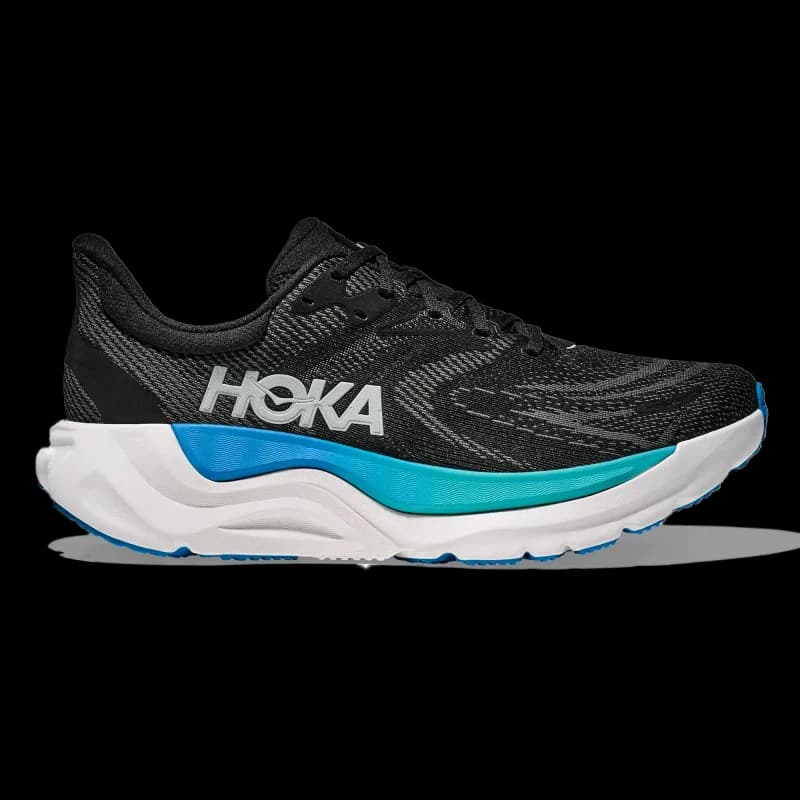 Hoka Arahi 8 Hoka Arahi 8 | 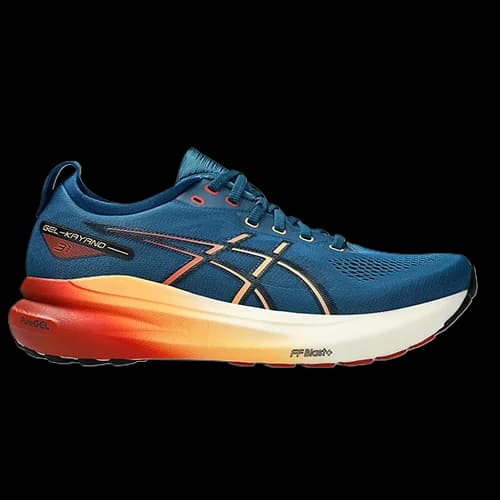 ASICS Gel-Kayano 31 ASICS Gel-Kayano 31 | |
|---|---|---|---|---|---|
| Pick it for | This page | Lower drop | Lower drop | More cushion | More cushion |
| Drop | 12 mm | 8 mm | 6 mm | 8 mm | 10 mm |
| Heel stack | 39 mm | 36.5 mm | 35 mm | 41 mm | 40 mm |
| Weight | 284 g | 275 g | 272 g | 264 g | 305 g |
| Support | Stability | Stability | Stability | Stability | Stability |
Questions runners ask
Is the Brooks Adrenaline GTS 24 good for overpronation?
The Adrenaline GTS 24 is built for runners who roll in. It pairs GuideRails, raised sidewalls on both sides, with a medial post of firmer foam from the heel into the midfoot. Doctors of Running rates its stability moderate to high, focused on the heel and midfoot. It works best when the inward roll follows a heel landing. Shoes guide movement, they do not correct it.
Does the Adrenaline GTS 24 run true to size?
Mostly. Doctors of Running found it close to true size but slightly short, because the toe box has low volume. Snug lacing or a heel lock keeps the foot from sliding. Men can choose narrow, standard, wide (2E) or extra-wide (4E).
What changed between the Adrenaline GTS 23 and GTS 24?
The GTS 24 moves to nitrogen-infused DNA Loft v3 foam, gains stack (RunRepeat measured 39.0 mm at the heel against 34.1 mm) and adds a bevel at the outer heel. Reviewers find the landing much smoother. GuideRails support and the 12 mm drop stay.
What is the drop and stack height of the Adrenaline GTS 24?
The listed drop is 12 mm. Doctors of Running gives 39 mm at the heel and 27 mm at the forefoot, and RunRepeat measured 39.0 mm and 25.5 mm, a 13.5 mm drop. Some retailers still list lower figures, so trust lab and review measurements.
Is the Adrenaline GTS 24 good for flat feet?
Arch shape alone does not decide the shoe. What matters is how your foot moves once it lands. The Adrenaline GTS 24 guides an inward roll after a heel landing, so it helps if that is what your stride does, flat feet or not. A fitting looks at the movement, not the arch.
Sources
- Doctors of Running, Brooks Adrenaline GTS 24 Review (2024): A Big Improvement. Accessed Oct 9, 2026.
- RunRepeat, Cut in half: Brooks Adrenaline GTS 24 Review. Accessed Oct 9, 2026.
- Fleet Feet, Men’s Brooks Adrenaline GTS 24. Accessed Oct 9, 2026.
- Strideprint, Strideprint running shoe catalogue (ranks computed on 2026-10-11). Accessed Oct 11, 2026.
- brooksrunning.com · Drop, Weight, US M9, Support, Plate, and Surface, listed
- runningwarehouse.com · Heel stack and Forefoot stack, listed
- roadtrailrun.com · Release year, listed
- cat: Strideprint catalogue, 395 shoes
How we review. We read published tests, brand and retailer pages and lab measurements, cross-check the figures and flag where they disagree. We did not test this shoe ourselves. Last updated October 13, 2026.