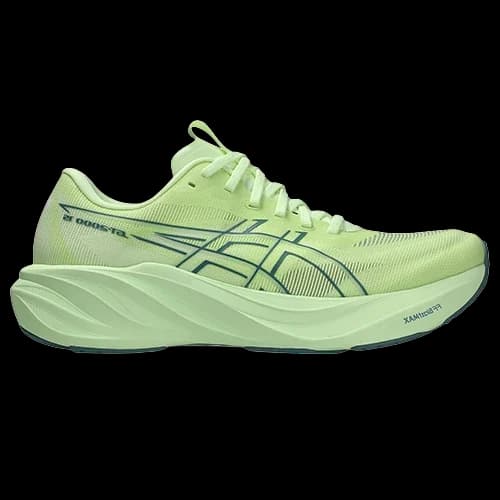
ASICS GT-2000 15 review
ASICS’s everyday stability shoe gets softer foam, a lighter upper and a fixed heel, and reviewers who disliked the 14 have changed their minds.
- Drop
- 8 mm
- Heel stack
- 38 mm
- Forefoot
- 30 mm
- Weight
- 249 g
- Support
- Stability
- Plate
- None
Our verdict
Light guidance, more life.
The GT-2000 15 is a moderate-stability daily trainer that is lighter, livelier and more flexible than the 14, on a platform reviewers find steady without feeling corrective. It suits runners with a mild inward roll and normal to narrow feet who want one shoe for easy, long and some faster runs.
Strong points
- A clear step up from the GT-2000 14
- Steady guidance that does not feel corrective
- Handles easy, long and uptempo runs
- Three men’s widths: D, 2E and 4E
- Durable outsole and good wet grip in RunRepeat’s test
- Light for a stability shoe: about 252 g, and only 2 of the 37 stability road shoes weighed in a men’s US 9 in our catalogue are lighter
Weak points
- Tapered, low-volume toe box in the standard width
- Stiff heel counter, hard on a sensitive heel
- Support sits on the inner side; little on the outer edge
- Balanced and firm-ish, not plush
Who it fits
- Your foot rolls in a little
- You want one shoe for several paces
- Your feet are normal to narrow
- You land on your heel on long runs
Who should skip it
- Your foot rolls in a lot
- Your forefoot is wide
- Your heel is sensitive at the back
- Your foot rolls outward
Shoe profile
Where the GT-2000 15 sits among the 395 shoes in our catalogue, and what changed from the GT-2000 14.
| Axis | GT-2000 15 | GT-2000 14 | Change |
|---|---|---|---|
| Cushioning | 43 | 31 | +12 |
| Lightness | 64 | 45 | +19 |
| Stability | 85 | 85 | = |
| Drop | 45 | 45 | = |
| Response | 6 | 6 | = |
Fig. 1 · How to read it. Each axis runs from 0 at the centre to 100 at the edge. Cushioning, lightness and drop are the shoe’s rank in the catalogue from listed figures; stability and response are scored from the support type, the plate, the rocker and the intended use. The dotted grey line is the catalogue median. Source: Strideprint catalogue (cat).
Where it sits in the catalogue
Weight249 g, lighter than 63% of shoes
Drop8 mm, higher than 45% of shoes
Heel stack38 mm, lower than 49% of shoes
Forefoot stack30 mm, lower than 56% of shoes
How it feels
Written from 3 published tests. We quote measurements, not impressions we did not have.
Balanced, with a little bounce. A softer FF Blast Max with about 2 mm more foam; RunRepeat measured 30.6 AC, and the ride feels balanced and slightly bouncy.
Guided from the inside. The 3D Guidance System uses raised sidewalls and a flared sole, not a hard post; guidance is mostly on the inner side.
Finally some life. Energy return reaches 63.5 percent in the heel and 67.7 in the forefoot, up from the 14, so it no longer fights you.
Balanced, with a little bounce. ASICS moved to a softer FF Blast Max compound with about 2 mm more foam, and softened the rearfoot gel. RunRepeat lists ASICS’s stack height figures of 38 mm at the heel and 30 mm at the forefoot.
RunRepeat measured the foam at 30.6 on the AC scale, on the soft side of average. Doctors of Running still describe the ride as balanced and slightly bouncy rather than plush: protective without sinking.
Guided from the inside. The 3D Guidance System works through raised sidewalls in the heel and midfoot and a flared sole, with no hard medial post. Doctors of Running rate the guidance as centred but mostly on the inner side, with little lateral support.
RunRepeat rates the heel counter 4 out of 5 for stiffness. For a mild inward roll this is enough stability; for a marked one, the Kayano does more.
Finally some life. RunRepeat measured energy return of 63.5 percent at the heel and 67.7 percent at the forefoot, up from 56.0 and 57.2 percent on the 14. It also measured a more flexible forefoot, 13.1 N against 15.0 N.
Doctors of Running found it light on the foot for its weight. It is still a trainer, but it no longer fights you when you speed up.
Read more
Balanced, with a little bounce. ASICS moved to a softer FF Blast Max compound with about 2 mm more foam, and softened the rearfoot gel. RunRepeat lists ASICS’s stack height figures of 38 mm at the heel and 30 mm at the forefoot.
RunRepeat measured the foam at 30.6 on the AC scale, on the soft side of average. Doctors of Running still describe the ride as balanced and slightly bouncy rather than plush: protective without sinking.
Guided from the inside. The 3D Guidance System works through raised sidewalls in the heel and midfoot and a flared sole, with no hard medial post. Doctors of Running rate the guidance as centred but mostly on the inner side, with little lateral support.
RunRepeat rates the heel counter 4 out of 5 for stiffness. For a mild inward roll this is enough stability; for a marked one, the Kayano does more.
Finally some life. RunRepeat measured energy return of 63.5 percent at the heel and 67.7 percent at the forefoot, up from 56.0 and 57.2 percent on the 14. It also measured a more flexible forefoot, 13.1 N against 15.0 N.
Doctors of Running found it light on the foot for its weight. It is still a trainer, but it no longer fights you when you speed up.
Which runs it’s for
| Run | Fit | Why | Source |
|---|---|---|---|
| Easy runs | Made for it | Its main job: a dependable stability trainer for daily miles. | Doctors of Running, RunRepeat, Runnea |
| Long runs | Made for it | Doctors of Running and RunRepeat both take it long without complaint. | Doctors of Running, RunRepeat |
| Tempo | Can do | Livelier than most stability shoes. Fine for uptempo work, not a race shoe. | Doctors of Running, RunRepeat |
| Half marathon race | Can do | Runnea lists the 10K and half marathon among its distances. | Runnea |
| Recovery runs | Can do | Comfortable, but firmer than a true recovery shoe. | Doctors of Running, RunRepeat |
Source: Doctors of Running, RunRepeat, Runnea
What the tests say
Reviewers see a clear improvement on the GT-2000 14: lighter, livelier and just as steady. Their reservations are the same everywhere: a narrow toe box and a stiff heel.
| Test | Type | Our reading | In one sentence | Source |
|---|---|---|---|---|
| Doctors of Running | Review | Positive | Doctors of Running grade it A minus or A throughout and see a return to form: lightweight stability with a better heel. | Read |
| RunRepeat | Lab | Positive | RunRepeat scores it 91 out of 100, a huge leap in durability, energy return, weight and traction, though the toe box can feel cramped. | Read |
They agree
- Better than the 14RunRepeat measured more energy return and more flexibility than on the 14, and Doctors of Running found the softer midsole and new heel fix the flaws of the previous version.
- Steady, not correctiveRunRepeat, Doctors of Running and Runnea all describe moderate stability that keeps the foot centred without pushing it.
- A narrow frontRunRepeat measured a toe box below its lab average and Doctors of Running describe a tapered, low-volume fit.
- More than an easy-day shoeBoth Doctors of Running and RunRepeat used it for faster efforts and long runs as well as easy miles.
They split
- How cushioned it feelsRunRepeat stresses how much cushioning it has. Doctors of Running describe a firm, balanced, slightly bouncy ride and say runners who want plush should look elsewhere.
- How far to take itRunRepeat calls it ready for long runs. Runnea sets its range at shorter distances up to the half marathon.
How it’s built
A light stability build: full-length FF BLAST MAX with a softer PureGEL at the rear, the 3D Guidance System shaped into the platform rather than a post, an overlay-free woven upper and generous AHAR rubber.
A light stability build: full-length FF Blast Max with a softer PureGEL at the rear, the 3D Guidance System shaped into the platform, an overlay-free woven upper and a 4.4 mm AHAR rubber outsole.
| # | Part | Measure |
|---|---|---|
| 1 | UpperEngineered woven upper | – |
| 2 | Tongue | 4.7 mm |
| 3 | Heel | Stiffness 4 / 5 |
| 4 | MidsoleFF BLAST MAX, PureGEL and 3D Guidance System | Hardness 30.6 AC |
| 5 | Insole | 4.1 mm |
| 6 | OutsoleAHAR LO, AHARPLUS and Trampoline pod | 4.4 mm |
Fig. 3 · Side profile. Stack heights to scale (listed: 38 mm heel, 30 mm forefoot; measured: 4.4 mm outsole); the split between the two foams is not measured and is drawn at mid-height. Dashed: insole, hidden. Sources: RunRepeat, Doctors of Running, Fleet Feet.
Upper. A new engineered woven upper with no added overlays, plus reflective details, according to Fleet Feet. Doctors of Running found it low in volume and snug, with a comfortable inner lining but a harsh toe guard. RunRepeat counts six eyelets a side plus an extra one for alternative lacing.
Tongue. Fully perforated and nearly paper thin, with 4.7 mm of padding only where the laces are tied and an overlay that keeps it centred, in RunRepeat’s teardown.
Heel. A stiff counter, 4 out of 5 for RunRepeat and “insanely stiff” for Doctors of Running, who still find pressure on the heel bone. A deeper split in the Achilles tab now lets the tendon pass more freely than on the 14. There is no finger-loop tab.
Midsole. A softer FF BLAST MAX compound with 2 mm more foam than the 14, measured at 30.6 AC, and only 13 percent firmer after 20 minutes in RunRepeat’s freezer. Fleet Feet describe the rear PureGEL as about 65 percent softer than standard GEL. The 3D Guidance System is built into the geometry: a wider base, raised edges at the heel and midfoot and sole flare, mostly on the inner side.
Insole. Removable and 4.1 mm thick, a standard figure in RunRepeat’s measurement.
Outsole. A Novablast-inspired layout with generous rubber under the arch and a Trampoline pod under the forefoot, AHARPLUS at the heel and AHAR LO elsewhere. The rubber is a thick 4.4 mm and its wet traction reached 0.99 on concrete in RunRepeat’s test; Doctors of Running found it fine, if not the grippiest, on wet roads.
Read more
A light stability build: full-length FF BLAST MAX with a softer PureGEL at the rear, the 3D Guidance System shaped into the platform rather than a post, an overlay-free woven upper and generous AHAR rubber.
1. Upper. A new engineered woven upper with no added overlays, plus reflective details, according to Fleet Feet. Doctors of Running found it low in volume and snug, with a comfortable inner lining but a harsh toe guard. RunRepeat counts six eyelets a side plus an extra one for alternative lacing.
2. Tongue. Fully perforated and nearly paper thin, with 4.7 mm of padding only where the laces are tied and an overlay that keeps it centred, in RunRepeat’s teardown.
3. Heel. A stiff counter, 4 out of 5 for RunRepeat and “insanely stiff” for Doctors of Running, who still find pressure on the heel bone. A deeper split in the Achilles tab now lets the tendon pass more freely than on the 14. There is no finger-loop tab.
4. Midsole. A softer FF BLAST MAX compound with 2 mm more foam than the 14, measured at 30.6 AC, and only 13 percent firmer after 20 minutes in RunRepeat’s freezer. Fleet Feet describe the rear PureGEL as about 65 percent softer than standard GEL. The 3D Guidance System is built into the geometry: a wider base, raised edges at the heel and midfoot and sole flare, mostly on the inner side.
5. Insole. Removable and 4.1 mm thick, a standard figure in RunRepeat’s measurement.
6. Outsole. A Novablast-inspired layout with generous rubber under the arch and a Trampoline pod under the forefoot, AHARPLUS at the heel and AHAR LO elsewhere. The rubber is a thick 4.4 mm and its wet traction reached 0.99 on concrete in RunRepeat’s test; Doctors of Running found it fine, if not the grippiest, on wet roads.
Durability. Exceptional in the lab. RunRepeat measured only 0.4 mm of outsole wear, against a 1.1 mm average, and scored the toe box 4 out of 5 and the heel lining 5 out of 5. Doctors of Running expect high durability overall, with the midsole likely to outlast the exposed areas of the outsole.
Durability. Exceptional in the lab. RunRepeat measured only 0.4 mm of outsole wear, against a 1.1 mm average, and scored the toe box 4 out of 5 and the heel lining 5 out of 5. Doctors of Running expect high durability overall, with the midsole likely to outlast the exposed areas of the outsole.
Specs, listed and measured
Every figure carries its source.
Drop, mm
Heel stack, mm
Forefoot stack, mm
Weight (men’s), g
| Spec | Listed | Measured |
|---|---|---|
| Drop |
|
|
| Heel stack |
|
|
| Forefoot stack |
|
|
| Weight, US M9 |
|
|
| Support |
| – |
| Plate |
| – |
| Surface |
| – |
| Release year |
| – |
Fig. 4 · Listed vs measured. Bars start at zero. Sources: RunRepeat, Fleet Feet, Doctors of Running.
Lab measurements
| Spec | Measured |
|---|---|
| Midsole hardness |
|
| Torsional rigidity |
|
| Energy return (heel) |
|
| Heel counter stiffness |
|
| Traction coefficient |
|
| Toe box width |
|
| Spec | Measured |
|---|---|
| Toe box height |
|
| Outsole thickness |
|
| Insole thickness |
|
| Tongue thickness |
|
| Flex force |
|
Sizing and fit
Take your usual size; choose the width carefully, because the standard toe box is narrow.
Length
True to size
Widths
standard, wide, and extra wide
Toe room
The front is the weak point. RunRepeat measured a 71.3 mm toe box, 24.7 mm high and narrower than its lab average, and Doctors of Running describe a tapered, low-volume forefoot, though one tester found the fit suited after relacing.
Doctors of Running, RunRepeat
Full sizing notes from testers
Doctors of Running and RunRepeat, backed by its readers’ sizing votes, both call it true to size.
The front is the issue. RunRepeat measured the toe box at 71.3 mm, below its lab average, and Doctors of Running describe a tapered, low-volume fit, especially in height. A new split in the Achilles tab gives the tendon more room.
Fleet Feet, RunRepeat and Doctors of Running list D, 2E and 4E widths for men. Wider versions are not always stocked in Europe, so check before you settle on a size.
Doctors of Running, RunRepeat, Fleet Feet
Vs GT-2000 14
The update the 14 needed: softer, livelier foam, a lighter upper and a heel that no longer gets in the way.
| GT-2000 15 | GT-2000 14 | |
|---|---|---|
| Support | Stability | Stability |
| Drop | 8 mm | 8 mm |
| Heel stack | 38 mm | 36.5 mm |
| Forefoot | 30 mm | 28.5 mm |
| Weight | 249 g | 269 g |
There are few reasons to stay with the GT-2000 14: reviewers found the 15 better on nearly every count. Keep the 14 only if it already fits you well and you run mostly easy miles; move to the 15 if the 14 felt flat or its heel bothered you.
Listed figures. Source: Strideprint catalogue (cat).
Version history: GT-2000 14 to GT-2000 15
Softer foam, more of it. A softer FF Blast Max compound with about 2 mm extra cushioning, and a softer heel gel. (Fleet Feet)
Livelier and more flexible. RunRepeat measured clearly higher energy return and a more flexible forefoot than on the 14. (RunRepeat)
Reworked heel. Doctors of Running disliked the 14’s heel flare; the 15 improves the heel and splits the Achilles tab. (Doctors of Running)
Lighter upper. An engineered woven upper without overlays saves weight. (Fleet Feet)
Alternatives compared
Each one fixes one thing the GT-2000 15 does not do.
| ASICS GT-2000 15 | 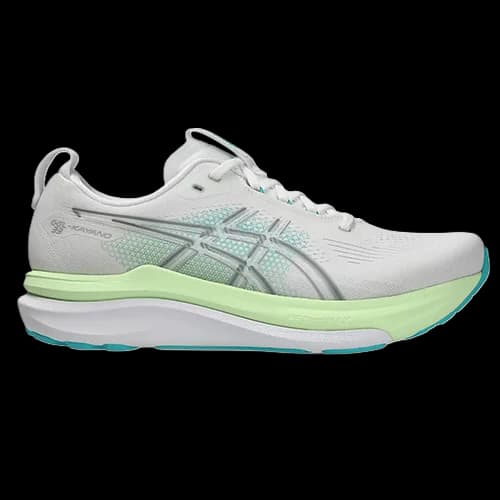 ASICS Gel-Kayano 33 ASICS Gel-Kayano 33 | 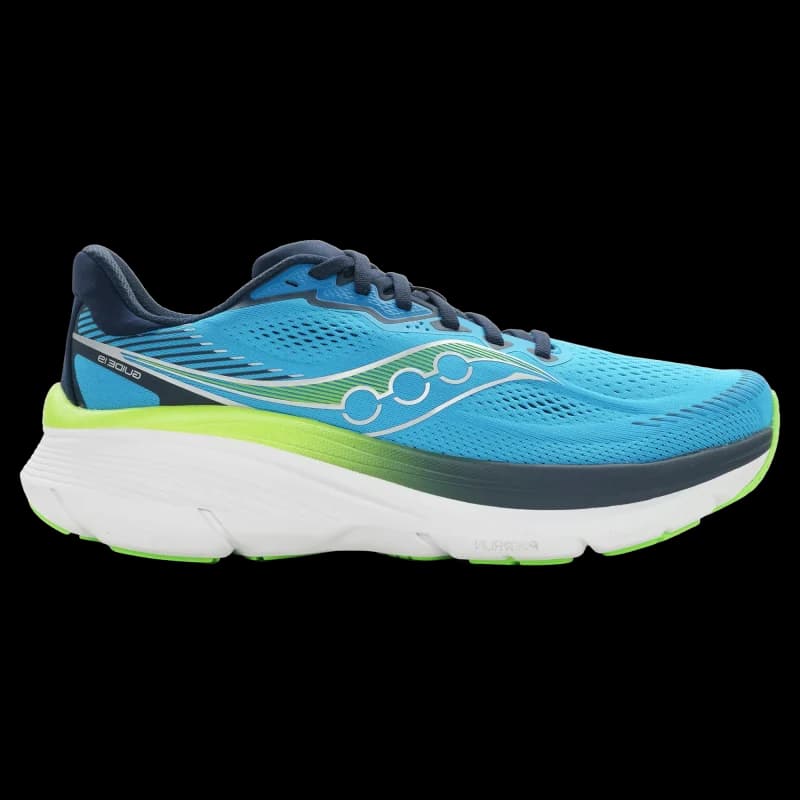 Saucony Guide 19 Saucony Guide 19 | 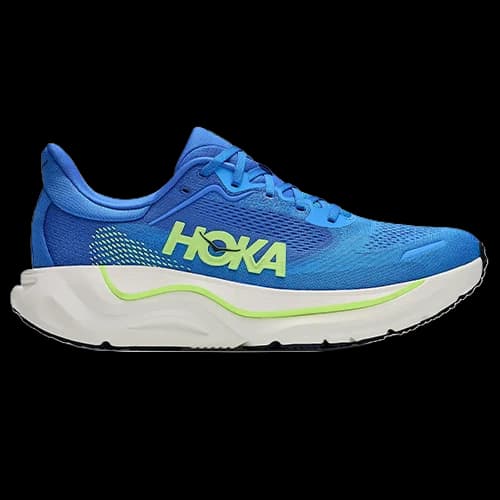 Hoka Arahi 9 Hoka Arahi 9 | 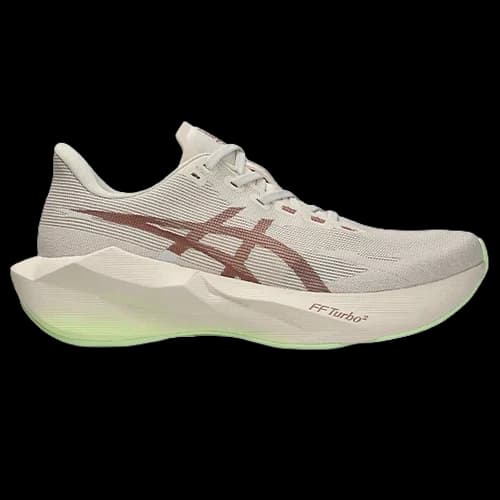 ASICS Novablast 6 ASICS Novablast 6 | |
|---|---|---|---|---|---|
| Pick it for | This page | More stable | Lower drop | More cushion | Less stable |
| Drop | 8 mm | 8 mm | 6 mm | 8 mm | 8 mm |
| Heel stack | 38 mm | 39 mm | 37 mm | 41 mm | 41.5 mm |
| Weight | 249 g | 298 g | 258 g | 275 g | 249 g |
| Support | Stability | Stability | Stability | Stability | Neutral |
Questions runners ask
What is the difference between the GT-2000 14 and GT-2000 15?
The GT-2000 15 has softer FF Blast Max foam with about 2 mm more cushioning, a softer heel gel, a lighter overlay-free upper and a reworked heel with a split Achilles tab. RunRepeat measured more energy return and more flexibility than on the 14.
GT-2000 15 or Gel-Kayano 33: which should I choose?
Choose the GT-2000 15 for a mild inward roll and a lighter, livelier shoe that handles faster runs. Choose the Gel-Kayano 33 if your foot rolls in more: RunRepeat recommends the Kayano for runners who need maximum support.
Does the GT-2000 15 fit true to size?
Yes. Doctors of Running and RunRepeat both call it true to size. The toe box is tapered and low in volume, so runners with wide feet should look at the 2E or 4E versions.
Is the GT-2000 15 available in wide?
Yes. Fleet Feet, RunRepeat and Doctors of Running list D, 2E and 4E widths for men. Availability of the wider versions varies in Europe.
Is the GT-2000 15 good for flat feet or overpronation?
The GT-2000 15 offers moderate guidance, suited to a mild inward roll. For a marked one, RunRepeat suggests the Kayano 33. Flat feet do not always mean overpronation, so check how your foot actually moves before choosing. It is a stability shoe, not a treatment.
Can you run a marathon in the GT-2000 15?
Reviewers are split on distance. RunRepeat calls it ready for long runs and Doctors of Running use it for long efforts, while Runnea sets its range up to the half marathon. For a comfort-first marathon with a mild inward roll, it is a reasonable choice.
Sources
- Doctors of Running, ASICS GT-2000 15 Review (Matt Klein, Bach Pham, August 2026). Accessed Oct 9, 2026.
- RunRepeat, ASICS GT 2000 15 lab review. Accessed Oct 9, 2026.
- Runnea, ASICS GT 2000 15 review. Accessed Oct 9, 2026.
- Fleet Feet, Men’s ASICS GT-2000 15. Accessed Oct 9, 2026.
- Strideprint, Strideprint running shoe catalogue (ranks computed on 2026-10-11). Accessed Oct 11, 2026.
- i-run.fr · Release year, listed
- cat: Strideprint catalogue, 395 shoes
How we review. We read published tests, brand and retailer pages and lab measurements, cross-check the figures and flag where they disagree. We did not test this shoe ourselves. Last updated October 12, 2026.