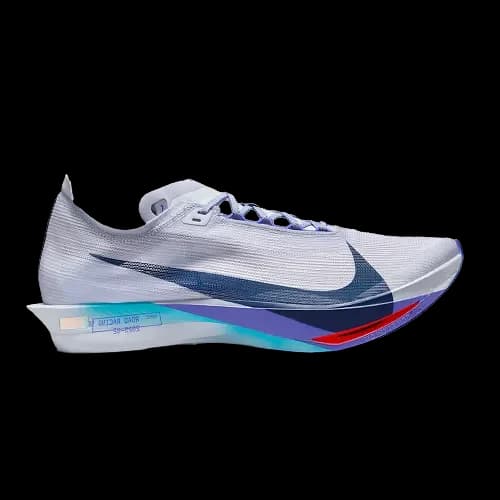
Nike Streakfly 2 review
A track spike for the road: ZoomX, a full carbon plate and 128 g in a men’s US 9. Reviewers love the speed and agree it is built for short races only.
- Drop
- 4 mm
- Heel stack
- 27 mm
- Forefoot
- 23 mm
- Weight
- 128 g
- Support
- Neutral
- Plate
- Carbon
Our verdict
A road spike for short races.
The Streakfly 2 is an ultralight neutral racer that puts ZoomX foam and a full-length carbon plate under a low 27 mm heel, built for races from the mile to 10 km. It suits midfoot and forefoot strikers with narrow feet and conditioned calves, and almost no one as a daily or long-distance shoe.
Strong points
- Ultralight: 128 g in a men’s US 9
- Fast, snappy ride for the mile to 10 km
- Full carbon plate, which the first Streakfly lacked
- Very high energy return: 77.9 percent in RunRepeat’s lab
- Good grip on wet roads and track
Weak points
- Little protection beyond 10 km
- Hard on the calves and not for heel strikers
- Very narrow, low-volume fit
- Upper and exposed midsole wear quickly
- Weak lockdown in sharp turns
Who it fits
- You race the mile, 5 km or 10 km
- You land on the midfoot or forefoot
- Your foot is narrow
- You miss racing flats but want a plate
Who should skip it
- You race the half marathon or longer
- You land on your heel
- Your calves are not used to low drops
- You need room or stability
Shoe profile
Where the Streakfly 2 sits among the 395 shoes in our catalogue.
| Axis | Streakfly 2 |
|---|---|
| Cushioning | 6 |
| Lightness | 100 |
| Stability | 30 |
| Drop | 6 |
| Response | 80 |
Fig. 1 · How to read it. Each axis runs from 0 at the centre to 100 at the edge. Cushioning, lightness and drop are the shoe’s rank in the catalogue from listed figures; stability and response are scored from the support type, the plate, the rocker and the intended use. The dotted grey line is the catalogue median. Source: Strideprint catalogue (cat).
Where it sits in the catalogue
Weight128 g, lighter than 99% of shoes
Drop4 mm, lower than 91% of shoes
Heel stack27 mm, lower than 96% of shoes
Forefoot stack23 mm, lower than 92% of shoes
How it feels
Written from 4 published tests. We quote measurements, not impressions we did not have.
Thin, springy, firmer up front. Soft ZoomX at 31.9 AC under a low 27 mm heel: springy when loaded hard, but RTINGS warn protection fades with fatigue.
Planted at speed, narrow everywhere. Neutral, with a 70.8 mm heel platform against a 91.1 mm average: planted at speed, less so when tired or cornering.
Spike-like turnover. Energy return of 77.9 percent and an early rocker give fast, spike-like turnover with a forward-leaning feel.
Thin, springy, firmer up front. ZoomX sits over a full-length carbon plate in a low stack: RunRepeat measured 27.0 mm at the heel and 23.3 mm at the forefoot, against lab averages of 35.5 mm and 27.1 mm. Doctors of Running found the heel softer and the forefoot firmer, with the foam getting more responsive the harder it is loaded.
RunRepeat measured the foam itself as soft, 31.9 AC, but RTINGS rate the cushioning low and warn that protection fades as fatigue builds.
Planted at speed, narrow everywhere. RTINGS find the stiff plate and firm foam keep it planted at pace, but the narrow platform limits stability as fatigue builds. RunRepeat measured a 70.8 mm heel and a 102.2 mm forefoot platform, against averages of 91.1 mm and 115.1 mm.
Doctors of Running class it neutral, with mild forefoot guidance from a small medial sidewall and a lateral flare, and found lockdown weak in sharp turns.
Spike-like turnover. RunRepeat measured 77.9 percent energy return at the forefoot, against a 61.4 percent average, and describes a ride closer to a track spike than a road shoe. Believe in the Run found it snappy and aggressive, with a forward-leaning feel.
Doctors of Running describe a forefoot rocker with an early apex, and one tester felt the shoe close to zero drop when landing on the heel.
Read more
Thin, springy, firmer up front. ZoomX sits over a full-length carbon plate in a low stack: RunRepeat measured 27.0 mm at the heel and 23.3 mm at the forefoot, against lab averages of 35.5 mm and 27.1 mm. Doctors of Running found the heel softer and the forefoot firmer, with the foam getting more responsive the harder it is loaded.
RunRepeat measured the foam itself as soft, 31.9 AC, but RTINGS rate the cushioning low and warn that protection fades as fatigue builds.
Planted at speed, narrow everywhere. RTINGS find the stiff plate and firm foam keep it planted at pace, but the narrow platform limits stability as fatigue builds. RunRepeat measured a 70.8 mm heel and a 102.2 mm forefoot platform, against averages of 91.1 mm and 115.1 mm.
Doctors of Running class it neutral, with mild forefoot guidance from a small medial sidewall and a lateral flare, and found lockdown weak in sharp turns.
Spike-like turnover. RunRepeat measured 77.9 percent energy return at the forefoot, against a 61.4 percent average, and describes a ride closer to a track spike than a road shoe. Believe in the Run found it snappy and aggressive, with a forward-leaning feel.
Doctors of Running describe a forefoot rocker with an early apex, and one tester felt the shoe close to zero drop when landing on the heel.
Which runs it’s for
| Run | Fit | Why | Source |
|---|---|---|---|
| Intervals | Made for it | Its home ground: Doctors of Running used it for 200 m to 400 m repeats, and RunRepeat rates it for track sessions. | RunRepeat, Doctors of Running |
| Tempo | Can do | RunRepeat scores tempo 93 out of 100, but one Doctors of Running tester wanted more cushioning for tempo runs. | RunRepeat, Doctors of Running |
| Half marathon race | Not for it | RunRepeat allows it only for light runners, and Doctors of Running found it does not come alive at half marathon pace. | RunRepeat, Doctors of Running |
| Marathon race | Not for it | RunRepeat and RTINGS both rule it out for the marathon. | RunRepeat, RTINGS |
| Easy runs | Not for it | Daily training scores 5.2 out of 10 at RTINGS, and Doctors of Running would not even warm up in it. | Doctors of Running, RTINGS |
| Walking | Not for it | Doctors of Running rate it poor for walking, and Believe in the Run found it unstable at walking pace. | Doctors of Running, Believe in the Run |
Source: RunRepeat, Doctors of Running, RTINGS, Believe in the Run
What the tests say
Published tests agree the Streakfly 2 is a fast, ultralight racer for the mile to 10 km that demands a midfoot or forefoot landing and a narrow foot. They differ on sizing, on durability and on how far beyond 5 km it stretches.
| Test | Type | Our reading | In one sentence | Source |
|---|---|---|---|---|
| RunRepeat | Lab | Positive | RunRepeat scores it 88 out of 100 and calls it a track spike for the road, ideal for 5 km and 10 km racing. | Read |
| Doctors of Running | Review | Positive | Doctors of Running call it an incredible update, and one tester’s favourite mile racer, with A and A+ performance grades. | Read |
| Believe in the Run | Review | Positive | Believe in the Run put design and performance at the top of their scale, while calling it a one-trick pony for short races. | Read |
| RTINGS | Lab | Positive | RTINGS score it 9.0 out of 10 for 5 km and 10 km racing, with little protection for anything longer. | Read |
They agree
- Built for short, fast racesRunRepeat, Doctors of Running, Believe in the Run and RTINGS all place it between the mile and 10 km.
- A big step up from the first StreakflyRunRepeat finds it much quicker than version 1, Doctors of Running call it a true short-distance racer, and Believe in the Run note a lighter build with a plate.
- Not for heel strikers or easy milesRunRepeat, Doctors of Running, Believe in the Run and RTINGS all warn against slow running and heel landings in it.
- Narrow, close fitRunRepeat, Doctors of Running and RTINGS describe a narrow, snug fit, and Believe in the Run a tube-shaped upper that sits close to the foot.
They split
- Size up or not?RunRepeat’s owner vote says slightly small and RTINGS found it shorter than expected, though they advise your usual size for short races. At Doctors of Running one tester stayed true to size and the other went up half a size.
- How far can it go?One Believe in the Run tester would not race it past 5 km. Doctors of Running allow 10 km for experienced runners, and RunRepeat a half marathon for light runners.
- How durable is it?One Doctors of Running tester found it more durable than expected, while the other saw quick wear on the exposed midsole. RunRepeat gave the toe box 1 out of 5 and measured more outsole wear than average.
How it’s built
A racing build stripped to essentials: a full-length carbon Flyplate under ZoomX foam, the seamless mesh upper of the Vaporfly 4, wire lacing and a thin perforated rubber outsole.
ZoomX over a full-length carbon Flyplate with a large central cutout, the Vaporfly 4’s mesh upper, a 0.4 mm tongue and a thin, soft rubber outsole.
| # | Part | Measure |
|---|---|---|
| 1 | UpperEngineered mesh | Breathability 5 / 5 |
| 2 | Tongue | 0.4 mm |
| 3 | Heel | Stiffness 1 / 5 |
| 4 | MidsoleZoomX | Hardness 31.9 AC |
| 5 | PlateCarbon Flyplate | Bend force 7.0 N |
| 6 | Insole | 3.0 mm |
| 7 | Outsole | 2.4 mm |
Fig. 3 · Side profile. Stack heights to scale (listed: 27 mm heel, 23 mm forefoot; measured: 2.4 mm outsole); the split between the two foams is not measured and is drawn at mid-height. Dashed: insole, hidden. Sources: RunRepeat, Believe in the Run, Running Warehouse, Doctors of Running.
Upper. Seamless engineered mesh, the same upper as the Vaporfly 4 according to Running Warehouse and Believe in the Run. RunRepeat scored breathability 5 out of 5.
Tongue. Not gusseted and almost unpadded, 0.4 mm in RunRepeat’s lab, held by a lace loop. Doctors of Running found it takes care to seat correctly.
Heel. No real counter, 1 out of 5 for stiffness at RunRepeat, but a contoured Achilles pad. Doctors of Running and Believe in the Run needed firm lacing to stop heel slip.
Midsole. Full PEBA ZoomX, upgraded from the TPE version of the original according to Running Warehouse. RunRepeat matched it to the foam of the Vaporfly 4 and Dragonfly 2.
Plate. A full-length carbon fiber plate with a large central cutout, replacing the plastic midfoot shank of the first Streakfly. RunRepeat measured only 7.0 N to bend it, against a 15.5 N average, while Doctors of Running list the forefoot as not flexible.
Insole. Not removable, 3.0 mm thick.
Outsole. Perforated rubber with a waffle pattern, missing under much of the midfoot and heel. RunRepeat measured 2.4 mm of soft rubber and a wet grip of 0.49, against a 0.53 average.
Read more
A racing build stripped to essentials: a full-length carbon Flyplate under ZoomX foam, the seamless mesh upper of the Vaporfly 4, wire lacing and a thin perforated rubber outsole.
1. Upper. Seamless engineered mesh, the same upper as the Vaporfly 4 according to Running Warehouse and Believe in the Run. RunRepeat scored breathability 5 out of 5.
2. Tongue. Not gusseted and almost unpadded, 0.4 mm in RunRepeat’s lab, held by a lace loop. Doctors of Running found it takes care to seat correctly.
3. Heel. No real counter, 1 out of 5 for stiffness at RunRepeat, but a contoured Achilles pad. Doctors of Running and Believe in the Run needed firm lacing to stop heel slip.
4. Midsole. Full PEBA ZoomX, upgraded from the TPE version of the original according to Running Warehouse. RunRepeat matched it to the foam of the Vaporfly 4 and Dragonfly 2.
5. Plate. A full-length carbon fiber plate with a large central cutout, replacing the plastic midfoot shank of the first Streakfly. RunRepeat measured only 7.0 N to bend it, against a 15.5 N average, while Doctors of Running list the forefoot as not flexible.
6. Insole. Not removable, 3.0 mm thick.
7. Outsole. Perforated rubber with a waffle pattern, missing under much of the midfoot and heel. RunRepeat measured 2.4 mm of soft rubber and a wet grip of 0.49, against a 0.53 average.
Durability. A racing-shoe lifespan. RunRepeat scored the toe box 1 out of 5 and measured 1.7 mm of outsole wear against a 1.1 mm average. Doctors of Running expect below-average durability: one tester saw little wear after about 20 miles, the other visible wear on the exposed midsole after 10.
Durability. A racing-shoe lifespan. RunRepeat scored the toe box 1 out of 5 and measured 1.7 mm of outsole wear against a 1.1 mm average. Doctors of Running expect below-average durability: one tester saw little wear after about 20 miles, the other visible wear on the exposed midsole after 10.
Specs, listed and measured
Every figure carries its source.
Drop, mm
Heel stack, mm
Forefoot stack, mm
Weight (men’s), g
| Spec | Listed | Measured |
|---|---|---|
| Drop |
|
|
| Heel stack |
|
|
| Forefoot stack |
|
|
| Weight, US M9 |
|
|
| Support |
| – |
| Plate |
| – |
| Surface |
| – |
Fig. 4 · Listed vs measured. Bars start at zero. Sources: RunRepeat, Running Warehouse, RTINGS, Believe in the Run.
Lab measurements
| Spec | Measured |
|---|---|
| Midsole hardness |
|
| Energy return |
|
| Flex force |
|
| Torsional rigidity |
|
| Heel counter stiffness |
|
| Toe box width |
|
| Spec | Measured |
|---|---|
| Toe box height |
|
| Outsole thickness |
|
| Insole thickness |
|
| Tongue thickness |
|
| Traction coefficient |
|
| Breathability |
|
Sizing and fit
Unisex sizing that runs short for some: go half a size up if you are between sizes or sensitive at the toes.
Length
Mixed reports
Widths
standard
Toe room
Very little. RunRepeat measured a 66.7 mm toe box and 23.1 mm of height, both well below average, and RTINGS find the toe box can feel constricting. Doctors of Running found the forefoot snug but rounded on the outside.
RunRepeat, Doctors of Running, RTINGS
Full sizing notes from testers
RunRepeat’s owner vote, with 182 responses, says slightly small, and RTINGS found it shorter than expected while advising your usual size for short racing. At Doctors of Running one tester stayed true to size and the other went up half a size, adding that runners who size up in the Vaporfly 4 will likely need to here too.
Sizing is unisex, listed in men’s and women’s pairs by Running Warehouse; Doctors of Running give 128 g for a men’s 9 or women’s 10.5. RunRepeat and RTINGS report one standard width only.
RunRepeat, Doctors of Running, RTINGS, Running Warehouse
Vs Streakfly
A different shoe: the first Streakfly was a soft, plate-free racer that reviewers found too slow, and version 2 is a carbon-plated short-distance racer.
Keep the original only if you used it as a soft shoe for hill repeats or relaxed speed work, as one Doctors of Running tester did. For racing, reviewers agree version 2 is the one.
Version history: Streakfly to Streakfly 2
Full carbon plate. A full-length carbon Flyplate replaces the plastic midfoot shank of the original, per Running Warehouse and RunRepeat. (RunRepeat, Running Warehouse)
Much lighter. RunRepeat gives 171 g for the first Streakfly against 128 g for version 2. (RunRepeat)
Lower stack. RunRepeat measured 31.7 mm at the heel on the original against 27.0 mm now. (RunRepeat)
New foam and upper. Full PEBA ZoomX replaces the TPE version, and the Atomknit upper gives way to the Vaporfly 4’s mesh, which one Believe in the Run tester likes less. (Believe in the Run, Running Warehouse)
Alternatives compared
Each one fixes one thing the Streakfly 2 does not do.
| Nike Streakfly 2 | 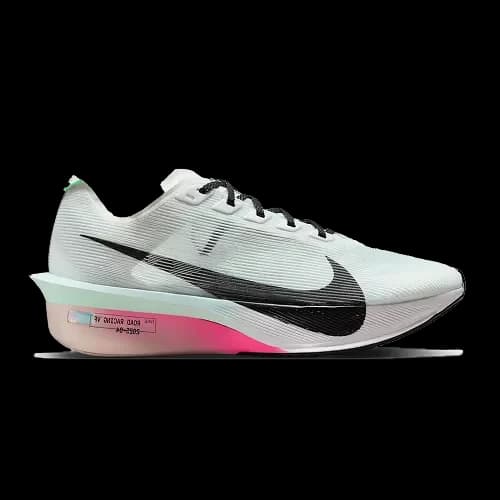 Nike Vaporfly 4 Nike Vaporfly 4 | 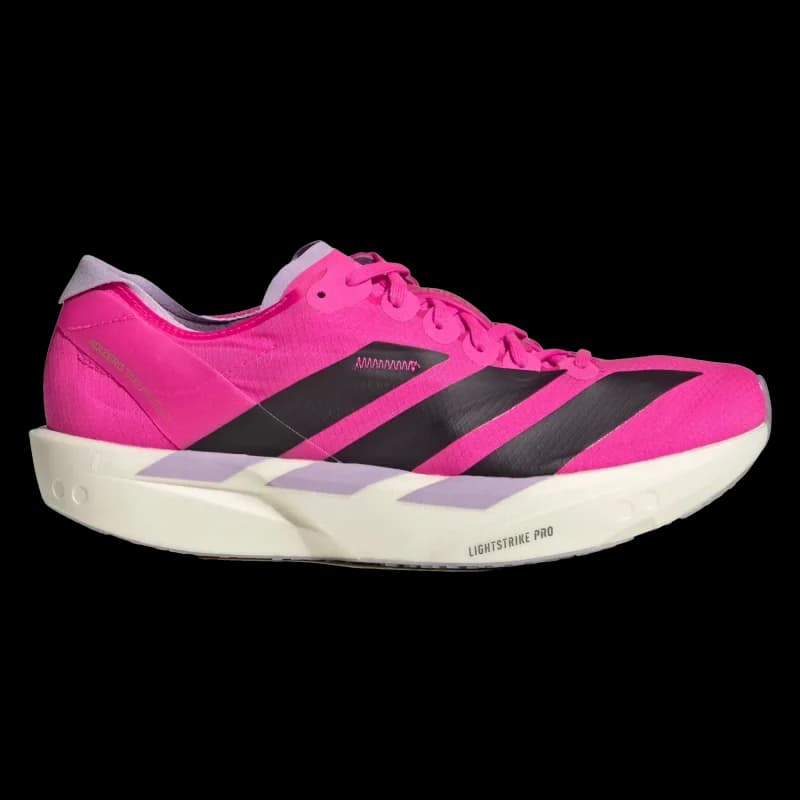 Adidas Takumi Sen 10 Adidas Takumi Sen 10 | 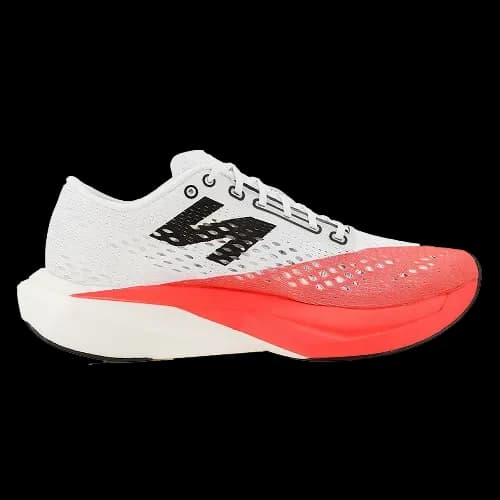 New Balance FuelCell SuperComp Pacer v2 New Balance FuelCell SuperComp Pacer v2 | 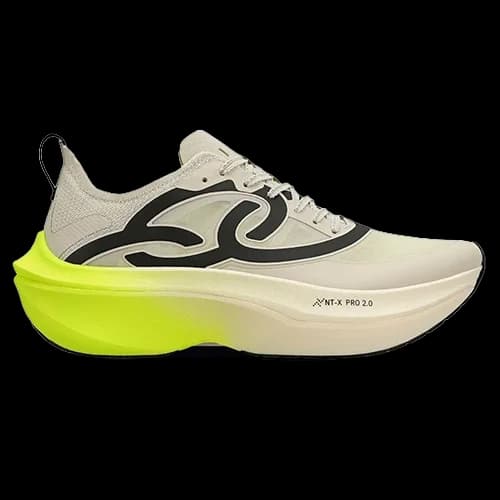 Olympikus Corre Supra 2 Olympikus Corre Supra 2 | |
|---|---|---|---|---|---|
| Pick it for | This page | More cushion | Higher drop | Roomier fit | Same support |
| Drop | 4 mm | 6 mm | 6 mm | 8 mm | 6 mm |
| Heel stack | 27 mm | 36 mm | 33 mm | 35 mm | – |
| Weight | 128 g | 190 g | 198 g | 209 g | – |
| Support | Neutral | Neutral | Neutral | Neutral | Neutral |
Questions runners ask
What distances is the Nike Streakfly 2 for?
The Streakfly 2 is built for the mile to 10 km. Doctors of Running recommend it from the mile to 5 km, and 10 km for experienced runners, and RTINGS score it 9.0 out of 10 for 5 km and 10 km racing. RunRepeat allows a half marathon for light runners only and points to the Vaporfly 4 or Alphafly 3 for anything longer.
Does the Streakfly 2 have a carbon plate?
Yes. Unlike the first Streakfly, which had a plastic midfoot shank, the Streakfly 2 has a full-length carbon fiber Flyplate with a large central cutout, under full PEBA ZoomX foam.
Does the Streakfly 2 fit true to size?
Not for everyone. RunRepeat’s owner vote says the Streakfly 2 runs slightly small and RTINGS found it shorter than expected; at Doctors of Running one tester stayed true to size and one went up half a size. Sizing is unisex, so check the men’s and women’s conversion.
What is the stack height and drop of the Streakfly 2?
RunRepeat relays 27 mm at the heel and 23 mm at the forefoot, a 4 mm drop, and measured 27.0 mm and 23.3 mm; Running Warehouse lists 26 mm and 22 mm. Only 7 of the 183 neutral road shoes in our catalogue list a lower heel, and only 11 of 234 a lower drop.
Is the Streakfly 2 good for heel strikers?
No. RunRepeat lists heel strikers among the runners the Streakfly 2 does not suit, and Doctors of Running say its geometry discourages heel striking. With a 4 mm drop and a low stack it loads the calves, ankles and feet, so transition gradually even if you land on the forefoot.
How light is the Streakfly 2?
Very light: 128 g in a men’s US 9 according to Running Warehouse and Doctors of Running, and RTINGS weighed 121.5 g in the same size. Only 1 of the 149 neutral road shoes weighed in a men’s US 9 in our catalogue is lighter.
Streakfly 2 or Vaporfly 4?
The Streakfly 2 for the mile to 10 km, the Vaporfly 4 for longer races. Believe in the Run see the Streakfly 2 as the better choice for short races and the Vaporfly 4 as the wider-ranging shoe, and RunRepeat send half and full marathon runners to the Vaporfly 4.
How long does the Streakfly 2 last?
Less long than a trainer. Doctors of Running expect below-average durability, and RunRepeat measured above-average outsole wear and gave the toe box 1 out of 5. Because the Streakfly 2 is kept for races and short sessions, its mileage builds slowly, as Doctors of Running point out.
Sources
- RunRepeat, Nike Streakfly 2 lab review (Carlos Sánchez, updated February 2026). Accessed Oct 13, 2026.
- Doctors of Running, Nike Streakfly 2 Review (Andrea Myers and Matt Klein, June 2025). Accessed Oct 13, 2026.
- Believe in the Run, Nike Streakfly 2 Review: Cutthroat to the Core (June 2025). Accessed Oct 13, 2026.
- RTINGS, Nike Streakfly 2 review (updated June 2026). Accessed Oct 13, 2026.
- Running Warehouse, Nike Streakfly 2 Unisex Shoes. Accessed Oct 13, 2026.
- Strideprint, Strideprint running shoe catalogue (ranks computed on 2026-10-13). Accessed Oct 13, 2026.
- cat: Strideprint catalogue, 395 shoes
How we review. We read published tests, brand and retailer pages and lab measurements, cross-check the figures and flag where they disagree. We did not test this shoe ourselves. Last updated October 13, 2026.