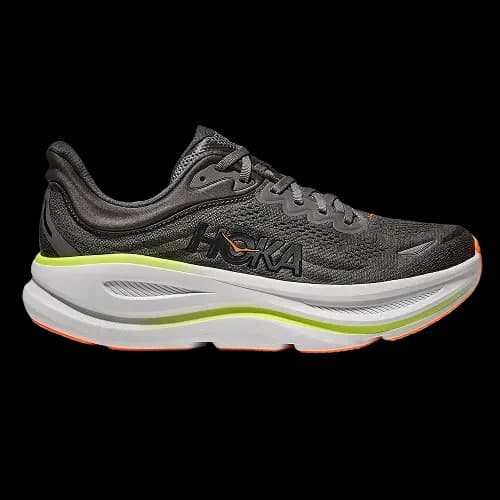
Hoka Bondi 9 review
Hoka’s most protective road shoe: a tall, rockered, 5 mm drop platform built for slow miles, long walks and long days on your feet.
- Drop
- 5 mm
- Heel stack
- 43 mm
- Forefoot
- 38 mm
- Weight
- 297 g
- Support
- Neutral
- Plate
- None
Our verdict
Maximum protection, minimum hurry.
The Bondi 9 is a tall, steady, heavily cushioned shoe that does one job well: taking the sting out of easy miles and long hours on your feet. It suits heel strikers and runners who want a calm, guided landing at relaxed paces, and it makes little sense for anyone who wants to run fast in it.
Strong points
- Deep cushioning: 43 mm at the heel, 38 mm at the forefoot
- Stable neutral ride, with strong guidance at the heel
- New supercritical foam is lighter and livelier than the Bondi 8
- Rocker keeps walking and slow runs moving
- Wide and extra-wide versions for broad feet
Weak points
- Heavy and clunky once you try to speed up
- Tapered, lower-volume toe box in the standard width
- Very stiff heel counter can rub sensitive heels
- Little ground feel for forefoot strikers
Who it fits
- Heel strikers on easy days
- Runners who want stable neutral
- Walkers and long shifts on your feet
- Heavier runners at easy paces
Who should skip it
- Anyone chasing pace
- Wide or high-volume forefeet in the standard width
- Runners who dislike a firm heel counter
- Forefoot strikers who want ground feel
Shoe profile
Where the Bondi 9 sits among the 395 shoes in our catalogue.
| Axis | Bondi 9 |
|---|---|
| Cushioning | 83 |
| Lightness | 15 |
| Stability | 30 |
| Drop | 9 |
| Response | 20 |
Fig. 1 · How to read it. Each axis runs from 0 at the centre to 100 at the edge. Cushioning, lightness and drop are the shoe’s rank in the catalogue from listed figures; stability and response are scored from the support type, the plate, the rocker and the intended use. The dotted grey line is the catalogue median. Source: Strideprint catalogue (cat).
Where it sits in the catalogue
Weight297 g, heavier than 85% of shoes
Drop5 mm, lower than 80% of shoes
Heel stack43 mm, higher than 83% of shoes
Forefoot stack38 mm, higher than 88% of shoes
How it feels
Written from 3 published tests. We quote measurements, not impressions we did not have.
Deep cushioning, firm underfoot. Supercritical EVA, about 2 mm more than the Bondi 8. Lighter and bouncier, yet firmer than expected at 43.0 AC: protection rather than sink.
Neutral on paper, steady underfoot. No medial post: tall sidewalls and a wide midfoot steady it, with guidance mostly at the heel. A strong inward roll needs a stability shoe.
Built to cruise. Slightly more rebound than the old Bondi and a rocker that rolls you forward. At 297 g, reviewers keep it for slow runs and walking.
Deep cushioning, firm underfoot. The Bondi 9 moves to a supercritical EVA midsole and adds about 2 mm of foam over the Bondi 8. Hoka’s claim is a less heavy, bouncier foam, and reviewers mostly agree: Believe in the Run calls the ride lighter and bouncier while keeping the plush Bondi feel.
Doctors of Running describes it as highly cushioned yet a little firmer than you might expect, a structured softness that eases with break-in. RunRepeat’s durometer reading of 43.0 AC puts it on the firmer side of max-cushion shoes. Expect protection rather than sink. With a 43 mm heel, it ranks 30th tallest of the 183 neutral road shoes in our catalogue.
Neutral on paper, steady underfoot. There is no medial post. The steadiness comes from geometry: Hoka’s Active Foot Frame cradles the heel, the sidewalls are tall, the midfoot is wide and the medial side of the sole flares out. Doctors of Running reports a high level of rearfoot guidance and calls it stable neutral.
The guidance sits mostly at the heel. If your fitting shows you roll in a lot through the midfoot, a dedicated stability shoe will hold you better.
Built to cruise. The newer foam gives a bit more rebound than the old Bondi, and the rocker rolls you through the stride. That is where the energy ends. At around 297 g for a men’s US 9, it ranks 138th lightest of the 149 neutral road shoes weighed in that size in our catalogue, and it feels it when you push, and every reviewer we read keeps it for slow running and walking.
Read more
Deep cushioning, firm underfoot. The Bondi 9 moves to a supercritical EVA midsole and adds about 2 mm of foam over the Bondi 8. Hoka’s claim is a less heavy, bouncier foam, and reviewers mostly agree: Believe in the Run calls the ride lighter and bouncier while keeping the plush Bondi feel.
Doctors of Running describes it as highly cushioned yet a little firmer than you might expect, a structured softness that eases with break-in. RunRepeat’s durometer reading of 43.0 AC puts it on the firmer side of max-cushion shoes. Expect protection rather than sink. With a 43 mm heel, it ranks 30th tallest of the 183 neutral road shoes in our catalogue.
Neutral on paper, steady underfoot. There is no medial post. The steadiness comes from geometry: Hoka’s Active Foot Frame cradles the heel, the sidewalls are tall, the midfoot is wide and the medial side of the sole flares out. Doctors of Running reports a high level of rearfoot guidance and calls it stable neutral.
The guidance sits mostly at the heel. If your fitting shows you roll in a lot through the midfoot, a dedicated stability shoe will hold you better.
Built to cruise. The newer foam gives a bit more rebound than the old Bondi, and the rocker rolls you through the stride. That is where the energy ends. At around 297 g for a men’s US 9, it ranks 138th lightest of the 149 neutral road shoes weighed in that size in our catalogue, and it feels it when you push, and every reviewer we read keeps it for slow running and walking.
Which runs it’s for
| Run | Fit | Why | Source |
|---|---|---|---|
| Easy runs | Made for it | Its home ground: steady, protective miles at a relaxed pace. | Doctors of Running, Believe in the Run |
| Recovery runs | Made for it | Believe in the Run names recovery runs and easy days as its job. | Believe in the Run |
| Long runs | Made for it | Plenty of foam for slow long runs; size up half a size for ultra distances. | Doctors of Running |
| Walking | Made for it | Reviewers single out walking and long hours standing. | Doctors of Running, Believe in the Run |
| Tempo | Not for it | Clunky when you speed up, and tiring on tempo efforts. | Doctors of Running, Believe in the Run |
| Light trail | Not for it | Designed for roads and smooth surfaces. | Doctors of Running |
Source: Doctors of Running, Believe in the Run
What the tests say
Doctors of Running, Believe in the Run and RunRepeat agree the Bondi 9 is a tall, steady shoe for slow miles and long days on your feet. They differ on how soft it really is.
| Test | Type | Our reading | In one sentence | Source |
|---|---|---|---|---|
| Doctors of Running | Review | Mixed | Grades from B+ to A: a stable neutral shoe that still handles long slow efforts, but with a snug, low-volume forefoot at step-in. | Read |
| RunRepeat | Lab | Positive | Scored 86 out of 100, called better than the Bondi 8 in every way, though still heavy and clunky and not roomy up front. | Read |
| Believe in the Run | Review | Negative | Rated C tier overall: existing Bondi fans will like the new foam, but it is a recovery and easy-day shoe only, not for speed. | Read |
They agree
- Made for slow miles and walkingDoctors of Running and Believe in the Run both keep it for easy running and long hours standing, and both find it clunky when the pace rises.
- True to size, tapered up frontDoctors of Running and Believe in the Run both call it true to size, and RunRepeat measured a toe box it rates as a tight fit, which points wide feet to the 2E or 4E versions.
They split
- Plush or firm?Believe in the Run describes a lighter, bouncier ride that keeps the plush Bondi feel. Doctors of Running found it firmer than expected at first, and RunRepeat’s durometer puts the foam on the firm side for a max-cushion shoe.
How it’s built
A gas-foamed EVA midsole on a broad, rockered platform, HOKA’s Active Foot Frame around the heel, a plush knit upper and rubber on the high-wear zones.
A supercritical EVA midsole on a broad, rockered platform, a plush knit upper with a padded tongue not attached at the sides, a heel held by tall sidewalls and rubber on the high-wear zones.
| # | Part | Measure |
|---|---|---|
| 1 | UpperKnit upper | Breathability 3 / 5 |
| 2 | Tongue | 9.0 mm |
| 3 | HeelActive Foot Frame | Stiffness 3 / 5 |
| 4 | MidsoleSupercritical EVA | 43.0 AC |
| 5 | Insole | 4.4 mm |
| 6 | Outsole | 3.4 mm |
Fig. 3 · Side profile. Stack heights to scale (listed: 43 mm heel, 38 mm forefoot; measured: 3.4 mm outsole); the split between the two foams is not measured and is drawn at mid-height. Dashed: insole, hidden. Sources: Doctors of Running, RunRepeat, Believe in the Run.
Upper. A newly designed knit with a retooled collar. RunRepeat found it dense enough to block light, vented through large holes; Believe in the Run expect it to run warm in summer. Doctors of Running describe a lower volume than earlier Bondis that eases as the plush material breaks in.
Tongue. A thick, padded tongue (9.0 mm in RunRepeat’s measurement) that is not attached to the sides, with flat laces and an extra eyelet for a runner’s knot.
Heel. Tall midsole sidewalls let the heel sit down into the sole, which HOKA calls the Active Foot Frame; Doctors of Running suspect extra reinforcement in the sole too. The 3D-molded heel counter scored only 3 out of 5 for stiffness at RunRepeat, though Doctors of Running found the heel stiff on foot. An extended heel collar makes the shoe easier to pull on.
Midsole. HOKA swaps compression-molded EVA (CMEVA) for supercritical EVA, foamed under high pressure and heat with a gas such as nitrogen to get small, uniform cells, and adds about 2 mm of stack height. RunRepeat measured 43.0 AC, firmer than their 35.5 AC average, and Doctors of Running felt it soften with break-in. Believe in the Run single out the supportive arch as the standout feature of the midsole design.
Insole. A removable insole of average thickness, 4.4 mm. RunRepeat found enough vertical room in the toe box for custom orthotics or a thicker insole.
Outsole. The outsole puts rubber on the high-wear zones, with cutouts and flex grooves to save weight and stiffness. RunRepeat measured 3.4 mm of rubber and a wet grip score of 0.45, good rather than standout. On trails, Doctors of Running found small stones lodging in the grooves.
Read more
A gas-foamed EVA midsole on a broad, rockered platform, HOKA’s Active Foot Frame around the heel, a plush knit upper and rubber on the high-wear zones.
1. Upper. A newly designed knit with a retooled collar. RunRepeat found it dense enough to block light, vented through large holes; Believe in the Run expect it to run warm in summer. Doctors of Running describe a lower volume than earlier Bondis that eases as the plush material breaks in.
2. Tongue. A thick, padded tongue (9.0 mm in RunRepeat’s measurement) that is not attached to the sides, with flat laces and an extra eyelet for a runner’s knot.
3. Heel. Tall midsole sidewalls let the heel sit down into the sole, which HOKA calls the Active Foot Frame; Doctors of Running suspect extra reinforcement in the sole too. The 3D-molded heel counter scored only 3 out of 5 for stiffness at RunRepeat, though Doctors of Running found the heel stiff on foot. An extended heel collar makes the shoe easier to pull on.
4. Midsole. HOKA swaps compression-molded EVA (CMEVA) for supercritical EVA, foamed under high pressure and heat with a gas such as nitrogen to get small, uniform cells, and adds about 2 mm of stack height. RunRepeat measured 43.0 AC, firmer than their 35.5 AC average, and Doctors of Running felt it soften with break-in. Believe in the Run single out the supportive arch as the standout feature of the midsole design.
5. Insole. A removable insole of average thickness, 4.4 mm. RunRepeat found enough vertical room in the toe box for custom orthotics or a thicker insole.
6. Outsole. The outsole puts rubber on the high-wear zones, with cutouts and flex grooves to save weight and stiffness. RunRepeat measured 3.4 mm of rubber and a wet grip score of 0.45, good rather than standout. On trails, Doctors of Running found small stones lodging in the grooves.
Durability. Lab and road disagree on outsole durability. RunRepeat’s Dremel removed only 0.9 mm of rubber against a 1.1 mm average, and the toe box and heel padding scored 4 and 5 out of 5. Doctors of Running already saw wear at the outer heel after 30 miles and rate durability as average, so runners who wear through that zone quickly should expect the same.
Durability. Lab and road disagree on outsole durability. RunRepeat’s Dremel removed only 0.9 mm of rubber against a 1.1 mm average, and the toe box and heel padding scored 4 and 5 out of 5. Doctors of Running already saw wear at the outer heel after 30 miles and rate durability as average, so runners who wear through that zone quickly should expect the same.
Specs, listed and measured
Every figure carries its source.
Drop, mm
Heel stack, mm
Weight (men’s), g
| Spec | Listed | Measured |
|---|---|---|
| Drop |
|
|
| Heel stack |
|
|
| Forefoot stack |
| – |
| Weight, US M9 |
|
|
| Support |
| – |
| Plate |
| – |
| Surface |
| – |
| Release year |
| – |
Fig. 4 · Listed vs measured. Bars start at zero. Sources: Fleet Feet, RunRepeat.
Lab measurements
| Spec | Measured |
|---|---|
| Torsional rigidity |
|
| Heel counter stiffness |
|
| Traction coefficient |
|
| Breathability |
|
| Toe box width |
|
| Toe box height |
|
| Spec | Measured |
|---|---|
| Outsole thickness |
|
| Insole thickness |
|
| Tongue padding |
|
| Flexibility (bending force) |
|
| Midsole hardness |
|
| Energy return (heel) |
|
Sizing and fit
Go with your usual size for everyday running, and consider a half size up for ultra distances.
Length
True to size
Widths
standard, wide, and extra wide
Toe room
Tests differ: RunRepeat measured 72.5 mm and say the toe box is not roomy, Doctors of Running found the forefoot low in volume, while Believe in the Run’s wider-footed tester felt comfortable.
Doctors of Running, RunRepeat, Believe in the Run
Full sizing notes from testers
Doctors of Running and Believe in the Run both found the Bondi 9 true to size. It can feel a little snug on first step-in because the upper has less volume than before, and reviewers say it eases quickly. Believe in the Run had a wider and a narrow foot on the test team, and the regular width suited both.
The toe box tapers. RunRepeat measured it at 72.5 mm, which it rates as a tight fit. If your forefoot is wide, go straight to the wide (2E) or extra-wide (4E) men’s versions.
The heel is very secure with a stiff counter and generous collar padding, and the padded tongue keeps lace pressure off the top of the foot. Doctors of Running suggests a half size up for ultra runners, whose feet swell over many hours.
Doctors of Running, RunRepeat, Believe in the Run, Fleet Feet
Vs Bondi 8
The Bondi 9 keeps the Bondi formula of maximum foam and a rocker, but swaps in a livelier supercritical foam and a lower-volume, more secure upper.
If you loved the roomier forefoot of the previous version, the Bondi 8, try the Bondi 9 in wide before switching, because the new upper fits closer.
Version history: Bondi 8 to Bondi 9
New supercritical EVA midsole. Made with high pressure, heat and nitrogen gas for more uniform cells, it replaces the compression-molded EVA of the Bondi 8. Reviewers find it trims weight and adds rebound. (Believe in the Run, Fleet Feet)
About 2 mm more stack. Hoka and its retailers list roughly 2 mm more foam than the Bondi 8. RunRepeat measured the heel at 41.3 mm against 36.2 mm on the Bondi 8. (RunRepeat, Fleet Feet)
Active Foot Frame heel. The heel is restructured to cradle the foot, which is where most of the extra stability comes from. (Doctors of Running)
Lower-volume knit upper and new collar. A new knit upper sits closer to the foot, and an extended heel pull makes the shoe easier to slip on. (Doctors of Running, Fleet Feet)
Alternatives compared
Each one fixes one thing the Bondi 9 does not do.
| Hoka Bondi 9 | 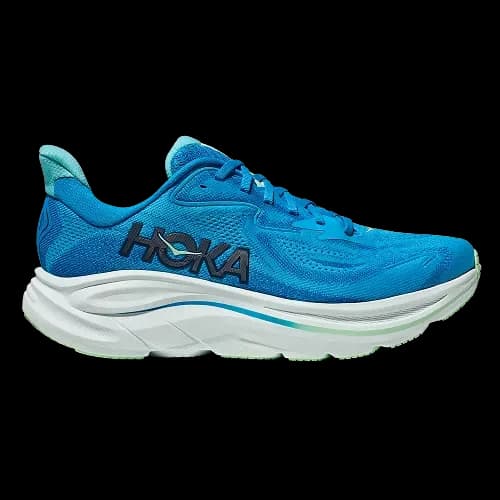 Hoka Clifton 10 Hoka Clifton 10 | 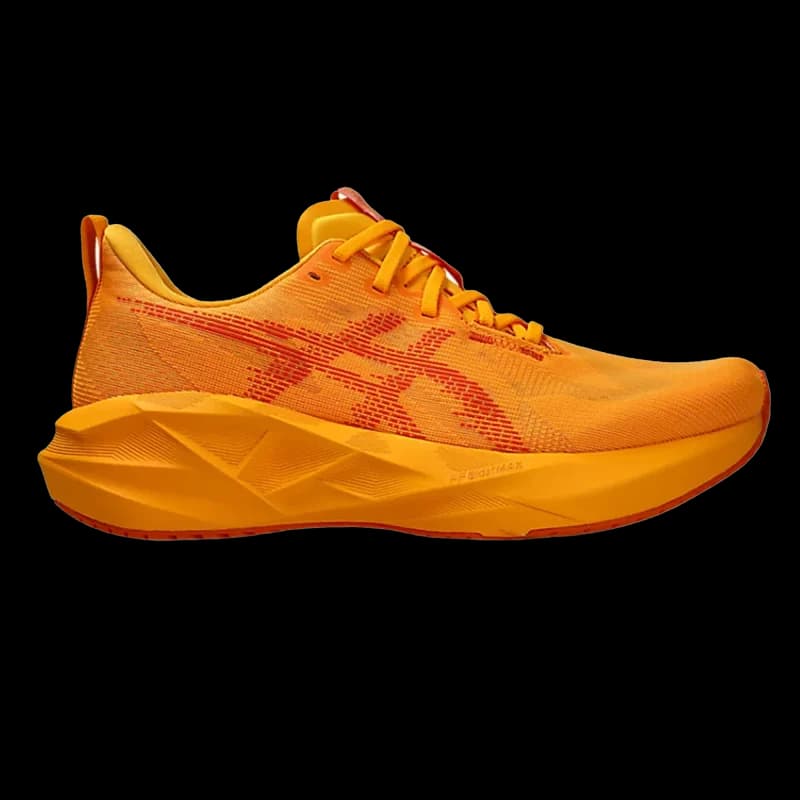 ASICS Novablast 5 ASICS Novablast 5 | 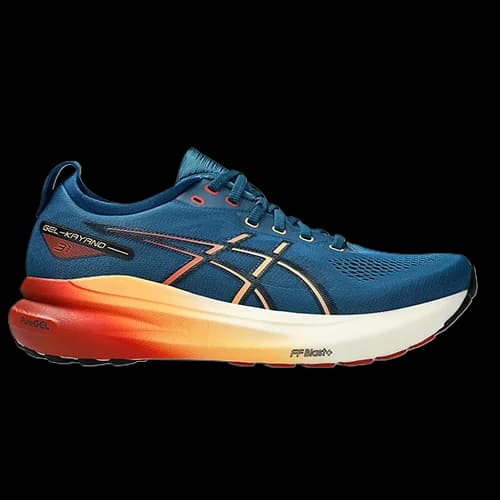 ASICS Gel-Kayano 31 ASICS Gel-Kayano 31 | 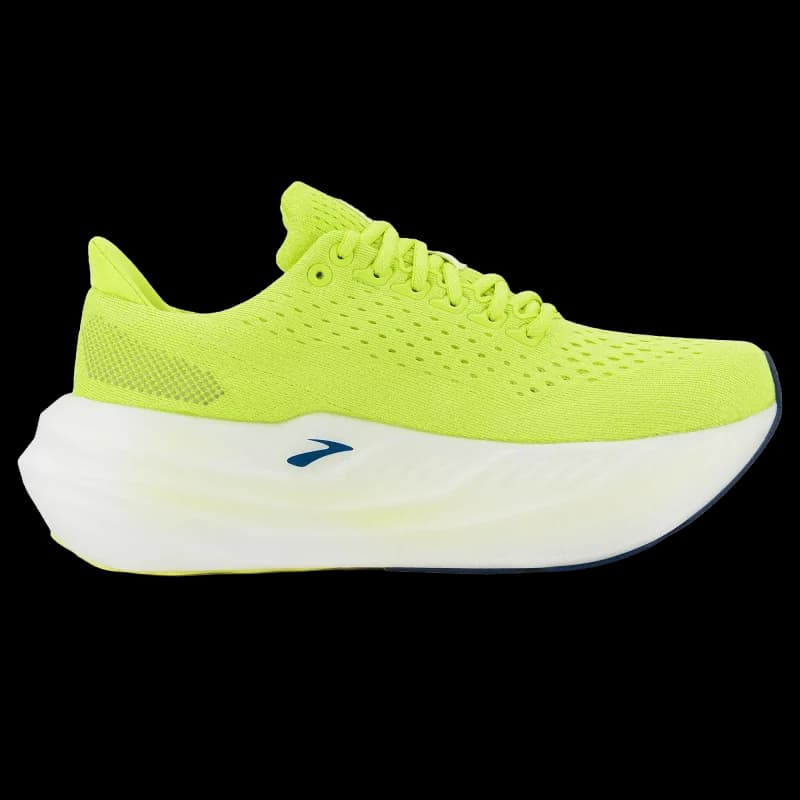 Brooks Glycerin Max Brooks Glycerin Max | |
|---|---|---|---|---|---|
| Pick it for | This page | Lighter | Faster | More stable | More cushion |
| Drop | 5 mm | 8 mm | 8 mm | 10 mm | 6 mm |
| Heel stack | 43 mm | 43 mm | 41.5 mm | 40 mm | 45 mm |
| Weight | 297 g | 258 g | 252 g | 305 g | 297 g |
| Support | Neutral | Neutral | Neutral | Stability | Neutral |
Questions runners ask
Is the Hoka Bondi 9 good for running or just walking?
The Hoka Bondi 9 works for both, as long as the running is easy. Reviewers at Doctors of Running and Believe in the Run keep it for recovery runs, slow long runs and walking. It feels clunky at faster paces, so pair it with a lighter shoe if your week includes workouts.
Does the Hoka Bondi 9 run true to size?
Yes, for most runners. Doctors of Running and Believe in the Run both found it true to size. It can feel snug on first wear because the upper has less volume than the Bondi 8, and the toe box tapers. Wide (2E) and extra-wide (4E) men’s versions exist.
What is the difference between the Bondi 9 and the Bondi 8?
The Bondi 9 uses a supercritical EVA foam instead of compression-molded EVA, adds about 2 mm of stack, reworks the heel with Hoka’s Active Foot Frame and switches to a lower-volume knit upper. Reviewers describe it as lighter and bouncier than the Bondi 8, with a closer fit.
Is the Hoka Bondi 9 a stability shoe?
No. The Bondi 9 is a neutral shoe without a medial post. Its wide base, tall sidewalls and cradled heel make it feel steady, and Doctors of Running describes it as stable neutral with strong heel guidance. Runners who roll in a lot through the midfoot may still need a stability model.
What is the drop of the Hoka Bondi 9?
Hoka lists a 5 mm drop, with a 43 mm heel and 38 mm forefoot for men. Lab measurements vary: RunRepeat measured 41.3 mm at the heel and 32.2 mm at the forefoot, a 9.1 mm drop. Measuring points differ between labs, so the feel may sit closer to a mid drop than the spec suggests.
Is the Bondi 9 good for plantar fasciitis?
No shoe treats plantar fasciitis, and no study shows the Bondi 9 does. What reviewers describe is a heavily cushioned, rockered shoe with a firm heel and a steady base, which some people find comfortable when their feet are sore. If heel pain lasts, see a physiotherapist or podiatrist.
Sources
- Doctors of Running, HOKA Bondi 9 Review (2025). Accessed Oct 9, 2026.
- RunRepeat, Cut in half: HOKA Bondi 9 Review (2025). Accessed Oct 9, 2026.
- Believe in the Run, Hoka Bondi 9 Review: Bigger, Bouncier, Bondi-er. Accessed Oct 9, 2026.
- Fleet Feet, Men’s HOKA Bondi 9. Accessed Oct 9, 2026.
- Strideprint, Strideprint running shoe catalogue (ranks computed on 2026-10-11). Accessed Oct 11, 2026.
- hoka.com · Surface, listed
- cat: Strideprint catalogue, 395 shoes
How we review. We read published tests, brand and retailer pages and lab measurements, cross-check the figures and flag where they disagree. We did not test this shoe ourselves. Last updated October 12, 2026.