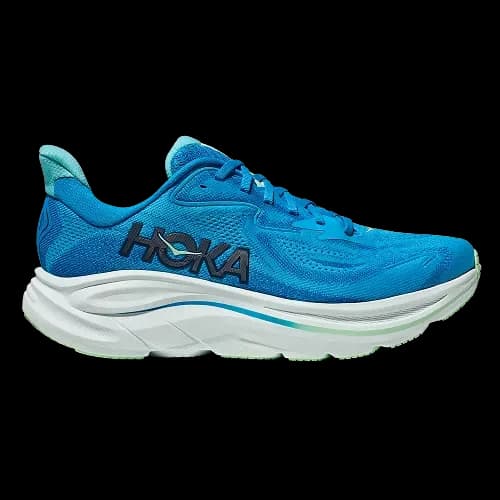
Hoka Clifton 10 review
Hoka’s best-known daily trainer, with more foam under the heel, a higher 8 mm drop and a roomier toe box than any Clifton before it.
- Drop
- 8 mm
- Heel stack
- 43 mm
- Forefoot
- 35 mm
- Weight
- 258 g
- Support
- Neutral
- Plate
- None
Our verdict
Soft, steady, made for easy miles.
The Clifton 10 is a high-stack, rockered daily trainer that trades a little lightness for more heel cushioning, a more stable landing and a smooth, predictable ride. It suits runners who land on their heel, log steady easy miles and want a neutral shoe that still feels planted.
Strong points
- More cushioning at the rear and a rocker make heel landings soft and smooth
- Stable for a neutral shoe: sidewalls, flared base, firm torsion
- Roomier toe box than the Clifton 9, true to size
- 8 mm drop is easier on calves than the old 5 mm
- Offered in regular, wide and extra-wide
Weak points
- Older EVA foam: smooth, but little bounce when you push
- Heavier than the Clifton 9
- Thin forefoot compared with the heel for forefoot strikers
- Early outsole wear reported by one tester
Who it fits
- You land on your heel
- You want neutral, but not wobbly
- Your easy days make up most of your week
- Low drops have bothered your calves or Achilles
Who should skip it
- You want speed from the same pair
- You land on your forefoot
- Your heel is sensitive at the back
- You want an outsole that lasts forever
Shoe profile
Where the Clifton 10 sits among the 395 shoes in our catalogue.
| Axis | Clifton 10 |
|---|---|
| Cushioning | 83 |
| Lightness | 58 |
| Stability | 30 |
| Drop | 45 |
| Response | 20 |
Fig. 1 · How to read it. Each axis runs from 0 at the centre to 100 at the edge. Cushioning, lightness and drop are the shoe’s rank in the catalogue from listed figures; stability and response are scored from the support type, the plate, the rocker and the intended use. The dotted grey line is the catalogue median. Source: Strideprint catalogue (cat).
Where it sits in the catalogue
Weight258 g, lighter than 56% of shoes
Drop8 mm, higher than 45% of shoes
Heel stack43 mm, higher than 83% of shoes
Forefoot stack35 mm, higher than 79% of shoes
How it feels
Written from 3 published tests. We quote measurements, not impressions we did not have.
Plenty of foam, not mushy. Extra rear cushioning for a softer landing, on compression-molded EVA slightly firmer than earlier Cliftons. RunRepeat measured 34.2 AC, balanced rather than plush.
Neutral, with guard rails you don’t feel. No post, but raised sidewalls, a flared sole and a firm midsole keep the foot centred. Torsional rigidity is 5 out of 5.
A smooth roll, not a spring. The rocker rolls you heel to toe with little push-off, keeping long easy runs smooth. It does not bounce; older foam and weight limit it.
Plenty of foam, not mushy. Hoka added cushioning at the rear for a softer, more padded landing, and Running Warehouse lists a stack height of 43 mm at the heel and 35 mm at the forefoot. Believe in the Run quotes Hoka explaining why: Clifton owners put a lot of miles on their shoes, and the extra rearfoot cushioning keeps the drop feeling right as the midsole compresses over time.
The midsole itself is compression-molded EVA. Reviewers describe it as slightly firmer than earlier Cliftons, and Believe in the Run places it between the New Balance 1080 and the 880: firmer than the first, softer than the second. RunRepeat measured it at 34.2 on the AC durometer scale, which sits in the balanced range rather than plush.
Neutral, with guard rails you don’t feel. There is no stability post, yet Doctors of Running give it an A- for stability within neutral shoes. Raised sidewalls, a wider and flared sole and the firmer midsole all keep the foot centred. RunRepeat rated torsional rigidity 5 out of 5, so the shoe barely twists through the midfoot.
For a runner whose foot rolls in a little at landing, that structure can be enough. For a marked inward roll, a true stability shoe will do more.
A smooth roll, not a spring. The rocker does the work: the shoe rolls you from heel to toe without asking for much push-off, which is what keeps it smooth over long easy runs. Testers found it takes a few runs to break in, mainly at the stiff crash pad on the outer heel.
What it does not do is bounce. RunRepeat flags the older EVA foam and the weight gain as the main limits if you want energy return.
Read more
Plenty of foam, not mushy. Hoka added cushioning at the rear for a softer, more padded landing, and Running Warehouse lists a stack height of 43 mm at the heel and 35 mm at the forefoot. Believe in the Run quotes Hoka explaining why: Clifton owners put a lot of miles on their shoes, and the extra rearfoot cushioning keeps the drop feeling right as the midsole compresses over time.
The midsole itself is compression-molded EVA. Reviewers describe it as slightly firmer than earlier Cliftons, and Believe in the Run places it between the New Balance 1080 and the 880: firmer than the first, softer than the second. RunRepeat measured it at 34.2 on the AC durometer scale, which sits in the balanced range rather than plush.
Neutral, with guard rails you don’t feel. There is no stability post, yet Doctors of Running give it an A- for stability within neutral shoes. Raised sidewalls, a wider and flared sole and the firmer midsole all keep the foot centred. RunRepeat rated torsional rigidity 5 out of 5, so the shoe barely twists through the midfoot.
For a runner whose foot rolls in a little at landing, that structure can be enough. For a marked inward roll, a true stability shoe will do more.
A smooth roll, not a spring. The rocker does the work: the shoe rolls you from heel to toe without asking for much push-off, which is what keeps it smooth over long easy runs. Testers found it takes a few runs to break in, mainly at the stiff crash pad on the outer heel.
What it does not do is bounce. RunRepeat flags the older EVA foam and the weight gain as the main limits if you want energy return.
Which runs it’s for
| Run | Fit | Why | Source |
|---|---|---|---|
| Easy runs | Made for it | Its home ground. Soft enough for daily miles, stable enough that tired legs stay centred. | Doctors of Running, Believe in the Run |
| Long runs | Made for it | The heel foam and rocker keep long, steady runs smooth, provided you land on your heel. | Doctors of Running, RunRepeat |
| Marathon race | Can do | A sound choice for marathon training and for a comfort-first marathon. Not a shoe for chasing a time. | RunRepeat |
| Recovery runs | Made for it | Cushioned, predictable and undemanding: exactly what a recovery day asks for. | Doctors of Running |
| Walking | Can do | Fleet Feet points to walking and long hours on your feet. Expect a lot of shoe for a walk. | Fleet Feet |
| Tempo | Not for it | Reviewers found it flat when the pace goes up. Keep a lighter pair for faster sessions. | RunRepeat, Believe in the Run |
Source: Doctors of Running, Believe in the Run, RunRepeat, Fleet Feet
What the tests say
Doctors of Running, RunRepeat and Believe in the Run agree on the core of the Clifton 10: a soft, steady heel-first trainer for easy miles. Where they part ways is on how much the older foam and the extra weight hold it back.
| Test | Type | Our reading | In one sentence | Source |
|---|---|---|---|---|
| Doctors of Running | Review | Mixed | Overall grades of B+ and A-: a nice rockered ride for easy days and long runs, with reservations about outsole durability and forefoot volume. | Read |
| RunRepeat | Lab | Positive | Scored 86 out of 100 and called a solid pick: comfortable and stable, but held back by older foam technology and a weight gain. | Read |
| Believe in the Run | Review | Mixed | Rated B tier: exactly the reliable, well-cushioned daily trainer you expect from a Clifton, though some testers felt rubbing at the big toe. | Read |
They agree
- Built for easy, steady mileageDoctors of Running and Believe in the Run both place it as a daily trainer for relaxed and long runs, and neither recommends it for faster sessions.
- More stable than a typical neutral shoeDoctors of Running credit the sidewalls and flared base with a centred landing, and RunRepeat’s lab found the shoe barely twists through the midfoot.
- True to size, with more room up frontAll three call it true to size. RunRepeat measured a wider toe box than on the Clifton 9, and Believe in the Run also found the forefoot roomier.
They split
- How much the foam holds it backRunRepeat sees the compression-molded EVA and the added weight as the main weakness. Believe in the Run is kinder, describing a balanced foam that sits between a soft and a firm New Balance trainer.
- How quickly it feels rightDoctors of Running found it snug and needing a few runs to break in, mainly at the outer heel. Believe in the Run’s testers only mention slight big toe rubbing that lacing fixed.
How it’s built
A compression-molded EVA midsole shaped by HOKA’s MetaRocker and a rearfoot Active Foot Frame, a jacquard knit upper with a plush extended collar, and Durabrasion rubber on the wear zones.
A compression-molded EVA midsole with a MetaRocker and a rearfoot Active Foot Frame, a jacquard knit upper with a plush extended collar, and Durabrasion rubber on the wear zones with midsole left exposed elsewhere.
| # | Part | Measure |
|---|---|---|
| 1 | UpperJacquard knit | Breathability 3 / 5 |
| 2 | Tongue | 7.6 mm |
| 3 | HeelExtended heel collar, Active Foot Frame | Stiffness 3 / 5 |
| 4 | MidsoleCMEVA, MetaRocker | 34.2 AC |
| 5 | Insole | 4.8 mm |
| 6 | OutsoleDurabrasion rubber | 3.6 mm |
Fig. 3 · Side profile. Stack heights to scale (listed: 43 mm heel, 35 mm forefoot; measured: 3.6 mm outsole); the split between the two foams is not measured and is drawn at mid-height. Dashed: insole, hidden. Sources: Running Warehouse Europe, Doctors of Running, RunRepeat, Believe in the Run.
Upper. The upper is a jacquard knit with a little stretch that still holds its shape, as Doctors of Running describe it. RunRepeat found it thick in places and only average for airflow (3 out of 5), so it suits cool weather better than summer.
Tongue. Moderately padded (7.6 mm in RunRepeat’s measurement) and no longer gusseted: the Clifton 9’s semi-gusseted tongue is gone, which RunRepeat regret. Doctors of Running had no tongue slippage on the run.
Heel. HOKA’s extended collar flares away from the Achilles tendon and doubles as a grab point; Believe in the Run miss the old pull tabs. The counter is generously padded and of average stiffness, 3 out of 5 at RunRepeat. Running Warehouse describe the rearfoot Active Foot Frame as a bucket seat the foot sits into.
Midsole. Compression-molded EVA (CMEVA), with about 3 mm added at the rear. RunRepeat measured 52.3 percent energy return, below their lab average, and regret that HOKA did not move to a supercritical foam. The MetaRocker, which Running Warehouse credit with smooth transitions, feels slightly more pronounced than on the Clifton 9 because the taller platform is stiffer.
Insole. A molded EVA sockliner reshaped for a better arch fit. It is 4.8 mm thick and removable, so most aftermarket insoles fit.
Outsole. Durabrasion rubber covers the most abrasion-prone zones, with extra reinforcements at the midfoot and rearfoot and exposed midsole elsewhere to save weight. Wet grip rose from 0.33 on the Clifton 9 to 0.49 in RunRepeat’s test, and flex grooves keep it fairly flexible, 14.7 N in RunRepeat’s bend test.
Read more
A compression-molded EVA midsole shaped by HOKA’s MetaRocker and a rearfoot Active Foot Frame, a jacquard knit upper with a plush extended collar, and Durabrasion rubber on the wear zones.
1. Upper. The upper is a jacquard knit with a little stretch that still holds its shape, as Doctors of Running describe it. RunRepeat found it thick in places and only average for airflow (3 out of 5), so it suits cool weather better than summer.
2. Tongue. Moderately padded (7.6 mm in RunRepeat’s measurement) and no longer gusseted: the Clifton 9’s semi-gusseted tongue is gone, which RunRepeat regret. Doctors of Running had no tongue slippage on the run.
3. Heel. HOKA’s extended collar flares away from the Achilles tendon and doubles as a grab point; Believe in the Run miss the old pull tabs. The counter is generously padded and of average stiffness, 3 out of 5 at RunRepeat. Running Warehouse describe the rearfoot Active Foot Frame as a bucket seat the foot sits into.
4. Midsole. Compression-molded EVA (CMEVA), with about 3 mm added at the rear. RunRepeat measured 52.3 percent energy return, below their lab average, and regret that HOKA did not move to a supercritical foam. The MetaRocker, which Running Warehouse credit with smooth transitions, feels slightly more pronounced than on the Clifton 9 because the taller platform is stiffer.
5. Insole. A molded EVA sockliner reshaped for a better arch fit. It is 4.8 mm thick and removable, so most aftermarket insoles fit.
6. Outsole. Durabrasion rubber covers the most abrasion-prone zones, with extra reinforcements at the midfoot and rearfoot and exposed midsole elsewhere to save weight. Wet grip rose from 0.33 on the Clifton 9 to 0.49 in RunRepeat’s test, and flex grooves keep it fairly flexible, 14.7 N in RunRepeat’s bend test.
Durability. Opinions split. RunRepeat measured 3.6 mm of rubber and only 1.0 mm of wear in their Dremel test, with 4 and 5 out of 5 for the toe box and the heel padding. One Doctors of Running tester was already wearing through the exposed midsole and rubber reinforcements after 30 miles and expects below-average to average durability. Believe in the Run found the midsole still fresh after about 40 miles.
Durability. Opinions split. RunRepeat measured 3.6 mm of rubber and only 1.0 mm of wear in their Dremel test, with 4 and 5 out of 5 for the toe box and the heel padding. One Doctors of Running tester was already wearing through the exposed midsole and rubber reinforcements after 30 miles and expects below-average to average durability. Believe in the Run found the midsole still fresh after about 40 miles.
Specs, listed and measured
Every figure carries its source.
Drop, mm
Heel stack, mm
Forefoot stack, mm
Weight, g
| Spec | Listed | Measured |
|---|---|---|
| Drop |
|
|
| Heel stack |
|
|
| Forefoot stack |
|
|
| Weight, US M9 |
|
|
| Support |
| – |
| Plate |
| – |
| Surface |
| – |
| Release year |
| – |
Fig. 4 · Listed vs measured. Bars start at zero. Sources: Running Warehouse Europe, RunRepeat, Doctors of Running.
Lab measurements
| Spec | Measured |
|---|---|
| Torsional rigidity |
|
| Heel counter stiffness |
|
| Traction coefficient |
|
| Breathability |
|
| Toe box width |
|
| Toe box height |
|
| Spec | Measured |
|---|---|
| Outsole thickness |
|
| Insole thickness |
|
| Tongue padding |
|
| Flexibility (bending force) |
|
| Midsole hardness |
|
Sizing and fit
Go with your usual size; the fit is lower volume but the toe box is wider than on the Clifton 9.
Length
True to size
Widths
standard, wide, and extra wide
Toe room
RunRepeat measured a 73.1 mm toe box that removes the pointy taper of older versions. Doctors of Running still found it snug and quick to taper, and Believe in the Run testers noted rubbing at the big toe.
Doctors of Running, RunRepeat, Believe in the Run
Full sizing notes from testers
Running Warehouse, Doctors of Running, RunRepeat and Believe in the Run all call it true to size. Running Warehouse describes a medium heel, a medium-to-low midfoot volume and a medium toe box on the standard width.
The toe box is the big change. RunRepeat measured 73.1 mm at the big toe against 68.9 mm on the Clifton 9, which removes the pointy taper of older versions. Doctors of Running still found it snug at first and lower in volume overall, and all three Believe in the Run testers felt slight rubbing at the big toe until they adjusted the laces.
If you have a high instep or wide feet, the wider versions are the better starting point. Fleet Feet stocks the Clifton 10 in regular, wide and extra-wide.
Running Warehouse Europe, Doctors of Running, RunRepeat, Believe in the Run, Fleet Feet
Vs Clifton 9
The biggest Clifton update in years: more heel foam, a higher drop, a new last and more room up front, at the cost of some weight.
If you loved the low 5 mm drop, the lighter feel or the narrower, sleeker fit of the Clifton 9, the 10 is a different shoe, not just a newer one.
Version history: Clifton 9 to Clifton 10
Drop goes from 5 to 8 mm. Hoka added about 3 mm of foam under the heel. It changes how the shoe lands more than any other update. (Doctors of Running, Believe in the Run)
Taller heel stack. RunRepeat measured the heel at 44.4 mm against 32.7 mm on the Clifton 9. Running Warehouse lists 43 mm. (Running Warehouse Europe, RunRepeat)
New last, roomier toe box. Believe in the Run reports an entirely new last, and the measured toe box grew from 68.9 to 73.1 mm. (RunRepeat, Believe in the Run)
Reworked heel and insole. A redesigned, more padded heel collar improves lockdown, and the insole is new. (Running Warehouse Europe, Doctors of Running)
Heavier. RunRepeat measured about 10 percent more weight than the Clifton 9: 275 g (9.7 oz). At 258 g (9.1 oz) for a men’s US 9 in Running Warehouse’s figure, it now sits mid-pack, 82nd lightest of the 149 neutral road shoes weighed in that size in our catalogue. (Running Warehouse Europe, RunRepeat, Strideprint)
Alternatives compared
Each one fixes one thing the Clifton 10 does not do.
| Hoka Clifton 10 | 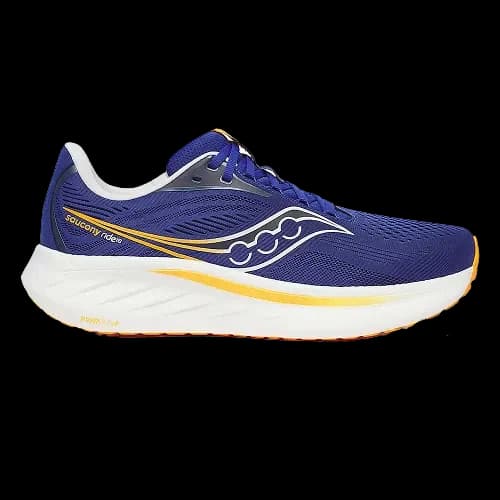 Saucony Ride 18 Saucony Ride 18 | 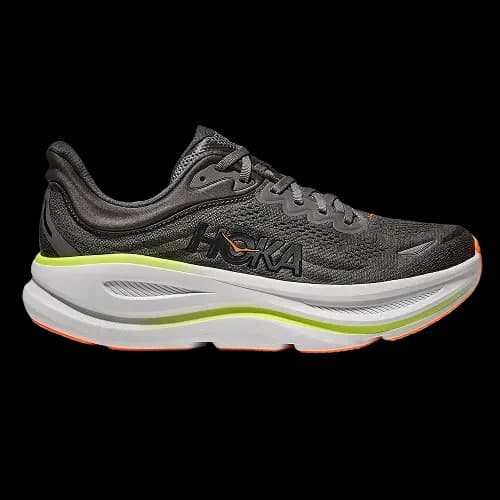 Hoka Bondi 9 Hoka Bondi 9 | 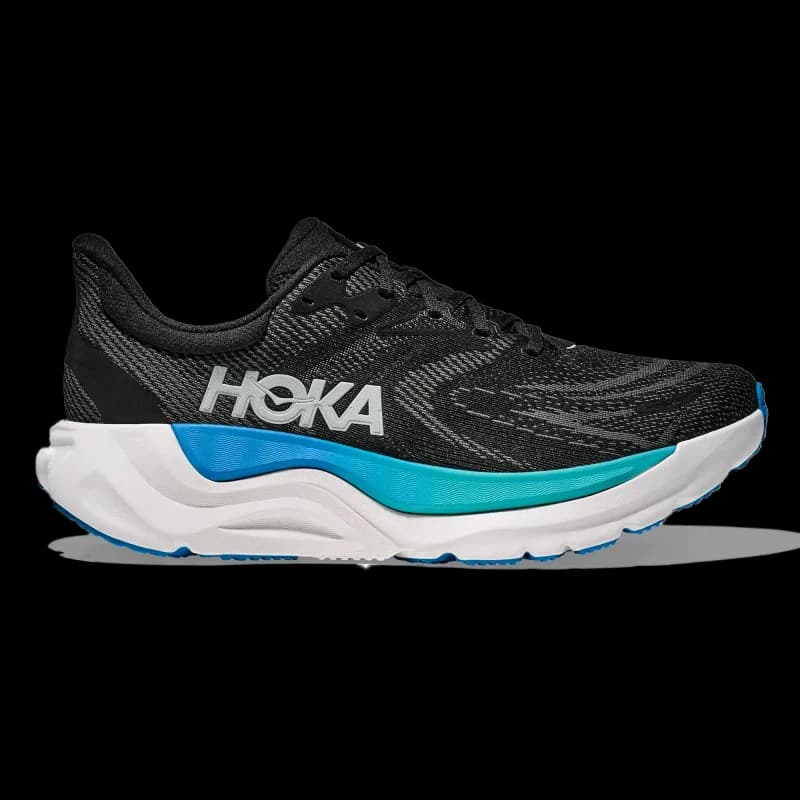 Hoka Arahi 8 Hoka Arahi 8 | 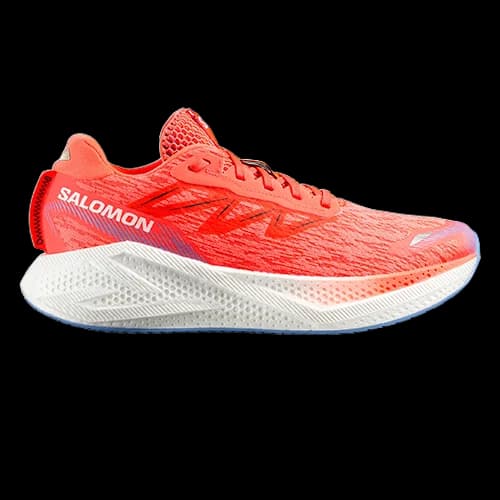 Salomon Aero Glide 4 Salomon Aero Glide 4 | |
|---|---|---|---|---|---|
| Pick it for | This page | Lighter | More cushion | More stable | Same support |
| Drop | 8 mm | 8 mm | 5 mm | 8 mm | 8 mm |
| Heel stack | 43 mm | 35 mm | 43 mm | 41 mm | 42 mm |
| Weight | 258 g | 259 g | 297 g | 264 g | 261 g |
| Support | Neutral | Neutral | Neutral | Stability | Neutral |
Questions runners ask
Is the Hoka Clifton 10 true to size?
Yes. Running Warehouse, Doctors of Running, RunRepeat and Believe in the Run all report a true-to-size fit. The toe box is wider than on the Clifton 9, but the overall volume is on the low side, so runners with a high instep or wide feet should look at the wide versions.
What is the drop of the Hoka Clifton 10?
Hoka lists 8 mm, up from 5 mm on the Clifton 9. Running Warehouse gives 43 mm at the heel and 35 mm at the forefoot. RunRepeat’s own lab measurement found a larger gap, 44.4 mm against 32.0 mm, so the shoe may feel more heel-forward than the spec suggests.
What changed between the Clifton 9 and the Clifton 10?
The Clifton 10 adds about 3 mm of foam under the heel, raising the drop from 5 to 8 mm. It also gets a new last with a wider toe box, a more padded heel collar and a new insole. The trade-off is weight: RunRepeat measured roughly 10 percent more than the Clifton 9.
Is the Hoka Clifton 10 good for heavy runners?
It has traits heavier runners often look for: a tall heel stack, a firmer-than-before midsole that does not bottom out easily and a wide, stable base. No review we found tested it specifically with heavier runners, so treat it as a strong candidate to try, not a guarantee.
Is the Clifton 10 good for flat feet or overpronation?
The Clifton 10 is a neutral shoe, but a stable one: sidewalls, a flared base and high torsional rigidity limit how much it twists. That can be enough for a mild inward roll. Flat feet do not always mean overpronation, so check how your foot actually moves before choosing between this and a stability shoe.
Can you run fast in the Hoka Clifton 10?
Not really. Reviewers describe it as a daily trainer for easy and steady miles. The compression-molded EVA and the added weight make it feel flat when you pick up the pace. Pair it with a lighter shoe for tempo work.
Sources
- Running Warehouse Europe, HOKA Clifton 10 Men’s Shoes. Accessed Oct 9, 2026.
- Doctors of Running, Hoka Clifton 10 Review (David Salas, Matt Klein, January 2025). Accessed Oct 9, 2026.
- RunRepeat, HOKA Clifton 10 lab review. Accessed Oct 9, 2026.
- Believe in the Run, Hoka Clifton 10 Review. Accessed Oct 9, 2026.
- Fleet Feet, Men’s HOKA Clifton 10. Accessed Oct 9, 2026.
- Strideprint, Strideprint running shoe catalogue (ranks computed on 2026-10-11). Accessed Oct 11, 2026.
- hoka.com · Surface, listed
- cat: Strideprint catalogue, 395 shoes
How we review. We read published tests, brand and retailer pages and lab measurements, cross-check the figures and flag where they disagree. We did not test this shoe ourselves. Last updated October 12, 2026.