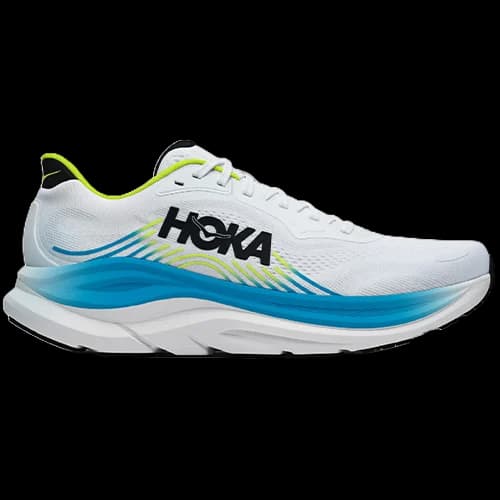
Hoka Clifton 11 review
Same midsole recipe as the Clifton 10, a new mesh upper and a plusher insole: a softer step-in for Hoka’s everyday trainer, with the same heel-first geometry.
- Drop
- 8 mm
- Heel stack
- 42 mm
- Forefoot
- 34 mm
- Weight
- 261 g
- Support
- Neutral
- Plate
- None
Our verdict
A softer Clifton for easy days.
The Clifton 11 is a cushioned, rockered daily trainer whose real changes sit in the upper and insole, which make it feel softer than the 10 underfoot. It suits heel strikers who run easy most days and like a snug, secure fit, less so heavy, hard landers or anyone who wants pace from one shoe.
Strong points
- Softer step-in than the Clifton 10, thanks to the new insole
- Rocker and tall heel reward a heel landing
- Stable neutral platform with sidewalls for mild stability needs
- Close, secure fit for average and narrow feet
- Lighter, more breathable mesh upper
Weak points
- Forefoot measured several millimetres under the listed stack
- Reported wear and softening after about 80 miles for heavy runners
- Smooth roll, but no snap for faster days
- Toe box measured narrower than on the Clifton 10
Who it fits
- You land on your heel
- You want neutral, with a little help
- Your week is mostly easy and long runs
- You like a close, secure fit
Who should skip it
- You are a heavy, hard lander
- You land on your forefoot
- You want one shoe for faster days
Shoe profile
Where the Clifton 11 sits among the 395 shoes in our catalogue, and what changed from the Clifton 10.
| Axis | Clifton 11 | Clifton 10 | Change |
|---|---|---|---|
| Cushioning | 78 | 83 | −5 |
| Lightness | 54 | 58 | −4 |
| Stability | 30 | 30 | = |
| Drop | 45 | 45 | = |
| Response | 6 | 20 | −14 |
Fig. 1 · How to read it. Each axis runs from 0 at the centre to 100 at the edge. Cushioning, lightness and drop are the shoe’s rank in the catalogue from listed figures; stability and response are scored from the support type, the plate, the rocker and the intended use. The dotted grey line is the catalogue median. Source: Strideprint catalogue (cat).
Where it sits in the catalogue
Weight261 g, lighter than 51% of shoes
Drop8 mm, higher than 45% of shoes
Heel stack42 mm, higher than 78% of shoes
Forefoot stack34 mm, higher than 69% of shoes
How it feels
Written from 4 published tests. We quote measurements, not impressions we did not have.
Softer than the 10, same foam family. Same compression-molded EVA and 8 mm drop, with a softer sockliner. Doctors of Running feel a more cushioned ride; RunRepeat measured 31.1 AC.
Stable neutral, with a break-in. Sidewalls keep the foot centred in a stable neutral shoe for mild needs. It is flexible in torsion, so a twisting foot will feel it.
Rolls, does not spring. A firm forefoot rocker with little flex handles the transition and keeps easy runs smooth, but the shoe is not built to push off hard.
Softer than the 10, same foam family. The midsole is still full-length compression-molded EVA, and Hoka lists the same 8 mm drop. What changed is the insole: a softer, more premium sockliner that Fleet Feet says improves step-in comfort while the core cushioning stays the same.
Doctors of Running felt a bigger difference than the spec sheet suggests, describing a more cushioned, easier-rolling shoe that feels quite different from the 10. The lab agrees: RunRepeat measured the foam at 31.1 on the AC durometer scale, down from the 34.2 it measured on the Clifton 10.
Stable neutral, with a break-in. Hoka’s sidewall frame keeps the foot centred, and Doctors of Running treat it as a stable neutral shoe for mild stability needs. The heel bevel is biased toward the inside of the foot and took their testers 5 to 7 miles to settle in.
RunRepeat classes it as flexible in torsion, unusual for a shoe this tall. The stability comes from the wide base and sidewalls, not from a rigid midfoot, so a foot that twists a lot will feel it.
Rolls, does not spring. A firm forefoot rocker with little flex does the transition for you. It keeps easy runs smooth, but reviewers agree the shoe is not built to push off hard.
If you want more pace from the same family, Doctors of Running and Believe in the Run both point to the Clifton Pro, which they found snappier.
Read more
Softer than the 10, same foam family. The midsole is still full-length compression-molded EVA, and Hoka lists the same 8 mm drop. What changed is the insole: a softer, more premium sockliner that Fleet Feet says improves step-in comfort while the core cushioning stays the same.
Doctors of Running felt a bigger difference than the spec sheet suggests, describing a more cushioned, easier-rolling shoe that feels quite different from the 10. The lab agrees: RunRepeat measured the foam at 31.1 on the AC durometer scale, down from the 34.2 it measured on the Clifton 10.
Stable neutral, with a break-in. Hoka’s sidewall frame keeps the foot centred, and Doctors of Running treat it as a stable neutral shoe for mild stability needs. The heel bevel is biased toward the inside of the foot and took their testers 5 to 7 miles to settle in.
RunRepeat classes it as flexible in torsion, unusual for a shoe this tall. The stability comes from the wide base and sidewalls, not from a rigid midfoot, so a foot that twists a lot will feel it.
Rolls, does not spring. A firm forefoot rocker with little flex does the transition for you. It keeps easy runs smooth, but reviewers agree the shoe is not built to push off hard.
If you want more pace from the same family, Doctors of Running and Believe in the Run both point to the Clifton Pro, which they found snappier.
Which runs it’s for
| Run | Fit | Why | Source |
|---|---|---|---|
| Easy runs | Made for it | Its core job. Soft, predictable, easy to run in on tired legs. | Doctors of Running |
| Long runs | Made for it | Doctors of Running name long runs as a strength, for heel strikers who keep the pace steady. | Doctors of Running |
| Recovery runs | Made for it | The plusher open-cell insole and gentle rocker make it a natural recovery-day shoe. | Doctors of Running, Fleet Feet |
| Walking | Made for it | Testers recommend it for walking and long hours standing, a use Hoka’s Clifton has long been chosen for. | Doctors of Running, Believe in the Run |
| Marathon race | Can do | Fine for a comfort-first marathon or the training block. Not a shoe for chasing a time. | Doctors of Running |
| Tempo | Not for it | Not responsive enough. Keep a lighter pair, or look at the Clifton Pro, for faster sessions. | Doctors of Running |
Source: Doctors of Running, Fleet Feet, Believe in the Run
What the tests say
Reviewers agree the Clifton 11 is a softer-feeling, smooth-rolling daily trainer for easy miles. They split on the fit, and on how much really changed from the Clifton 10.
| Test | Type | Our reading | In one sentence | Source |
|---|---|---|---|---|
| Doctors of Running | Review | Mixed | Performance grade of B+: a softer, easy-rolling ride for easy and long runs, with durability concerns after only 80 miles. | Read |
| RunRepeat | Lab | Positive | Scored 85 out of 100: strong for daily running, but the compression-molded EVA foam and weak tempo and race scores limit its standing. | Read |
| Believe in the Run | Review | Mixed | Rated B tier and summed up as just a good shoe, not bad but not great against what else is on the market. | Read |
| Runnea | Review | Positive | Runnea is positive: the shoe you leave by the front door and forget about choosing another. | Read |
They agree
- A daily trainer, not a fast shoeDoctors of Running and Believe in the Run both describe a smooth roll that suits easy days, and both point to the Clifton Pro when you want more snap.
- Softer than the Clifton 10 underfootDoctors of Running felt a clearly plusher, easier-rolling shoe, and RunRepeat’s durometer backs them up: 31.1 AC against 34.2 AC on the 10.
- True to size in lengthDoctors of Running and RunRepeat both recommend your usual size.
They split
- Snug or roomy?Doctors of Running describe a slightly snug, tapering forefoot and RunRepeat measured a narrower toe box than on the Clifton 10. Believe in the Run and Runnea found it roomier than earlier Hokas.
- How stable it feelsDoctors of Running rate it a stable neutral shoe thanks to its sidewalls, while RunRepeat classes it as flexible in torsion, unusual for a shoe this tall.
How it’s built
The Clifton 10’s CMEVA midsole, Meta-Rocker and rearfoot Active Foot Frame carry over, under a new engineered mesh upper and an open-cell sockliner.
The Clifton 10’s compression-molded EVA midsole, Meta-Rocker and Active Foot Frame carry over, under a lighter engineered mesh upper and a new open-cell sockliner. Rubber pods sit front and rear over exposed foam.
| # | Part | Measure |
|---|---|---|
| 1 | UpperEngineered mesh | Breathability 93 BR |
| 2 | TongueDouble-Lace Lock | 8.1 mm |
| 3 | HeelActive Foot Frame | Stiffness 3 / 5 |
| 4 | MidsoleCMEVA, Meta-Rocker | 31.1 AC |
| 5 | InsoleOpen-cell sockliner | 4.4 mm |
| 6 | Outsole | 3.2 mm |
Fig. 3 · Side profile. Stack heights to scale (listed: 42 mm heel, 34 mm forefoot; measured: 3.2 mm outsole); the split between the two foams is not measured and is drawn at mid-height. Dashed: insole, hidden. Sources: Fleet Feet, Doctors of Running, RunRepeat, Runnea, Believe in the Run. BR: RunRepeat’s breathability scale (not a score out of 100).
Upper. A lighter engineered mesh with mild stretch that feels smooth and comfortable against the skin, according to Doctors of Running. RunRepeat measured excellent breathability (93 BR) and found it released 62 percent of the moisture it had absorbed within three hours.
Tongue. The tongue is not gusseted, but it is padded along its full length (8.1 mm in RunRepeat’s measurement). Flat laces run through a double loop on the tongue, HOKA’s Double-Lace Lock, which stops it sliding sideways.
Heel. The foot sits down inside tall rearfoot sidewalls, HOKA’s Active Foot Frame, which Doctors of Running found keeps it centred better than on the 10. The padded counter is of moderate stiffness in RunRepeat’s test and ends in HOKA’s extended heel collar.
Midsole. Full-length compression-molded EVA, the same recipe as before; Believe in the Run sum up the ride as consistent. RunRepeat measured energy return of 46.8 percent at the heel and 50.1 percent up front, low for a current daily trainer. The Meta-Rocker lifts the toe up to 5 cm off the ground, and flex grooves keep a little bend in the front of the shoe.
Insole. The new open-cell sockliner, 4.4 mm thick and removable, is what makes the step-in plusher than on the Clifton 10. Doctors of Running list the shoe as orthotic friendly.
Outsole. The outsole keeps thick rubber pods at the front and the rear with exposed midsole across the middle, a layout carried over from the Clifton 10. Wet traction edged up from 0.49 to 0.52 in RunRepeat’s test, about average and a small improvement.
Read more
The Clifton 10’s CMEVA midsole, Meta-Rocker and rearfoot Active Foot Frame carry over, under a new engineered mesh upper and an open-cell sockliner.
1. Upper. A lighter engineered mesh with mild stretch that feels smooth and comfortable against the skin, according to Doctors of Running. RunRepeat measured excellent breathability (93 BR) and found it released 62 percent of the moisture it had absorbed within three hours.
2. Tongue. The tongue is not gusseted, but it is padded along its full length (8.1 mm in RunRepeat’s measurement). Flat laces run through a double loop on the tongue, HOKA’s Double-Lace Lock, which stops it sliding sideways.
3. Heel. The foot sits down inside tall rearfoot sidewalls, HOKA’s Active Foot Frame, which Doctors of Running found keeps it centred better than on the 10. The padded counter is of moderate stiffness in RunRepeat’s test and ends in HOKA’s extended heel collar.
4. Midsole. Full-length compression-molded EVA, the same recipe as before; Believe in the Run sum up the ride as consistent. RunRepeat measured energy return of 46.8 percent at the heel and 50.1 percent up front, low for a current daily trainer. The Meta-Rocker lifts the toe up to 5 cm off the ground, and flex grooves keep a little bend in the front of the shoe.
5. Insole. The new open-cell sockliner, 4.4 mm thick and removable, is what makes the step-in plusher than on the Clifton 10. Doctors of Running list the shoe as orthotic friendly.
6. Outsole. The outsole keeps thick rubber pods at the front and the rear with exposed midsole across the middle, a layout carried over from the Clifton 10. Wet traction edged up from 0.49 to 0.52 in RunRepeat’s test, about average and a small improvement.
Durability. Lab and road disagree. RunRepeat’s Dremel removed only 0.9 mm from 3.2 mm of rubber, but the soft mesh scored just 2 out of 5 for toe box durability. After 80 miles, a Doctors of Running tester had worn through the exposed midsole, was wearing down the outer heel rubber and felt the midsole flattening; they rate durability low to moderate.
Durability. Lab and road disagree. RunRepeat’s Dremel removed only 0.9 mm from 3.2 mm of rubber, but the soft mesh scored just 2 out of 5 for toe box durability. After 80 miles, a Doctors of Running tester had worn through the exposed midsole, was wearing down the outer heel rubber and felt the midsole flattening; they rate durability low to moderate.
Specs, listed and measured
Every figure carries its source.
Drop, mm
Heel stack, mm
Forefoot stack, mm
Weight (men’s US 9), g
| Spec | Listed | Measured |
|---|---|---|
| Drop |
|
|
| Heel stack |
|
|
| Forefoot stack |
|
|
| Weight, US M9 |
|
|
| Support |
| – |
| Plate |
| – |
| Surface |
| – |
| Release year |
| – |
Fig. 4 · Listed vs measured. Bars start at zero. Sources: Doctors of Running, RunRepeat, Fleet Feet.
Lab measurements
| Spec | Measured |
|---|---|
| Energy return (heel) |
|
| Heel counter stiffness |
|
| Traction coefficient |
|
| Breathability |
|
| Toe box width |
|
| Toe box height |
|
| Spec | Measured |
|---|---|
| Outsole thickness |
|
| Insole thickness |
|
| Tongue padding |
|
| Flexibility (bending force) |
|
| Midsole hardness |
|
| Torsional rigidity |
|
BR: RunRepeat’s breathability scale (not a score out of 100).
Sizing and fit
Take your usual size; choose the width carefully, because testers disagree on how roomy the forefoot is.
Length
True to size
Widths
standard, wide, and extra wide
Toe room
RunRepeat measured 70.9 mm, narrower than on the Clifton 10, and Doctors of Running found a slightly tapered forefoot. Runnea calls the last wide, and Believe in the Run had no fit issues.
Doctors of Running, RunRepeat, Believe in the Run, Runnea
Full sizing notes from testers
Doctors of Running and RunRepeat both call it true to size. Doctors of Running describe a normal to slightly snug width, a lower-volume midfoot and a forefoot that tapers slightly. RunRepeat measured a 70.9 mm toe box, which it classes as narrow, and down from the 73.1 mm it measured on the Clifton 10.
Not everyone agrees. Believe in the Run found it wider than previous Hokas, and Runnea describes a roomy fit from the first kilometre. Foot shape explains most of this: a long, slim foot reads the same shoe as roomy that a broad forefoot reads as tight.
The answer is the width. Fleet Feet lists Regular (D), Wide (2E) and Extra Wide (4E) for men. In Europe, i-run lists a standard and a Wide version; we did not find the extra-wide version listed by a European retailer.
Doctors of Running, RunRepeat, Believe in the Run, Fleet Feet, i-run, Runnea
Vs Clifton 10
An upper and insole update on the same midsole and geometry. On paper a refresh, on foot a softer and slightly closer-fitting shoe.
| Clifton 11 | Clifton 10 | |
|---|---|---|
| Support | Neutral | Neutral |
| Drop | 8 mm | 8 mm |
| Heel stack | 42 mm | 43 mm |
| Forefoot | 34 mm | 35 mm |
| Weight | 261 g | 258 g |
Keep the Clifton 10 if you have a broad forefoot and liked its roomier toe box or if you are a heavier runner who prefers a slightly firmer feel. Move to the 11 if you want a softer step-in and a snugger hold, or if your easy runs are the bulk of your week.
Listed figures. Source: Strideprint catalogue (cat).
Version history: Clifton 10 to Clifton 11
New engineered mesh upper. Lighter and more breathable, with refreshed reflective details and silicone touchpoints. (Doctors of Running, Fleet Feet)
Softer, more premium insole. An open-cell sockliner, the main reason the step-in feels plusher. (Doctors of Running, Fleet Feet)
Same midsole recipe and drop. Compression-molded EVA and an 8 mm listed drop, as on the Clifton 10. (Doctors of Running, Fleet Feet)
Measured narrower toe box. RunRepeat measured 70.9 mm at the toe box, against 73.1 mm on the Clifton 10. (RunRepeat)
A touch heavier. Runnea reports a gain of only a few grams over the Clifton 10. At 261 g (9.2 oz) for a men’s US 9, the brand figure Doctors of Running quote, it sits mid-pack: 87th lightest of the 149 neutral road shoes weighed in that size in our catalogue. (Runnea, Doctors of Running, Strideprint)
Alternatives compared
Each one fixes one thing the Clifton 11 does not do.
| Hoka Clifton 11 | 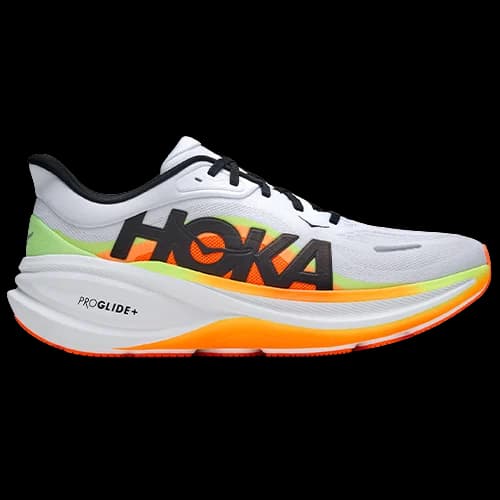 Hoka Clifton Pro Hoka Clifton Pro | 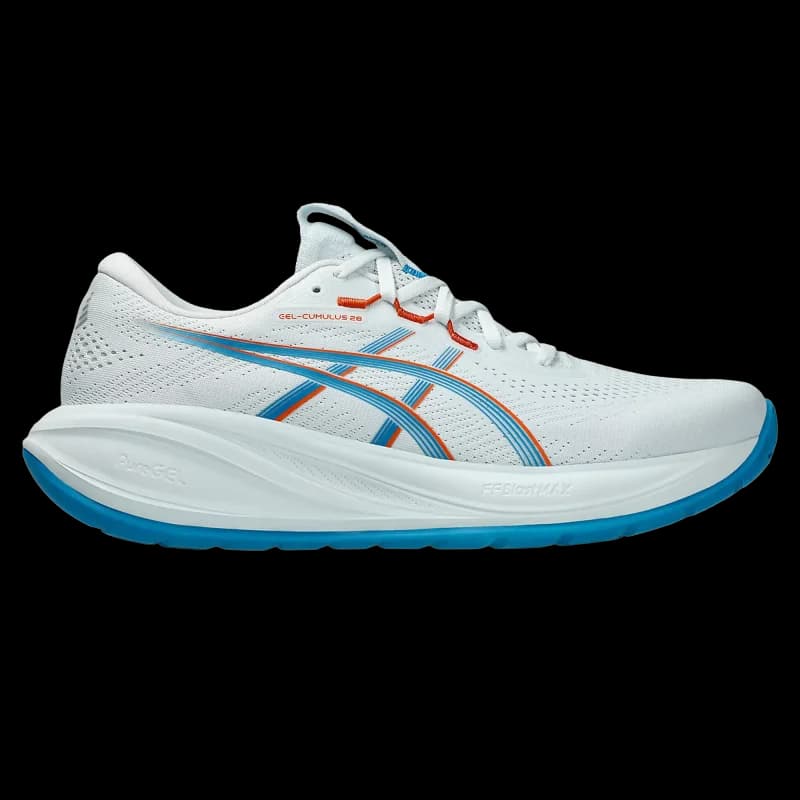 ASICS Gel-Cumulus 28 ASICS Gel-Cumulus 28 | 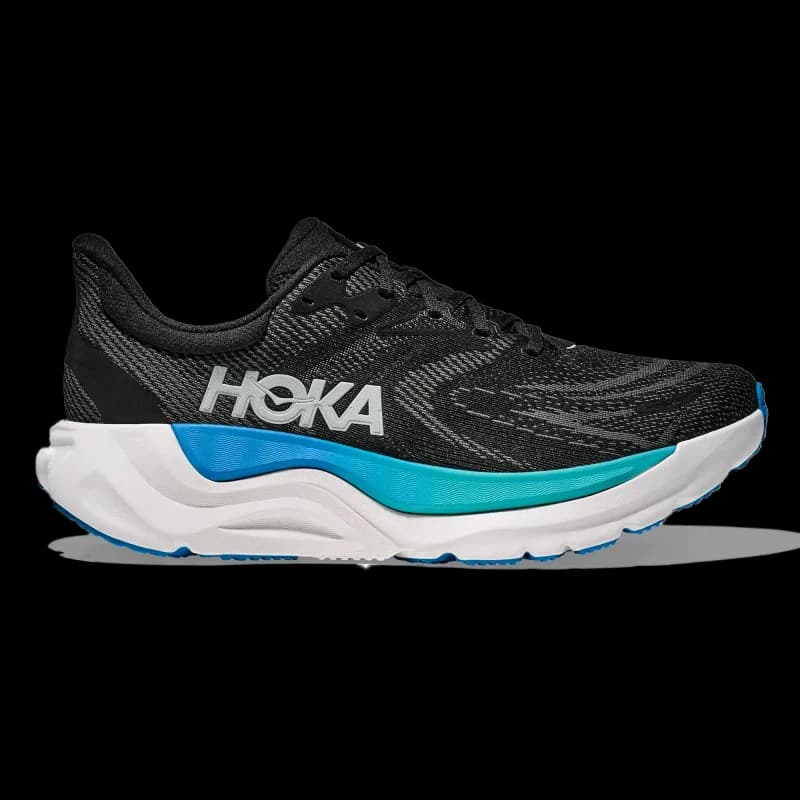 Hoka Arahi 8 Hoka Arahi 8 | 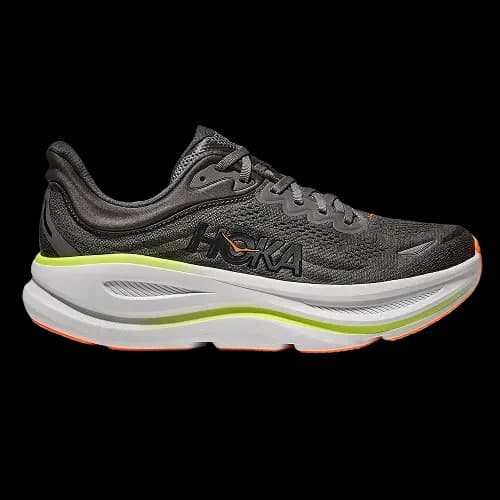 Hoka Bondi 9 Hoka Bondi 9 | |
|---|---|---|---|---|---|
| Pick it for | This page | Faster | Less cushion | More stable | More cushion |
| Drop | 8 mm | 8 mm | 8 mm | 8 mm | 5 mm |
| Heel stack | 42 mm | 46 mm | 38.5 mm | 41 mm | 43 mm |
| Weight | 261 g | 266 g | 258 g | 264 g | 297 g |
| Support | Neutral | Neutral | Neutral | Stability | Neutral |
Questions runners ask
What is the difference between the Hoka Clifton 10 and Clifton 11?
The Clifton 11 keeps the Clifton 10’s compression-molded EVA midsole and 8 mm listed drop, and changes the upper and insole: a lighter engineered mesh and an open-cell sockliner. Testers find it more cushioned underfoot, and RunRepeat measured a narrower toe box than on the Clifton 10.
Should I keep my Clifton 10 or move to the Clifton 11?
Keep the Clifton 10 if you have a wide forefoot, or are a heavier runner, since the platform is the same. Choose the Clifton 11 if you want a softer step-in and a closer fit, and most of your running is easy.
Does the Hoka Clifton 11 fit true to size?
Yes, according to Doctors of Running and RunRepeat. The width is the open question: Doctors of Running and RunRepeat find the toe box tapered, while Believe in the Run and Runnea find it roomy. If your forefoot is broad, start with the Wide (2E) version.
Does the Clifton 11 come in wide sizes?
Yes. Fleet Feet lists the men’s Clifton 11 in Regular (D), Wide (2E) and Extra Wide (4E). In Europe, i-run lists standard and Wide versions; we found no European retailer listing the extra-wide version.
Is the Hoka Clifton 11 good for heavy runners?
It is not the strongest choice. Doctors of Running rate it low for heavier heel strikers and saw the foam and outsole wear noticeably after about 80 miles. Heavier runners who like the Clifton feel may do better with the Clifton 10, the Clifton Pro or the Bondi.
Is the Clifton 11 good for heel strikers?
Yes. RunRepeat measured an 11.7 mm drop against the 8 mm listed, so the heel sits higher than the spec suggests, and the rocker rolls a heel landing forward. Runners who land further forward get less: the measured stack height at the front is 29.7 mm.
Is the Clifton 11 good for flat feet or overpronation?
It is a neutral shoe with a stable build, suited to mild stability needs according to Doctors of Running. Flat feet do not always mean your foot rolls in, and a marked inward roll calls for a stability shoe. Check how your foot actually moves before choosing.
Sources
- Doctors of Running, Hoka Clifton 11 Review (Matt Klein and testers, July 2026). Accessed Oct 9, 2026.
- RunRepeat, HOKA Clifton 11 lab review. Accessed Oct 9, 2026.
- Believe in the Run, Hoka Clifton 11 Review. Accessed Oct 9, 2026.
- Fleet Feet, Men’s HOKA Clifton 11. Accessed Oct 9, 2026.
- i-run, Hoka Clifton 11. Accessed Oct 9, 2026.
- Runnea, HOKA Clifton 11. Accessed Oct 9, 2026.
- RunRepeat, HOKA Clifton 10 lab review. Accessed Oct 9, 2026.
- Strideprint, Strideprint running shoe catalogue (ranks computed on 2026-10-11). Accessed Oct 11, 2026.
- cat: Strideprint catalogue, 395 shoes
How we review. We read published tests, brand and retailer pages and lab measurements, cross-check the figures and flag where they disagree. We did not test this shoe ourselves. Last updated October 12, 2026.