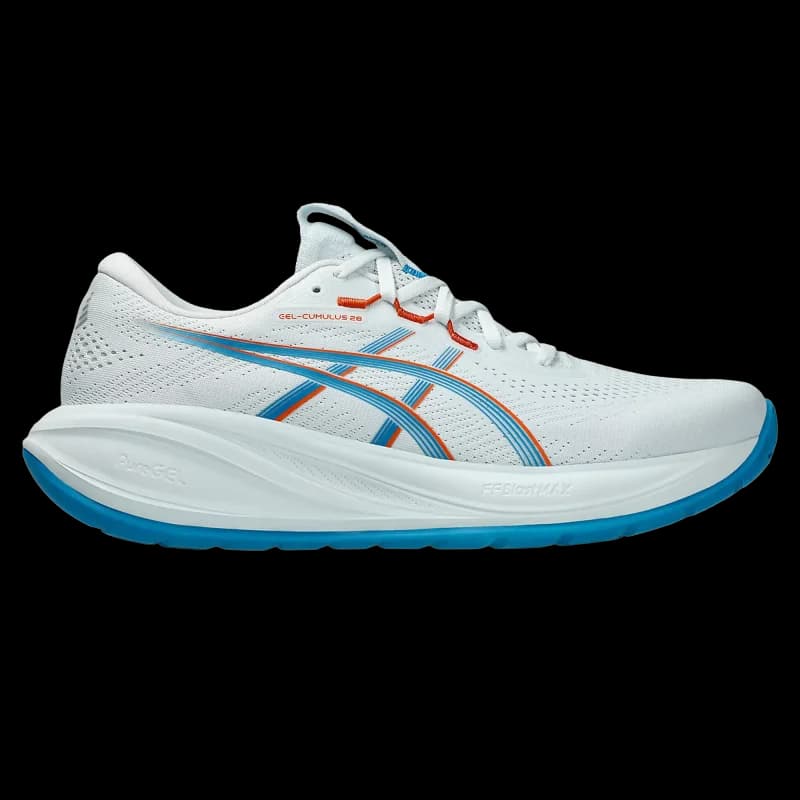
ASICS Gel-Cumulus 28 review
ASICS’s everyday neutral trainer moves to FF Blast Max foam and a roomier toe box, and two labs found a much steeper heel-to-toe slope than the spec sheet admits.
- Drop
- 8 mm
- Heel stack
- 38.5 mm
- Forefoot
- 30.5 mm
- Weight
- 258 g
- Support
- Neutral
- Plate
- None
Our verdict
Built around the heel.
The Gel-Cumulus 28 is a comfortable, stable neutral trainer whose measured drop sits well above the listed 8 mm. It suits rearfoot strikers who log easy daily miles, and it asks a lot of anyone who lands further forward.
Strong points
- Stable platform for a neutral shoe
- Comfortable, protected landings for heel strikers
- Roomier toe box than the Cumulus 27
- True to size, with wide and extra-wide versions
- Light for how much foam it carries
Weak points
- Measured drop far above the listed 8 mm
- Flat ride with little energy return
- Outsole wore fast in RunRepeat’s test
- No use for workouts or races
Who it fits
- You land on your heel
- Your week is mostly easy miles
- You want neutral, but steady
- The Cumulus 27 pinched your toes
Who should skip it
- You land on your midfoot or forefoot
- You want one shoe for faster days
- You wear through outsoles quickly
Shoe profile
Where the Gel-Cumulus 28 sits among the 395 shoes in our catalogue, and what changed from the Gel-Cumulus 27.
| Axis | Gel-Cumulus 28 | Gel-Cumulus 27 | Change |
|---|---|---|---|
| Cushioning | 51 | 51 | = |
| Lightness | 58 | 50 | +8 |
| Stability | 30 | 30 | = |
| Drop | 45 | 45 | = |
| Response | 6 | 6 | = |
Fig. 1 · How to read it. Each axis runs from 0 at the centre to 100 at the edge. Cushioning, lightness and drop are the shoe’s rank in the catalogue from listed figures; stability and response are scored from the support type, the plate, the rocker and the intended use. The dotted grey line is the catalogue median. Source: Strideprint catalogue (cat).
Where it sits in the catalogue
Weight258 g, lighter than 56% of shoes
Drop8 mm, higher than 45% of shoes
Heel stack38.5 mm, higher than 51% of shoes
Forefoot stack30.5 mm, lower than 55% of shoes
How it feels
Written from 3 published tests. We quote measurements, not impressions we did not have.
Plenty under the heel, less up front. FF Blast Max with PureGEL in the heel, and the extra height sits at the back: RunRepeat finds it plush, RTINGS firm.
Calm for a neutral shoe. No stability post, but a wide outsole and stiff heel counter calm the platform; enough for a mild roll, not a marked one.
Comfortable, not lively. Energy return is below average at 50.5 percent in the heel and 52.5 in the forefoot; the geometry rolls you forward, nothing pushes back.
Plenty under the heel, less up front. The 28 moves to FF Blast Max foam, with PureGEL kept in the heel. Fleet Feet lists a stack height of 38.5 mm at the heel and 30.5 mm at the forefoot. RunRepeat measured 42.8 mm and 29.5 mm, RTINGS 41.4 mm at the heel: the extra height is all at the back.
RunRepeat measured the foam at 31.9 on the AC scale, on the soft side, and found it plush underfoot. RTINGS rated the same shoe firm under both heel and forefoot. Expect a softer heel than forefoot either way.
Calm for a neutral shoe. There is no stability post, yet RTINGS rates the platform highly for stability thanks to a wide outsole and a stiff heel counter. RunRepeat describes smooth, stable touchdowns.
For a foot that rolls in a little at landing, that base is often enough. It does nothing specific for a marked inward roll.
Comfortable, not lively. RunRepeat measured energy return of 50.5 percent at the heel and 52.5 percent at the forefoot, below average. RTINGS found the rear of the shoe flat on impact.
The geometry rolls you forward smoothly enough, but nothing pushes back. It is a shoe for steady effort.
Read more
Plenty under the heel, less up front. The 28 moves to FF Blast Max foam, with PureGEL kept in the heel. Fleet Feet lists a stack height of 38.5 mm at the heel and 30.5 mm at the forefoot. RunRepeat measured 42.8 mm and 29.5 mm, RTINGS 41.4 mm at the heel: the extra height is all at the back.
RunRepeat measured the foam at 31.9 on the AC scale, on the soft side, and found it plush underfoot. RTINGS rated the same shoe firm under both heel and forefoot. Expect a softer heel than forefoot either way.
Calm for a neutral shoe. There is no stability post, yet RTINGS rates the platform highly for stability thanks to a wide outsole and a stiff heel counter. RunRepeat describes smooth, stable touchdowns.
For a foot that rolls in a little at landing, that base is often enough. It does nothing specific for a marked inward roll.
Comfortable, not lively. RunRepeat measured energy return of 50.5 percent at the heel and 52.5 percent at the forefoot, below average. RTINGS found the rear of the shoe flat on impact.
The geometry rolls you forward smoothly enough, but nothing pushes back. It is a shoe for steady effort.
Which runs it’s for
| Run | Fit | Why | Source |
|---|---|---|---|
| Easy runs | Made for it | What it was built for: steady, relaxed daily miles. | RTINGS, Runnea |
| Recovery runs | Made for it | Stable and forgiving when your legs are tired. | RunRepeat, Runnea |
| Long runs | Can do | Fine at an easy pace. RTINGS felt the cushioning fade over long distances. | RTINGS, Runnea |
| Tempo | Not for it | Little rebound in either lab. A livelier shoe will serve you better. | RunRepeat, RTINGS |
| Marathon race | Not for it | RTINGS is clear that it is not a racing shoe. | RTINGS |
Source: RTINGS, Runnea, RunRepeat
What the tests say
The two labs and Runnea describe a stable, dependable daily trainer with a flat ride, built for rearfoot strikers. They differ on how soft it is and on how far it can go.
| Test | Type | Our reading | In one sentence | Source |
|---|---|---|---|---|
| RunRepeat | Lab | Positive | RunRepeat scores it 86 out of 100: plush cushioning, wide platform and stable geometry suit heel strikers wanting a relaxed daily trainer. | Read |
| RTINGS | Lab | Mixed | RTINGS gives 6.4 out of 10: a no-nonsense, stable daily trainer for relaxed mileage, with a dull midsole and poor energy return. | Read |
| Runnea | Review | Positive | Runnea is very positive, calling it a total guarantee of success as a reliable daily trainer for piling up comfortable kilometres. | Read |
They agree
- Stable for a neutral shoeRunRepeat, RTINGS and Runnea all describe steady, predictable transitions on a broad base.
- A heel striker’s shoeRunRepeat recommends it above all to rearfoot strikers, and Runnea points to the heel gel as its main comfort asset.
- The real drop is steepRunRepeat measured 13.3 mm and RTINGS 11.7 mm against the 8 mm ASICS lists. Two labs, same direction.
- Not a speed shoeBoth labs measured little energy return, and Runnea frames it as a training shoe rather than a racer.
They split
- Soft or firm?RunRepeat measured its foam softer than average and calls the cushioning plush. RTINGS rates both heel and forefoot as firm.
- Long runsRTINGS felt the cushioning did not hold up well over long distances. Runnea found it stays consistent as fatigue sets in.
How it’s built
A plate-free daily trainer: FF BLAST MAX foam with a PureGEL insert at the rear, a FluidRide outsole that is part foam, part rubber, and a jacquard mesh upper with a knit tongue.
A plate-free daily trainer: FF Blast Max foam with PureGEL at the rear, a 5.0 mm FluidRide outsole that is part foam and part rubber, and a jacquard mesh upper with a thin 2.0 mm knit tongue.
| # | Part | Measure |
|---|---|---|
| 1 | UpperEngineered jacquard mesh | Breathability 3 / 5 |
| 2 | Tongue | 2.0 mm |
| 3 | Heel | Stiffness 5 / 5 |
| 4 | MidsoleFF BLAST MAX and PureGEL | Hardness 31.9 AC |
| 5 | InsoleOrthoLite HC35 | 5.2 mm |
| 6 | OutsoleFluidRide and LO-HRD rubber | 5.0 mm |
Fig. 3 · Side profile. Stack heights to scale (listed: 38.5 mm heel, 30.5 mm forefoot; measured: 5 mm outsole); the split between the two foams is not measured and is drawn at mid-height. Dashed: insole, hidden. Sources: Fleet Feet, RunRepeat, RTINGS.
Upper. A new engineered jacquard mesh using recycled polyester, according to Fleet Feet. RunRepeat found a second layer under the main mesh that blocks part of the airflow, and scored breathability 3 out of 5.
Tongue. Redesigned in an elastic knit, only 2.0 mm thick, semi-gusseted with a finger-loop tab, in RunRepeat’s teardown. RTINGS counts the gusseted tongue among the reasons the shoe feels steady.
Heel. A very stiff heel counter, 5 out of 5 in RunRepeat’s test, balanced by generous foam padding and no heel tab. RunRepeat warns it may bother sensitive Achilles tendons.
Midsole. FF BLAST MAX, a POE-based foam according to RTINGS, replaces the FF BLAST PLUS of the Cumulus 27, with the same PureGEL insert kept at the rear. RunRepeat measured 31.9 AC, plush, but found shock absorption almost unchanged from the 27. RTINGS found a pronounced heel rocker and an early forefoot rocker, stiff enough to hold its shape under load.
Insole. A removable OrthoLite HC35 insole, 5.2 mm thick in RunRepeat’s measurement, slightly above average.
Outsole. FluidRide mixes foam and rubber in one layer, 5.0 mm thick, with ASICS LO-HRD rubber at the back and a new white rubber section under the forefoot. Wet traction rose from 0.50 to 0.54 in RunRepeat’s test, still short of ASICSGRIP.
Read more
A plate-free daily trainer: FF BLAST MAX foam with a PureGEL insert at the rear, a FluidRide outsole that is part foam, part rubber, and a jacquard mesh upper with a knit tongue.
1. Upper. A new engineered jacquard mesh using recycled polyester, according to Fleet Feet. RunRepeat found a second layer under the main mesh that blocks part of the airflow, and scored breathability 3 out of 5.
2. Tongue. Redesigned in an elastic knit, only 2.0 mm thick, semi-gusseted with a finger-loop tab, in RunRepeat’s teardown. RTINGS counts the gusseted tongue among the reasons the shoe feels steady.
3. Heel. A very stiff heel counter, 5 out of 5 in RunRepeat’s test, balanced by generous foam padding and no heel tab. RunRepeat warns it may bother sensitive Achilles tendons.
4. Midsole. FF BLAST MAX, a POE-based foam according to RTINGS, replaces the FF BLAST PLUS of the Cumulus 27, with the same PureGEL insert kept at the rear. RunRepeat measured 31.9 AC, plush, but found shock absorption almost unchanged from the 27. RTINGS found a pronounced heel rocker and an early forefoot rocker, stiff enough to hold its shape under load.
5. Insole. A removable OrthoLite HC35 insole, 5.2 mm thick in RunRepeat’s measurement, slightly above average.
6. Outsole. FluidRide mixes foam and rubber in one layer, 5.0 mm thick, with ASICS LO-HRD rubber at the back and a new white rubber section under the forefoot. Wet traction rose from 0.50 to 0.54 in RunRepeat’s test, still short of ASICSGRIP.
Durability. Outsole durability is the weak point. RunRepeat measured 2.4 mm of wear, more than double the 1.1 mm average, partly offset by the thicker foam-and-rubber layer, and advises against it for runners who wear down small areas fast. The heel lining scored a perfect 5 out of 5, the ventilated toe box 2 out of 5.
Durability. Outsole durability is the weak point. RunRepeat measured 2.4 mm of wear, more than double the 1.1 mm average, partly offset by the thicker foam-and-rubber layer, and advises against it for runners who wear down small areas fast. The heel lining scored a perfect 5 out of 5, the ventilated toe box 2 out of 5.
Specs, listed and measured
Every figure carries its source.
Drop, mm
Heel stack, mm
Forefoot stack, mm
Weight (men’s), g
| Spec | Listed | Measured |
|---|---|---|
| Drop |
|
|
| Heel stack |
|
|
| Forefoot stack |
|
|
| Weight, US M9 |
|
|
| Support |
| – |
| Plate |
| – |
| Surface |
| – |
| Release year |
| – |
Fig. 4 · Listed vs measured. Bars start at zero. Sources: Fleet Feet, RunRepeat, RTINGS.
Lab measurements
| Spec | Measured |
|---|---|
| Midsole hardness |
|
| Torsional rigidity |
|
| Energy return (heel) |
|
| Heel counter stiffness |
|
| Traction coefficient |
|
| Breathability |
|
| Spec | Measured |
|---|---|
| Toe box width |
|
| Toe box height |
|
| Outsole thickness |
|
| Insole thickness |
|
| Tongue thickness |
|
| Flex force |
|
Sizing and fit
Take your usual size; the toe box is roomier than on the Cumulus 27.
Length
True to size
Widths
standard, wide, and extra wide
Toe room
More room than the Cumulus 27. RunRepeat measured a 74.4 mm toe box, up from 71.1 mm, with 29.1 mm of height, and RTINGS describes roomy dimensions through the forefoot and arch.
RunRepeat, RTINGS
Full sizing notes from testers
RunRepeat, backed by its readers’ sizing votes, and RTINGS both report a true-to-size fit. RTINGS also scores the forefoot and arch width fit well.
RunRepeat measured the toe box at 74.4 mm at the big toe, up from 71.1 mm on the Cumulus 27, so runners who found the old version snug up front should be more comfortable.
Fleet Feet lists regular, wide (2E) and extra-wide (4E) for men, and RTINGS also mentions a narrow option. Availability of the wider versions in Europe varies by retailer.
RunRepeat, RTINGS, Fleet Feet
Vs Gel-Cumulus 27
A steady update: new foam, a new upper and more toe room, with the same heel-first character.
| Gel-Cumulus 28 | Gel-Cumulus 27 | |
|---|---|---|
| Support | Neutral | Neutral |
| Drop | 8 mm | 8 mm |
| Heel stack | 38.5 mm | 38.5 mm |
| Forefoot | 30.5 mm | 30.5 mm |
| Weight | 258 g | 264 g |
Keep the Cumulus 27 if it fits your forefoot well: the 28 still rides the same way, flat and rear-weighted. Move to the 28 if the 27 felt tight at the toes, or if you want the newer foam.
Listed figures. Source: Strideprint catalogue (cat).
Version history: Gel-Cumulus 27 to Gel-Cumulus 28
FF Blast Max foam. The midsole moves to ASICS’s FF Blast Max compound. (Fleet Feet)
Roomier toe box. RunRepeat measured 74.4 mm at the big toe, up from 71.1 mm. (RunRepeat)
New upper and heel rubber. An engineered jacquard mesh upper and harder-wearing rubber at the heel. (Fleet Feet)
Slightly lighter. RunRepeat measured about 3 percent less weight than the Cumulus 27. (RunRepeat)
Alternatives compared
Each one fixes one thing the Gel-Cumulus 28 does not do.
| ASICS Gel-Cumulus 28 | 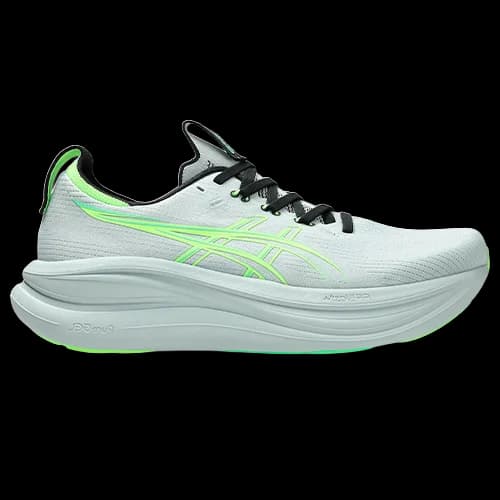 ASICS Gel-Nimbus 28 ASICS Gel-Nimbus 28 | 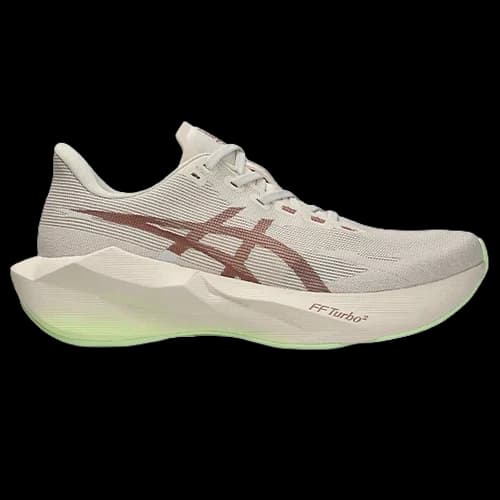 ASICS Novablast 6 ASICS Novablast 6 | 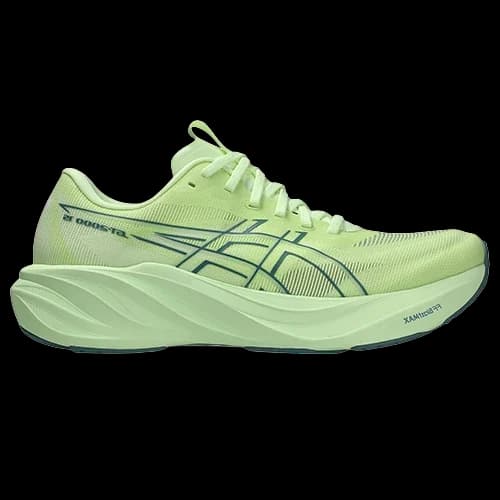 ASICS GT-2000 15 ASICS GT-2000 15 | 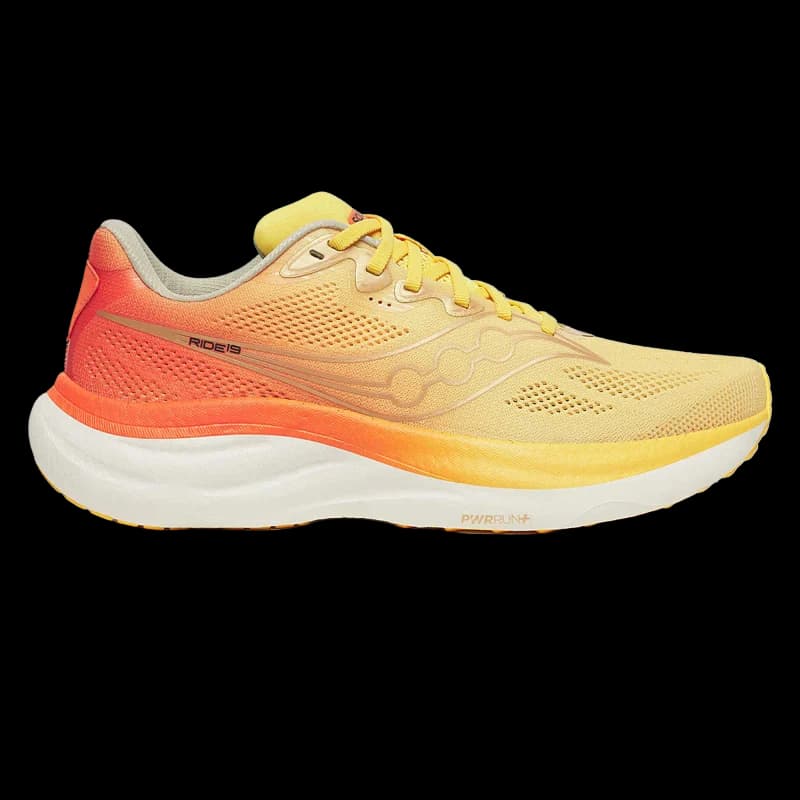 Saucony Ride 19 Saucony Ride 19 | |
|---|---|---|---|---|---|
| Pick it for | This page | More cushion | Faster | More stable | Same support |
| Drop | 8 mm | 8 mm | 8 mm | 8 mm | 8 mm |
| Heel stack | 38.5 mm | 43.5 mm | 41.5 mm | 37 mm | 38 mm |
| Weight | 258 g | 280 g | 249 g | 249 g | 255 g |
| Support | Neutral | Neutral | Neutral | Stability | Neutral |
Questions runners ask
Cumulus 28 or Nimbus 28: which should I choose?
Choose the Gel-Cumulus 28 for a balanced, stable daily trainer. Choose the Gel-Nimbus 28 if you want more cushioning for long, slow miles. Runnea frames the Cumulus as the more neutral, versatile option and the Nimbus as the more cushioned one.
What changed from the Cumulus 27 to the Cumulus 28?
The Cumulus 28 gets FF Blast Max foam, a new jacquard mesh upper and more durable heel rubber. RunRepeat also measured a roomier toe box, 74.4 mm against 71.1 mm, and about 3 percent less weight. The ride itself stays the same.
What is the real drop of the Gel-Cumulus 28?
ASICS lists 8 mm. RunRepeat measured 13.3 mm and RTINGS 11.7 mm, so the shoe sits clearly heel-down. Heel strikers will feel at home; midfoot and forefoot strikers may find the slope steep.
Does the Gel-Cumulus 28 fit true to size?
Yes. RunRepeat and RTINGS both report a true-to-size fit, and the toe box is roomier than on the Cumulus 27. Fleet Feet lists wide (2E) and extra-wide (4E) versions for men.
Is the Cumulus 28 good for heel strikers?
It is one of the clearest heel-striker shoes in the ASICS range. RunRepeat rates it excellent for rearfoot strikers, Runnea credits the PureGEL insert for softer impacts, and both labs measured a drop well above the listed 8 mm.
Is the Cumulus 28 good for long runs?
At an easy pace, yes, with some debate. RTINGS felt the cushioning fade over long distances, while Runnea found it consistent as fatigue sets in. If most of your training is long and slow, the more cushioned Nimbus 28 is worth comparing.
Sources
- RunRepeat, ASICS Gel Cumulus 28 lab review. Accessed Oct 9, 2026.
- RTINGS, ASICS GEL-CUMULUS 28 review. Accessed Oct 9, 2026.
- Runnea, ASICS Gel Cumulus 28 review. Accessed Oct 9, 2026.
- Fleet Feet, Men’s ASICS Gel-Cumulus 28. Accessed Oct 9, 2026.
- roadtrailrun.com · Release year, listed
- cat: Strideprint catalogue, 395 shoes
How we review. We read published tests, brand and retailer pages and lab measurements, cross-check the figures and flag where they disagree. We did not test this shoe ourselves. Last updated October 12, 2026.