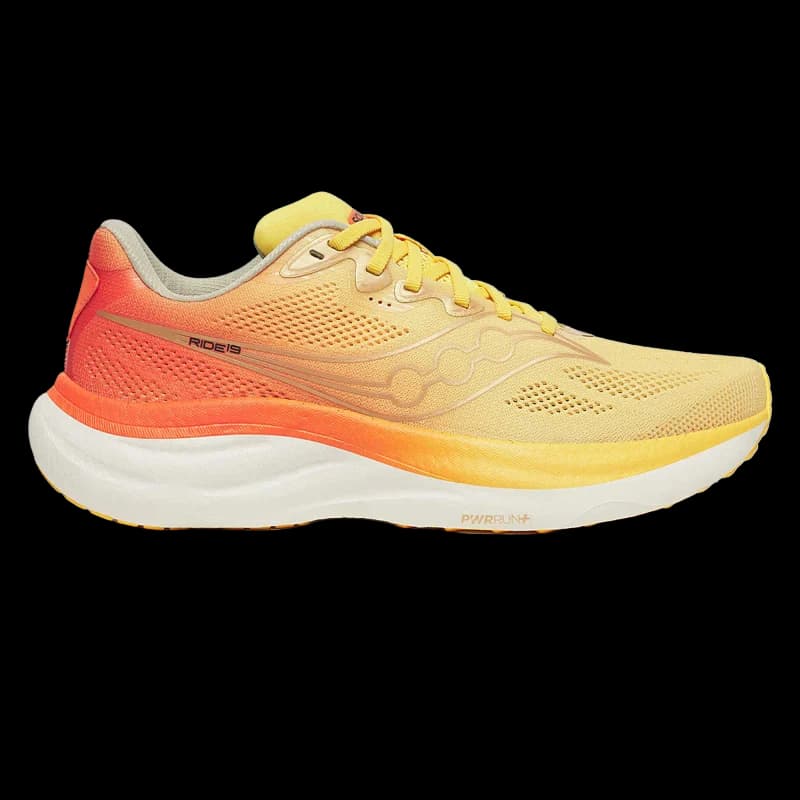
Saucony Ride 19 review
Saucony’s everyday trainer grows taller, wider and softer. It is now a calmer, more cushioned shoe, and a little less of an all-rounder.
- Drop
- 8 mm
- Heel stack
- 38 mm
- Forefoot
- 30 mm
- Weight
- 255 g
- Support
- Neutral
- Plate
- None
Our verdict
More cushion, less zip.
The Ride 19 is a neutral daily trainer with more cushioning, a broader base and a stronger rocker than the Ride 18. It suits runners who spend most of their week at relaxed, steady paces and want a stable, durable shoe more than a quick one.
Strong points
- Wider, more stable platform than the Ride 18
- High energy return measured for a daily trainer
- Very low outsole wear in the lab, durable on the road
- Secure heel and padded tongue, no lace bite
- Offered in a wide (2E) version
Weak points
- Heavier than the Ride 18 on the lab scale: 9.8 oz against 9.0 oz
- Less lively at faster paces than the previous version
- Low volume over the midfoot and forefoot
- Listed stack heights differ between sources
Who it fits
- Your week is mostly easy running
- You want neutral, but steady
- You land on your heel or midfoot at a relaxed pace
- You go through shoes quickly
Who should skip it
- You want one shoe for workouts too
- Every gram matters to you
- Your foot rolls in markedly
- You have a high instep
Shoe profile
Where the Ride 19 sits among the 395 shoes in our catalogue, and what changed from the Ride 18.
| Axis | Ride 19 | Ride 18 | Change |
|---|---|---|---|
| Cushioning | 43 | 18 | +25 |
| Lightness | 60 | 56 | +4 |
| Stability | 30 | 30 | = |
| Drop | 45 | 45 | = |
| Response | 6 | 6 | = |
Fig. 1 · How to read it. Each axis runs from 0 at the centre to 100 at the edge. Cushioning, lightness and drop are the shoe’s rank in the catalogue from listed figures; stability and response are scored from the support type, the plate, the rocker and the intended use. The dotted grey line is the catalogue median. Source: Strideprint catalogue (cat).
Where it sits in the catalogue
Weight255 g, lighter than 59% of shoes
Drop8 mm, higher than 45% of shoes
Heel stack38 mm, lower than 49% of shoes
Forefoot stack30 mm, lower than 56% of shoes
How it feels
Written from 4 published tests. We quote measurements, not impressions we did not have.
Softer and taller, still balanced. Reformulated PWRRUN+ is softer and taller than on the Ride 18 without turning mushy: neither too soft nor unstable, said one tester.
Neutral, with a wide footprint. No post or rail: stability comes from a base much wider than average at heel and forefoot. Forgiving, yet still neutral.
Bouncy numbers, relaxed character. High lab energy return, but the rocker and extra weight feel smooth rather than quick. Reviewers part ways on picking up the pace.
Softer and taller, still balanced. Saucony reformulated its PWRRUN+ foam and added more of it. Doctors of Running find it softer than earlier Rides, and RunRepeat’s lab put the stack height at the heel close to 39 mm, well above the 35 mm they measured on the Ride 18.
It does not cross into mushy. RunRepeat’s durometer reading sits near the average, and one Believe in the Run tester summed it up as neither too soft nor unstable.
Neutral, with a wide footprint. There is no post or guide rail. Stability comes from geometry: RunRepeat measured a base about 10 mm wider than average at the heel and 12 mm wider at the forefoot. Doctors of Running grade it A- for stability.
That makes it forgiving for a slightly uneven landing. It is still a neutral shoe, not a support model.
Bouncy numbers, relaxed character. RunRepeat measured high energy return at heel and forefoot for a daily trainer. On the road, the rocker and the extra weight make it feel smooth rather than quick.
Reviewers agree it is at home on steady runs. How well it picks up the pace is where they part ways.
Read more
Softer and taller, still balanced. Saucony reformulated its PWRRUN+ foam and added more of it. Doctors of Running find it softer than earlier Rides, and RunRepeat’s lab put the stack height at the heel close to 39 mm, well above the 35 mm they measured on the Ride 18.
It does not cross into mushy. RunRepeat’s durometer reading sits near the average, and one Believe in the Run tester summed it up as neither too soft nor unstable.
Neutral, with a wide footprint. There is no post or guide rail. Stability comes from geometry: RunRepeat measured a base about 10 mm wider than average at the heel and 12 mm wider at the forefoot. Doctors of Running grade it A- for stability.
That makes it forgiving for a slightly uneven landing. It is still a neutral shoe, not a support model.
Bouncy numbers, relaxed character. RunRepeat measured high energy return at heel and forefoot for a daily trainer. On the road, the rocker and the extra weight make it feel smooth rather than quick.
Reviewers agree it is at home on steady runs. How well it picks up the pace is where they part ways.
Which runs it’s for
| Run | Fit | Why | Source |
|---|---|---|---|
| Easy runs | Made for it | Its natural setting: soft, stable and calm underfoot. | Doctors of Running, Runnea |
| Long runs | Made for it | The extra foam and wide base hold up over distance; Runnea names long, easy runs as its best use. | Runnea |
| Recovery runs | Made for it | Cushioned and undemanding, a good match for the day after a hard session. | Doctors of Running |
| Marathon race | Can do | Fine for marathon training mileage. For race day, most runners will want something lighter. | RunRepeat, Runnea |
| Tempo | Can do | Believe in the Run testers found it handles tempo efforts; Doctors of Running and Runnea are less convinced. | Doctors of Running, Believe in the Run, Runnea |
| Intervals | Not for it | Too heavy and too calm for short, fast repeats. | RunRepeat, Runnea |
Source: Doctors of Running, Runnea, RunRepeat, Believe in the Run
What the tests say
Reviewers agree the Ride 19 is taller, wider and steadier than before, and a strong daily trainer. They split on how much speed it kept.
| Test | Type | Our reading | In one sentence | Source |
|---|---|---|---|---|
| Doctors of Running | Review | Mixed | Doctors of Running enjoys the plush comfort for easy runs, with grades from B plus to A minus, but misses the versatility at faster paces. | Read |
| RunRepeat | Lab | Positive | RunRepeat scores it 88 out of 100, in its Superb band, and finds a dependable fit with a quite generous toe box volume. | Read |
| Believe in the Run | Review | Positive | Believe in the Run places it in its A tier as a dependable workhorse that quietly accumulates miles of every variety. | Read |
| Runnea | Review | Positive | Runnea recommends it as a reliable daily trainer, praising its forgiving midsole and secure heel, with limited responsiveness for faster running. | Read |
They agree
- A bigger, more stable platformRunRepeat measured a taller stack and a base far broader than average; Doctors of Running describe much more sole flare and a broader platform than the Ride 18.
- A very good daily trainerDoctors of Running, Believe in the Run and Runnea all frame it as a dependable shoe for everyday mileage, and RunRepeat recommends it as a solid daily trainer.
- Built to lastRunRepeat recorded low outsole wear in its abrasion test and Runnea reports strong durability after more than 300 km.
They split
- How lively it feelsBelieve in the Run testers found it responsive enough for tempo work. Doctors of Running say it lost the Ride 18’s versatility at speed, and Runnea finds it lacking at fast paces.
- Room up frontDoctors of Running describe a slightly wide forefoot with low volume on top; one Believe in the Run tester calls the toe box spacious.
How it’s built
One block of reformulated PWRRUN+ foam with no plate, under an engineered mesh upper, with the rubber concentrated where the forefoot wears.
One block of reformulated PWRRUN+ foam with no plate, under an engineered mesh upper made with recycled materials, with the rubber concentrated where the forefoot wears.
| # | Part | Measure |
|---|---|---|
| 1 | UpperEngineered mesh | Breathability 74 BR |
| 2 | Tongue | 7.3 mm |
| 3 | Heel | Stiffness 5 / 5 |
| 4 | MidsolePWRRUN+ | 37.1 AC |
| 5 | Insole | 6.5 mm |
| 6 | OutsoleXT-900 rubber | 3.5 mm |
Fig. 3 · Side profile. Stack heights to scale (listed: 38 mm heel, 30 mm forefoot; measured: 3.5 mm outsole); the split between the two foams is not measured and is drawn at mid-height. Dashed: insole, hidden. Sources: Doctors of Running, Fleet Feet, RunRepeat, Believe in the Run, Runnea. BR: RunRepeat’s breathability scale (not a score out of 100).
Upper. A new engineered mesh made with recycled materials, built to stretch around different foot shapes while staying breathable. RunRepeat lists its breathability among the shoe’s strengths, and Saucony swapped the Ride 18’s lace loops for classic punched eyelets.
Tongue. A semi-gusseted tongue, attached on both sides, with more padding than average in RunRepeat’s lab. Doctors of Running had no lace bite and good lockdown.
Heel. A stiff heel counter, rated 5 out of 5 in RunRepeat’s lab, inside a heel collar with extra cushioning and a textured lining that helps stop slippage.
Midsole. A reformulated PWRRUN+ midsole, a beaded eTPU foam, in a single block despite the two-tone paint. The heel of the platform grew from 91.9 mm across on the Ride 18 to 100.7 mm, with an aggressive heel bevel and a late forefoot rocker. The added material also made it 73% stiffer in RunRepeat’s bend test.
Insole. A removable insole, 6.5 mm thick, made of a lighter and softer material than the PWRRUN+ insoles of earlier Saucony models.
Outsole. A redesigned outsole in XT-900 rubber, thicker than average, with more coverage under the forefoot and less at the midfoot and heel to save weight. New flex grooves smooth the transition, and RunRepeat’s testers felt secure on dry asphalt and wet concrete.
Read more
One block of reformulated PWRRUN+ foam with no plate, under an engineered mesh upper, with the rubber concentrated where the forefoot wears.
1. Upper. A new engineered mesh made with recycled materials, built to stretch around different foot shapes while staying breathable. RunRepeat lists its breathability among the shoe’s strengths, and Saucony swapped the Ride 18’s lace loops for classic punched eyelets.
2. Tongue. A semi-gusseted tongue, attached on both sides, with more padding than average in RunRepeat’s lab. Doctors of Running had no lace bite and good lockdown.
3. Heel. A stiff heel counter, rated 5 out of 5 in RunRepeat’s lab, inside a heel collar with extra cushioning and a textured lining that helps stop slippage.
4. Midsole. A reformulated PWRRUN+ midsole, a beaded eTPU foam, in a single block despite the two-tone paint. The heel of the platform grew from 91.9 mm across on the Ride 18 to 100.7 mm, with an aggressive heel bevel and a late forefoot rocker. The added material also made it 73% stiffer in RunRepeat’s bend test.
5. Insole. A removable insole, 6.5 mm thick, made of a lighter and softer material than the PWRRUN+ insoles of earlier Saucony models.
6. Outsole. A redesigned outsole in XT-900 rubber, thicker than average, with more coverage under the forefoot and less at the midfoot and heel to save weight. New flex grooves smooth the transition, and RunRepeat’s testers felt secure on dry asphalt and wet concrete.
Durability. RunRepeat’s abrasion test left only 0.6 mm of wear on the outsole, about half the average, and the heel padding scored 4 out of 5. Runnea reports high durability after more than 300 km.
Durability. RunRepeat’s abrasion test left only 0.6 mm of wear on the outsole, about half the average, and the heel padding scored 4 out of 5. Runnea reports high durability after more than 300 km.
Specs, listed and measured
Every figure carries its source.
Heel stack, mm
Forefoot stack, mm
Drop, mm
Weight (men’s), g
| Spec | Listed | Measured |
|---|---|---|
| Drop |
|
|
| Heel stack |
|
|
| Forefoot stack |
|
|
| Weight, US M9 |
|
|
| Support |
| – |
| Plate |
| – |
| Surface |
| – |
| Release year |
| – |
Fig. 4 · Listed vs measured. Bars start at zero. Sources: Fleet Feet, Doctors of Running, Believe in the Run, RunRepeat.
Lab measurements
| Spec | Measured |
|---|---|
| Midsole hardness |
|
| Energy return (heel) |
|
| Torsional rigidity |
|
| Heel counter stiffness |
|
| Traction coefficient |
|
| Breathability |
|
| Spec | Measured |
|---|---|
| Toe box width |
|
| Toe box height |
|
| Outsole thickness |
|
| Insole thickness |
|
| Tongue thickness |
|
| Flex force |
|
BR: RunRepeat’s breathability scale (not a score out of 100).
Sizing and fit
Take your usual size; check the wide version if your forefoot is broad or your instep is high.
Length
True to size
Widths
standard and wide
Toe room
Toe room is generous, with one caveat. RunRepeat calls the toe box volume quite generous and Believe in the Run spacious, while Doctors of Running finds a slightly wide forefoot but low volume under the tongue.
Doctors of Running, RunRepeat, Believe in the Run
Full sizing notes from testers
Doctors of Running and RunRepeat call it true to size, and RunRepeat’s reader vote agrees. Runnea found the fit comfortable from the first run, with a secure heel.
Doctors of Running describe a normal heel and midfoot, a slightly wide forefoot and a low volume on top. If that top feels tight, the insole is removable and unusually thick in RunRepeat’s lab, so a thinner one frees some room. Believe in the Run testers were split: one found the toe box spacious, another received a pair half a size too big.
Fleet Feet lists regular (D) and wide (2E) for men. RunRepeat also mentions a narrow version, so availability depends on the market.
Doctors of Running, RunRepeat, Believe in the Run, Fleet Feet, Runnea
Vs Ride 18
A bigger update than the number suggests: more foam, a much broader base and more rocker, with more weight to carry.
| Ride 19 | Ride 18 | |
|---|---|---|
| Support | Neutral | Neutral |
| Drop | 8 mm | 8 mm |
| Heel stack | 38 mm | 35 mm |
| Forefoot | 30 mm | 27 mm |
| Weight | 255 g | 259 g |
Keep the Ride 18 if you used it as your one shoe for everything, including faster sessions, or if you prefer a closer-to-the-ground feel. Move to the 19 if most of your running is easy and you want more cushion and a steadier base.
Listed figures. Source: Strideprint catalogue (cat).
Version history: Ride 18 to Ride 19
Reformulated PWRRUN+ foam. Fleet Feet describes a lighter, more responsive version of the foam, and there is more of it underfoot. (Fleet Feet)
Taller stack. RunRepeat measured the heel at 38.7 mm against 35.0 mm on the Ride 18. (RunRepeat)
Wider base, stronger rocker. Doctors of Running point to far more sole flare, a wider platform and a more pronounced rocker. (Doctors of Running)
New upper and outsole. A new engineered mesh, more heel padding and added forefoot traction on the outsole. (Believe in the Run, Fleet Feet)
Heavier in the lab. RunRepeat weighed it at 278 g (9.8 oz) against 255 g (9.0 oz) for the Ride 18. (RunRepeat)
Alternatives compared
Each one fixes one thing the Ride 19 does not do.
| Saucony Ride 19 | 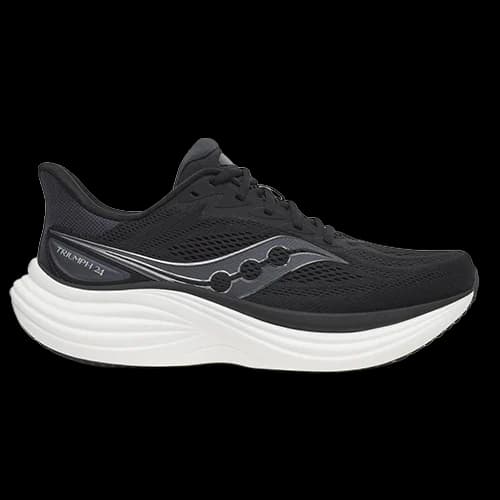 Saucony Triumph 24 Saucony Triumph 24 | 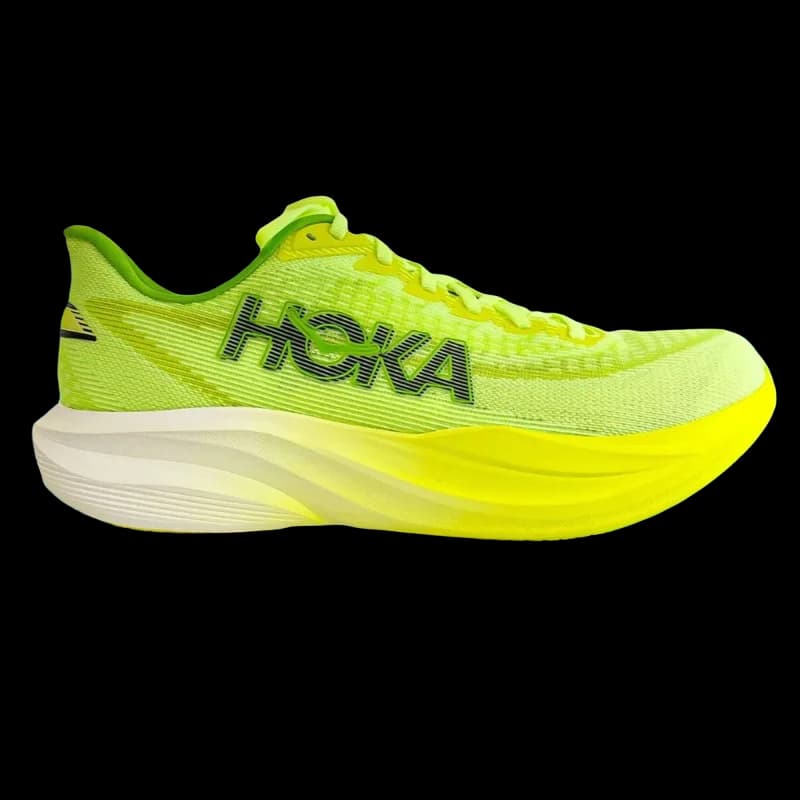 Hoka Mach 7 Hoka Mach 7 | 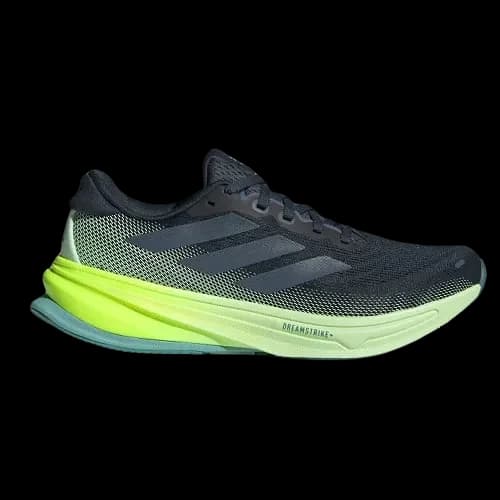 Adidas Supernova Rise 2 Adidas Supernova Rise 2 | 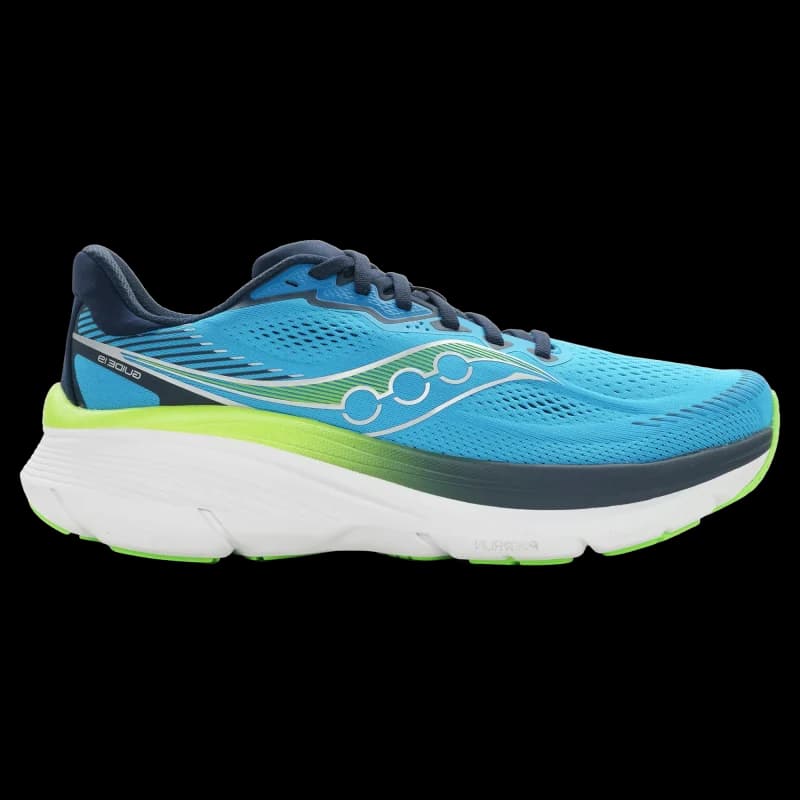 Saucony Guide 19 Saucony Guide 19 | |
|---|---|---|---|---|---|
| Pick it for | This page | More cushion | Lighter | Lighter | More stable |
| Drop | 8 mm | 10 mm | 5 mm | 10 mm | 6 mm |
| Heel stack | 38 mm | 43 mm | 37 mm | – | 37 mm |
| Weight | 255 g | 250 g | 241 g | 262 g | 258 g |
| Support | Neutral | Neutral | Neutral | Neutral | Stability |
Questions runners ask
Ride 18 or Ride 19: which should I choose?
The Ride 19 has more foam, a wider base and more rocker, so it is softer and steadier but heavier, at 278 g (9.8 oz) against 255 g (9.0 oz) in RunRepeat’s lab. Choose it for relaxed mileage. Stay with the Ride 18 if you want one shoe that also handles faster sessions.
Does the Saucony Ride 19 fit true to size?
Yes for most runners. Doctors of Running, RunRepeat and Runnea report a true-to-size fit. The forefoot is slightly wide but low in volume, so runners with a high instep should try the wide version, the lacing or a thinner insole before going up a size.
Is the Saucony Ride 19 available in wide?
Yes. Fleet Feet lists the men’s Ride 19 in regular (D) and wide (2E), and RunRepeat also lists a narrow option. Which widths you can find depends on the country, so check the width before choosing your size.
What is the stack height and drop of the Ride 19?
Every source gives an 8 mm drop. Listed stack heights differ: Doctors of Running and Believe in the Run list 38 mm at the heel and 30 mm at the forefoot, Fleet Feet 36 mm and 28 mm. RunRepeat’s lab measured 38.7 mm and 30.2 mm.
Ride 19 or Triumph 24?
The Triumph 24 has a taller stack and Saucony’s new incrediLUX foam, so it is softer and bouncier for long, easy runs, with a snugger forefoot. The Ride 19 is lower, steadier and more versatile as an everyday shoe. Pick the Triumph for comfort on long days, the Ride for daily mileage.
Is the Ride 19 good for marathon training?
For the mileage, yes. Runnea recommends it for long, easy runs and base building, and it measured very durable in RunRepeat’s lab. For long runs at marathon pace or for race day, a lighter shoe will feel quicker.
Sources
- Doctors of Running, Saucony Ride 19 Review (David Salas, March 2026). Accessed Oct 9, 2026.
- RunRepeat, Saucony Ride 19 lab review. Accessed Oct 9, 2026.
- Believe in the Run, Saucony Ride 19 Review (January 2026). Accessed Oct 9, 2026.
- Fleet Feet, Men’s Saucony Ride 19. Accessed Oct 9, 2026.
- Runnea, Saucony Ride 19. Accessed Oct 9, 2026.
- RunRepeat, Saucony Triumph 24 lab review. Accessed Oct 9, 2026.
- saucony.com · Drop, Support, and Release year, listed
- cat: Strideprint catalogue, 395 shoes
How we review. We read published tests, brand and retailer pages and lab measurements, cross-check the figures and flag where they disagree. We did not test this shoe ourselves. Last updated October 12, 2026.