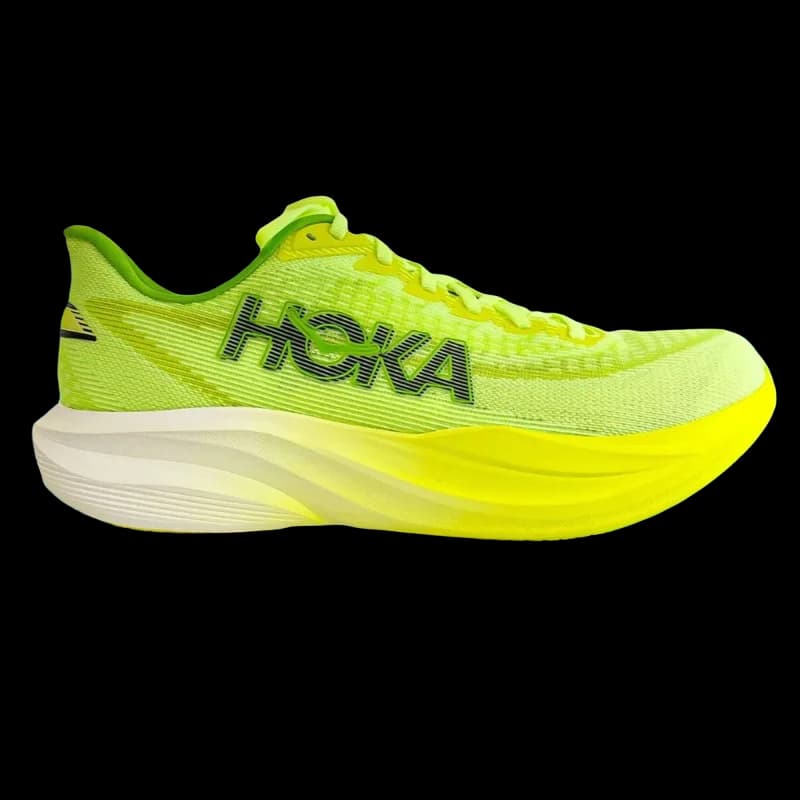
Hoka Mach 7 review
Hoka’s light, quick trainer keeps the Mach 6 midsole and gets a new upper, better grip and a reworked heel. The drop on paper and the drop in the lab are not the same shoe.
- Drop
- 5 mm
- Heel stack
- 37 mm
- Forefoot
- 32 mm
- Weight
- 241 g
- Support
- Neutral
- Plate
- None
Our verdict
Light and quick, best kept short.
The Mach 7 is a light, rockered neutral trainer that feels quick on tempo days and steady runs, with a firmer, snugger build than its Hoka looks suggest. It suits neutral runners with a normal to narrow foot who want one nimble shoe for runs up to a half marathon, more than heavy runners or very long days.
Strong points
- Very light for a daily trainer
- Much better grip than the Mach 6
- Smooth, forward-rolling rocker
- Highly breathable upper in the lab
- Secure lockdown from the reworked heel and tongue
Weak points
- Runs slightly small, about half a size versus the Mach 6
- Feels flat on runs beyond about 16 km for some testers
- Very stiff heel counter: careful with a sensitive Achilles
- Firmer than a typical Hoka
Who it fits
- You want one light shoe that can go faster
- You land on your heel
- Your foot is normal to narrow
- Your races are 5 km to a half marathon
Who should skip it
- Your feet are wide
- Your long runs are long
- You are a heavier runner
- You want plush
Shoe profile
Where the Mach 7 sits among the 395 shoes in our catalogue.
| Axis | Mach 7 |
|---|---|
| Cushioning | 33 |
| Lightness | 69 |
| Stability | 30 |
| Drop | 9 |
| Response | 40 |
Fig. 1 · How to read it. Each axis runs from 0 at the centre to 100 at the edge. Cushioning, lightness and drop are the shoe’s rank in the catalogue from listed figures; stability and response are scored from the support type, the plate, the rocker and the intended use. The dotted grey line is the catalogue median. Source: Strideprint catalogue (cat).
Where it sits in the catalogue
Weight241 g, lighter than 68% of shoes
Drop5 mm, lower than 80% of shoes
Heel stack37 mm, lower than 58% of shoes
Forefoot stack32 mm, higher than 52% of shoes
How it feels
Written from 4 published tests. We quote measurements, not impressions we did not have.
Cushioned, not soft. Supercritical EVA carried over from the Mach 6, no plate. RunRepeat measured 41.7 AC, firm; Runner’s World Germany says well cushioned, not soft.
Neutral, held by the fit. Neutral, steadied by a snug upper and a very stiff heel counter (5 out of 5). A marked inward roll needs a guidance shoe.
The reason to choose it. Light for a trainer, with a rocker that rolls you forward and a snappy toe-off. Late in long runs, testers felt the foam go flat.
Cushioned, not soft. The midsole is the supercritical EVA of the Mach 6, at a listed stack height of 37 mm at the heel and 32 mm at the forefoot, with Hoka’s Early Stage Meta-Rocker. There is no plate.
RunRepeat measured the foam at 41.7 on the AC scale, on the firm side. Runner’s World Germany describe it as well cushioned but not marshmallow soft, which is a fair summary of every test.
Neutral, held by the fit. It is a neutral shoe. What keeps you steady is the snug upper and a very stiff heel counter, rated 5 out of 5 in RunRepeat’s lab, and a torsional rigidity close to average.
A foot that rolls in a little will be fine; a marked inward roll needs a guidance shoe.
The reason to choose it. At 224 g (7.9 oz) in RunRepeat’s lab, it is light for a trainer; on the brand figure of 241 g for a men’s US 9, it ranks 57th lightest of the 149 neutral road shoes in our catalogue weighed in that size, and the rocker rolls you forward without effort. Believe in the Run like the ground feel and the pace it encourages; Runnea describe a snappy toe-off that suits medium and brisk paces.
The trade-off shows late in long runs, when Believe in the Run testers felt the foam go flat.
Read more
Cushioned, not soft. The midsole is the supercritical EVA of the Mach 6, at a listed stack height of 37 mm at the heel and 32 mm at the forefoot, with Hoka’s Early Stage Meta-Rocker. There is no plate.
RunRepeat measured the foam at 41.7 on the AC scale, on the firm side. Runner’s World Germany describe it as well cushioned but not marshmallow soft, which is a fair summary of every test.
Neutral, held by the fit. It is a neutral shoe. What keeps you steady is the snug upper and a very stiff heel counter, rated 5 out of 5 in RunRepeat’s lab, and a torsional rigidity close to average.
A foot that rolls in a little will be fine; a marked inward roll needs a guidance shoe.
The reason to choose it. At 224 g (7.9 oz) in RunRepeat’s lab, it is light for a trainer; on the brand figure of 241 g for a men’s US 9, it ranks 57th lightest of the 149 neutral road shoes in our catalogue weighed in that size, and the rocker rolls you forward without effort. Believe in the Run like the ground feel and the pace it encourages; Runnea describe a snappy toe-off that suits medium and brisk paces.
The trade-off shows late in long runs, when Believe in the Run testers felt the foam go flat.
Which runs it’s for
| Run | Fit | Why | Source |
|---|---|---|---|
| Tempo | Made for it | Its best use for Believe in the Run and Runnea. | Believe in the Run, Runnea |
| Easy runs | Made for it | RunRepeat rate it as a nimble daily trainer. | RunRepeat |
| Half marathon race | Can do | Runnea see it up to the half marathon. | Runnea |
| Long runs | Can do | Fine for medium runs; Believe in the Run found it flat beyond about 16 km. | Believe in the Run |
| Marathon race | Not for it | Believe in the Run would not race a marathon in it. | Believe in the Run |
| Recovery runs | Can do | Light and smooth, but firmer than a dedicated recovery shoe. | RunRepeat |
Source: Believe in the Run, Runnea, RunRepeat
What the tests say
Reviewers agree it is light, quick and a careful upper refresh of the Mach 6. They disagree on how roomy and how soft it is.
| Test | Type | Our reading | In one sentence | Source |
|---|---|---|---|---|
| Believe in the Run | Review | Mixed | Rated B tier, with the Mach line said to be aging like fine wine: better looking, a little livelier and good for gym work too. | Read |
| RunRepeat | Lab | Positive | Scored 90, rated Superb: a versatile daily trainer that also handles faster paces, though the narrow fit can be a problem for wider feet. | Read |
| Runnea | Review | Positive | Runnea is positive: described as the most balanced and versatile shoe in HOKA’s range. | Read |
They agree
- Light and livelyRunRepeat, Believe in the Run, Runner’s World Germany and Runnea all describe a light trainer that likes to move.
- New upper, same midsoleRunRepeat, Believe in the Run and Runner’s World Germany agree the changes are in the heel, tongue, upper and rubber, not the foam.
- Best on tempo and medium runsBelieve in the Run, Runner’s World Germany and Runnea all lean toward faster training and runs up to a half marathon.
- Slightly smallRunRepeat’s readers vote slightly small, and a Believe in the Run tester found it half a size smaller than the Mach 6.
They split
- Toe box roomRunRepeat measured a narrow fit and advise wide feet to look elsewhere; Runner’s World Germany found it roomier than the Clifton 10.
- Firm or softRunRepeat measured firm-leaning foam; Runnea describe a soft landing with a snappy toe-off.
- One shoe for everythingRunRepeat see it as a good single shoe for newer runners; Believe in the Run would not take it on long runs.
How it’s built
The Mach 6’s supercritical EVA midsole and Early Stage Meta-Rocker carry over, with no plate, under a new creel jacquard upper and a split outsole: Sticky Rubber up front, Durabrasion rubber at the outer heel.
Supercritical EVA midsole and Early Stage Meta-Rocker carried over from the Mach 6, with no plate, under a breathable creel jacquard mesh. Sticky Rubber at the front and Durabrasion at the outer heel, on a thin, light outsole.
| # | Part | Measure |
|---|---|---|
| 1 | UpperCreel jacquard mesh | Breathability 96 BR |
| 2 | Tongue | 3.1 mm |
| 3 | Heel | Stiffness 5 / 5 |
| 4 | MidsoleSupercritical EVA, Early Stage Meta-Rocker | 41.7 AC |
| 5 | Insole | 4.4 mm |
| 6 | OutsoleSticky Rubber, Durabrasion Rubber | 2.3 mm |
Fig. 3 · Side profile. Stack heights to scale (listed: 37 mm heel, 32 mm forefoot; measured: 2.3 mm outsole); the split between the two foams is not measured and is drawn at mid-height. Dashed: insole, hidden. Sources: runningwarehouse.com, RunRepeat, Runnea, Believe in the Run, Runner’s World Germany. BR: RunRepeat’s breathability scale (not a score out of 100).
Upper. A creel jacquard engineered mesh, a material HOKA already uses on other models, with zoned ventilation and a reinforced midfoot hold according to Runnea. RunRepeat measured an exceptional 96 BR for breathability.
Tongue. Thin, with 3.1 mm of padding, and gusseted. RunRepeat found the gusset keeps it locked in place at almost no cost in weight or airflow.
Heel. The heel counter sits lower and broader than before without letting the heel slip, according to Believe in the Run and Runner’s World Germany. It is very stiff, 5 out of 5 in RunRepeat’s test, which may bother a sensitive Achilles. The tall extended collar is gone; a short rear extension serves as a grab point.
Midsole. Supercritical EVA, unchanged from the Mach 6, with no plate. RunRepeat measured 41.7 AC, leaning firm, and energy return of 60.6 percent at the heel and 66.6 percent up front. The Early Stage Meta-Rocker starts the roll early, guiding the foot from landing to toe-off, as Runnea explain it.
Insole. A standard 4.4 mm insole, removable, perforated under the forefoot for a little extra airflow.
Outsole. The outsole design splits two compounds: Sticky Rubber at the front for grip at toe-off and on turns, and harder-wearing Durabrasion rubber at the outer heel, where coverage now extends a little further back. RunRepeat measured wet grip up from 0.49 to 0.62; Runner’s World Germany found the fine crosswise grooves grippy on asphalt and light gravel after a slippery first few metres.
Read more
The Mach 6’s supercritical EVA midsole and Early Stage Meta-Rocker carry over, with no plate, under a new creel jacquard upper and a split outsole: Sticky Rubber up front, Durabrasion rubber at the outer heel.
1. Upper. A creel jacquard engineered mesh, a material HOKA already uses on other models, with zoned ventilation and a reinforced midfoot hold according to Runnea. RunRepeat measured an exceptional 96 BR for breathability.
2. Tongue. Thin, with 3.1 mm of padding, and gusseted. RunRepeat found the gusset keeps it locked in place at almost no cost in weight or airflow.
3. Heel. The heel counter sits lower and broader than before without letting the heel slip, according to Believe in the Run and Runner’s World Germany. It is very stiff, 5 out of 5 in RunRepeat’s test, which may bother a sensitive Achilles. The tall extended collar is gone; a short rear extension serves as a grab point.
4. Midsole. Supercritical EVA, unchanged from the Mach 6, with no plate. RunRepeat measured 41.7 AC, leaning firm, and energy return of 60.6 percent at the heel and 66.6 percent up front. The Early Stage Meta-Rocker starts the roll early, guiding the foot from landing to toe-off, as Runnea explain it.
5. Insole. A standard 4.4 mm insole, removable, perforated under the forefoot for a little extra airflow.
6. Outsole. The outsole design splits two compounds: Sticky Rubber at the front for grip at toe-off and on turns, and harder-wearing Durabrasion rubber at the outer heel, where coverage now extends a little further back. RunRepeat measured wet grip up from 0.49 to 0.62; Runner’s World Germany found the fine crosswise grooves grippy on asphalt and light gravel after a slippery first few metres.
Durability. The low weight has a cost. RunRepeat measured only 2.3 mm of rubber, below average, which they note also gives more ground feel, and 1.1 mm of wear in their Dremel test, acceptable but not standout. The thin toe box mesh scored 2 out of 5 for durability, the heel padding 4 out of 5.
Durability. The low weight has a cost. RunRepeat measured only 2.3 mm of rubber, below average, which they note also gives more ground feel, and 1.1 mm of wear in their Dremel test, acceptable but not standout. The thin toe box mesh scored 2 out of 5 for durability, the heel padding 4 out of 5.
Specs, listed and measured
Every figure carries its source.
Drop, mm
Heel stack, mm
Forefoot stack, mm
Weight (men’s), g
| Spec | Listed | Measured |
|---|---|---|
| Drop |
|
|
| Heel stack |
|
|
| Forefoot stack |
|
|
| Weight, US M9 |
|
|
| Support |
| – |
| Plate |
| – |
| Surface |
| – |
Fig. 4 · Listed vs measured. Bars start at zero. Sources: Believe in the Run, RunRepeat.
Lab measurements
| Spec | Measured |
|---|---|
| Energy return (heel) |
|
| Heel counter stiffness |
|
| Traction coefficient |
|
| Breathability |
|
| Toe box width |
|
| Toe box height |
|
| Spec | Measured |
|---|---|
| Outsole thickness |
|
| Insole thickness |
|
| Tongue padding |
|
| Flexibility (bending force) |
|
| Midsole hardness |
|
| Torsional rigidity |
|
BR: RunRepeat’s breathability scale (not a score out of 100).
Sizing and fit
It runs slightly small: if you were between sizes in the previous model, go half a size up.
Length
Half a size up
Widths
standard and wide
Toe room
RunRepeat measured 72.9 mm on a narrow last and warn that wider feet may struggle. Runner’s World Germany found the toe box roomier than the Clifton 10’s.
RunRepeat, Runner’s World Germany
Full sizing notes from testers
RunRepeat’s readers vote slightly small and their lab measured an internal length below average. A Believe in the Run tester found the Mach 7 half a size smaller than the Mach 6.
Width is where the tests split. RunRepeat measured a narrow last and recommend it to narrow feet. Runner’s World Germany found the toe box roomier than the Clifton 10. RunRepeat list normal and wide versions.
Believe in the Run, RunRepeat, Runner’s World Germany
Vs Mach 6
Same midsole and geometry, a new upper, a better heel and far better grip.
Keep the Mach 6 if it fits you well and grip has not been a problem: the ride is nearly identical. Choose the Mach 7 if you run on wet roads, struggled with the Mach 6 heel or tongue, or want a more secure fit, and check your size first.
Version history: Mach 6 to Mach 7
Better rubber. RunRepeat measured forefoot traction up from 0.49 to 0.62, with rubber extended at the heel. (RunRepeat)
Lower, broader heel counter. Believe in the Run and Runner’s World Germany describe a reshaped heel that sits lower and wider. (Believe in the Run, Runner’s World Germany)
Tongue held by elastic bands. The tongue is now anchored for a more stable fit. (Believe in the Run, Runner’s World Germany)
New jacquard upper. RunRepeat measured outstanding breathability. (RunRepeat)
Alternatives compared
Each one fixes one thing the Mach 7 does not do.
| Hoka Mach 7 | 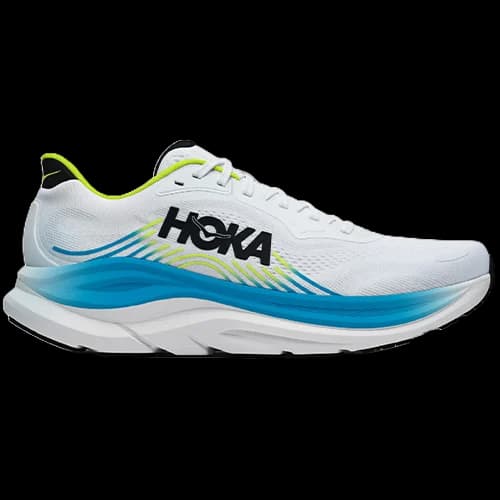 Hoka Clifton 11 Hoka Clifton 11 | 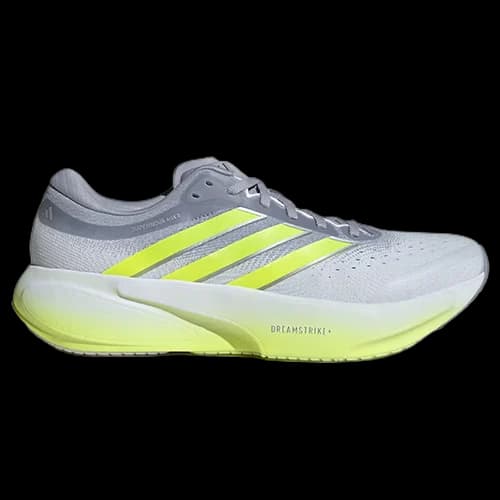 Adidas Supernova Rise 3 Adidas Supernova Rise 3 | 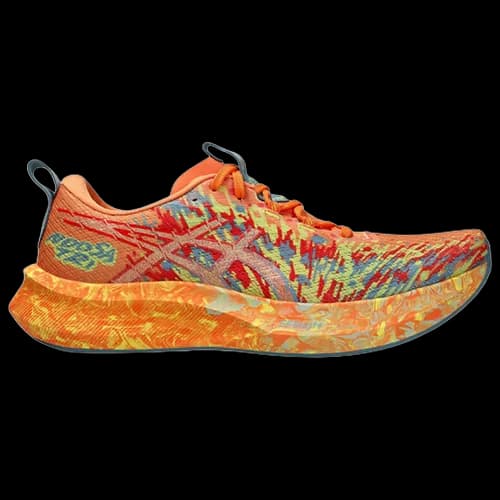 ASICS Noosa Tri 16 ASICS Noosa Tri 16 | 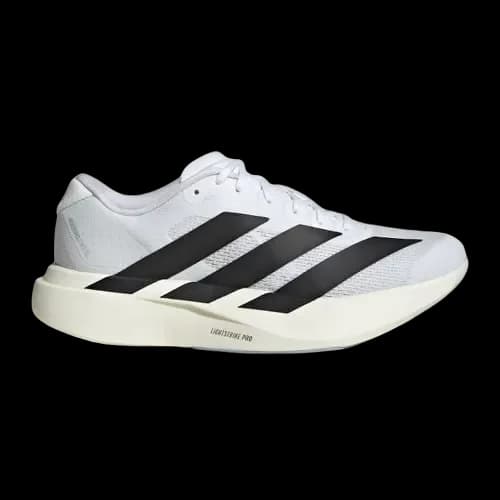 Adidas Adizero Evo SL Adidas Adizero Evo SL | |
|---|---|---|---|---|---|
| Pick it for | This page | More cushion | Softer | Roomier fit | Faster |
| Drop | 5 mm | 8 mm | 8 mm | 5 mm | 7 mm |
| Heel stack | 37 mm | 42 mm | 36 mm | – | 37 mm |
| Weight | 241 g | 261 g | 264 g | 215 g | 230 g |
| Support | Neutral | Neutral | Neutral | Neutral | Neutral |
Questions runners ask
What is the difference between the Mach 6 and the Mach 7?
The midsole and rocker are nearly identical. The Mach 7 gets a new jacquard upper, a lower and broader heel counter, a tongue anchored by elastic bands and better rubber: RunRepeat measured forefoot traction up from 0.49 to 0.62.
Does the Hoka Mach 7 run small?
Slightly. RunRepeat’s readers vote slightly small, and a Believe in the Run tester found it half a size smaller than the Mach 6. If you were between sizes, go half a size up.
What is the real drop of the Hoka Mach 7?
Hoka lists 5 mm, with 37 mm at the heel and 32 mm at the forefoot. RunRepeat’s lab measured 35.6 mm and 26.2 mm, a drop of about 9.4 mm, and say it felt closer to an 8 mm shoe. Expect a more heel-forward feel than the spec suggests.
Mach 7 or Clifton 11?
Choose the Mach 7 for a lighter, quicker shoe for tempo days and runs up to a half marathon. Choose the Clifton 11 for more cushioning on easy and long runs; Runner’s World Germany also find the Clifton better for heavier runners.
Can you run a marathon in the Hoka Mach 7?
Some can, but most tests advise against it. Believe in the Run found it went flat late in runs beyond 10 miles, and Runnea place it up to the half marathon. For a marathon, a more cushioned or plated shoe is the safer choice.
Is the Hoka Mach 7 available in wide?
Yes, RunRepeat list a wide version. Given its narrow last in the lab, a wide forefoot should start there.
Sources
- Believe in the Run, Hoka Mach 7 Review (March 2026). Accessed Oct 9, 2026.
- RunRepeat, HOKA Mach 7 lab review. Accessed Oct 9, 2026.
- Runner’s World Germany, Hoka Mach 7 im Test (Urs Weber, April 2026). Accessed Oct 9, 2026.
- Runnea, HOKA Mach 7 (Gorka Sedano, March 2026). Accessed Oct 9, 2026.
- Strideprint, Strideprint running shoe catalogue (ranks computed on 2026-10-11). Accessed Oct 11, 2026.
- runningwarehouse.com · Drop, Heel stack, Forefoot stack, Weight, US M9, Support, and Plate, listed
- cat: Strideprint catalogue, 395 shoes
How we review. We read published tests, brand and retailer pages and lab measurements, cross-check the figures and flag where they disagree. We did not test this shoe ourselves. Last updated October 12, 2026.