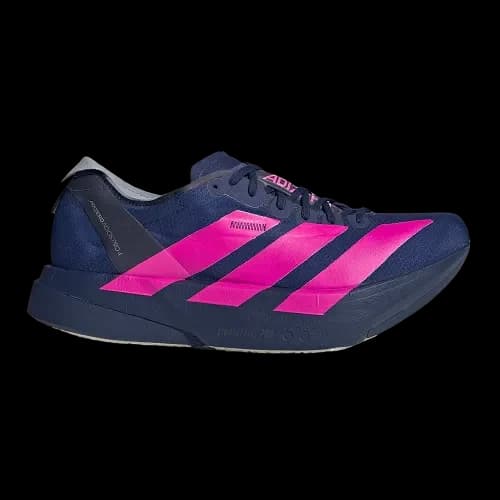
Adidas Adizero Adios Pro 4 review
Adidas’s 2024 marathon racer traded firmness for bounce. Reviewers rank the foam among the liveliest they have run, and warn about a short, narrow fit and a wobbly midfoot.
- Drop
- 6 mm
- Heel stack
- 39 mm
- Forefoot
- 33 mm
- Weight
- 201 g
- Support
- Neutral
- Plate
- Carbon
Our verdict
Bounce first, stability second.
The Adios Pro 4 is a light, neutral marathon racer that pairs very soft Lightstrike Pro foam with five carbon-infused EnergyRods for a quick, bouncy toe-off. It suits efficient midfoot and forefoot strikers racing from 10 km to the marathon, and asks a lot of heel strikers and of feet that roll inward.
Strong points
- Bouncy foam: 80.3% forefoot energy return in RunRepeat’s lab
- Light: 201 g in a men’s US 9, about 8% lighter than the Pro 3
- Grippy outsole with Continental rubber at toe-off
- Secure lockdown and a padded, gusseted tongue
- Fast from 10 km to the half marathon
Weak points
- Runs short and tapers hard at the big toe
- Medial cutout and narrow heel make it wobbly
- Awkward at easy paces, not a daily trainer
- Foam loses bounce sooner than the Pro 3’s, per RunRepeat
- Upper breathes poorly in the heat
Who it fits
- You land on the midfoot or forefoot
- You race 10 km to the half marathon
- You run the marathon at a quick clip
- You found the Pro 3 too firm
Who should skip it
- You land hard on your heel
- Your foot rolls inward, especially late in a race
- You have wide feet or a long big toe
- Your marathon takes four hours or more
Shoe profile
Where the Adizero Adios Pro 4 sits among the 395 shoes in our catalogue.
| Axis | Adizero Adios Pro 4 |
|---|---|
| Cushioning | 52 |
| Lightness | 90 |
| Stability | 30 |
| Drop | 20 |
| Response | 80 |
Fig. 1 · How to read it. Each axis runs from 0 at the centre to 100 at the edge. Cushioning, lightness and drop are the shoe’s rank in the catalogue from listed figures; stability and response are scored from the support type, the plate, the rocker and the intended use. The dotted grey line is the catalogue median. Source: Strideprint catalogue (cat).
Where it sits in the catalogue
Weight201 g, lighter than 90% of shoes
Drop6 mm, lower than 59% of shoes
Heel stack39 mm, higher than 52% of shoes
Forefoot stack33 mm, higher than 60% of shoes
How it feels
Written from 5 published tests. We quote measurements, not impressions we did not have.
Very soft, very springy. Soft at 29.3 AC and very springy: reviewers call it the bounciest Lightstrike Pro yet, though protection fades late in long efforts.
Neutral, narrow and a little wobbly. No support system: a narrow 80.4 mm heel and a medial cutout make it wobbly, while the wide 118.8 mm forefoot base stays steady.
Quick at race pace, clumsy when slow. 80.3% forefoot energy return and an early rocker make it quick at race pace, but the fast transition feels clumsy when you slow down.
Very soft, very springy. The Lightstrike Pro in the Pro 4 is a new TPEE formulation, according to RunRepeat, and measured 29.3 AC against 37.6 AC for the Pro 3. Doctors of Running call it the bounciest version of the foam they have run, and Believe in the Run find it smooth rather than mushy.
RunRepeat measured 142 SA of heel shock absorption, above the 131 SA average. RTINGS find the cushioning loses some protection deep into a long run, which matters more for a four-hour marathon than for a fast half.
Neutral, narrow and a little wobbly. There is no support system. Doctors of Running describe a lateral bias from the heel bevel and forefoot flare, offset by a medial midfoot cutout that lets the foot collapse inward quickly. RunRepeat measured an 80.4 mm heel, 3.6 mm narrower than the Pro 3’s, and RTINGS score stability 5.5 out of 10.
The 118.8 mm forefoot base is the steady part, which is why the shoe favors runners who stay on the front half of the foot.
Quick at race pace, clumsy when slow. RunRepeat measured 80.3% energy return at the forefoot, against a 61.4% average, and RTINGS score energy return 8.8 out of 10. Five carbon-infused EnergyRods and a large, early forefoot rocker roll you forward fast, which Doctors of Running find natural at speed and awkward at easy paces.
Runnea’s tester found the rods more progressive and less demanding than a rigid plate.
Read more
Very soft, very springy. The Lightstrike Pro in the Pro 4 is a new TPEE formulation, according to RunRepeat, and measured 29.3 AC against 37.6 AC for the Pro 3. Doctors of Running call it the bounciest version of the foam they have run, and Believe in the Run find it smooth rather than mushy.
RunRepeat measured 142 SA of heel shock absorption, above the 131 SA average. RTINGS find the cushioning loses some protection deep into a long run, which matters more for a four-hour marathon than for a fast half.
Neutral, narrow and a little wobbly. There is no support system. Doctors of Running describe a lateral bias from the heel bevel and forefoot flare, offset by a medial midfoot cutout that lets the foot collapse inward quickly. RunRepeat measured an 80.4 mm heel, 3.6 mm narrower than the Pro 3’s, and RTINGS score stability 5.5 out of 10.
The 118.8 mm forefoot base is the steady part, which is why the shoe favors runners who stay on the front half of the foot.
Quick at race pace, clumsy when slow. RunRepeat measured 80.3% energy return at the forefoot, against a 61.4% average, and RTINGS score energy return 8.8 out of 10. Five carbon-infused EnergyRods and a large, early forefoot rocker roll you forward fast, which Doctors of Running find natural at speed and awkward at easy paces.
Runnea’s tester found the rods more progressive and less demanding than a rigid plate.
Which runs it’s for
| Run | Fit | Why | Source |
|---|---|---|---|
| Half marathon race | Made for it | Its sweet spot for Doctors of Running, Believe in the Run and Runnea. | Doctors of Running, Believe in the Run, Runnea |
| Marathon race | Made for it | For quick marathoners: RTINGS score half and full marathon racing 8.1 out of 10. | Believe in the Run, RTINGS |
| Tempo | Made for it | Doctors of Running’s David ran 11-mile tempo runs in it. | Doctors of Running |
| Intervals | Made for it | Matt Klein liked it most around 10K pace, and Runnea used it on the track. | Doctors of Running, Runnea |
| Long runs | Can do | RTINGS score long runs 7.2 out of 10, as protection fades deep into a long effort. | RTINGS |
| Easy runs | Not for it | The quick transition feels awkward slowly; RTINGS give daily training 6.0 out of 10. | Doctors of Running, RTINGS |
Source: Doctors of Running, Believe in the Run, Runnea, RTINGS
What the tests say
Published reviews agree the Adios Pro 4 is a light, very bouncy racer at its fastest from 10 km to the half marathon, with a snug fit and little stability. They split on its length and on how far it carries a slower runner in a marathon.
| Test | Type | Our reading | In one sentence | Source |
|---|---|---|---|---|
| RunRepeat | Lab | Positive | RunRepeat scores it 93 out of 100, a superb racer from 5K to the marathon for midfoot and forefoot strikers. | Read |
| Doctors of Running | Review | Positive | Doctors of Running give it B+ overall and an A for performance: fast and aggressive, held back by a short upper and an unstable midfoot. | Read |
| Believe in the Run | Review | Positive | Believe in the Run put it in their S tier, close to perfect for most runners if they size up for the marathon. | Read |
| RTINGS | Lab | Mixed | RTINGS rate it well for racing but find it not stable at all, with a medial cutout that can let the ankles roll late in a marathon. | Read |
| Runnea | Review | Positive | Runnea call it the best Adios Pro so far after 250 km, for racing at 3:30 to 4:30 min/km rather than daily use. | Read |
They agree
- Softer and bouncier than the Pro 3RunRepeat measured a much softer foam, Doctors of Running call it the bounciest Lightstrike Pro they have tried, and Believe in the Run find it soft without turning mushy.
- Unstable outside a neutral, front-foot strideRunRepeat, Doctors of Running and RTINGS all flag the narrow heel or the medial cutout, and RTINGS score stability 5.5 out of 10.
- Built for racing, not daily milesRunRepeat scores daily running 45 out of 100, RTINGS score daily training 6.0 out of 10, and Runnea rules out easy runs.
- Strong gripRunRepeat measured 0.55 forefoot traction, above the 0.53 average, and Doctors of Running and Believe in the Run praise the outsole in turns and on wet roads.
They split
- True to size or short?RTINGS give length a full 10 out of 10. RunRepeat’s owner vote says slightly small, Doctors of Running found it short, and Believe in the Run suggest half a size up for the full marathon.
- A marathon shoe for everyone?Believe in the Run call it close to perfect for most runners, with half a size up for the marathon, yet their testers found it less suited to efforts over four hours. Doctors of Running’s Matt Klein and Runnea keep the marathon for faster runners.
- How long does the foam last?Doctors of Running expect above-average durability and saw no outsole wear at 45 miles. RunRepeat says the foam loses performance after roughly 100 miles, Believe in the Run saw more creasing after a marathon, and Runnea saw heel foam peel early.
How it’s built
A race build with nothing extra: a single slab of soft Lightstrike Pro, five carbon-infused EnergyRods, a thin woven upper with a padded tongue, and a polyurethane outsole with a small Continental patch.
One slab of soft Lightstrike Pro, five carbon-infused EnergyRods 2.0, a thin woven upper with a padded gusseted tongue, a minimal heel counter, and a 1.0 mm outsole with Continental rubber at toe-off.
| # | Part | Measure |
|---|---|---|
| 1 | UpperLightlock woven mesh | Breathability 2 / 5 |
| 2 | Tongue | 5.6 mm |
| 3 | Heel | Stiffness 1 / 5 |
| 4 | MidsoleLightstrike Pro | 29.3 AC |
| 5 | PlateEnergyRods 2.0 | Bend force 22.7 N |
| 6 | Insole | 1.9 mm |
| 7 | OutsoleLighttraxion and Continental | 1.0 mm |
Fig. 3 · Side profile. Stack heights to scale (listed: 39 mm heel, 33 mm forefoot; measured: 1 mm outsole); the split between the two foams is not measured and is drawn at mid-height. Dashed: insole, hidden. Sources: doctorsofrunning.com, RunRepeat, Doctors of Running, RTINGS, Believe in the Run, Runnea.
Upper. A thin, light woven mesh with a snug, low-volume fit, according to Doctors of Running. Breathability is the weak point: RunRepeat rates it 2 out of 5, RTINGS 6.0 out of 10.
Tongue. Gusseted and padded, a big change from the Pro 3: RunRepeat measured 5.6 mm against 0.9 mm before, and Believe in the Run credit its foam pillow with preventing lace bite.
Heel. Almost no heel counter, 1 out of 5 for stiffness in RunRepeat’s lab, with light collar padding. Doctors of Running say an external overlay helps lock the heel, and RunRepeat found no heel slippage.
Midsole. A new supercritical TPEE version of Lightstrike Pro, which RunRepeat says differs from the Pro 3’s foam. It measured 29.3 AC, much softer than the 35.5 AC average.
Plate. Five carbon-infused rods run the length of the shoe, unchanged from the Pro 3 according to RunRepeat. Doctors of Running feel them stiffen mainly the forefoot; RunRepeat measured 22.7 N in its bend test and 4 out of 5 for torsional rigidity.
Insole. Removable and very thin: 1.9 mm against a 4.4 mm average.
Outsole. A full-length Lighttraxion polyurethane layer with Continental rubber at toe-off. RunRepeat measured just 1.0 mm of thickness and 0.55 traction, and Doctors of Running rate the grip among the best of current road super shoes.
Read more
A race build with nothing extra: a single slab of soft Lightstrike Pro, five carbon-infused EnergyRods, a thin woven upper with a padded tongue, and a polyurethane outsole with a small Continental patch.
1. Upper. A thin, light woven mesh with a snug, low-volume fit, according to Doctors of Running. Breathability is the weak point: RunRepeat rates it 2 out of 5, RTINGS 6.0 out of 10.
2. Tongue. Gusseted and padded, a big change from the Pro 3: RunRepeat measured 5.6 mm against 0.9 mm before, and Believe in the Run credit its foam pillow with preventing lace bite.
3. Heel. Almost no heel counter, 1 out of 5 for stiffness in RunRepeat’s lab, with light collar padding. Doctors of Running say an external overlay helps lock the heel, and RunRepeat found no heel slippage.
4. Midsole. A new supercritical TPEE version of Lightstrike Pro, which RunRepeat says differs from the Pro 3’s foam. It measured 29.3 AC, much softer than the 35.5 AC average.
5. Plate. Five carbon-infused rods run the length of the shoe, unchanged from the Pro 3 according to RunRepeat. Doctors of Running feel them stiffen mainly the forefoot; RunRepeat measured 22.7 N in its bend test and 4 out of 5 for torsional rigidity.
6. Insole. Removable and very thin: 1.9 mm against a 4.4 mm average.
7. Outsole. A full-length Lighttraxion polyurethane layer with Continental rubber at toe-off. RunRepeat measured just 1.0 mm of thickness and 0.55 traction, and Doctors of Running rate the grip among the best of current road super shoes.
Durability. The outsole holds up better than the foam. RunRepeat measured a 0.8 mm dent in its abrasion test, better than the 1.1 mm average, and Runnea found the Continental rubber hard-wearing after 250 km. The foam is the question: RunRepeat says it loses performance after roughly 100 miles, Believe in the Run saw more creasing after a marathon, and Runnea saw heel foam peeling early. RunRepeat also rates the toe box mesh 1 out of 5.
Durability. The outsole holds up better than the foam. RunRepeat measured a 0.8 mm dent in its abrasion test, better than the 1.1 mm average, and Runnea found the Continental rubber hard-wearing after 250 km. The foam is the question: RunRepeat says it loses performance after roughly 100 miles, Believe in the Run saw more creasing after a marathon, and Runnea saw heel foam peeling early. RunRepeat also rates the toe box mesh 1 out of 5.
Specs, listed and measured
Every figure carries its source.
Drop, mm
Heel stack, mm
Forefoot stack, mm
Weight (men’s US 9), g
| Spec | Listed | Measured |
|---|---|---|
| Drop |
|
|
| Heel stack |
|
|
| Forefoot stack |
|
|
| Weight, US M9 |
|
|
| Support |
| – |
| Plate |
| – |
| Surface |
| – |
| Release year |
| – |
Fig. 4 · Listed vs measured. Bars start at zero. Sources: Doctors of Running, Runnea, RunRepeat, RTINGS, Believe in the Run.
Lab measurements
| Spec | Measured |
|---|---|
| Midsole hardness |
|
| Energy return |
|
| Torsional rigidity |
|
| Heel counter stiffness |
|
| Traction coefficient |
|
| Breathability |
|
| Spec | Measured |
|---|---|
| Toe box width |
|
| Toe box height |
|
| Outsole thickness |
|
| Insole thickness |
|
| Tongue thickness |
|
| Flex force |
|
Sizing and fit
Most reviewers find it a touch short and snug at the big toe: consider half a size up for a marathon.
Length
Mixed reports
Widths
standard
Toe room
Tapered and low in volume at the front. RunRepeat measured 69.5 mm at the big toe, against a 73.2 mm average and 77.8 mm on the Pro 3, with 28.3 mm of height, and Believe in the Run and Doctors of Running report pressure from the toe bumper on the big toe.
RunRepeat, Doctors of Running, Believe in the Run
Full sizing notes from testers
RunRepeat’s owner vote, with 525 responses, says it runs slightly small. Doctors of Running found it short in their usual size: Matt Klein suggests half a size up for the marathon, David half a size up in general. Believe in the Run recommend half a size up if you are between sizes. RTINGS, on the other hand, rate the length true to size.
Width is the second issue: RunRepeat and RTINGS describe a narrow fit, especially at the arch and the big toe. RunRepeat lists narrow, normal and wide versions from adidas, but RTINGS report no wide version, so check what is sold in your country.
RunRepeat, Doctors of Running, Believe in the Run, RTINGS
Vs Adios Pro 3
The Pro 4 trades the Pro 3’s firmer, more forgiving ride for a softer, bouncier and lighter shoe with a narrower fit and less stability. Doctors of Running call it far more aggressive.
Runners with wide feet, heel strikers and anyone who liked the Pro 3’s steadier, more accessible ride: RunRepeat advises wide feet to stay with the Pro 3, and Doctors of Running find the older shoe the more forgiving of the two.
Version history: Adios Pro 3 to Adizero Adios Pro 4
Much softer foam. RunRepeat measured 29.3 AC against 37.6 AC, from a new TPEE version of Lightstrike Pro. (RunRepeat)
Lighter. About 8% lighter in RunRepeat’s lab; Believe in the Run weighed 7.5 oz against 8.3 oz in a men’s US 10.5. (RunRepeat, Believe in the Run)
Narrower. The toe box shrank from 77.8 mm to 69.5 mm at the big toe, and the heel is 3.6 mm narrower, per RunRepeat. (RunRepeat)
New tongue and better heel hold. A padded, gusseted tongue (5.6 mm against 0.9 mm) and a heel that no longer slips, which RunRepeat and Believe in the Run both credit. (RunRepeat, Believe in the Run)
Same rods. The five EnergyRods carry over unchanged, according to RunRepeat. (RunRepeat)
Alternatives compared
Each one fixes one thing the Adizero Adios Pro 4 does not do.
| Adidas Adizero Adios Pro 4 | 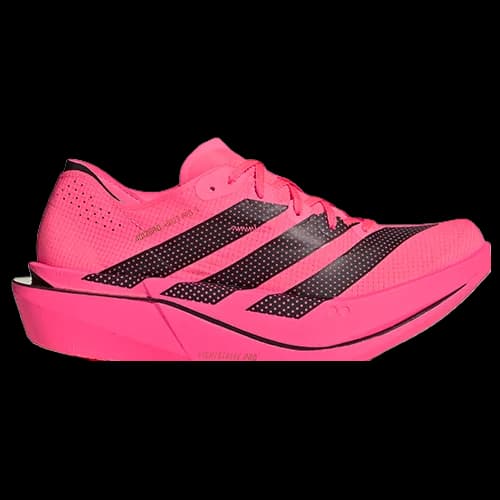 Adidas Adizero Adios Pro 5 Adidas Adizero Adios Pro 5 | 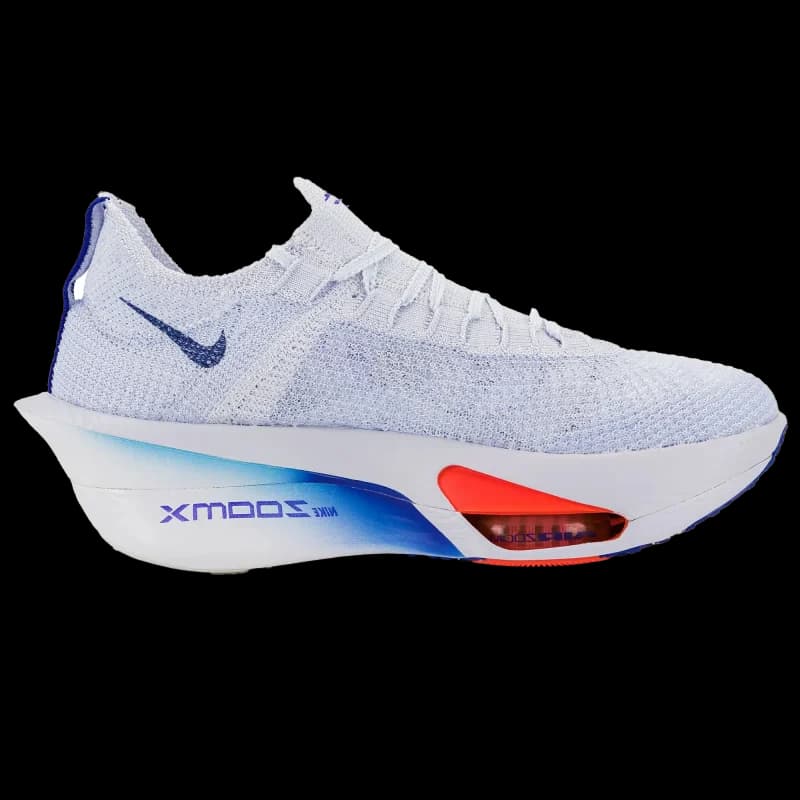 Nike Alphafly 3 Nike Alphafly 3 | 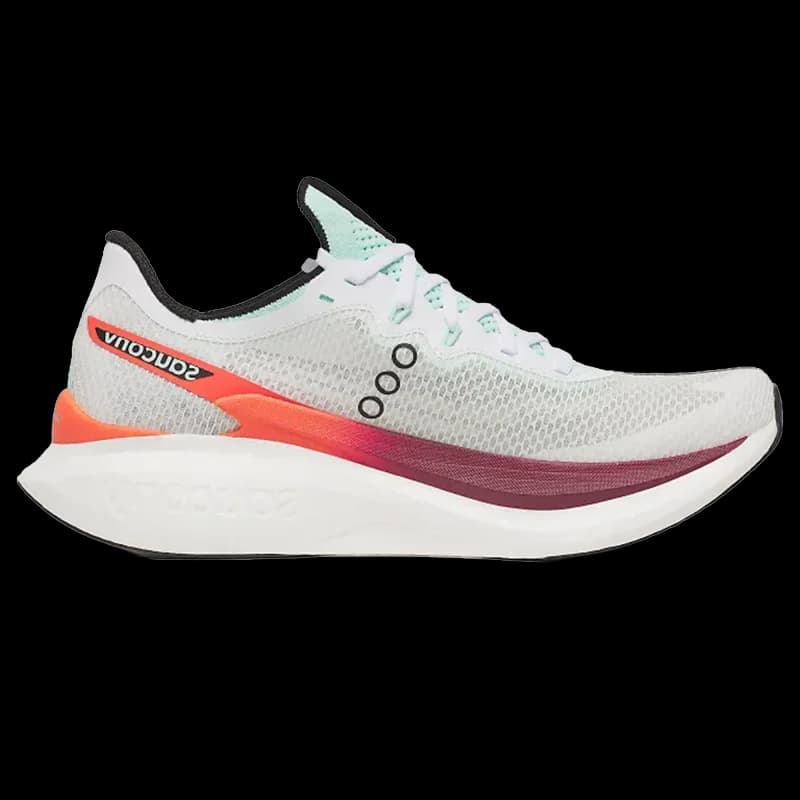 Saucony Endorphin Pro 5 Saucony Endorphin Pro 5 | 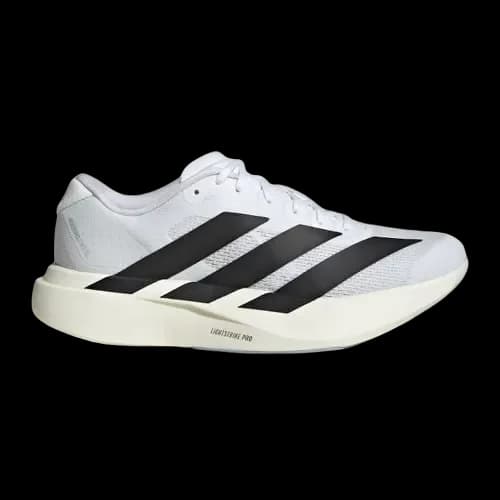 Adidas Adizero Evo SL Adidas Adizero Evo SL | |
|---|---|---|---|---|---|
| Pick it for | This page | Lighter | Roomier fit | Higher drop | Less cushion |
| Drop | 6 mm | 4 mm | 8 mm | 8 mm | 7 mm |
| Heel stack | 39 mm | 38 mm | 40 mm | 39.5 mm | 37 mm |
| Weight | 201 g | 170 g | 218 g | 206 g | 230 g |
| Support | Neutral | Neutral | Neutral | Neutral | Neutral |
Questions runners ask
Does the Adidas Adios Pro 4 have a carbon plate?
Not a single plate. The Adios Pro 4 uses EnergyRods 2.0, five carbon-infused rods that run the length of the shoe and carry over from the Pro 3, according to RunRepeat. Doctors of Running find they stiffen mainly the forefoot, and Runnea’s tester felt them more progressive than a rigid carbon plate.
Does the Adios Pro 4 run true to size?
Many runners find the Adios Pro 4 a touch short. RunRepeat’s owner vote says slightly small, Doctors of Running found it short, and Believe in the Run advise half a size up if you are between sizes, especially for a full marathon. RTINGS rate the length true to size, so try it on with your race socks if you can.
Is the Adios Pro 4 good for a marathon?
For quick, efficient runners, yes: RTINGS score half and full marathon racing 8.1 out of 10, and Runnea keeps it for paces between 3:30 and 4:30 min/km. Doctors of Running and Believe in the Run find it less comfortable for slower marathons, where controlling the unstable platform, as RTINGS put it, can tire the lower legs.
Is the Adios Pro 4 good for heel strikers?
Not really. RunRepeat measured a narrow 80.4 mm heel and calls the Adios Pro 4 unstable for heel strikers, suggesting a Saucony Endorphin Pro instead. The shoe works best when you land on the midfoot or forefoot, where the base is 118.8 mm wide.
Adios Pro 4 or Adios Pro 3?
The Adios Pro 4 is softer (29.3 AC against 37.6 AC in RunRepeat’s lab), about 8% lighter and bouncier, with a much better tongue. The Pro 3 is wider at the toes and steadier, so RunRepeat advises wide-footed runners to stick with it, and Doctors of Running see it as the more accessible shoe.
How long does the Adios Pro 4 last?
The Adios Pro 4 outsole is tough: RunRepeat measured a small 0.8 mm dent and Runnea found the Continental rubber hard-wearing. The foam ages faster: RunRepeat says it loses performance after roughly 100 miles, and Believe in the Run saw more creasing after one marathon. Keep it for races and key sessions.
Can you train every day in the Adios Pro 4?
The Adios Pro 4 is not built for it. RTINGS score daily training 6.0 out of 10, RunRepeat scores daily running 45 out of 100, and Runnea advises against easy runs. Doctors of Running find the quick transition awkward at slow paces. Pair it with a daily trainer.
How much does the Adios Pro 4 weigh?
The listed weight of the Adios Pro 4 is 201 g for a men’s US 9, and RunRepeat and RTINGS weighed 200 g and 197.5 g. Only 20 of the 149 neutral road shoes weighed in a men’s US 9 in our catalogue are lighter.
Sources
- RunRepeat, adidas Adizero Adios Pro 4 lab review (Carlos Sánchez, updated October 2026). Accessed Oct 13, 2026.
- Doctors of Running, adidas adizero Adios Pro 4 Review (Matt Klein and David, 2024). Accessed Oct 13, 2026.
- Believe in the Run, Adidas Adizero Adios Pro 4 Review (October 2024). Accessed Oct 13, 2026.
- RTINGS, adidas Adizero Adios Pro 4 review (updated October 2025). Accessed Oct 13, 2026.
- Runnea, Adidas Adizero Adios Pro 4 (Eider Fernández, updated March 2026). Accessed Oct 13, 2026.
- Strideprint, Strideprint running shoe catalogue (ranks computed on 2026-10-13). Accessed Oct 13, 2026.
- doctorsofrunning.com · Drop, Heel stack, Forefoot stack, and Weight, US M9, listed
- adidas.com · Support and Plate, listed
- roadtrailrun.com · Release year, listed
- cat: Strideprint catalogue, 395 shoes
How we review. We read published tests, brand and retailer pages and lab measurements, cross-check the figures and flag where they disagree. We did not test this shoe ourselves. Last updated October 13, 2026.