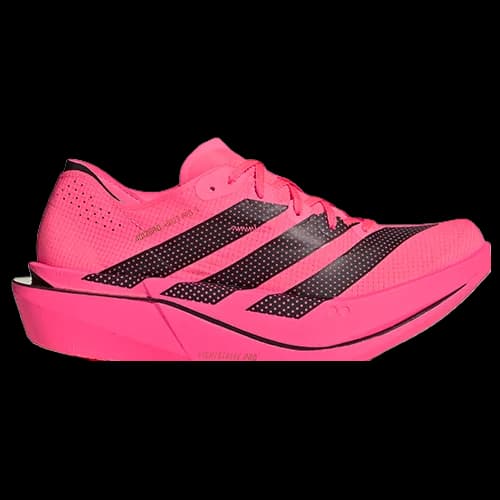
Adidas Adizero Adios Pro 5 review
Adidas’s 2026 marathon racer sheds about an ounce and swaps the rods for a carbon-infused rim. The labs like the weight and the foam; early durability reports and a narrow heel temper the praise.
- Drop
- 4 mm
- Heel stack
- 39 mm
- Forefoot
- 35 mm
- Weight
- 170 g
- Support
- Neutral
- Plate
- Carbon
Our verdict
Lighter, softer, still narrow.
The Adios Pro 5 is a very light neutral marathon racer: a two-layer Lightstrike Pro midsole sits inside a carbon-infused EnergyRim that replaces the Pro 4’s rods, for a softer, more forgiving ride. It suits midfoot and forefoot strikers with narrow to average feet racing the half or full marathon, and suits heel strikers and runners who need stability less well.
Strong points
- Very light: 170 g in a men’s US 9, and RTINGS weighed 170.3 g
- Top-level bounce: 80.4% forefoot energy return at RunRepeat
- Still protective late in a 50 km simulated run at RTINGS
- Much better grip: 0.74 traction against 0.55 on the Pro 4
- Medial cutout gone, so the midfoot is easier to trust
Weak points
- Early reports of fast wear on the exposed forefoot foam
- Very narrow 77.1 mm heel: hard work for heel strikers
- Narrow arch and a shallow 24.9 mm toe box
- Not made for easy days or daily mileage
- A less snappy toe-off than the Pro 4
Who it fits
- You land on the midfoot or forefoot
- You race the half or full marathon
- You found the Pro 4 too aggressive
- You want the lightest Adios Pro yet
Who should skip it
- You land on your heel
- You need a stable platform late in a race
- You have wide feet or tall toes
- You want one shoe for training too
Shoe profile
Where the Adizero Adios Pro 5 sits among the 395 shoes in our catalogue, and what changed from the Adizero Adios Pro 4.
| Axis | Adizero Adios Pro 5 | Adizero Adios Pro 4 | Change |
|---|---|---|---|
| Cushioning | 52 | 52 | = |
| Lightness | 97 | 90 | +7 |
| Stability | 30 | 30 | = |
| Drop | 6 | 20 | −14 |
| Response | 60 | 80 | −20 |
Fig. 1 · How to read it. Each axis runs from 0 at the centre to 100 at the edge. Cushioning, lightness and drop are the shoe’s rank in the catalogue from listed figures; stability and response are scored from the support type, the plate, the rocker and the intended use. The dotted grey line is the catalogue median. Source: Strideprint catalogue (cat).
Where it sits in the catalogue
Weight170 g, lighter than 96% of shoes
Drop4 mm, lower than 91% of shoes
Heel stack39 mm, higher than 52% of shoes
Forefoot stack35 mm, higher than 79% of shoes
How it feels
Written from 3 published tests. We quote measurements, not impressions we did not have.
Softer on top, protective for the distance. A very soft 18.2 AC PEBA layer over a 30.3 AC base: plush, and still protective late in a 50 km simulated run at RTINGS.
Better midfoot, very narrow heel. No more medial cutout, so the midfoot holds better, but a 77.1 mm heel keeps it a shoe for front-foot landers.
Bouncy, a little less snappy. 80.4% forefoot energy return in RunRepeat’s lab, with a later, gentler rocker than the Pro 4, which reviewers find the snappier of the two.
Softer on top, protective for the distance. The Lightstrike Pro midsole now has two layers, a PEBA top layer over an A-TPU base, according to Running Warehouse and RunRepeat. RunRepeat measured the base at 30.3 AC, close to the Pro 4, and the top layer at a very soft 18.2 AC, which makes the ride plusher overall.
RTINGS found the cushioning still protective in a 50 km simulated run, and RunRepeat measured 149 SA of heel shock absorption. In the cold the foam firms up: 22% after 20 minutes in RunRepeat’s freezer, though the soft top layer still feels plush.
Better midfoot, very narrow heel. The Pro 4’s medial cutout is gone, which RTINGS say makes the Pro 5 easier to trust, and RunRepeat finds better midfoot hold. The heel is the limit: RunRepeat measured 77.1 mm, against a 91.1 mm average, and RTINGS score stability 5.8 out of 10.
RunRepeat still rates it less stable than the Pro 3 and Pro 4 overall. Land on the front half and the 116.2 mm forefoot base keeps it steady; land on the heel and it asks a lot.
Bouncy, a little less snappy. RunRepeat measured 80.4% energy return at the forefoot and 75.1% at the heel, and adidas claims 9% more energy return than the Pro 4’s foam, as relayed by Running Warehouse and Believe in the Run. The EnergyRim adds some bending stiffness, according to RTINGS; RunRepeat measured 20.5 N in its bend test.
Believe in the Run and RTINGS both find the Pro 4 snappier off the toe, as the Pro 5 rolls through later and more gently. Thomas at Believe in the Run still prefers the Pro 5’s lower weight over a marathon.
Read more
Softer on top, protective for the distance. The Lightstrike Pro midsole now has two layers, a PEBA top layer over an A-TPU base, according to Running Warehouse and RunRepeat. RunRepeat measured the base at 30.3 AC, close to the Pro 4, and the top layer at a very soft 18.2 AC, which makes the ride plusher overall.
RTINGS found the cushioning still protective in a 50 km simulated run, and RunRepeat measured 149 SA of heel shock absorption. In the cold the foam firms up: 22% after 20 minutes in RunRepeat’s freezer, though the soft top layer still feels plush.
Better midfoot, very narrow heel. The Pro 4’s medial cutout is gone, which RTINGS say makes the Pro 5 easier to trust, and RunRepeat finds better midfoot hold. The heel is the limit: RunRepeat measured 77.1 mm, against a 91.1 mm average, and RTINGS score stability 5.8 out of 10.
RunRepeat still rates it less stable than the Pro 3 and Pro 4 overall. Land on the front half and the 116.2 mm forefoot base keeps it steady; land on the heel and it asks a lot.
Bouncy, a little less snappy. RunRepeat measured 80.4% energy return at the forefoot and 75.1% at the heel, and adidas claims 9% more energy return than the Pro 4’s foam, as relayed by Running Warehouse and Believe in the Run. The EnergyRim adds some bending stiffness, according to RTINGS; RunRepeat measured 20.5 N in its bend test.
Believe in the Run and RTINGS both find the Pro 4 snappier off the toe, as the Pro 5 rolls through later and more gently. Thomas at Believe in the Run still prefers the Pro 5’s lower weight over a marathon.
Which runs it’s for
| Run | Fit | Why | Source |
|---|---|---|---|
| Marathon race | Made for it | Its best use at RTINGS, 8.5 out of 10, with protection that holds up over distance. | RTINGS |
| Half marathon race | Made for it | Same 8.5 out of 10 at RTINGS; RunRepeat finds it versatile for short and long races. | RunRepeat, RTINGS |
| Tempo | Made for it | Marathon Sports found it fits uptempo training too; RunRepeat scores tempo 87 out of 100. | RunRepeat, Marathon Sports |
| Long runs | Can do | RTINGS score long runs 7.6 out of 10, best when they include faster sections. | RTINGS |
| Easy runs | Not for it | RTINGS find the build poorly suited to relaxed mileage, though Believe in the Run’s Karl ran easy miles in it. | RTINGS, Believe in the Run |
Source: RTINGS, RunRepeat, Marathon Sports, Believe in the Run
What the tests say
Published reviews agree the Adios Pro 5 is a very light, soft and forgiving marathon racer for forefoot and midfoot strikers, with a narrow fit and limited stability. Coverage is still thin, three full reviews by October 2026, and they split on how snappy it feels and on durability.
| Test | Type | Our reading | In one sentence | Source |
|---|---|---|---|---|
| RunRepeat | Lab | Positive | RunRepeat scores it 91 out of 100, a superb racer from the mile to the marathon, with doubts over durability and stability. | Read |
| RTINGS | Lab | Positive | RTINGS rate it 8.5 out of 10 for half and full marathon racing, praising the weight and long-race cushioning while calling stability inadequate. | Read |
| Believe in the Run | Review | Positive | Believe in the Run place it in their A tier: a solid update for most Pro 4 fans, with a less aggressive ride. | Read |
They agree
- The lightest Adios Pro yetRunRepeat weighed 176 g against 200 g for the Pro 4, RTINGS 170.3 g, and Believe in the Run and Running Warehouse also report the weight drop.
- Made for forefoot and midfoot landersRunRepeat and RTINGS both name the narrow heel as the limit on landing stability.
- Protective over a marathonRTINGS found the cushioning still protective through a 50 km simulation, and RunRepeat measured 149 SA of heel shock absorption against a 131 SA average.
- A narrow fitRunRepeat and RTINGS describe a narrow fit with a shallow toe box, and Marathon Sports suggest sizing up for toe room.
They split
- Snappy or soft?Believe in the Run’s Thomas found it snappy rather than mushy, yet the same review lists the less aggressive ride as a drawback for runners who want propulsion. RTINGS find the soft forefoot limits a direct toe-off and rate the Pro 4 snappier.
- Roomier or tighter than the Pro 4?Believe in the Run find a slightly wider forefoot and more volume over the toes. RunRepeat measured a toe box 0.4 mm narrower and lower than the Pro 4’s, and RTINGS call it very shallow.
- Will it last?RunRepeat relays reports of serious wear after one or two runs and adidas’s reply that it is cosmetic abrasion, while its own pair showed only minor wear. Running Warehouse customer reviews range from frayed forefoot foam to almost no wear.
What runners say
Forum threads and buyer reviews, summarised and linked. No star ratings: we report what people wrote, not a score.
Durability
Running Warehouse customer reviews are split: several report forefoot foam wearing badly within 12 to 20 miles, while one marathoner saw almost no wear after about 50 miles.
Running Warehouse · source
How it’s built
A redesigned racer: a two-layer Lightstrike Pro midsole held by a carbon-infused EnergyRim around its edge, a Lightlock 2.0 woven upper, and a thin polyurethane outsole with a small Continental patch.
Two layers of Lightstrike Pro, PEBA over A-TPU, framed by a carbon-infused EnergyRim instead of rods, under a Lightlock 2.0 upper, with a 1.0 mm outsole and a small Continental patch.
| # | Part | Measure |
|---|---|---|
| 1 | UpperLightlock 2.0 | Breathability 6.0 / 10 |
| 2 | Tongue | 3.7 mm |
| 3 | Heel | Stiffness 1 / 5 |
| 4 | MidsoleLightstrike Pro (PEBA and A-TPU) | 18.2 / 30.3 AC |
| 5 | PlateEnergyRim | Bend force 20.5 N |
| 6 | Insole | 2.0 mm |
| 7 | OutsoleLighttraxion and Continental | 1.0 mm |
Fig. 3 · Side profile. Stack heights to scale (listed: 39 mm heel, 35 mm forefoot; measured: 1 mm outsole); the split between the two foams is not measured and is drawn at mid-height. Dashed: insole, hidden. Sources: Believe in the Run, RTINGS, Running Warehouse, RunRepeat.
Upper. A woven mesh with one-way stretch, per Running Warehouse. Believe in the Run find it lighter and more pliable than the Pro 4’s; RTINGS still rate breathability mediocre, at 6.0 out of 10.
Tongue. A semi-gusseted tongue, 3.7 mm thick against 5.6 mm on the Pro 4 in RunRepeat’s lab, with new sawtooth laces that Believe in the Run welcome.
Heel. A soft heel with a 1 out of 5 counter in RunRepeat’s lab. Running Warehouse lists anti-slip foam pods inside, and Believe in the Run find more padding than on the Pro 4 but miss its pull tab.
Midsole. A PEBA top layer over an A-TPU base, measured at 18.2 AC and 30.3 AC by RunRepeat. Running Warehouse relays adidas’s claim of 9% more energy return than the Pro 4.
Plate. A carbon-infused, U-shaped frame around the edge of the midsole, which leaves uninterrupted foam underfoot, according to Running Warehouse. RTINGS find it adds a bit of bending stiffness; RunRepeat measured 20.5 N to bend and 11.3 Nm of torsional rigidity, below the 14.4 Nm average.
Insole. Removable and thin: 2.0 mm in RunRepeat’s lab.
Outsole. A full-length cast polyurethane layer with Continental rubber in the medial forefoot. RunRepeat measured 1.0 mm and a 0.74 traction score, far above the 0.53 average, but notes less coverage at the outer forefoot.
Read more
A redesigned racer: a two-layer Lightstrike Pro midsole held by a carbon-infused EnergyRim around its edge, a Lightlock 2.0 woven upper, and a thin polyurethane outsole with a small Continental patch.
1. Upper. A woven mesh with one-way stretch, per Running Warehouse. Believe in the Run find it lighter and more pliable than the Pro 4’s; RTINGS still rate breathability mediocre, at 6.0 out of 10.
2. Tongue. A semi-gusseted tongue, 3.7 mm thick against 5.6 mm on the Pro 4 in RunRepeat’s lab, with new sawtooth laces that Believe in the Run welcome.
3. Heel. A soft heel with a 1 out of 5 counter in RunRepeat’s lab. Running Warehouse lists anti-slip foam pods inside, and Believe in the Run find more padding than on the Pro 4 but miss its pull tab.
4. Midsole. A PEBA top layer over an A-TPU base, measured at 18.2 AC and 30.3 AC by RunRepeat. Running Warehouse relays adidas’s claim of 9% more energy return than the Pro 4.
5. Plate. A carbon-infused, U-shaped frame around the edge of the midsole, which leaves uninterrupted foam underfoot, according to Running Warehouse. RTINGS find it adds a bit of bending stiffness; RunRepeat measured 20.5 N to bend and 11.3 Nm of torsional rigidity, below the 14.4 Nm average.
6. Insole. Removable and thin: 2.0 mm in RunRepeat’s lab.
7. Outsole. A full-length cast polyurethane layer with Continental rubber in the medial forefoot. RunRepeat measured 1.0 mm and a 0.74 traction score, far above the 0.53 average, but notes less coverage at the outer forefoot.
Durability. The open question. RunRepeat relays reports of serious wear after one or two runs, with exposed foam at the outer forefoot and the rim rubbing against it, and adidas’s reply that this is cosmetic abrasion. RunRepeat’s own pair showed only minor wear and 1.1 mm in the outsole abrasion test, level with the average. Running Warehouse customer reviews are split.
Durability. The open question. RunRepeat relays reports of serious wear after one or two runs, with exposed foam at the outer forefoot and the rim rubbing against it, and adidas’s reply that this is cosmetic abrasion. RunRepeat’s own pair showed only minor wear and 1.1 mm in the outsole abrasion test, level with the average. Running Warehouse customer reviews are split.
Specs, listed and measured
Every figure carries its source.
Drop, mm
Heel stack, mm
Forefoot stack, mm
Weight (men’s), g
| Spec | Listed | Measured |
|---|---|---|
| Drop |
|
|
| Heel stack |
|
|
| Forefoot stack |
|
|
| Weight, US M9 |
|
|
| Support |
| – |
| Plate |
| – |
| Surface |
| – |
| Release year |
| – |
Fig. 4 · Listed vs measured. Bars start at zero. Sources: Running Warehouse, Believe in the Run, Runnea, RunRepeat, RTINGS, Marathon Sports.
Lab measurements
| Spec | Measured |
|---|---|
| Midsole hardness (base / top layer) |
|
| Energy return |
|
| Torsional rigidity |
|
| Heel counter stiffness |
|
| Traction coefficient |
|
| Breathability |
|
| Spec | Measured |
|---|---|
| Toe box width |
|
| Toe box height |
|
| Outsole thickness |
|
| Insole thickness |
|
| Tongue thickness |
|
| Flex force |
|
Sizing and fit
Length is close to true to size; the fit is narrow, so broad feet should try it first.
Length
Mixed reports
Widths
standard
Toe room
Low and tapered for most, roomier for some. RunRepeat measured a 69.1 mm toe box with only 24.9 mm of height, lower than the Pro 4, and RTINGS call it very shallow. Believe in the Run, by contrast, found more volume over the toes than on the Pro 4.
RunRepeat, RTINGS, Believe in the Run
Full sizing notes from testers
RTINGS rate the length true to size and say your usual size is very likely right. RunRepeat’s owner vote, with only 30 responses, says slightly small, and Believe in the Run’s Thomas recommends half a size up. Marathon Sports find it true to size but suggest sizing up for toe room.
There is a single width: RunRepeat lists normal only, Running Warehouse stocks D only, and RTINGS report no wide version. RTINGS also describe a very narrow arch.
RunRepeat, RTINGS, Believe in the Run, Marathon Sports, Running Warehouse
Vs Adizero Adios Pro 4
The Pro 5 keeps the race brief but goes lighter and softer: the rods become a carbon-infused rim, the foam gains a PEBA top layer, and the medial cutout disappears. The Pro 4 remains the snappier shoe.
| Adizero Adios Pro 5 | Adizero Adios Pro 4 | |
|---|---|---|
| Support | Neutral | Neutral |
| Drop | 4 mm | 6 mm |
| Heel stack | 39 mm | 39 mm |
| Forefoot | 35 mm | 33 mm |
| Weight | 170 g | 201 g |
Runners who loved the Pro 4’s snappy, aggressive toe-off: RTINGS and Believe in the Run both find the older shoe the more energetic of the two off the toe.
Listed figures. Source: Strideprint catalogue (cat).
Version history: Adizero Adios Pro 4 to Adizero Adios Pro 5
EnergyRim replaces EnergyRods. A carbon-infused, U-shaped frame around the foam instead of five rods underfoot, per Running Warehouse and Marathon Sports. (Marathon Sports, Running Warehouse)
Lighter. RunRepeat weighed 176 g against 200 g for the Pro 4, and Running Warehouse calls it a full ounce lighter. (RunRepeat, Running Warehouse)
Softer top layer. A new PEBA layer at 18.2 AC sits on a base about as firm as the Pro 4’s, per RunRepeat. (RunRepeat)
Better grip, less rubber. Traction rose from 0.55 to 0.74 in RunRepeat’s lab, but the outer forefoot now has exposed foam. (RunRepeat)
Calmer geometry. No medial cutout and a later rocker: RTINGS find it easier to trust, Believe in the Run less aggressive. (RTINGS, Believe in the Run)
Alternatives compared
Each one fixes one thing the Adizero Adios Pro 5 does not do.
| Adidas Adizero Adios Pro 5 | 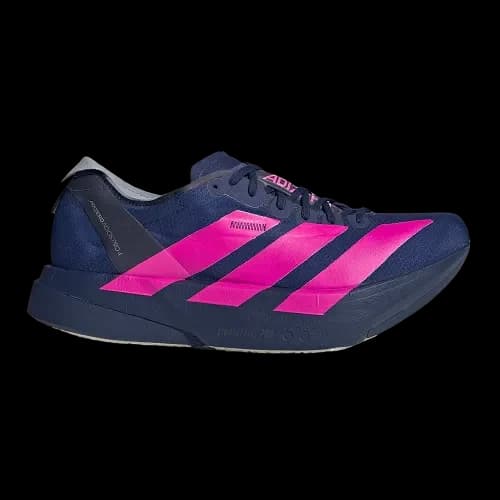 Adidas Adizero Adios Pro 4 Adidas Adizero Adios Pro 4 | 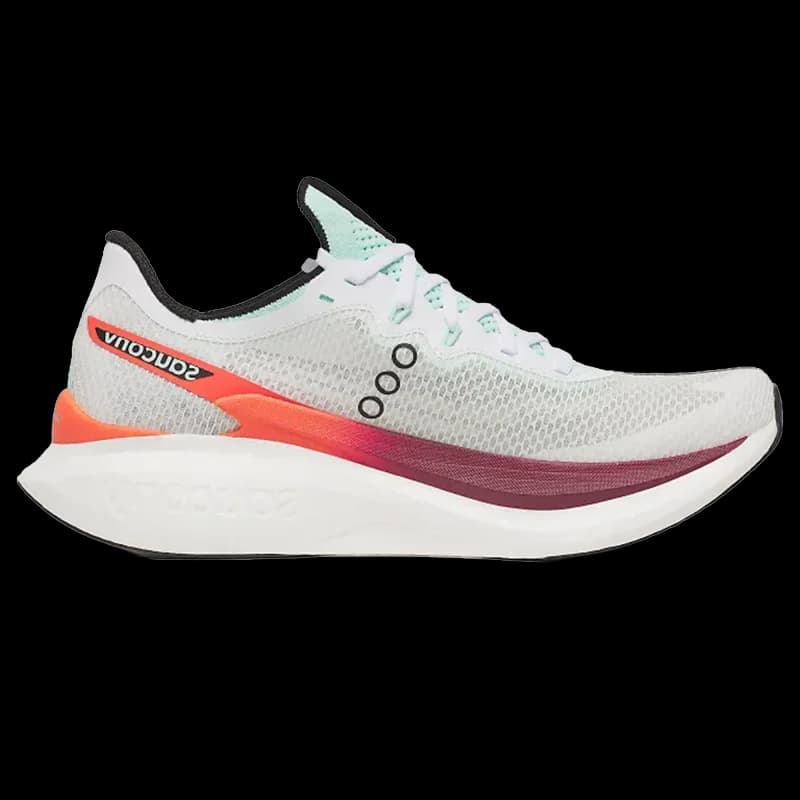 Saucony Endorphin Pro 5 Saucony Endorphin Pro 5 | 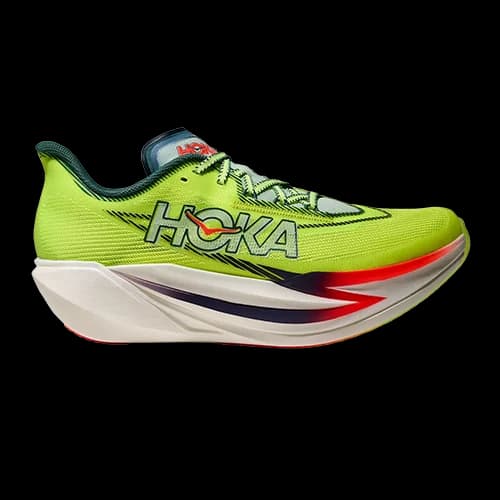 Hoka Cielo X1 3.0 Hoka Cielo X1 3.0 | 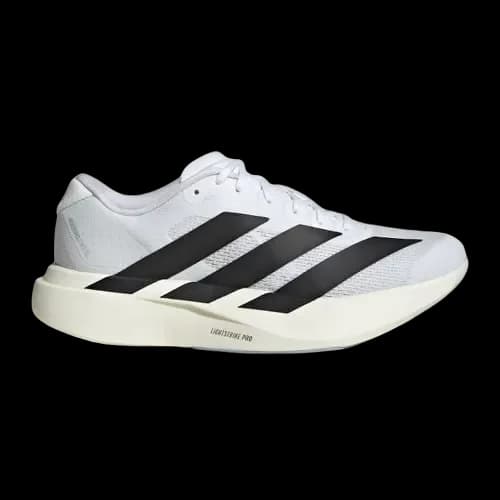 Adidas Adizero Evo SL Adidas Adizero Evo SL | |
|---|---|---|---|---|---|
| Pick it for | This page | Faster | Higher drop | More cushion | Less cushion |
| Drop | 4 mm | 6 mm | 8 mm | 7 mm | 7 mm |
| Heel stack | 39 mm | 39 mm | 39.5 mm | 48 mm | 37 mm |
| Weight | 170 g | 201 g | 206 g | 198 g | 230 g |
| Support | Neutral | Neutral | Neutral | Neutral | Neutral |
Questions runners ask
Does the Adidas Adios Pro 5 have a carbon plate?
Not a classic one. The Adios Pro 5 uses the EnergyRim, a carbon-infused, U-shaped frame around the edge of the midsole that replaces the Pro 4’s EnergyRods, according to Running Warehouse and Believe in the Run. RTINGS find it adds a bit of bending stiffness, and Running Warehouse say it leaves uninterrupted foam underfoot.
Adios Pro 5 or Adios Pro 4?
The Adios Pro 5 is lighter (176 g against 200 g in RunRepeat’s lab), softer on top and steadier through the midfoot, with much better grip. The Pro 4 has the snappier, more aggressive toe-off, according to RTINGS and Believe in the Run. The Pro 5 makes more sense for the marathon, the Pro 4 if you want a punchier ride.
Does the Adios Pro 5 run true to size?
Mostly, in length: RTINGS rate the Adios Pro 5 true to size, while RunRepeat’s small owner vote says slightly small and Believe in the Run’s Thomas went half a size up. The fit is narrow at the arch and low over the toes, and only one width is sold, so broad feet should try it first.
Is the Adios Pro 5 durable?
It is too early to say. RunRepeat relays reports of serious wear on the exposed outer forefoot foam after one or two runs, which adidas called cosmetic abrasion, while RunRepeat’s own pair of Adios Pro 5 showed only minor wear. Running Warehouse customer reviews are split. Keep it for races and key sessions.
Is the Adios Pro 5 good for heel strikers?
Not the best match. RunRepeat measured a very narrow 77.1 mm heel on the Adios Pro 5 and says the geometry clearly favors forefoot and midfoot landers; it suggests the Saucony Endorphin Pro 5 for heel strikers. RTINGS also say the narrow heel limits stability on landing.
Is the Adios Pro 5 good for a marathon?
Yes, that is its best use. RTINGS rate the Adios Pro 5 8.5 out of 10 for half and full marathon racing and found the cushioning still protective in a 50 km simulated run, and RunRepeat scores it 94 out of 100 for racing. Runners who need stability late in a race may want a wider heel.
How much does the Adios Pro 5 weigh?
Running Warehouse lists the Adios Pro 5 at 170 g for a men’s US 9, and RTINGS weighed 170.3 g; RunRepeat weighed 176 g. Only 6 of the 149 neutral road shoes weighed in a men’s US 9 in our catalogue are lighter, and only 11 of 234 list a lower drop than its 4 mm.
Sources
- RunRepeat, adidas Adizero Adios Pro 5 lab review (Carlos Sánchez, October 2026). Accessed Oct 13, 2026.
- RTINGS, adidas Adizero Adios Pro 5 review (September 2026). Accessed Oct 13, 2026.
- Believe in the Run, Adidas Adizero Adios Pro 5 Review (September 2026). Accessed Oct 13, 2026.
- Marathon Sports, adidas Adios Pro 5 review: meet the carbon Energy Rim (September 2026). Accessed Oct 13, 2026.
- Running Warehouse, adidas adizero Adios Pro 5 Men’s Shoes. Accessed Oct 13, 2026.
- Runnea, Adidas Adizero Adios Pro 5 (product guide). Accessed Oct 13, 2026.
- Strideprint, Strideprint running shoe catalogue (ranks computed on 2026-10-13). Accessed Oct 13, 2026.
- adidas.com · Plate, listed
- i-run.fr · Surface, listed
- cat: Strideprint catalogue, 395 shoes
How we review. We read published tests, brand and retailer pages and lab measurements, cross-check the figures and flag where they disagree. We did not test this shoe ourselves. Last updated October 13, 2026.