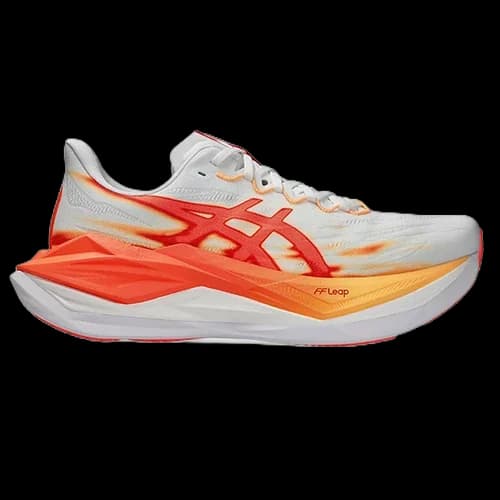
ASICS Superblast 3 review
ASICS’s plateless super trainer, now softer and lighter thanks to a top layer of FF Leap foam, on a stack of more than 46 mm at the heel.
- Drop
- 8 mm
- Heel stack
- 45 mm
- Forefoot
- 37 mm
- Weight
- 238 g
- Support
- Neutral
- Plate
- None
Our verdict
Huge cushioning that still wants to move.
The Superblast 3 is a very tall, very light neutral trainer that feels soft and bouncy without a plate. It suits neutral runners who land fairly centred, want one pair for long efforts and steady workouts, and don’t need help from the shoe to stay stable.
Strong points
- Softer ride thanks to the new FF Leap top layer
- Light for its height, with no plate
- Smooth from recovery pace up to tempo inside long runs
- Slightly higher energy return than the Superblast 2
- Best wet grip RunRepeat has measured to date
Weak points
- Less stable than the Superblast 2, with a medial bias up front
- Not for a marked inward roll
- Unisex sizing, so women need to convert
- Takes 20 to 30 miles to break in
Who it fits
- You found earlier Superblasts too firm
- Your long runs include work at pace
- You are a neutral runner who likes a lot under foot
- You want a light shoe without a plate
Who should skip it
- You relied on the Superblast 2’s stability
- Your foot rolls in noticeably
- You want a pure speed shoe for intervals
- Your feet are narrow
Shoe profile
Where the Superblast 3 sits among the 395 shoes in our catalogue, and what changed from the Superblast 2.
| Axis | Superblast 3 | Superblast 2 | Change |
|---|---|---|---|
| Cushioning | 90 | 90 | = |
| Lightness | 71 | 65 | +6 |
| Stability | 30 | 30 | = |
| Drop | 45 | 45 | = |
| Response | 20 | 20 | = |
Fig. 1 · How to read it. Each axis runs from 0 at the centre to 100 at the edge. Cushioning, lightness and drop are the shoe’s rank in the catalogue from listed figures; stability and response are scored from the support type, the plate, the rocker and the intended use. The dotted grey line is the catalogue median. Source: Strideprint catalogue (cat).
Where it sits in the catalogue
Weight238 g, lighter than 70% of shoes
Drop8 mm, higher than 45% of shoes
Heel stack45 mm, higher than 90% of shoes
Forefoot stack37 mm, higher than 86% of shoes
How it feels
Written from 3 published tests. We quote measurements, not impressions we did not have.
Soft and tall, without the wobble of a marshmallow. FF Leap over a firmer FF Blast Plus base: RunRepeat measured the top foam at 22.8 AC, much softer than average, yet not mushy.
Neutral, and more so than before. Above-average torsional rigidity resists twisting, but a lateral flare and medial bias pull the foot inward; not a guidance shoe.
Bouncy for a trainer. Energy return is 67.8 percent, 2.3 points above the Superblast 2, and a diamond channel under the forefoot helps toe-off.
Soft and tall, without the wobble of a marshmallow. The midsole stacks FF Leap foam over FF Blast Plus. ASICS lists 45 mm at the heel and 37 mm at the forefoot, as reported by RunRepeat, for an 8 mm drop. Doctors of Running and Believe in the Run give slightly taller figures, 46.5 mm and 38.5 mm.
RunRepeat measured the foam at 22.8 on the AC scale, much softer than average. Believe in the Run still describe a ride with enough structure that it does not feel mushy, thanks to the firmer bottom layer.
Neutral, and more so than before. RunRepeat measured above-average torsional rigidity, so the shoe does not twist easily. Doctors of Running, however, found that a wide lateral sole flare and a medial bias under the forefoot pull the foot inward compared with version 2, which made one tester less comfortable over longer distances.
If you need guidance, this is not where to find it. Centred, efficient strides get the most out of it.
Bouncy for a trainer. RunRepeat measured energy return just under 68 percent at both heel and forefoot, a little higher than on the Superblast 2. A diamond-shaped channel under the forefoot is designed to help toe-off.
Doctors of Running mention a break-in of 20 to 30 miles before the foam settles, so the first outings may feel less lively than later ones.
Read more
Soft and tall, without the wobble of a marshmallow. The midsole stacks FF Leap foam over FF Blast Plus. ASICS lists 45 mm at the heel and 37 mm at the forefoot, as reported by RunRepeat, for an 8 mm drop. Doctors of Running and Believe in the Run give slightly taller figures, 46.5 mm and 38.5 mm.
RunRepeat measured the foam at 22.8 on the AC scale, much softer than average. Believe in the Run still describe a ride with enough structure that it does not feel mushy, thanks to the firmer bottom layer.
Neutral, and more so than before. RunRepeat measured above-average torsional rigidity, so the shoe does not twist easily. Doctors of Running, however, found that a wide lateral sole flare and a medial bias under the forefoot pull the foot inward compared with version 2, which made one tester less comfortable over longer distances.
If you need guidance, this is not where to find it. Centred, efficient strides get the most out of it.
Bouncy for a trainer. RunRepeat measured energy return just under 68 percent at both heel and forefoot, a little higher than on the Superblast 2. A diamond-shaped channel under the forefoot is designed to help toe-off.
Doctors of Running mention a break-in of 20 to 30 miles before the foam settles, so the first outings may feel less lively than later ones.
Which runs it’s for
| Run | Fit | Why | Source |
|---|---|---|---|
| Long runs | Made for it | Its sweet spot, especially long runs with sections at pace. | Doctors of Running, Believe in the Run |
| Tempo | Made for it | Reviewers found it happiest at uptempo efforts. | Doctors of Running, Believe in the Run |
| Easy runs | Made for it | Smooth and soft at easy pace, if you don’t mind the height. | Believe in the Run |
| Marathon race | Can do | Doctors of Running see it carrying neutral runners through a marathon. Runners chasing a time usually pick a plated racer. | Doctors of Running |
| Intervals | Not for it | Too much shoe for short, sharp repeats. | Believe in the Run |
| Light trail | Not for it | Built for the road. | Believe in the Run |
Source: Doctors of Running, Believe in the Run
What the tests say
Reviewers agree the Superblast 3 is softer and lighter than the 2 and shines on long runs with work at pace. They disagree on fit and on how stable it still is.
| Test | Type | Our reading | In one sentence | Source |
|---|---|---|---|---|
| Doctors of Running | Review | Mixed | Doctors of Running’s testers split: one grades the design B plus and sees fixed issues, the other B minus and limited appeal. | Read |
| RunRepeat | Lab | Positive | RunRepeat scores it 94 out of 100, clearly the best Superblast to date, with better cushioning, grip and less weight. | Read |
| Believe in the Run | Review | Positive | Believe in the Run places it in its S tier, testers unanimous that it will be a tough shoe to beat. | Read |
They agree
- Softer than beforeRunRepeat measured a midsole well below average on their hardness scale, and Believe in the Run describe a softer ride that still keeps its structure.
- A long-run and mixed-pace shoeDoctors of Running highlight uptempo work inside long sessions, and Believe in the Run found it smooth from recovery pace up to tempo.
- Light for its heightRunRepeat weighed it lighter than the Superblast 2, and Believe in the Run stress that it carries no plate.
They split
- StabilityRunRepeat measured above-average torsional rigidity, while Doctors of Running felt a forefoot bias pulling the foot inward compared with version 2.
- Fit and toe boxRunRepeat and Doctors of Running found it true to size, one Believe in the Run tester found it large. Doctors of Running and Believe in the Run call the toe box roomy, while RunRepeat measured it slightly below average width.
How it’s built
A plateless super trainer: a thick top layer of FF LEAP over firmer FF BLAST PLUS, a diamond-shaped channel and trampoline pod under the toes, an engineered woven upper and ASICSGRIP with AHAR LO underneath.
A plateless super trainer: a thick FF Leap top layer over firmer FF Blast Plus, a diamond channel and trampoline pod under the toes, a woven upper, and a thin 2.4 mm ASICSGRIP and AHAR LO outsole.
| # | Part | Measure |
|---|---|---|
| 1 | UpperEngineered woven upper | – |
| 2 | Tongue | 1.9 mm |
| 3 | Heel | Stiffness 4 / 5 |
| 4 | MidsoleFF LEAP and FF BLAST PLUS | Hardness 22.8 AC |
| 5 | Insole | 4.2 mm |
| 6 | OutsoleASICSGRIP and AHAR LO | 2.4 mm |
Fig. 3 · Side profile. Stack heights to scale (listed: 45 mm heel, 37 mm forefoot; measured: 2.4 mm outsole); the split between the two foams is not measured and is drawn at mid-height. Dashed: insole, hidden. Sources: RunRepeat, Doctors of Running, Believe in the Run.
Upper. A new engineered woven mesh with interwoven overlays, stiffer and more structured than it looks according to Doctors of Running, with a roomier toe box than the Superblast 2. RunRepeat rates breathability moderate: the large vent holes are in the tongue, none over the toes.
Tongue. Thin, 1.9 mm of padding. The lacing is new: an elastic cord stitched along the eyelet row forms the lower eyelets, with punched ones on the top half. RunRepeat finds it excellent for pressure control but unproven over time; Believe in the Run found lockdown easy.
Heel. A slightly stiffer counter than on the Superblast 2, 4 out of 5 for RunRepeat, offset by more padding, and an extended collar that eases pressure on the Achilles and doubles as a pull tab.
Midsole. FF LEAP, the ATPU foam of the Metaspeed Ray, replaces the FF Turbo top layer. Believe in the Run note that the FF BLAST PLUS base now extends up under the inner arch and the base is a little wider to steady it, and that a diamond-shaped channel cut into the FF LEAP just behind the toes lets that zone compress on its own. RunRepeat measured torsional rigidity at 18.2 Nm, high for a shoe without a plate.
Insole. Removable and 4.2 mm thick, the standard figure for a daily trainer in RunRepeat’s measurement.
Outsole. ASICSGRIP under the forefoot and AHAR LO at the heel, around a more pronounced central pod and wide areas of exposed FF BLAST PLUS. RunRepeat measured 1.05 in its wet traction test, the best result it had recorded, up from 0.83 on the Superblast 2.
Read more
A plateless super trainer: a thick top layer of FF LEAP over firmer FF BLAST PLUS, a diamond-shaped channel and trampoline pod under the toes, an engineered woven upper and ASICSGRIP with AHAR LO underneath.
1. Upper. A new engineered woven mesh with interwoven overlays, stiffer and more structured than it looks according to Doctors of Running, with a roomier toe box than the Superblast 2. RunRepeat rates breathability moderate: the large vent holes are in the tongue, none over the toes.
2. Tongue. Thin, 1.9 mm of padding. The lacing is new: an elastic cord stitched along the eyelet row forms the lower eyelets, with punched ones on the top half. RunRepeat finds it excellent for pressure control but unproven over time; Believe in the Run found lockdown easy.
3. Heel. A slightly stiffer counter than on the Superblast 2, 4 out of 5 for RunRepeat, offset by more padding, and an extended collar that eases pressure on the Achilles and doubles as a pull tab.
4. Midsole. FF LEAP, the ATPU foam of the Metaspeed Ray, replaces the FF Turbo top layer. Believe in the Run note that the FF BLAST PLUS base now extends up under the inner arch and the base is a little wider to steady it, and that a diamond-shaped channel cut into the FF LEAP just behind the toes lets that zone compress on its own. RunRepeat measured torsional rigidity at 18.2 Nm, high for a shoe without a plate.
5. Insole. Removable and 4.2 mm thick, the standard figure for a daily trainer in RunRepeat’s measurement.
6. Outsole. ASICSGRIP under the forefoot and AHAR LO at the heel, around a more pronounced central pod and wide areas of exposed FF BLAST PLUS. RunRepeat measured 1.05 in its wet traction test, the best result it had recorded, up from 0.83 on the Superblast 2.
Durability. Labs and road testers differ. RunRepeat measured only 0.5 mm of outsole wear on a thin 2.4 mm layer, 3 out of 5 for the toe box and 4 out of 5 for the heel lining. Doctors of Running saw early wear on exposed foam and rubber after 20 to 50 miles and expect average durability; Believe in the Run expect the ATPU foam to keep its bounce longer than PEBA blends.
Durability. Labs and road testers differ. RunRepeat measured only 0.5 mm of outsole wear on a thin 2.4 mm layer, 3 out of 5 for the toe box and 4 out of 5 for the heel lining. Doctors of Running saw early wear on exposed foam and rubber after 20 to 50 miles and expect average durability; Believe in the Run expect the ATPU foam to keep its bounce longer than PEBA blends.
Specs, listed and measured
Every figure carries its source.
Heel stack, mm
Forefoot stack, mm
Drop, mm
Weight (men’s), g
| Spec | Listed | Measured |
|---|---|---|
| Drop |
|
|
| Heel stack |
|
|
| Forefoot stack |
|
|
| Weight, US M9 |
|
|
| Support |
| – |
| Plate |
| – |
| Surface |
| – |
Fig. 4 · Listed vs measured. Bars start at zero. Sources: RunRepeat, Doctors of Running, Believe in the Run.
Lab measurements
| Spec | Measured |
|---|---|
| Midsole hardness |
|
| Torsional rigidity |
|
| Energy return |
|
| Heel counter stiffness |
|
| Traction coefficient |
|
| Toe box width |
|
| Spec | Measured |
|---|---|
| Toe box height |
|
| Outsole thickness |
|
| Insole thickness |
|
| Tongue thickness |
|
| Flex force |
|
Sizing and fit
Most testers say true to size, but the Superblast 3 uses unisex sizing, so women need to convert, and one reviewer found it slightly long.
Length
Mixed reports
Widths
standard
Toe room
Sources disagree. RunRepeat measured a 71.6 mm toe box, 25.1 mm high and below average, a snug fit. Doctors of Running find more width and volume than the Superblast 2, and Believe in the Run call it generously roomy.
Doctors of Running, RunRepeat, Believe in the Run
Full sizing notes from testers
RunRepeat and both Doctors of Running testers found it true to size. One Believe in the Run tester felt it ran large and suggested half a size down, so if you sit between sizes, try the smaller one first.
The shoe is sold in unisex sizes. Fleet Feet advises women to order 1.5 sizes below their usual women’s running shoe size, for example a men’s 8 for a women’s 9.5.
The toe box is roomier than on the Superblast 2 according to Doctors of Running, and Believe in the Run call it generous. RunRepeat’s measurement, by contrast, puts it slightly below average width at the toes. We found no source confirming a dedicated wide version.
Doctors of Running, RunRepeat, Believe in the Run, Fleet Feet
Vs Superblast 2
A softer, lighter and roomier Superblast, at the cost of some of the stability that made the 2 easy to live with.
| Superblast 3 | Superblast 2 | |
|---|---|---|
| Support | Neutral | Neutral |
| Drop | 8 mm | 8 mm |
| Heel stack | 45 mm | 45 mm |
| Forefoot | 37 mm | 37 mm |
| Weight | 238 g | 247 g |
Keep the Superblast 2 if its steadier, slightly firmer ride is what made it work for you, especially if your foot rolls in a little late in long efforts. Move to the 3 if you are a neutral runner who wanted the 2 softer, lighter and roomier.
Listed figures. Source: Strideprint catalogue (cat).
Version history: Superblast 2 to Superblast 3
FF Leap replaces FF Turbo on top. The new top layer adds softness and rebound. RunRepeat measured slightly higher energy return than on the Superblast 2. (RunRepeat, Believe in the Run)
Lighter. Believe in the Run report about 10 g saved. RunRepeat’s scale shows a bigger drop, from 252 g on the Superblast 2 to 235 g. (RunRepeat, Believe in the Run)
Roomier toe box. Doctors of Running found it slightly wider than version 2, with clearly more toe room for their women’s tester. (Doctors of Running)
Less stable. Doctors of Running describe a shift from stable-neutral to neutral, partly due to the medial forefoot bias and the shape of the sole flares. (Doctors of Running)
More flexible forefoot. RunRepeat measured a lower bending stiffness than on the Superblast 2. (RunRepeat)
Alternatives compared
Each one fixes one thing the Superblast 3 does not do.
| ASICS Superblast 3 | 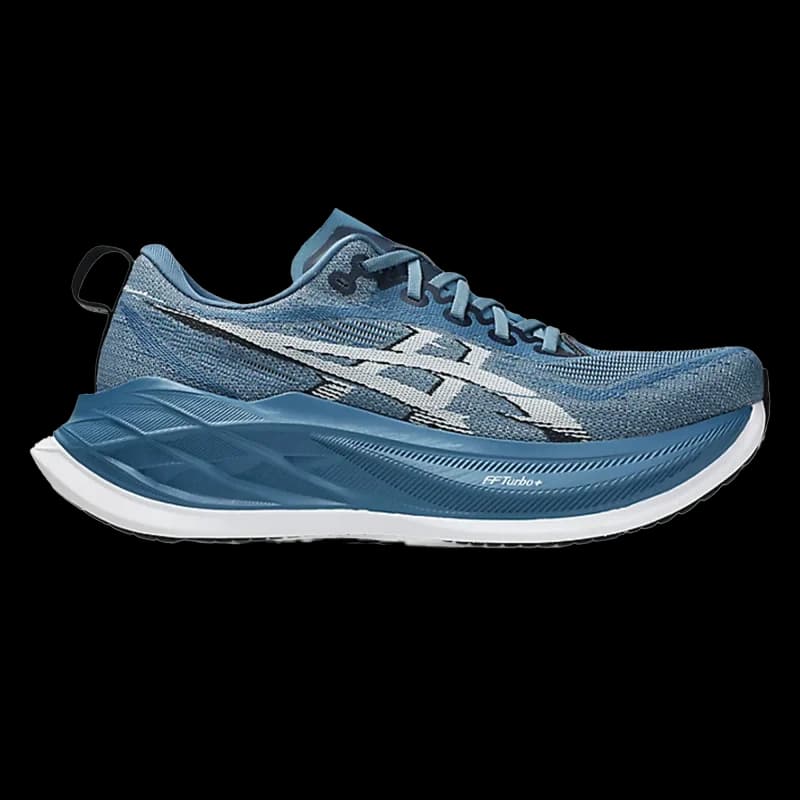 ASICS Superblast 2 ASICS Superblast 2 | 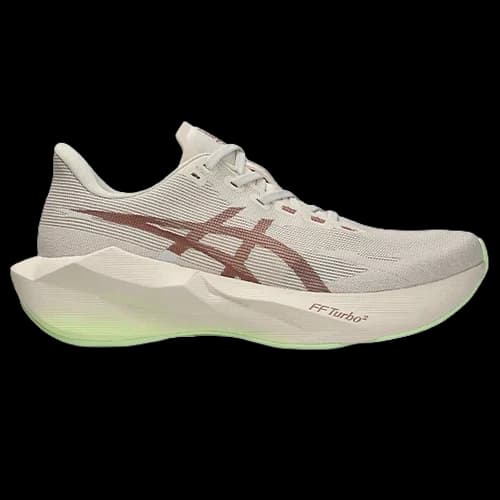 ASICS Novablast 6 ASICS Novablast 6 | 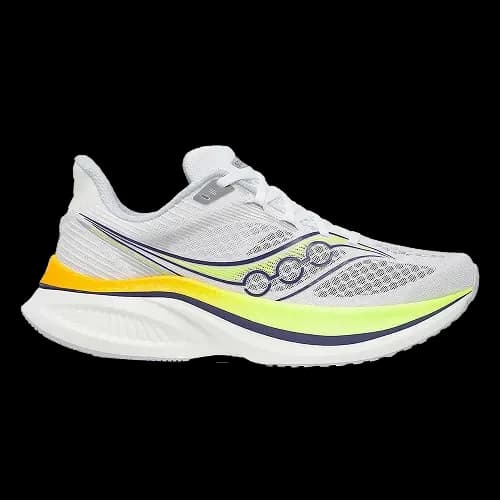 Saucony Endorphin Speed 5 Saucony Endorphin Speed 5 | 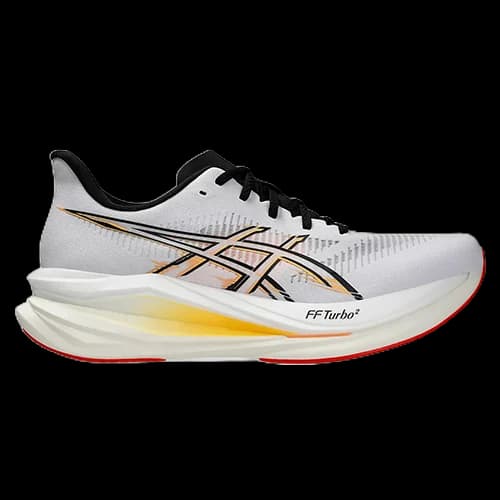 ASICS Sonicblast 2 ASICS Sonicblast 2 | |
|---|---|---|---|---|---|
| Pick it for | This page | More stable | Less cushion | Faster | Same support |
| Drop | 8 mm | 8 mm | 8 mm | 8 mm | 8 mm |
| Heel stack | 45 mm | 45 mm | 41.5 mm | 36 mm | 46 mm |
| Weight | 238 g | 247 g | 249 g | 238 g | 238 g |
| Support | Neutral | Neutral | Neutral | Neutral | Neutral |
Questions runners ask
Superblast 2 or Superblast 3: which should I choose?
Pick the Superblast 3 if you are a neutral runner who wants a softer, lighter ride and more toe room. Stay with the Superblast 2 if you liked its steadier, stable-neutral feel, since Doctors of Running found version 3 more purely neutral, with a forefoot that pulls slightly inward.
Does the ASICS Superblast 3 fit true to size?
Mostly yes: RunRepeat and Doctors of Running found it true to size, while one Believe in the Run tester felt it ran large. It uses unisex sizing, and Fleet Feet advises women to go 1.5 sizes below their usual women’s size.
What is the stack height and drop of the Superblast 3?
ASICS lists 45 mm at the heel and 37 mm at the forefoot, as reported by RunRepeat, an 8 mm drop. Doctors of Running and Believe in the Run give 46.5 mm and 38.5 mm. RunRepeat’s lab measured 45.8 mm and 37.7 mm, so the drop measured almost exactly as listed. Only 14 of the 183 neutral road shoes in our catalogue list a taller heel.
Does the Superblast 3 have a carbon plate?
No. The Superblast 3 has no plate. Its responsiveness comes from the two foam layers, FF Leap on top and FF Blast Plus below, plus a rocker shape and a channel under the forefoot.
Is the Superblast 3 good for overpronation?
It is a neutral shoe and not a natural choice for a marked inward roll. Doctors of Running found it less stable than the Superblast 2, with a medial forefoot bias that one tester struggled with. Runners who roll in should check their stride before choosing a soft, tall shoe like this.
Can you race a marathon in the Superblast 3?
Yes, for many runners. Doctors of Running see it as suitable from training through marathon racing for neutral runners. It is a plateless trainer, though, so runners chasing every second usually save a plated racer for race day.
Sources
- Doctors of Running, ASICS Superblast 3 Review (Andrea Myers, Matt Klein, February 2026). Accessed Oct 9, 2026.
- RunRepeat, ASICS Superblast 3 lab review. Accessed Oct 9, 2026.
- Believe in the Run, ASICS Superblast 3 Review. Accessed Oct 9, 2026.
- Fleet Feet, ASICS Superblast 3. Accessed Oct 9, 2026.
- Strideprint, Strideprint running shoe catalogue (ranks computed on 2026-10-11). Accessed Oct 11, 2026.
- fleetfeet.com · Drop, Weight, US M9, Support, and Plate, listed
- cat: Strideprint catalogue, 395 shoes
How we review. We read published tests, brand and retailer pages and lab measurements, cross-check the figures and flag where they disagree. We did not test this shoe ourselves. Last updated October 13, 2026.