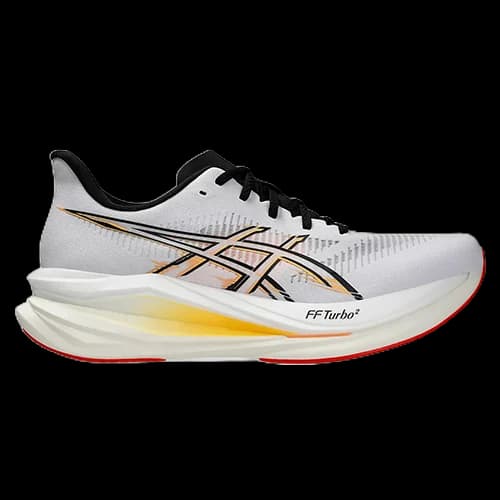
ASICS Sonicblast 2 review
ASICS’s plated super trainer, rebuilt with a forked Pebax plate, a springy forefoot pod and a smoother heel, and a little lighter than the first version.
- Drop
- 8 mm
- Heel stack
- 46 mm
- Forefoot
- 38 mm
- Weight
- 238 g
- Support
- Neutral
- Plate
- Other
Our verdict
Firm, stable, and happiest at pace.
The Sonicblast 2 puts 46 mm of foam and a forked plate under a neutral runner and still feels steady, which every test notices. It suits tempo runs, long runs with faster blocks and marathon pace. At easy paces the stiff midfoot can feel like work, and the toe box divides testers.
Strong points
- Very stable for a 46 mm stack, per Doctors of Running
- Responsive once the rocker engages, at tempo and marathon pace
- Lighter than the first Sonicblast: 225.9 g on RTINGS’s scale
- Cushioning that holds up over long efforts: 9.2 out of 10 at RTINGS
- True to size for every test we read
Weak points
- Stiff midfoot that feels awkward at easy paces
- Firm on landing for Running Lab
- Shallow toe box in RTINGS’s fit test
- Only one width
Who it fits
- Tempo runs and long runs with fast blocks
- You find super shoes too wobbly
- You want training shoe comfort with a plate
Who should skip it
- Your runs are mostly easy
- You need support for an inward roll
- You want ground feel or a soft landing
Shoe profile
Where the Sonicblast 2 sits among the 395 shoes in our catalogue, and what changed from the Sonicblast.
| Axis | Sonicblast 2 | Sonicblast | Change |
|---|---|---|---|
| Cushioning | 93 | 93 | = |
| Lightness | 71 | 60 | +11 |
| Stability | 30 | 30 | = |
| Drop | 45 | 45 | = |
| Response | 20 | 40 | −20 |
Fig. 1 · How to read it. Each axis runs from 0 at the centre to 100 at the edge. Cushioning, lightness and drop are the shoe’s rank in the catalogue from listed figures; stability and response are scored from the support type, the plate, the rocker and the intended use. The dotted grey line is the catalogue median. Source: Strideprint catalogue (cat).
Where it sits in the catalogue
Weight238 g, lighter than 70% of shoes
Drop8 mm, higher than 45% of shoes
Heel stack46 mm, higher than 93% of shoes
Forefoot stack38 mm, higher than 88% of shoes
How it feels
Written from 3 published tests. We quote measurements, not impressions we did not have.
Lots of foam, firm feel. 46 mm of FF Turbo Squared over FF Blast Max: well protected over long efforts, firm rather than plush.
Steady for 46 mm. No support system, yet a wide, firm base makes it one of the steadiest tall trainers for Doctors of Running; less so on grass.
Plate and rocker want pace. A forked Pebax plate and forefoot pod make toe-off springy at pace; at slow speeds the stiff midfoot can slap.
Lots of foam, firm feel. FF Turbo Squared sits on top, FF Blast Max underneath, with an extra Turbo Squared pod under the forefoot. Doctors of Running list 46 mm at the heel and 38 mm at the forefoot for men; RTINGS measured a 45.1 mm heel. Only 4 of the 183 neutral road shoes in our catalogue list a taller heel.
RTINGS rates cushioning 9.2 out of 10 and finds it holds over long efforts. Running Lab and Doctors of Running still describe a firm overall feel, and RTINGS notes limited ground feel.
Steady for 46 mm. There is no support system, but Doctors of Running found it one of the most stable super trainers at this height, thanks to a wide platform, moderate flare on the inner side and a firm midsole.
Two caveats: one Doctors of Running tester felt that inner flare could bother runners sensitive to pressure there, and grass or uneven ground felt less secure under the forefoot pod. RTINGS rates stability 6.8 out of 10.
Plate and rocker want pace. The forked Pebax plate and the forefoot pod give a springy toe-off. RTINGS scores forefoot energy return 7.8 out of 10 but the heel only 6.8, and rates the rocker as stiff.
At about 238 g listed for a men’s US 9, it ranks 52nd lightest of the 149 neutral road shoes weighed in that size in our catalogue. Doctors of Running feel a slap through the midfoot at slow paces that fades as speed rises.
Read more
Lots of foam, firm feel. FF Turbo Squared sits on top, FF Blast Max underneath, with an extra Turbo Squared pod under the forefoot. Doctors of Running list 46 mm at the heel and 38 mm at the forefoot for men; RTINGS measured a 45.1 mm heel. Only 4 of the 183 neutral road shoes in our catalogue list a taller heel.
RTINGS rates cushioning 9.2 out of 10 and finds it holds over long efforts. Running Lab and Doctors of Running still describe a firm overall feel, and RTINGS notes limited ground feel.
Steady for 46 mm. There is no support system, but Doctors of Running found it one of the most stable super trainers at this height, thanks to a wide platform, moderate flare on the inner side and a firm midsole.
Two caveats: one Doctors of Running tester felt that inner flare could bother runners sensitive to pressure there, and grass or uneven ground felt less secure under the forefoot pod. RTINGS rates stability 6.8 out of 10.
Plate and rocker want pace. The forked Pebax plate and the forefoot pod give a springy toe-off. RTINGS scores forefoot energy return 7.8 out of 10 but the heel only 6.8, and rates the rocker as stiff.
At about 238 g listed for a men’s US 9, it ranks 52nd lightest of the 149 neutral road shoes weighed in that size in our catalogue. Doctors of Running feel a slap through the midfoot at slow paces that fades as speed rises.
Which runs it’s for
| Run | Fit | Why | Source |
|---|---|---|---|
| Tempo | Made for it | Its sweet spot for every test: the rocker and plate come alive with pace. | Doctors of Running, RTINGS, Running Lab |
| Long runs | Made for it | RTINGS scores it 8.1 for long runs; Running Lab ran 30 km and more in comfort. | RTINGS, Running Lab |
| Marathon race | Made for it | RTINGS scores it 8.1 for marathon racing; one Doctors of Running tester found it most comfortable at marathon pace. | Doctors of Running, RTINGS |
| Intervals | Can do | Running Lab use it for fast sessions; one Doctors of Running tester found it a bit heavy at threshold. | Doctors of Running, Running Lab |
| Easy runs | Can do | Road Runner Sports pitch it for daily miles, but Doctors of Running and RTINGS find the midfoot stiff at slow paces. | Doctors of Running, RTINGS, Road Runner Sports |
| Walking | Not for it | Doctors of Running do not rate it for walking or standing. | Doctors of Running |
Source: Doctors of Running, RTINGS, Running Lab, Road Runner Sports
What the tests say
Tests agree the Sonicblast 2 is a clear step up from the first version: lighter, steadier and livelier at pace. They differ on how firm it feels and on room for the toes.
| Test | Type | Our reading | In one sentence | Source |
|---|---|---|---|---|
| Doctors of Running | Review | Positive | Doctors of Running grade it A minus overall from both testers: very stable for its height, best at faster efforts. | Read |
| RTINGS | Lab | Positive | RTINGS gives 8.1 out of 10, a better shoe than the original for long efforts, with muted heel rebound. | Read |
| Running Lab | Review | Positive | Running Lab score it 9.5 out of 10: explosive for fast running, firm on impact. | Read |
They agree
- Better than the first SonicblastDoctors of Running, RTINGS and Running Lab all prefer it: lighter, more stable and more responsive, with a smoother heel.
- Stable for its heightDoctors of Running call it one of the most stable super trainers at this stack, and Running Lab also found it steadier than before.
- Made for pace, not for joggingAll three tests find the stiff midfoot less pleasant at easy paces and the shoe at its best from tempo to marathon effort.
- True to sizeDoctors of Running, RTINGS, Running Lab and Road Runner Sports all advise your usual size.
They split
- Room in the forefootDoctors of Running found the forefoot roomier than average and comfortable. RTINGS measures a shallow toe box, and Running Lab report that some wide-footed testers found it too precise.
- Firm or softDoctors of Running and Running Lab describe a firm ride. RTINGS rates the forefoot noticeably softer than the first version and finds the foam gives limited underfoot support.
How it’s built
Two foams, FF Turbo Squared over FF Blast Max, a forked Pebax plate between them, a forefoot Turbo Squared pod, a light engineered mesh upper and ASICSGRIP rubber.
FF Turbo Squared over FF Blast Max with a forked Pebax plate and a forefoot pod, under a light, open mesh upper and ASICSGRIP rubber.
| # | Part | Measure |
|---|---|---|
| 1 | UpperEngineered mesh | Breathability 7.5 / 10 |
| 2 | Tongue | – |
| 3 | Heel | – |
| 4 | MidsoleFF Turbo Squared and FF Blast Max | – |
| 5 | PlateForked Pebax Astroplate | – |
| 6 | OutsoleASICSGRIP | – |
Fig. 3 · Side profile. Stack heights to scale (listed: 46 mm heel, 38 mm forefoot); the split between the two foams is not measured and is drawn at mid-height. Dashed: insole, hidden. Sources: Fleet Feet, Doctors of Running, RTINGS, Running Lab.
Upper. A new, more open mesh with no overlays, per Fleet Feet. Doctors of Running found it breathable and stable on the foot, and RTINGS scores breathability 7.5 out of 10.
Tongue. Gusseted, which RTINGS credits for stability, with flat, wide laces. Running Lab note a well padded upper around it.
Heel. A stiff but well shaped counter that caused no Achilles irritation for one Doctors of Running tester. The heel bevel is rounder than on the first version.
Midsole. FF Turbo Squared on top for rebound, FF Blast Max below, and a Turbo Squared pod under the forefoot that now connects to the midsole layer, according to Fleet Feet.
Plate. A three-quarter length Pebax plate split in a fork, replacing the first version’s design so that more foam reaches the forefoot. It is not carbon.
Outsole. Broad forefoot rubber coverage, per Doctors of Running. Running Lab found it grippy in the wet and resistant to trapping stones.
Read more
Two foams, FF Turbo Squared over FF Blast Max, a forked Pebax plate between them, a forefoot Turbo Squared pod, a light engineered mesh upper and ASICSGRIP rubber.
1. Upper. A new, more open mesh with no overlays, per Fleet Feet. Doctors of Running found it breathable and stable on the foot, and RTINGS scores breathability 7.5 out of 10.
2. Tongue. Gusseted, which RTINGS credits for stability, with flat, wide laces. Running Lab note a well padded upper around it.
3. Heel. A stiff but well shaped counter that caused no Achilles irritation for one Doctors of Running tester. The heel bevel is rounder than on the first version.
4. Midsole. FF Turbo Squared on top for rebound, FF Blast Max below, and a Turbo Squared pod under the forefoot that now connects to the midsole layer, according to Fleet Feet.
5. Plate. A three-quarter length Pebax plate split in a fork, replacing the first version’s design so that more foam reaches the forefoot. It is not carbon.
6. Outsole. Broad forefoot rubber coverage, per Doctors of Running. Running Lab found it grippy in the wet and resistant to trapping stones.
Durability. Early signs are good: no visible outsole wear after about 20 miles for one Doctors of Running tester, who expects average to above-average durability. No long-term data yet.
Durability. Early signs are good: no visible outsole wear after about 20 miles for one Doctors of Running tester, who expects average to above-average durability. No long-term data yet.
Specs, listed and measured
Every figure carries its source.
Drop, mm
Heel stack, mm
Weight (men’s), g
| Spec | Listed | Measured |
|---|---|---|
| Drop |
|
|
| Heel stack |
|
|
| Forefoot stack |
| – |
| Weight, US M9 |
|
|
| Support |
| – |
| Plate |
| – |
| Surface |
| – |
Fig. 4 · Listed vs measured. Bars start at zero. Sources: Doctors of Running, RTINGS, Fleet Feet.
Sizing and fit
Take your usual size; the question is toe room, not length.
Length
True to size
Widths
standard
Toe room
Width is generous for Doctors of Running, but height is limited: RTINGS scores toe box height 6.5 out of 10, so tall toes may touch the top.
Doctors of Running, RTINGS
Full sizing notes from testers
Doctors of Running, RTINGS, Running Lab and Road Runner Sports all advise your usual size. RTINGS adds that it may run very slightly long.
Doctors of Running found the midfoot and heel normal in width and the forefoot roomier than average; one tester had to lace a little tighter to hold it. RTINGS measures a shallow toe box, and Running Lab report that some testers with wide forefeet found it too snug.
Fleet Feet and RTINGS list a single standard width.
Doctors of Running, RTINGS, Running Lab, Road Runner Sports, Fleet Feet
Vs Sonicblast
A real rework: new plate, new forefoot pod, smoother heel, new upper and less weight, with the same 46 mm stack and 8 mm drop.
| Sonicblast 2 | Sonicblast | |
|---|---|---|
| Support | Neutral | Neutral |
| Drop | 8 mm | 8 mm |
| Heel stack | 46 mm | 46 mm |
| Forefoot | 38 mm | 38 mm |
| Weight | 238 g | 255 g |
RTINGS still finds the first Sonicblast slightly smoother and bouncier underfoot. Otherwise every test prefers version 2: lighter, steadier and better over long efforts.
Listed figures. Source: Strideprint catalogue (cat).
Version history: Sonicblast to Sonicblast 2
Forked Pebax plate. The plate is now split in a fork, letting more FF Turbo Squared reach the forefoot. (Doctors of Running, Fleet Feet)
Forefoot pod. A Turbo Squared pod under the forefoot adds spring at toe-off. (Doctors of Running, RTINGS)
Rounder heel. Doctors of Running found the heel and midfoot slap of the first version much reduced. (Doctors of Running)
Lighter. About half an ounce lighter for Doctors of Running, about 15 g for Running Lab. (Doctors of Running, Running Lab)
New upper. A more open mesh with more room in the toe box, per Doctors of Running and Fleet Feet. (Doctors of Running, Fleet Feet)
Alternatives compared
Each one fixes one thing the Sonicblast 2 does not do.
| ASICS Sonicblast 2 | 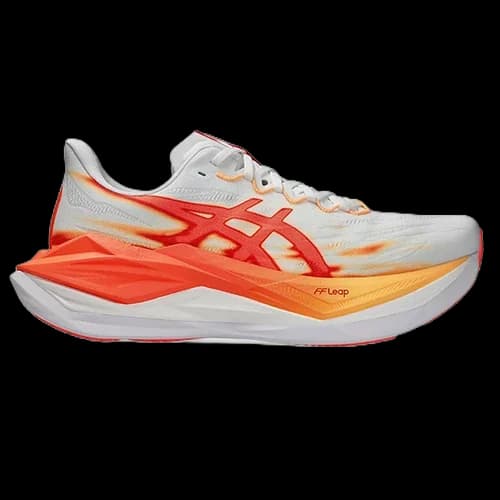 ASICS Superblast 3 ASICS Superblast 3 | 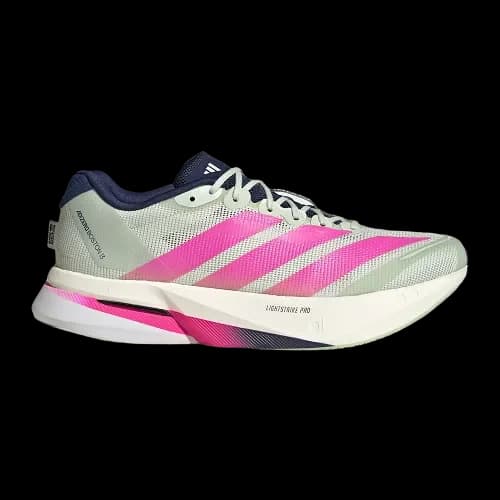 Adidas Adizero Boston 13 Adidas Adizero Boston 13 | 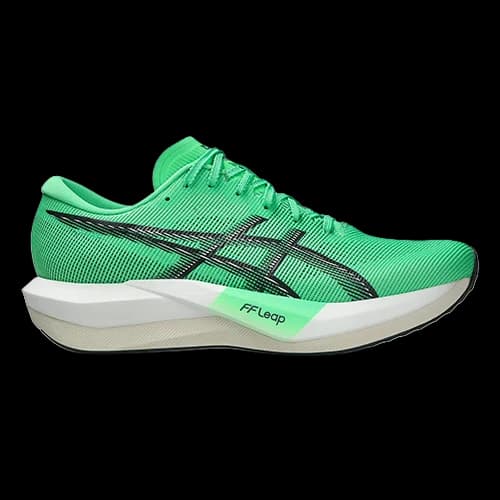 ASICS Magic Speed 5 ASICS Magic Speed 5 | 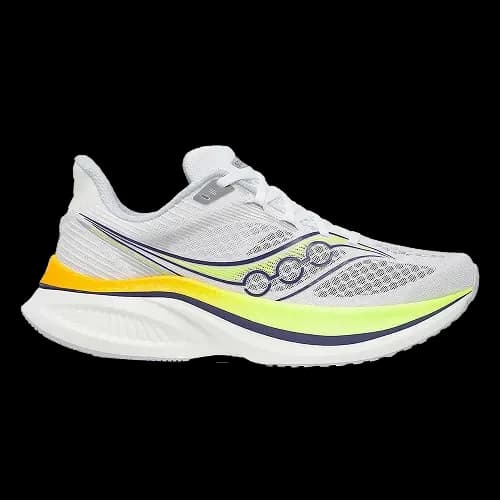 Saucony Endorphin Speed 5 Saucony Endorphin Speed 5 | |
|---|---|---|---|---|---|
| Pick it for | This page | Softer | Firmer | Faster | Less cushion |
| Drop | 8 mm | 8 mm | 7 mm | 7 mm | 8 mm |
| Heel stack | 46 mm | 47 mm | 37 mm | 37.5 mm | 36 mm |
| Weight | 238 g | 238 g | 255 g | 196 g | 238 g |
| Support | Neutral | Neutral | Neutral | Neutral | Neutral |
Questions runners ask
Does the ASICS Sonicblast 2 fit true to size?
Yes. Doctors of Running, RTINGS, Running Lab and Road Runner Sports all advise your usual size. Toe room is the debate: roomy for Doctors of Running, shallow for RTINGS.
Sonicblast 2 or the first Sonicblast?
Every test prefers version 2: lighter, steadier, with a smoother heel and more forefoot spring. RTINGS finds the original a little smoother and bouncier, which matters only if you liked it that way.
Sonicblast 2 or Superblast 3?
The Superblast 3 is softer with more heel rebound, per RTINGS. The Sonicblast 2 is lighter, steadier and more responsive thanks to its plate, and one Doctors of Running tester felt less side-to-side shift in it.
Is the Sonicblast 2 good for a marathon?
RTINGS scores it 8.1 for marathon racing, and one Doctors of Running tester found it most comfortable at marathon pace. It suits runners who want a plated, stable shoe rather than a pure carbon racer.
Is the Sonicblast 2 good for easy runs?
It can do them, but it is not its strength. Doctors of Running and RTINGS find the plate and stiff midfoot less natural at slow paces, and Running Lab advise it against beginners.
Does the Sonicblast 2 come in wide?
Not at the time of writing: Fleet Feet and RTINGS list a single standard width.
Sources
- Doctors of Running, ASICS Sonicblast 2 Review (David Salas, Andrea Myers, August 2026). Accessed Oct 13, 2026.
- RTINGS, ASICS SONICBLAST 2 review. Accessed Oct 13, 2026.
- Running Lab, Asics Sonicblast 2 : test et avis. Accessed Oct 13, 2026.
- Road Runner Sports, ASICS Sonicblast 2 review. Accessed Oct 13, 2026.
- Fleet Feet, Men’s ASICS Sonicblast 2. Accessed Oct 13, 2026.
- Strideprint, Strideprint running shoe catalogue (ranks computed on 2026-10-13). Accessed Oct 13, 2026.
- i-run.fr · Surface, listed
- cat: Strideprint catalogue, 395 shoes
How we review. We read published tests, brand and retailer pages and lab measurements, cross-check the figures and flag where they disagree. We did not test this shoe ourselves. Last updated October 13, 2026.