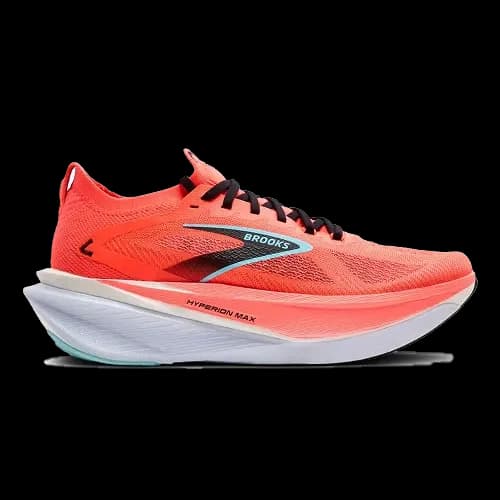
Brooks Hyperion Max 3 review
What Believe in the Run calls Brooks’s first real super trainer: a much taller stack, PEBA-based DNA Gold foam over a nylon plate, and a snug knit upper built for long miles.
- Drop
- 6 mm
- Heel stack
- 46 mm
- Forefoot
- 40 mm
- Weight
- 280 g
- Support
- Neutral
- Plate
- Nylon
Our verdict
Big, bouncy, built for distance.
The Hyperion Max 3 stacks soft DNA Gold over a firmer foam and a nylon plate, with a rocker that keeps long runs rolling. It suits neutral runners with standard to narrow feet who want a cushioned trainer for long and steady miles, less those who need stability or a light shoe for fast reps.
Strong points
- Very soft DNA Gold foam: 25.7 AC in RunRepeat’s test, far below the 35.5 average
- Above-average energy return, 66.2 percent at the forefoot per RunRepeat
- Smooth rocker and heel transition that reviewers enjoyed on long runs
- Secure lockdown and no heel slip, per RunRepeat, BITR and RunningShoesGuru
- Little outsole wear: 0.9 mm in RunRepeat’s test, minimal after 100 km for RunningShoesGuru
Weak points
- Heavy: 280 g in a men’s US 9, and 113 of 149 neutral shoes in our catalogue are lighter
- Limited stability, with a medial cutout under the midfoot
- Snug, low-volume toe box and one width only
- Runs warm for Believe in the Run, and Doctors of Running warn of the same
Who it fits
- Your long runs are the priority
- Your foot lands neutrally
- You like a snug, wrapped fit
- You land on your heel
Who should skip it
- Your foot rolls in noticeably
- Your feet are wide or your toes tall
- You want one shoe for short, fast reps
Shoe profile
Where the Hyperion Max 3 sits among the 395 shoes in our catalogue.
| Axis | Hyperion Max 3 |
|---|---|
| Cushioning | 93 |
| Lightness | 33 |
| Stability | 30 |
| Drop | 20 |
| Response | 40 |
Fig. 1 · How to read it. Each axis runs from 0 at the centre to 100 at the edge. Cushioning, lightness and drop are the shoe’s rank in the catalogue from listed figures; stability and response are scored from the support type, the plate, the rocker and the intended use. The dotted grey line is the catalogue median. Source: Strideprint catalogue (cat).
Where it sits in the catalogue
Weight280 g, heavier than 67% of shoes
Drop6 mm, lower than 59% of shoes
Heel stack46 mm, higher than 93% of shoes
Forefoot stack40 mm, higher than 96% of shoes
How it feels
Written from 6 published tests. We quote measurements, not impressions we did not have.
Deep and soft, with a bounce. A 46 mm heel and very soft DNA Gold foam, 25.7 AC at RunRepeat: plush in the lab, firm and bouncy on the road for Doctors of Running.
Neutral, and a little loose in corners. Neutral with a medial cutout: RTINGS scores stability 5.8, and RunningShoesGuru found it unsteady on corners despite a very rigid platform.
A rocker that rolls, a weight you feel. Energy return of 66.2 percent at the forefoot per RunRepeat and an early rocker, but the weight shows at 5K pace and faster.
Deep and soft, with a bounce. Brooks lists 46 mm at the heel and 40 mm at the forefoot, about 10 mm more than the Max 2 according to Believe in the Run. Only 4 of the 183 neutral road shoes in our catalogue list a taller heel. The midsole pairs PEBA-based DNA Gold on top with DNA Flash v2 underneath.
RunRepeat measured the foam at 25.7 on the AC scale, against a 35.5 average, and shock absorption of 151 at the heel, well above the 131 average. RTINGS rates the cushioning 9.0 out of 10. Doctors of Running still describe the ride as firm and bouncy rather than mushy.
Neutral, and a little loose in corners. A cutout on the inner side of the midfoot leaves less foam under the arch. RTINGS scores stability 5.8 out of 10, RunRepeat recommends it only for neutral runners, and RunningShoesGuru found it unsteady on corners and uneven ground.
The platform is very rigid, 21.4 Nm in RunRepeat’s torsion test against a 14.4 average, which helps on straight roads. Doctors of Running found it less stable than earlier versions on grass, yet clearly steadier than the Hoka Cielo X1 2.0 it resembles on paper.
A rocker that rolls, a weight you feel. RunRepeat measured energy return of 63.9 percent at the heel and 66.2 percent at the forefoot, above the 61.4 average. The RapidRoll rocker starts early under the forefoot, and the nylon SpeedVault plate adds stiffness rather than snap.
Doctors of Running found it comfortable from 10K to marathon pace but laboured at 5K pace. Believe in the Run felt the ride firmer and less nimble than the Max 2, and RunningShoesGuru found it harder to push than other speed trainers.
Read more
Deep and soft, with a bounce. Brooks lists 46 mm at the heel and 40 mm at the forefoot, about 10 mm more than the Max 2 according to Believe in the Run. Only 4 of the 183 neutral road shoes in our catalogue list a taller heel. The midsole pairs PEBA-based DNA Gold on top with DNA Flash v2 underneath.
RunRepeat measured the foam at 25.7 on the AC scale, against a 35.5 average, and shock absorption of 151 at the heel, well above the 131 average. RTINGS rates the cushioning 9.0 out of 10. Doctors of Running still describe the ride as firm and bouncy rather than mushy.
Neutral, and a little loose in corners. A cutout on the inner side of the midfoot leaves less foam under the arch. RTINGS scores stability 5.8 out of 10, RunRepeat recommends it only for neutral runners, and RunningShoesGuru found it unsteady on corners and uneven ground.
The platform is very rigid, 21.4 Nm in RunRepeat’s torsion test against a 14.4 average, which helps on straight roads. Doctors of Running found it less stable than earlier versions on grass, yet clearly steadier than the Hoka Cielo X1 2.0 it resembles on paper.
A rocker that rolls, a weight you feel. RunRepeat measured energy return of 63.9 percent at the heel and 66.2 percent at the forefoot, above the 61.4 average. The RapidRoll rocker starts early under the forefoot, and the nylon SpeedVault plate adds stiffness rather than snap.
Doctors of Running found it comfortable from 10K to marathon pace but laboured at 5K pace. Believe in the Run felt the ride firmer and less nimble than the Max 2, and RunningShoesGuru found it harder to push than other speed trainers.
Which runs it’s for
| Run | Fit | Why | Source |
|---|---|---|---|
| Long runs | Made for it | Its best use. RTINGS scores it highest for long runs and every test points it at distance. | RTINGS, Believe in the Run, RunningShoesGuru |
| Easy runs | Made for it | Believe in the Run and RunRepeat both see it as a comfortable daily trainer. | RunRepeat, Believe in the Run |
| Tempo | Can do | Divides testers: RTINGS and Doctors of Running like it for steady work, Believe in the Run finds it too heavy. | Doctors of Running, RTINGS, Believe in the Run |
| Marathon race | Can do | Doctors of Running see it as a race option for slower runners. RTINGS finds it too heavy to be a racing shoe. | Doctors of Running, RTINGS |
| Intervals | Not for it | Doctors of Running found it struggled at 5K pace and faster. Keep a lighter pair for short reps. | Doctors of Running, RunningShoesGuru |
| Light trail | Not for it | Doctors of Running found it less stable on grass and saw exposed foam scuffed by dirt. | Doctors of Running |
Source: RTINGS, Believe in the Run, RunningShoesGuru, RunRepeat, Doctors of Running
What the tests say
Published tests agree the Hyperion Max 3 is a heavy, deeply cushioned super trainer that shines on long runs and fits snugly. They split on how fast it can go and on whether it is an improvement on the lighter Max 2.
| Test | Type | Our reading | In one sentence | Source |
|---|---|---|---|---|
| RunRepeat | Lab | Positive | RunRepeat scores it 85 out of 100: big shock absorption and better rebound than earlier Max models, held back by weight and stability. | Read |
| Doctors of Running | Review | Mixed | Doctors of Running split: one tester calls it a true super trainer and the best version yet, the other struggled with a short, tight fit. | Read |
| RTINGS | Lab | Mixed | RTINGS gives 7.2 out of 10: excellent cushioning and good rebound, but very heavy and only fair on stability. | Read |
| Believe in the Run | Review | Mixed | Believe in the Run sees a fun long-run super trainer, but a different shoe from the Max 2 that two testers miss. | Read |
| RunningShoesGuru | Review | Positive | RunningShoesGuru gives 8 out of 10: a solid maximal trainer for medium and long runs, heavier and less stable than rivals. | Read |
| Runnea | Review | Positive | Runnea rates it 8.5 out of 10: a predictable training shoe for long runs and marathon blocks, snug over the instep. | Read |
They agree
- Heavier than beforeDoctors of Running and Believe in the Run list a gain of nearly an ounce over the Max 2, and RTINGS measured almost 30 g more.
- Made for long milesRTINGS, RunningShoesGuru and Believe in the Run all place it first for long runs at a steady effort.
- Snug fit, one widthRunRepeat, RTINGS and RunningShoesGuru confirm a standard width only, and Doctors of Running and RunningShoesGuru describe a tight, low-volume front.
- Not a stability shoeRunRepeat, RTINGS and RunningShoesGuru all flag limited stability, linked to the medial cutout under the midfoot.
They split
- How fast can it go?RTINGS prefers it to the Glycerin Max for faster work, and Doctors of Running ran 10K to marathon pace in it. Believe in the Run and RunningShoesGuru found it too heavy for tempo work.
- Soft or firm?RunRepeat measured one of the softest midsoles around, and one Believe in the Run tester found it soft. Doctors of Running describe a firm, bouncy ride.
- Better than the Max 2?Doctors of Running call it the best version yet. Two of Believe in the Run’s three testers would rather stock up on the Max 2.
How it’s built
A dual-foam super trainer: PEBA-based DNA Gold over DNA Flash v2, a nylon SpeedVault plate between them, a RapidRoll rocker, and a knit-collared upper.
PEBA-based DNA Gold over DNA Flash v2 with a nylon SpeedVault plate, an aggressive RapidRoll rocker, a medial cutout and a thin 2.8 mm outsole that wore well in testing.
| # | Part | Measure |
|---|---|---|
| 1 | UpperEngineered mesh with knit collar | Breathability 4 / 5 |
| 2 | Tongue | 1.8 mm |
| 3 | Heel | Stiffness 3 / 5 |
| 4 | MidsoleDNA Gold, DNA Flash v2 and RapidRoll | Hardness 25.7 AC |
| 5 | PlateSpeedVault | Torsion 21.4 Nm |
| 6 | Insole | 2.8 mm |
| 7 | Outsole | 2.8 mm |
Fig. 3 · Side profile. Stack heights to scale (listed: 46 mm heel, 40 mm forefoot; measured: 2.8 mm outsole); the split between the two foams is not measured and is drawn at mid-height. Dashed: insole, hidden. Sources: Believe in the Run, RunRepeat, Doctors of Running, Running Warehouse, RunningShoesGuru, Runnea.
Upper. Running Warehouse lists an engineered mesh body with a knit collar and tongue. RunRepeat rates breathability 4 out of 5, yet Believe in the Run found it warm, and Doctors of Running advise socks because of a scratchy lining.
Tongue. Asymmetric and semi-gusseted on both sides, only 1.8 mm thick in RunRepeat’s measurement. Doctors of Running found it folds easily when putting the shoe on.
Heel. RunRepeat rates the counter 3 out of 5. Doctors of Running found the counter stiff and the collar heavily padded, and do not recommend it for Haglund’s deformity.
Midsole. PEBA-based DNA Gold on top, measured at 25.7 AC, over DNA Flash v2. The RapidRoll rocker is aggressive at the forefoot, and a medial cutout sits under the midfoot.
Plate. A nylon plate, not carbon, per Running Warehouse and RunRepeat. The shoe is stiff: 21.4 Nm in torsion and 17.0 N in RunRepeat’s bend test.
Insole. Removable but thin, 2.8 mm against a 4.4 average in RunRepeat’s measurement, which leaves little room to gain by swapping it.
Outsole. Rubber in strategic zones, 2.8 mm thick, with a large medial cutout. RunRepeat measured traction of 0.51, close to average, and Doctors of Running found wet grip weaker than on earlier versions because more foam is exposed.
Read more
A dual-foam super trainer: PEBA-based DNA Gold over DNA Flash v2, a nylon SpeedVault plate between them, a RapidRoll rocker, and a knit-collared upper.
1. Upper. Running Warehouse lists an engineered mesh body with a knit collar and tongue. RunRepeat rates breathability 4 out of 5, yet Believe in the Run found it warm, and Doctors of Running advise socks because of a scratchy lining.
2. Tongue. Asymmetric and semi-gusseted on both sides, only 1.8 mm thick in RunRepeat’s measurement. Doctors of Running found it folds easily when putting the shoe on.
3. Heel. RunRepeat rates the counter 3 out of 5. Doctors of Running found the counter stiff and the collar heavily padded, and do not recommend it for Haglund’s deformity.
4. Midsole. PEBA-based DNA Gold on top, measured at 25.7 AC, over DNA Flash v2. The RapidRoll rocker is aggressive at the forefoot, and a medial cutout sits under the midfoot.
5. Plate. A nylon plate, not carbon, per Running Warehouse and RunRepeat. The shoe is stiff: 21.4 Nm in torsion and 17.0 N in RunRepeat’s bend test.
6. Insole. Removable but thin, 2.8 mm against a 4.4 average in RunRepeat’s measurement, which leaves little room to gain by swapping it.
7. Outsole. Rubber in strategic zones, 2.8 mm thick, with a large medial cutout. RunRepeat measured traction of 0.51, close to average, and Doctors of Running found wet grip weaker than on earlier versions because more foam is exposed.
Durability. Better than the thin rubber suggests. RunRepeat measured 0.9 mm of outsole wear, below the 1.1 mm average, and RunningShoesGuru saw minimal wear after 100 km. Doctors of Running expect average durability and saw the exposed foam scuffed, and Runnea worries the reduced rubber may cost mileage in the long run.
Durability. Better than the thin rubber suggests. RunRepeat measured 0.9 mm of outsole wear, below the 1.1 mm average, and RunningShoesGuru saw minimal wear after 100 km. Doctors of Running expect average durability and saw the exposed foam scuffed, and Runnea worries the reduced rubber may cost mileage in the long run.
Specs, listed and measured
Every figure carries its source.
Drop, mm
Heel stack, mm
Forefoot stack, mm
Weight (men’s), g
| Spec | Listed | Measured |
|---|---|---|
| Drop |
|
|
| Heel stack |
|
|
| Forefoot stack |
|
|
| Weight, US M9 |
|
|
| Support |
| – |
| Plate |
| – |
| Surface |
| – |
| Release year |
| – |
Fig. 4 · Listed vs measured. Bars start at zero. Sources: Believe in the Run, Running Warehouse, Doctors of Running, RunRepeat, RTINGS.
Lab measurements
| Spec | Measured |
|---|---|
| Midsole hardness |
|
| Energy return (forefoot) |
|
| Torsional rigidity |
|
| Flex force |
|
| Heel counter stiffness |
|
| Traction coefficient |
|
| Spec | Measured |
|---|---|
| Breathability |
|
| Toe box width |
|
| Toe box height |
|
| Outsole thickness |
|
| Insole thickness |
|
| Tongue thickness |
|
Sizing and fit
Take your usual size, but expect a snug, low-volume fit in a single width.
Length
True to size
Widths
standard
Toe room
Toe room is average in width and short in height. RunRepeat measured a 72.6 mm toe box, close to average, but only 25.0 mm of height against a 27.0 average, and RTINGS scores forefoot height 4.5 out of 10.
RunRepeat, RTINGS
Full sizing notes from testers
RunRepeat’s readers, RTINGS, RunningShoesGuru and Runnea all report a true-to-size length. Runnea and Doctors of Running add that the fit is snug, especially over the instep.
Doctors of Running found the shoe tighter and shorter than earlier versions: one tester felt it short because the padded collar and stiff counter pushed her foot forward, and doubted a half size up would fix it.
There is no wide option. RunRepeat, RTINGS and Running Warehouse list a standard width only, and RunningShoesGuru advises against it for wide feet. Believe in the Run found it warm, and Doctors of Running warn it may run warm.
RunRepeat, Doctors of Running, RTINGS, Believe in the Run, RunningShoesGuru, Runnea, Running Warehouse
Vs Hyperion Max 2
Less an update than a new shoe: a much taller stack, a PEBA-based top foam, a new upper and nearly an ounce more weight.
Keep the Max 2 if you liked a lighter, nimbler shoe for tempo runs: Believe in the Run found the Max 3 firmer and less agile, and two of its testers plan to stock up on the Max 2. Move to the Max 3 if long runs matter more than quick turnover.
Version history: Hyperion Max 2 to Hyperion Max 3
About 10 mm more stack. Believe in the Run counts roughly 10 mm more foam, and RTINGS measured the Max 3 almost 9 mm taller at the heel. (RTINGS, Believe in the Run)
DNA Gold on top. A PEBA-based DNA Gold layer now sits over DNA Flash v2, with the SpeedVault plate between the two. (Doctors of Running, Believe in the Run)
Heavier. Doctors of Running and Believe in the Run report nearly an ounce more, and RTINGS measured almost 30 g more than the Max 2. (Doctors of Running, RTINGS, Believe in the Run)
New upper, tighter fit. A redesigned upper with a knit collar and tongue. Doctors of Running found the fit tighter and shorter, with a lower-volume toe box. (Doctors of Running, Believe in the Run)
Less stable. RTINGS rates the Max 3 less stable than the Max 2, and Doctors of Running felt the same on uneven ground. (Doctors of Running, RTINGS)
Alternatives compared
Each one fixes one thing the Hyperion Max 3 does not do.
| Brooks Hyperion Max 3 | 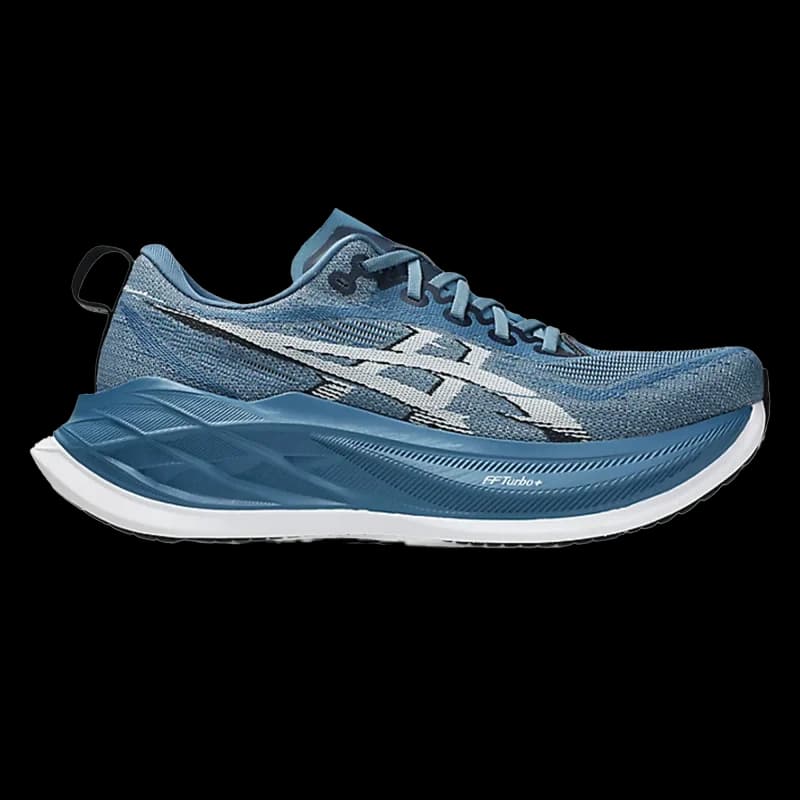 ASICS Superblast 2 ASICS Superblast 2 | 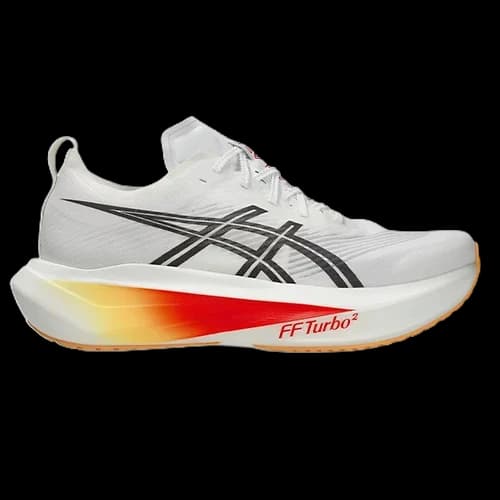 ASICS Megablast ASICS Megablast | 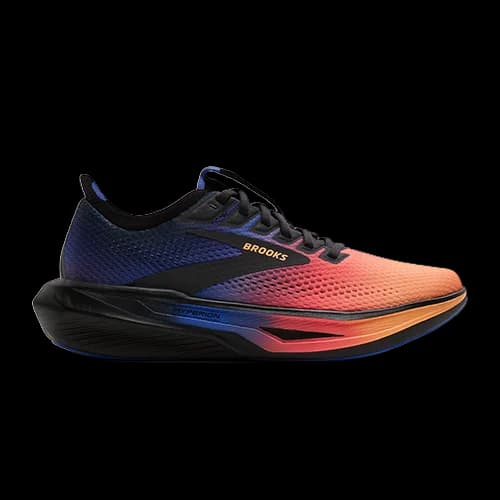 Brooks Hyperion 3 Brooks Hyperion 3 | 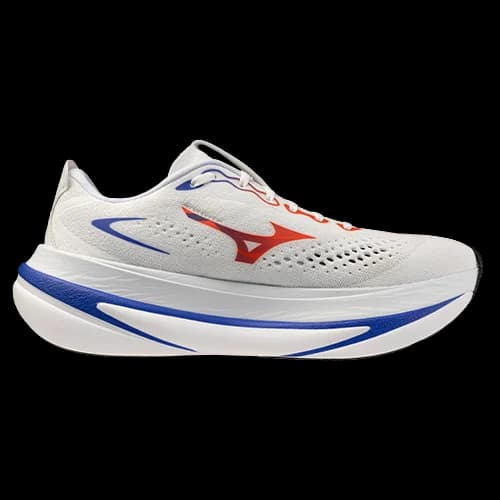 Mizuno Sky Prime Mizuno Sky Prime | |
|---|---|---|---|---|---|
| Pick it for | This page | More stable | Lighter | Less cushion | Same support |
| Drop | 6 mm | 8 mm | 8 mm | 8 mm | 6 mm |
| Heel stack | 46 mm | 45 mm | 46 mm | 37 mm | 46 mm |
| Weight | 280 g | 247 g | 230 g | 241 g | 292 g |
| Support | Neutral | Neutral | Neutral | Neutral | Neutral |
Questions runners ask
Does the Brooks Hyperion Max 3 fit true to size?
In length, yes: RunRepeat’s readers, RTINGS, RunningShoesGuru and Runnea all found it true to size. The fit is snug and low-volume, though, and Doctors of Running found it tighter and shorter than earlier versions. It comes in a standard width only, so runners with broad feet or tall toes should try it on first.
Hyperion Max 2 or Hyperion Max 3: what changed?
The Hyperion Max 3 gains roughly 10 mm of stack, a PEBA-based DNA Gold top layer and a new upper, and weighs nearly an ounce more. Believe in the Run found it softer and better for long runs but less nimble than the Max 2, so runners who used the Max 2 for tempo work may prefer to keep it.
Does the Hyperion Max 3 have a carbon plate?
No. The Hyperion Max 3 uses a SpeedVault plate made of nylon, according to Running Warehouse and RunRepeat, sandwiched between the DNA Gold and DNA Flash v2 foams. It makes the shoe stiff, 21.4 Nm in RunRepeat’s torsion test, without the aggressive snap of a carbon racer.
Is the Hyperion Max 3 good for overpronation or flat feet?
It is a neutral shoe. RunRepeat recommends it for neutral runners only, RTINGS scores stability 5.8 out of 10, and a medial cutout leaves less foam under the arch. A foot that rolls in noticeably will likely be better served elsewhere. Flat feet do not always mean overpronation, so check how your foot actually moves first.
Can you run a marathon in the Hyperion Max 3?
As a training shoe for marathon blocks, yes: Runnea and RTINGS rate it well for long runs. As a race shoe, opinions differ. Doctors of Running see it as a race option for slower runners, while RTINGS finds it too heavy to be a racing shoe at around 290 g in its lab.
Is the Hyperion Max 3 good for wide feet?
Not really. The Hyperion Max 3 comes in a standard width only, according to RunRepeat, RTINGS and Running Warehouse, and RunRepeat measured a toe box lower than average. RunningShoesGuru and Doctors of Running both advise against it for wide feet.
Hyperion Max 3 or Hyperion Max 4?
The Hyperion Max 4 has replaced the Max 3, as RTINGS and RunRepeat note. RunRepeat scores the two close, 86 against 85, and weighed the Max 4 at 292 g against 283 g. If you find a Max 3 that fits, it remains a sound long-run trainer.
Sources
- RunRepeat, Brooks Hyperion Max 3 lab review. Accessed Oct 13, 2026.
- Doctors of Running, Brooks Hyperion Max 3 Review (Andrea Myers, Matt Klein, May 2025). Accessed Oct 13, 2026.
- RTINGS, Brooks Hyperion Max 3 running shoe review. Accessed Oct 13, 2026.
- Believe in the Run, Brooks Hyperion Max 3 Review (May 2025). Accessed Oct 13, 2026.
- RunningShoesGuru, Brooks Hyperion Max 3 review (Brandon Law). Accessed Oct 13, 2026.
- Runnea, Brooks Hyperion Max 3 review. Accessed Oct 13, 2026.
- Running Warehouse, Brooks Hyperion Max 3 Men’s Shoes. Accessed Oct 13, 2026.
- Strideprint, Strideprint running shoe catalogue (ranks computed on 2026-10-13). Accessed Oct 13, 2026.
- cat: Strideprint catalogue, 395 shoes
How we review. We read published tests, brand and retailer pages and lab measurements, cross-check the figures and flag where they disagree. We did not test this shoe ourselves. Last updated October 13, 2026.