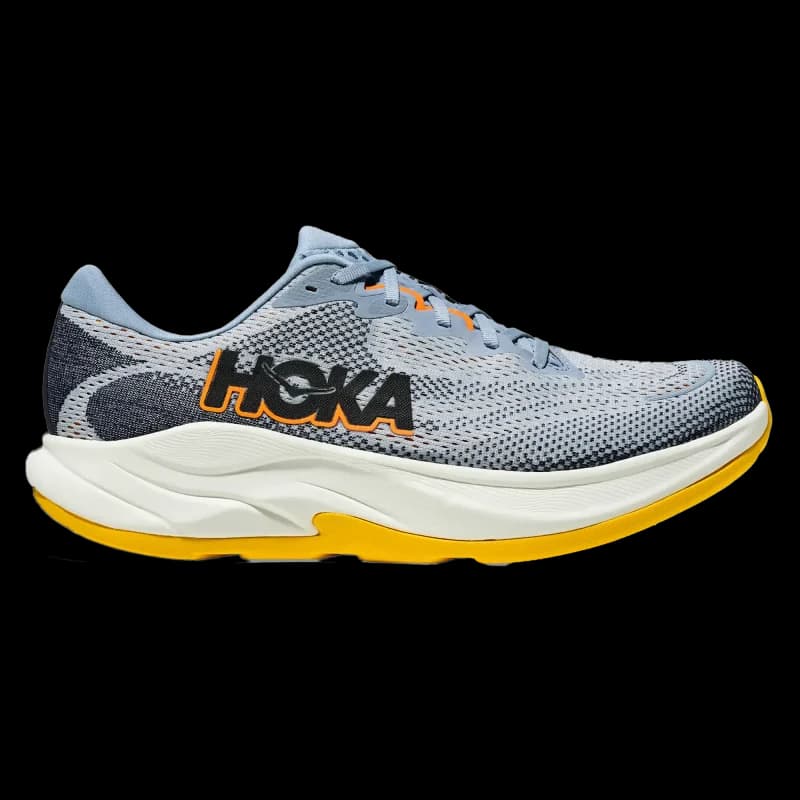
Hoka Rincon 4 review
Hoka’s lightweight neutral trainer grows 3 mm taller and gains a full rubberized outsole, at the cost of a narrower fit and a firmer, heavier ride than the Rincon 3.
- Drop
- 5 mm
- Heel stack
- 36 mm
- Forefoot
- 31 mm
- Weight
- 228 g
- Support
- Neutral
- Plate
- None
Our verdict
Light, simple, and snug.
The Hoka Rincon 4 is a light neutral daily trainer, about 228 g in a men’s US 9, with a 5 mm listed drop, a gentle rocker and a firmer feel than most Hokas. It suits neutral runners with narrow to average feet who want one easy pair for steady miles, provided they size up or pick the wide version and accept that the outsole wears fast.
Strong points
- Light: about 228 g, lighter than 108 of the 149 neutral road shoes weighed in a men’s US 9 in our catalogue
- Smooth, gentle rocker that rolls easily through each stride
- Very breathable upper, 5 out of 5 in RunRepeat’s test
- Wide heel platform that RunRepeat finds steadier than the Rincon 3
- Also good for walking and long days on your feet
Weak points
- Runs small and narrow: most testers suggest a half size up or the wide
- Rubberized EVA outsole wore badly in RunRepeat’s abrasion test
- Slippery on wet roads, according to three tests
- Heavier and firmer than the Rincon 3, which some fans miss
Who it fits
- Your foot rolls neutrally
- Your feet are narrow to average
- You want one light pair for steady miles
- You are new to Hoka
Who should skip it
- Your feet are wide or your toes need room
- You are a heavier runner
- You wear out shoes fast
Shoe profile
Where the Rincon 4 sits among the 395 shoes in our catalogue.
| Axis | Rincon 4 |
|---|---|
| Cushioning | 24 |
| Lightness | 79 |
| Stability | 30 |
| Drop | 9 |
| Response | 20 |
Fig. 1 · How to read it. Each axis runs from 0 at the centre to 100 at the edge. Cushioning, lightness and drop are the shoe’s rank in the catalogue from listed figures; stability and response are scored from the support type, the plate, the rocker and the intended use. The dotted grey line is the catalogue median. Source: Strideprint catalogue (cat).
Where it sits in the catalogue
Weight228 g, lighter than 78% of shoes
Drop5 mm, lower than 80% of shoes
Heel stack36 mm, lower than 69% of shoes
Forefoot stack31 mm, lower than 49% of shoes
How it feels
Written from 5 published tests. We quote measurements, not impressions we did not have.
Moderate stack, firm landing. 36 mm at the heel, a moderate stack. RunRepeat measured average foam hardness; testers describe a firm landing for a Hoka.
Neutral, with a wide base. No support element: a broad platform and gentle sidewalls keep it steady for a neutral shoe, steadier than the Rincon 3 per RunRepeat.
Smooth roll, modest rebound. Energy return below average, 56.4 percent at the heel per RunRepeat; a mild Meta-Rocker keeps the stride rolling smoothly.
Moderate stack, firm landing. The listed stack is 36 mm at the heel and 31 mm at the forefoot, 3 mm more than the Rincon 3. That is still a moderate stack: 132 of the 183 neutral road shoes in our catalogue have a taller heel.
RunRepeat measured the foam at 35.9 on the AC scale, right on its 35.5 average, and heel shock absorption a touch above average. On the road, testers lean firm: Running Shoes Guru call it firm for a Hoka, and Running Lab find the cushioning good for the weight but firm at impact.
Neutral, with a wide base. There is no support element. Doctors of Running describe gentle sidewalls in the rear and midfoot and a little flare at the forefoot, and Running Lab credit the seat-like heel and broad platform for a stable feel.
RunRepeat measured a wider midsole than the Rincon 3, 97.0 mm at the heel and 116.3 mm at the forefoot, and finds it steadier than before, while noting the shoe is sold as neutral and its lateral support is mild.
Smooth roll, modest rebound. RunRepeat measured energy return of 56.4 percent at the heel and 58.8 percent at the forefoot, below its 61.4 percent forefoot average. Doctors of Running call the responsiveness average by current standards, and Running Shoes Guru found less bounce than the Mach 6.
What carries the stride is the Meta-Rocker. Doctors of Running describe a mild, flexible rocker, and one Believe in the Run tester felt a clear roll and pop at toe-off.
Read more
Moderate stack, firm landing. The listed stack is 36 mm at the heel and 31 mm at the forefoot, 3 mm more than the Rincon 3. That is still a moderate stack: 132 of the 183 neutral road shoes in our catalogue have a taller heel.
RunRepeat measured the foam at 35.9 on the AC scale, right on its 35.5 average, and heel shock absorption a touch above average. On the road, testers lean firm: Running Shoes Guru call it firm for a Hoka, and Running Lab find the cushioning good for the weight but firm at impact.
Neutral, with a wide base. There is no support element. Doctors of Running describe gentle sidewalls in the rear and midfoot and a little flare at the forefoot, and Running Lab credit the seat-like heel and broad platform for a stable feel.
RunRepeat measured a wider midsole than the Rincon 3, 97.0 mm at the heel and 116.3 mm at the forefoot, and finds it steadier than before, while noting the shoe is sold as neutral and its lateral support is mild.
Smooth roll, modest rebound. RunRepeat measured energy return of 56.4 percent at the heel and 58.8 percent at the forefoot, below its 61.4 percent forefoot average. Doctors of Running call the responsiveness average by current standards, and Running Shoes Guru found less bounce than the Mach 6.
What carries the stride is the Meta-Rocker. Doctors of Running describe a mild, flexible rocker, and one Believe in the Run tester felt a clear roll and pop at toe-off.
Which runs it’s for
| Run | Fit | Why | Source |
|---|---|---|---|
| Easy runs | Made for it | Its main job. RunRepeat scores it 86 for daily running and Doctors of Running class it as a daily trainer. | Doctors of Running, RunRepeat |
| Walking | Made for it | Doctors of Running tick both walking and standing, and RunRepeat ranks it well for walking. | Doctors of Running, RunRepeat |
| Tempo | Can do | Fine for steady efforts: RunRepeat scores tempo 78. Running Lab finds it short of rebound for long threshold work. | RunRepeat, Running Shoes Guru, Running Lab |
| Long runs | Can do | Running Shoes Guru ran 38 km in it with enough cushioning if you like a firm ride. Running Lab keeps it to half-marathon distance. | Running Shoes Guru, Running Lab |
| Recovery runs | Not for it | Too firm for recovery days, according to Running Shoes Guru and one Believe in the Run tester. | Believe in the Run, Running Shoes Guru |
| Intervals | Not for it | Not enough energy return for fast repeats: RunRepeat measured below-average rebound, and Running Shoes Guru rule it out. | RunRepeat, Running Shoes Guru |
Source: Doctors of Running, RunRepeat, Running Shoes Guru, Running Lab, Believe in the Run
What the tests say
Published tests agree the Rincon 4 is light, firmer than a typical Hoka, snug and short in the toe box, with an outsole that grips poorly in the wet and wears quickly. They split on the update itself: RunRepeat, Running Shoes Guru and Running Lab are positive, Believe in the Run much cooler.
| Test | Type | Our reading | In one sentence | Source |
|---|---|---|---|---|
| Doctors of Running | Review | Mixed | Doctors of Running grade it from C+ for fit to B+ for performance: a light, smooth neutral trainer held back by a narrow upper and an ordinary midsole. | Read |
| RunRepeat | Lab | Positive | RunRepeat scores it 83 out of 100: a real step up from the Rincon 3 in stability and energy return, let down by durability. | Read |
| Believe in the Run | Review | Mixed | Believe in the Run place it in tier C: a decent, simple entry-level trainer that long-time Rincon fans may not love. | Read |
| Running Shoes Guru | Review | Positive | Running Shoes Guru give it 8 out of 10: a good lightweight trainer that works best at steady paces. | Read |
| Running Lab | Review | Positive | Running Lab rates it 9.1 out of 10: a versatile, light everyday trainer with a firm landing. | Read |
They agree
- Snug, narrow and a little shortDoctors of Running, RunRepeat, Believe in the Run, Running Shoes Guru and Running Lab all describe a tight forefoot, and most suggest going up a half size or choosing the wide.
- Firm for a HokaRunning Shoes Guru found it firmer than the Mach 6 and Clifton 9, Believe in the Run firmer than earlier Rincons, and Running Lab firm at impact.
- Weak wet grip and durabilityBelieve in the Run, Running Shoes Guru and Running Lab report slipping on wet surfaces, and RunRepeat rates both the outsole and the toe box poorly for durability.
- A trainer, not a racerDoctors of Running, RunRepeat, Running Shoes Guru and Running Lab all place it in daily training rather than racing.
They split
- Softer or firmer than the Rincon 3?RunRepeat found the new midsole softer and more responsive than the firm Rincon 3. Believe in the Run and Running Shoes Guru felt the opposite: a firmer, heavier shoe than earlier Rincons.
- Is the update a success?RunRepeat calls it a clear improvement and Running Lab rates it highly. Believe in the Run gave it a C tier and found it outclassed by rivals, and Doctors of Running felt it lost some of its appeal for workouts.
- Heel holdTwo Believe in the Run testers found the heel too roomy and slipped. Running Lab noticed no slipping, and Doctors of Running praised the secure lockdown.
How it’s built
A simple build: a light jacquard mesh upper, a single EVA-blend midsole shaped into a Meta-Rocker, and a full-length rubberized EVA outsole in place of exposed foam.
A double jacquard mesh upper, a padded tongue, an EVA-blend midsole shaped into a mild Meta-Rocker, and a thick rubberized EVA outsole that wore fast in RunRepeat’s test.
| # | Part | Measure |
|---|---|---|
| 1 | UpperEngineered jacquard mesh | Breathability 5 / 5 |
| 2 | Tongue | 6.7 mm |
| 3 | Heel | Stiffness 4 / 5 |
| 4 | MidsoleEVA blend with Meta-Rocker | Hardness 35.9 AC |
| 5 | Insole | 4.8 mm |
| 6 | OutsoleRubberized EVA | 6.6 mm |
Fig. 3 · Side profile. Stack heights to scale (listed: 36 mm heel, 31 mm forefoot; measured: 6.6 mm outsole); the split between the two foams is not measured and is drawn at mid-height. Dashed: insole, hidden. Sources: Doctors of Running, RunRepeat, Believe in the Run, Running Shoes Guru, Running Lab.
Upper. A new double jacquard mesh with ventilation holes over the toes, per Believe in the Run. RunRepeat gave breathability its top score, 5 out of 5, but rated toe box durability 1 out of 5 after the lab’s abrasion test.
Tongue. Padded this time, 6.7 mm in RunRepeat’s measurement, and not gusseted. One Believe in the Run tester found it short and awkward.
Heel. A stiff counter, 4 out of 5 in RunRepeat’s test. The pull tab of the Rincon 3 is gone, and two Believe in the Run testers found the heel a little roomy.
Midsole. Doctors of Running describe an updated compression-molded EVA blend. RunRepeat measured 35.9 AC, close to average, a flex force of 16.1 N and torsional rigidity of 4 out of 5, so the shoe bends easily at the forefoot but resists twisting.
Insole. Removable and perforated, 4.8 mm thick in RunRepeat’s measurement, which also lists the shoe as orthotic friendly.
Outsole. A full-length rubberized EVA layer, 6.6 mm thick and soft at 55.8 HC in RunRepeat’s test, replaces the exposed foam of earlier Rincons. It scored 0.46 on wet traction against a 0.53 average, and Believe in the Run, Running Shoes Guru and Running Lab all found it slippery on wet ground.
Read more
A simple build: a light jacquard mesh upper, a single EVA-blend midsole shaped into a Meta-Rocker, and a full-length rubberized EVA outsole in place of exposed foam.
1. Upper. A new double jacquard mesh with ventilation holes over the toes, per Believe in the Run. RunRepeat gave breathability its top score, 5 out of 5, but rated toe box durability 1 out of 5 after the lab’s abrasion test.
2. Tongue. Padded this time, 6.7 mm in RunRepeat’s measurement, and not gusseted. One Believe in the Run tester found it short and awkward.
3. Heel. A stiff counter, 4 out of 5 in RunRepeat’s test. The pull tab of the Rincon 3 is gone, and two Believe in the Run testers found the heel a little roomy.
4. Midsole. Doctors of Running describe an updated compression-molded EVA blend. RunRepeat measured 35.9 AC, close to average, a flex force of 16.1 N and torsional rigidity of 4 out of 5, so the shoe bends easily at the forefoot but resists twisting.
5. Insole. Removable and perforated, 4.8 mm thick in RunRepeat’s measurement, which also lists the shoe as orthotic friendly.
6. Outsole. A full-length rubberized EVA layer, 6.6 mm thick and soft at 55.8 HC in RunRepeat’s test, replaces the exposed foam of earlier Rincons. It scored 0.46 on wet traction against a 0.53 average, and Believe in the Run, Running Shoes Guru and Running Lab all found it slippery on wet ground.
Durability. The weak point. RunRepeat’s abrasion test removed 6.5 mm of outsole against a 1.1 mm average, and the heel padding scored 2 out of 5. Running Shoes Guru saw clear wear on the outer heel, a Believe in the Run tester had rubber peel at the big toe, and Running Lab rates durability as average.
Durability. The weak point. RunRepeat’s abrasion test removed 6.5 mm of outsole against a 1.1 mm average, and the heel padding scored 2 out of 5. Running Shoes Guru saw clear wear on the outer heel, a Believe in the Run tester had rubber peel at the big toe, and Running Lab rates durability as average.
Specs, listed and measured
Every figure carries its source.
Drop, mm
Heel stack, mm
Forefoot stack, mm
Weight (men’s), g
| Spec | Listed | Measured |
|---|---|---|
| Drop |
|
|
| Heel stack |
|
|
| Forefoot stack |
|
|
| Weight, US M9 |
|
|
| Support |
| – |
| Plate |
| – |
| Surface |
| – |
| Release year |
| – |
Fig. 4 · Listed vs measured. Bars start at zero. Sources: Doctors of Running, RunRepeat, Believe in the Run, Running Lab, Running Shoes Guru.
Lab measurements
| Spec | Measured |
|---|---|
| Midsole hardness |
|
| Energy return (heel) |
|
| Flex force |
|
| Torsional rigidity |
|
| Heel counter stiffness |
|
| Wet traction coefficient |
|
| Spec | Measured |
|---|---|
| Breathability |
|
| Toe box width (big toe) |
|
| Toe box height |
|
| Outsole thickness |
|
| Insole thickness |
|
| Tongue thickness |
|
Sizing and fit
Most testers found it short and snug: go up a half size, or choose the wide if your forefoot is broad.
Length
Half a size up
Widths
standard and wide
Toe room
Toe room is limited. RunRepeat measured 70.2 mm at the big toe, against a 73.2 mm average, and a low 25.2 mm toe box height; Doctors of Running would like more forefoot width and volume.
Doctors of Running, RunRepeat
Full sizing notes from testers
Doctors of Running found it runs small and snug through the forefoot, and Running Shoes Guru would go up a half size next time. RunRepeat’s readers vote “slightly small”, and a Believe in the Run tester considered sizing up.
Hoka makes a wide version: RunRepeat lists standard and wide for men, plus narrow for women. Running Lab suggests a half size up or the wide for broad feet.
Doctors of Running, RunRepeat, Believe in the Run, Running Shoes Guru, Running Lab
Vs Rincon 3
More shoe than before: taller, heavier and fully covered underfoot, with a narrower, more padded upper. The Rincon is now a light daily trainer rather than a featherweight speed shoe.
| Rincon 4 | Rincon 3 | |
|---|---|---|
| Support | Neutral | Neutral |
| Drop | 5 mm | 5 mm |
| Heel stack | 36 mm | 33 mm |
| Forefoot | 31 mm | 28 mm |
| Weight | 228 g | – |
Keep a Rincon 3 if you loved it as a featherweight for faster days and a more forgiving fit: Believe in the Run and Running Shoes Guru find the 4 heavier, firmer and narrower. Move to the 4 if you want more cushioning under you and an outsole that covers the foam.
Listed figures. Source: Strideprint catalogue (cat).
Version history: Rincon 3 to Rincon 4
3 mm more stack. Doctors of Running and Running Shoes Guru report 3 mm more at heel and forefoot; RunRepeat measured the heel at 36.0 mm against 31.8 mm on the Rincon 3. (Doctors of Running, RunRepeat, Running Shoes Guru)
Heavier. RunRepeat weighed 231 g against 208 g for the Rincon 3, and Running Shoes Guru note about 17 g more. (RunRepeat, Running Shoes Guru)
Full rubberized outsole. A full-length rubberized EVA layer replaces the exposed midsole foam of earlier Rincons. (Believe in the Run, Running Shoes Guru)
New upper, narrower fit. A double jacquard mesh with a padded tongue and no pull tab. Believe in the Run and Running Shoes Guru found it narrower and less accommodating than before. (Believe in the Run, Running Shoes Guru)
Alternatives compared
Each one fixes one thing the Rincon 4 does not do.
| Hoka Rincon 4 | 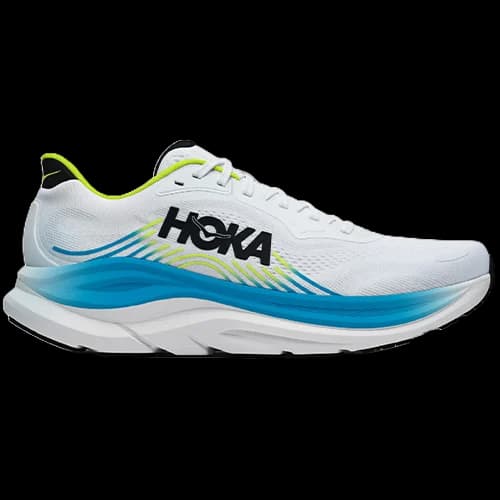 Hoka Clifton 11 Hoka Clifton 11 | 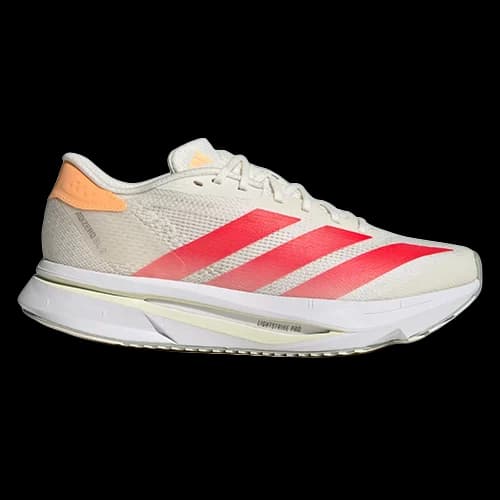 Adidas Adizero SL 2 Adidas Adizero SL 2 | 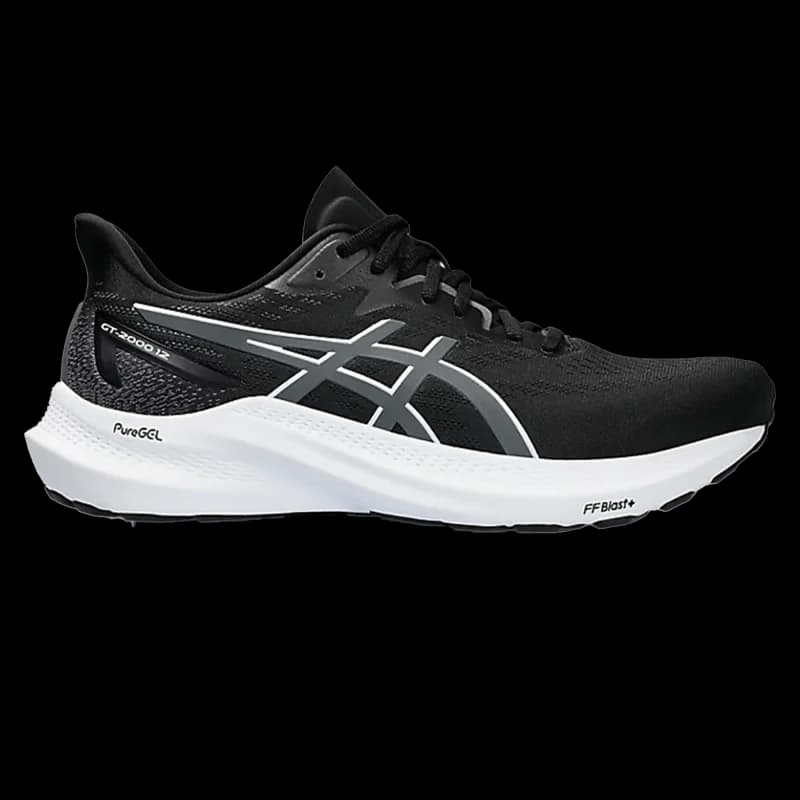 ASICS GT-2000 12 ASICS GT-2000 12 | 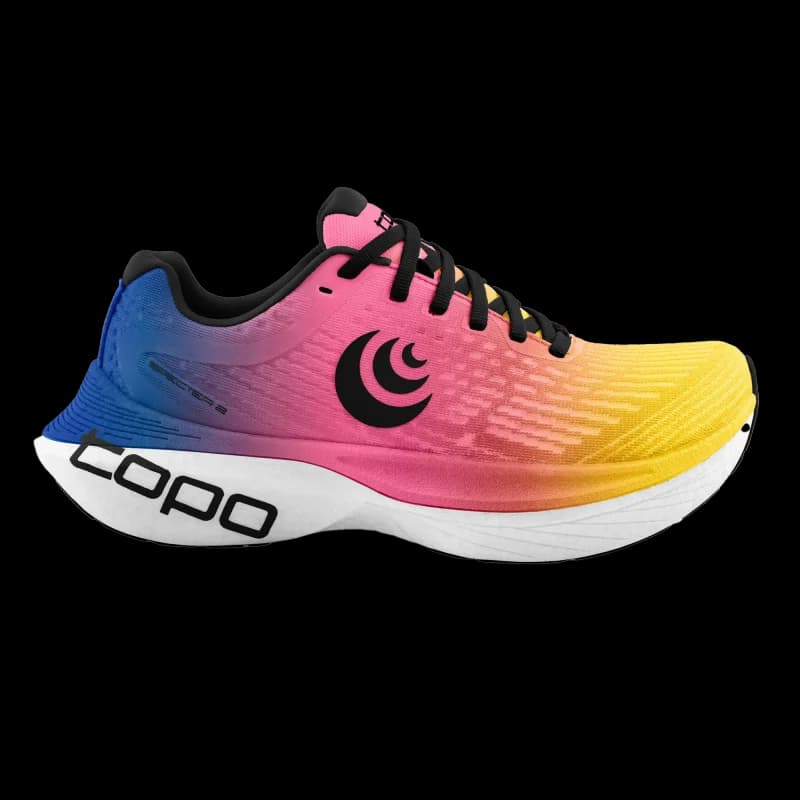 Topo Athletic Specter 2 Topo Athletic Specter 2 | |
|---|---|---|---|---|---|
| Pick it for | This page | More cushion | Faster | Roomier fit | Same support |
| Drop | 5 mm | 8 mm | 10 mm | 8 mm | 5 mm |
| Heel stack | 36 mm | 42 mm | 36 mm | 36 mm | 37 mm |
| Weight | 228 g | 261 g | 236 g | 269 g | 230 g |
| Support | Neutral | Neutral | Neutral | Stability | Neutral |
Questions runners ask
Does the Hoka Rincon 4 run small?
Yes, for most testers. Doctors of Running found it small and snug through the forefoot, RunRepeat’s readers vote “slightly small”, and Running Shoes Guru would go up a half size. A half size up is the usual advice, or the wide version if your forefoot is broad.
Rincon 3 or Rincon 4: which should I choose?
The Rincon 4 has 3 mm more stack, a full rubberized outsole and a padded tongue, but it is heavier and, for Believe in the Run and Running Shoes Guru, firmer and narrower. Choose the 4 for more protection on daily miles; keep a Rincon 3 if you used it as a light shoe for faster days.
Is the Hoka Rincon 4 good for wide feet?
Not in the standard width. RunRepeat measured a tapered toe box, 70.2 mm at the big toe against a 73.2 mm average, and Running Shoes Guru advise against it for wide feet. Hoka makes a wide version for men and women, which Running Lab suggests for broad feet.
Is the Hoka Rincon 4 a stability shoe?
No. Doctors of Running and Running Lab class the Rincon 4 as neutral, and RunRepeat notes it is sold as neutral with mild lateral support. Its wide base steadies a neutral stride, but it has no support element for a foot that rolls inward. If you are unsure how your foot moves, check it first, and see a professional if running hurts.
How durable is the Hoka Rincon 4?
Durability is its weakest point. RunRepeat’s abrasion test removed 6.5 mm of outsole, against a 1.1 mm average, and wore a hole in the toe box. Running Shoes Guru saw early heel wear and Running Lab rates durability as average. The thick outsole leaves some margin, but expect it to wear faster than most trainers.
Is the Hoka Rincon 4 good for walking?
Yes. Doctors of Running rate the Rincon 4 good for both walking and standing, and RunRepeat ranks it well for walking and recommends it for everyday use and the gym. Its low weight and gentle rocker help on long days on your feet; the snug fit is the thing to check first.
Sources
- Doctors of Running, HOKA Rincon 4 Review (David Salas, August 2024). Accessed Oct 13, 2026.
- RunRepeat, HOKA Rincon 4 lab review. Accessed Oct 13, 2026.
- Believe in the Run, Hoka Rincon 4 Review (September 2024). Accessed Oct 13, 2026.
- Running Shoes Guru, Hoka One One Rincon 4 review (Brandon Law, September 2024). Accessed Oct 13, 2026.
- Running Lab, Hoka Rincon 4 : test et avis (Julien Guyod, octobre 2024). Accessed Oct 13, 2026.
- Strideprint, Strideprint running shoe catalogue (ranks computed on 2026-10-13). Accessed Oct 13, 2026.
- cat: Strideprint catalogue, 395 shoes
How we review. We read published tests, brand and retailer pages and lab measurements, cross-check the figures and flag where they disagree. We did not test this shoe ourselves. Last updated October 13, 2026.