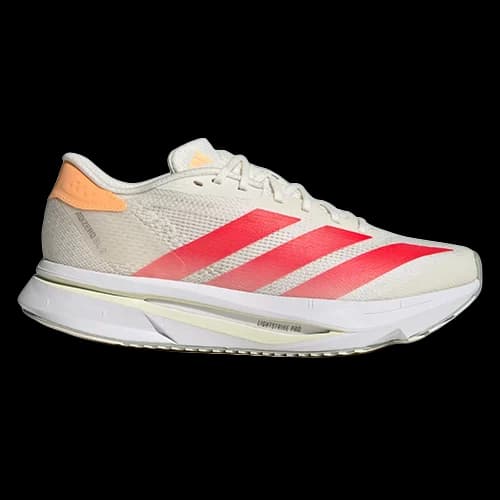
Adidas Adizero SL 2 review
A light daily trainer with a full-length Lightstrike Pro core and no plate. Reviewers like its speed and argue about how soft it is and how much room it leaves your toes.
- Drop
- 9 mm
- Heel stack
- 35 mm
- Forefoot
- 26 mm
- Weight
- 236 g
- Support
- Neutral
- Plate
- None
Our verdict
Light, quick, a little snug.
The Adizero SL 2 is a light neutral trainer that wraps a full-length Lightstrike Pro core in firmer Lightstrike 2.0 foam, with no plate. It suits neutral runners with normal to narrow feet who want one shoe for daily miles and faster sessions, and who need little help with stability.
Strong points
- Light for a daily trainer: 236 g in a men’s US 9
- Quick at tempo and uptempo paces
- Versatile from easy runs to track sessions
- Strong wet grip in RunRepeat’s lab: 0.69 against 0.53
- Very breathable upper in RunRepeat’s test
Weak points
- Narrow midfoot and low-volume fit
- Little stability for runners who roll in
- Non-gusseted tongue that can slide
- Not plush enough for long, slow days
Who it fits
- Your stride is neutral
- You want one light shoe for most runs
- Your feet are normal to narrow
- You like a higher drop
Who should skip it
- Your foot rolls in noticeably
- Your forefoot is wide or high in volume
- You want a plush, max-cushioned trainer
- You land hard on your heel
Shoe profile
Where the Adizero SL 2 sits among the 395 shoes in our catalogue.
| Axis | Adizero SL 2 |
|---|---|
| Cushioning | 18 |
| Lightness | 72 |
| Stability | 30 |
| Drop | 82 |
| Response | 20 |
Fig. 1 · How to read it. Each axis runs from 0 at the centre to 100 at the edge. Cushioning, lightness and drop are the shoe’s rank in the catalogue from listed figures; stability and response are scored from the support type, the plate, the rocker and the intended use. The dotted grey line is the catalogue median. Source: Strideprint catalogue (cat).
Where it sits in the catalogue
Weight236 g, lighter than 72% of shoes
Drop9 mm, higher than 82% of shoes
Heel stack35 mm, lower than 77% of shoes
Forefoot stack26 mm, lower than 83% of shoes
How it feels
Written from 7 published tests. We quote measurements, not impressions we did not have.
A soft core in a firmer shell. Lightstrike Pro inside firmer Lightstrike 2.0: 36.8 AC in RunRepeat’s lab, mildly soft to some testers, firm and planted to others.
Neutral, with a narrow heel. No support system and an 82.4 mm heel base, narrower than the 91.1 mm average: fine for neutral strides, not for feet that roll in.
Quicker as you push. Forefoot energy return of 64.3 percent and a 12.7 N bend force: lively at uptempo paces, but not a racer.
A soft core in a firmer shell. A full-length Lightstrike Pro core sits inside a shell of Lightstrike 2.0, according to Doctors of Running and Foro Atletismo. RunRepeat measured the midsole at 36.8 AC, slightly firmer than the 35.5 AC average.
How it feels depends on the tester. Doctors of Running call it mildly soft and resilient, and one Running Warehouse tester felt the forefoot bottom out late in a 12-mile run. OutdoorGearLab describe a firm, planted ride that feels lower than its stack.
Neutral, with a narrow heel. There is no support system. Doctors of Running find mild central guidance from the Lightstrike Pro core and some lateral help from the heel bevel, but a midfoot that narrows. RunRepeat measured a heel base of 82.4 mm against a 91.1 mm average and scores stability 65.
Running Warehouse testers found it less stable than the first SL. For a neutral stride that is freedom; for a foot that rolls in, it is work.
Quicker as you push. RunRepeat measured 64.3 percent energy return at the forefoot, above the 61.4 percent average, and 56.1 percent at the heel, up from 48.7 percent on the first SL. OutdoorGearLab felt the return grow with pace, and Running Warehouse testers found it lively at uptempo and threshold efforts.
It is not a racer: Doctors of Running call it quick but not the fastest in its class, and Running Shoes Guru struggled to hit pace on a tempo run. It bends easily, at 12.7 N in RunRepeat’s test against a 15.5 N average.
Read more
A soft core in a firmer shell. A full-length Lightstrike Pro core sits inside a shell of Lightstrike 2.0, according to Doctors of Running and Foro Atletismo. RunRepeat measured the midsole at 36.8 AC, slightly firmer than the 35.5 AC average.
How it feels depends on the tester. Doctors of Running call it mildly soft and resilient, and one Running Warehouse tester felt the forefoot bottom out late in a 12-mile run. OutdoorGearLab describe a firm, planted ride that feels lower than its stack.
Neutral, with a narrow heel. There is no support system. Doctors of Running find mild central guidance from the Lightstrike Pro core and some lateral help from the heel bevel, but a midfoot that narrows. RunRepeat measured a heel base of 82.4 mm against a 91.1 mm average and scores stability 65.
Running Warehouse testers found it less stable than the first SL. For a neutral stride that is freedom; for a foot that rolls in, it is work.
Quicker as you push. RunRepeat measured 64.3 percent energy return at the forefoot, above the 61.4 percent average, and 56.1 percent at the heel, up from 48.7 percent on the first SL. OutdoorGearLab felt the return grow with pace, and Running Warehouse testers found it lively at uptempo and threshold efforts.
It is not a racer: Doctors of Running call it quick but not the fastest in its class, and Running Shoes Guru struggled to hit pace on a tempo run. It bends easily, at 12.7 N in RunRepeat’s test against a 15.5 N average.
Which runs it’s for
| Run | Fit | Why | Source |
|---|---|---|---|
| Easy runs | Made for it | OutdoorGearLab and Running Shoes Guru find it comfortable for everyday and faster easy runs. | OutdoorGearLab, Running Shoes Guru |
| Long runs | Can do | Doctors of Running managed 10 miles; several Running Warehouse testers would not take it past single digits. | Doctors of Running, Running Warehouse |
| Tempo | Made for it | Its strongest use for Doctors of Running, Running Warehouse and RunRepeat. | RunRepeat, Doctors of Running, Running Warehouse |
| Intervals | Made for it | RunRepeat and Running Warehouse used it on the track; Doctors of Running find it fine, if not the lightest option. | RunRepeat, Doctors of Running, Running Warehouse |
| Half marathon race | Can do | Foro Atletismo recommends it for races up to the half marathon; RunRepeat sees a beginner racer. | RunRepeat, Foro Atletismo |
| Marathon race | Not for it | RTINGS score it 5.8 for marathon racing, and i-run point marathoners to a more cushioned adidas model. | RTINGS, i-run |
| Walking | Can do | Doctors of Running rate it only somewhat suited to walking and standing. | Doctors of Running |
Source: OutdoorGearLab, Running Shoes Guru, Doctors of Running, Running Warehouse, RunRepeat, Foro Atletismo, RTINGS, i-run
What the tests say
Published reviews agree the SL 2 is a light, neutral trainer that comes alive at faster paces, with little built-in stability. They split on how soft it feels, how roomy the forefoot is and how long the outsole will last.
| Test | Type | Our reading | In one sentence | Source |
|---|---|---|---|---|
| RunRepeat | Lab | Positive | RunRepeat scores it 85 out of 100 and calls it a worthy sequel to the first SL, while flagging stability and the outsole. | Read |
| Doctors of Running | Review | Positive | Doctors of Running give it B+ for fit and B+ to A minus for performance: a bouncy, light trainer that stays stable enough. | Read |
| OutdoorGearLab | Review | Positive | OutdoorGearLab see a light, versatile everyday shoe with more pep than its class, held back by a narrow fit and limited stability. | Read |
| Running Shoes Guru | Review | Mixed | Running Shoes Guru find it average to good: comfortable and well built, but nothing stands out. | Read |
| Running Warehouse | Review | Positive | Running Warehouse testers rate it highly for speed work and comfort, and call it a better running shoe than the original. | Read |
| Foro Atletismo | Review | Mixed | Foro Atletismo like a fast, agile shoe with much better cushioning, but find the fit narrow and the upper short on comfort. | Read |
They agree
- Light and quickRunRepeat, Doctors of Running, OutdoorGearLab and Running Warehouse all single out the low weight and the snap at uptempo paces.
- Neutral, with little supportRunRepeat, Doctors of Running and OutdoorGearLab all describe a neutral shoe with limited stability, and Running Warehouse testers found it less stable than the first SL.
- Versatile across pacesRunRepeat, OutdoorGearLab and Doctors of Running used it for everything from steady miles to tempo and track work.
They split
- Soft or firm?Running Warehouse testers found the midsole soft and at times mushy, and Doctors of Running call it mildly soft. OutdoorGearLab describe a firm, planted ride, and Running Shoes Guru a medium feel that is not plush. RunRepeat measured 36.8 AC, slightly firmer than average.
- Roomy or narrow?RunRepeat lists a spacious fit among its pros. Doctors of Running, OutdoorGearLab, Running Shoes Guru and Foro Atletismo all describe a snug or narrow fit, especially at the midfoot.
- How long will the outsole last?RunRepeat lists outsole durability as a con, with a deeper dent than the first SL in its abrasion test. Doctors of Running, Running Shoes Guru and OutdoorGearLab saw little or no wear, and Foro Atletismo expects about 750 km.
How it’s built
A simple trainer build: a Lightstrike Pro core wrapped in Lightstrike 2.0, no plate, an engineered mesh upper with a thick, non-gusseted tongue, and a non-Continental rubber outsole.
A Lightstrike Pro core inside Lightstrike 2.0, no plate, a very breathable mesh with a 12.7 mm tongue, and a 3.6 mm rubber outsole.
| # | Part | Measure |
|---|---|---|
| 1 | UpperEngineered mesh | Breathability 5 / 5 |
| 2 | Tongue | 12.7 mm |
| 3 | Heel | Stiffness 2 / 5 |
| 4 | MidsoleLightstrike Pro and Lightstrike 2.0 | Hardness 36.8 AC |
| 5 | Plate | – |
| 6 | Insole | 3.4 mm |
| 7 | Outsole | 3.6 mm |
Fig. 3 · Side profile. Stack heights to scale (listed: 35 mm heel, 26 mm forefoot; measured: 3.6 mm outsole); the split between the two foams is not measured and is drawn at mid-height. Dashed: insole, hidden. Sources: RunRepeat, Doctors of Running, OutdoorGearLab, Running Shoes Guru, Foro Atletismo, i-run.
Upper. An engineered mesh that scored 5 out of 5 for breathability in RunRepeat’s test, against a 3.6 average, and that OutdoorGearLab found very breathable. Doctors of Running felt it a little thick and warm, with a slightly scratchy lining, and Running Shoes Guru advise against running sockless.
Tongue. Padded and not gusseted. RunRepeat measured 12.7 mm of padding, against a 5.8 mm average and up from 4.1 mm on the first SL. Doctors of Running had it slide on quick turns.
Heel. A flexible heel counter, scored 2 out of 5 for stiffness by RunRepeat, inside a generously padded collar according to Doctors of Running.
Midsole. A full-length Lightstrike Pro core encased in Lightstrike 2.0, where the first SL had only a forefoot piece of Lightstrike Pro. Foro Atletismo note a lateral groove that helps the foam flex.
Plate. No plate of any kind, according to OutdoorGearLab and Running Shoes Guru.
Insole. Thin, 3.4 mm against a 4.4 mm average in RunRepeat’s lab. i-run list it as non-removable.
Outsole. Rubber, but not the Continental compound of adidas’s top-end models, according to RunRepeat and Running Shoes Guru. RunRepeat measured 3.6 mm of thickness and a 0.69 wet traction score against a 0.53 average; Foro Atletismo found it can slip on smooth wet surfaces.
Read more
A simple trainer build: a Lightstrike Pro core wrapped in Lightstrike 2.0, no plate, an engineered mesh upper with a thick, non-gusseted tongue, and a non-Continental rubber outsole.
1. Upper. An engineered mesh that scored 5 out of 5 for breathability in RunRepeat’s test, against a 3.6 average, and that OutdoorGearLab found very breathable. Doctors of Running felt it a little thick and warm, with a slightly scratchy lining, and Running Shoes Guru advise against running sockless.
2. Tongue. Padded and not gusseted. RunRepeat measured 12.7 mm of padding, against a 5.8 mm average and up from 4.1 mm on the first SL. Doctors of Running had it slide on quick turns.
3. Heel. A flexible heel counter, scored 2 out of 5 for stiffness by RunRepeat, inside a generously padded collar according to Doctors of Running.
4. Midsole. A full-length Lightstrike Pro core encased in Lightstrike 2.0, where the first SL had only a forefoot piece of Lightstrike Pro. Foro Atletismo note a lateral groove that helps the foam flex.
5. Plate. No plate of any kind, according to OutdoorGearLab and Running Shoes Guru.
6. Insole. Thin, 3.4 mm against a 4.4 mm average in RunRepeat’s lab. i-run list it as non-removable.
7. Outsole. Rubber, but not the Continental compound of adidas’s top-end models, according to RunRepeat and Running Shoes Guru. RunRepeat measured 3.6 mm of thickness and a 0.69 wet traction score against a 0.53 average; Foro Atletismo found it can slip on smooth wet surfaces.
Durability. Mixed signals. RunRepeat measured a 1.1 mm dent in its abrasion test, average but deeper than the 0.7 mm of the first SL, and scored the toe box mesh 1 out of 5, against 5 out of 5 for the heel padding. Doctors of Running saw no wear after about 40 miles, Running Shoes Guru little after 55 miles, and Foro Atletismo expect about 750 km.
Durability. Mixed signals. RunRepeat measured a 1.1 mm dent in its abrasion test, average but deeper than the 0.7 mm of the first SL, and scored the toe box mesh 1 out of 5, against 5 out of 5 for the heel padding. Doctors of Running saw no wear after about 40 miles, Running Shoes Guru little after 55 miles, and Foro Atletismo expect about 750 km.
Specs, listed and measured
Every figure carries its source.
Drop, mm
Heel stack, mm
Weight (men’s), g
| Spec | Listed | Measured |
|---|---|---|
| Drop |
|
|
| Heel stack |
|
|
| Forefoot stack |
| – |
| Weight, US M9 |
|
|
| Support |
| – |
| Plate |
| – |
| Surface |
| – |
| Release year |
| – |
Fig. 4 · Listed vs measured. Bars start at zero. Sources: RunRepeat, Doctors of Running, i-run, Foro Atletismo, RTINGS, OutdoorGearLab.
Lab measurements
| Spec | Measured |
|---|---|
| Midsole hardness |
|
| Energy return |
|
| Torsional rigidity |
|
| Heel counter stiffness |
|
| Traction coefficient |
|
| Breathability |
|
| Spec | Measured |
|---|---|
| Toe box width |
|
| Toe box height |
|
| Outsole thickness |
|
| Insole thickness |
|
| Tongue thickness |
|
| Flex force |
|
Sizing and fit
Most testers stay true to size, but RunRepeat’s readers and Foro Atletismo suggest going up for a snug foot.
Length
Mixed reports
Widths
standard and wide
Toe room
Tapered at the toes. RunRepeat measured 71.7 mm at the big toe against a 73.2 mm average and 26.2 mm of height against 27.0 mm. Doctors of Running found the toe guard tapers the toe box, and Running Shoes Guru found it tight.
RunRepeat, Doctors of Running, Running Shoes Guru
Full sizing notes from testers
Doctors of Running, OutdoorGearLab, Running Shoes Guru and Running Warehouse all found it true to size in length. RunRepeat’s reader vote, with 397 responses, says it runs half a size small, and Foro Atletismo suggest half a size up for training, or a full size if your forefoot is tight.
Width is the real issue: the midfoot is narrow for OutdoorGearLab and slightly snug for Doctors of Running. RunRepeat and OutdoorGearLab list a wide version, and OutdoorGearLab suggest trying both.
If you are between sizes or have a broad forefoot, try it on before choosing.
RunRepeat, Doctors of Running, OutdoorGearLab, Running Shoes Guru, Running Warehouse, Foro Atletismo
Vs Adizero SL
A softer, bouncier second version: Lightstrike Pro now runs the full length of the shoe, the upper is lighter, and the ride gives up some of the first SL’s firmness and stability.
Keep the first Adizero SL if you liked its firmer, denser and more stable ride, or used it for gym work and cross-training: Running Warehouse testers preferred it there. Move to the SL 2 if you mostly run and want more spring at speed.
Version history: Adizero SL to Adizero SL 2
Full-length Lightstrike Pro. The first SL had a small forefoot piece of Lightstrike Pro; the SL 2 has a full-length core, according to RunRepeat and Doctors of Running. (RunRepeat, Doctors of Running)
More spring. RunRepeat measured heel energy return up from 48.7 to 56.1 percent, and Doctors of Running found it noticeably bouncier. (RunRepeat, Doctors of Running)
Taller, or not?. Doctors of Running and Foro Atletismo report a taller stack, about 3 mm more according to Foro Atletismo, while RunRepeat measured the same 34.9 mm heel on both versions. (RunRepeat, Doctors of Running, Foro Atletismo)
Lighter, thicker tongue. Foro Atletismo put it about 4 g lighter. RunRepeat measured a tongue padded three times as thick, which it considers unnecessary. (RunRepeat, Foro Atletismo)
Less stable, less durable outsole. Running Warehouse testers found the first SL firmer and more stable. RunRepeat measured a softer, less abrasion-resistant outsole. (RunRepeat, Running Warehouse)
Alternatives compared
Each one fixes one thing the Adizero SL 2 does not do.
| Adidas Adizero SL 2 | 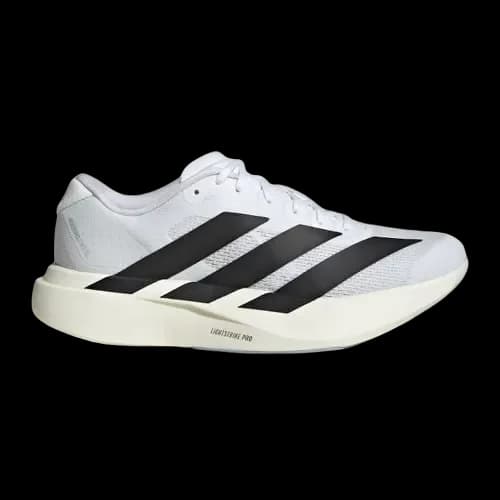 Adidas Adizero Evo SL Adidas Adizero Evo SL | 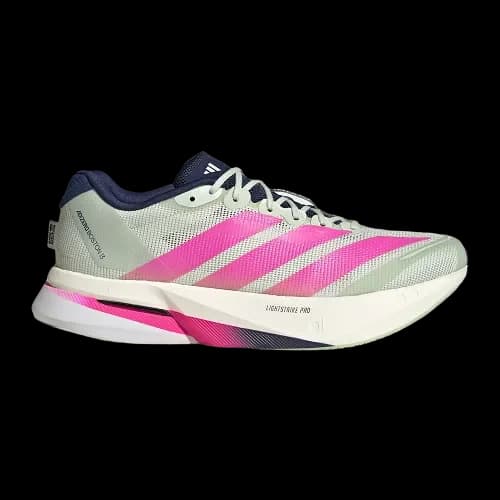 Adidas Adizero Boston 13 Adidas Adizero Boston 13 | 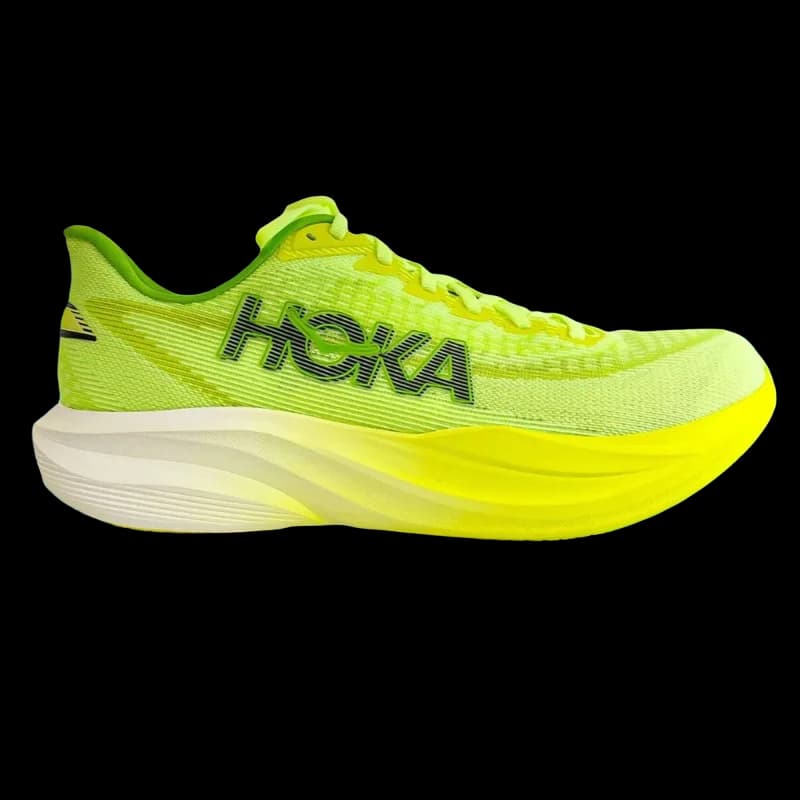 Hoka Mach 7 Hoka Mach 7 | 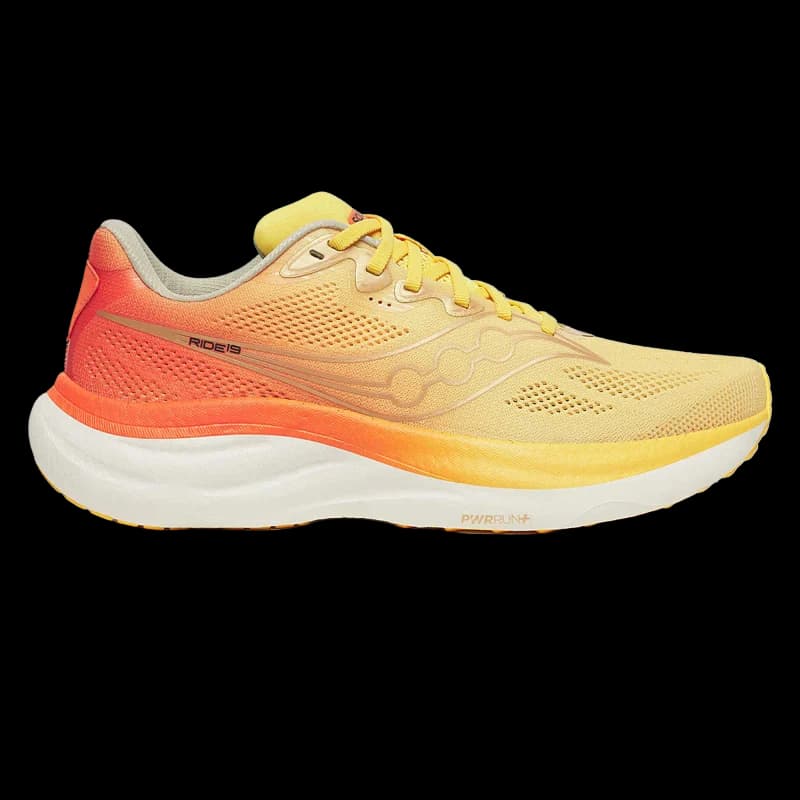 Saucony Ride 19 Saucony Ride 19 | |
|---|---|---|---|---|---|
| Pick it for | This page | Faster | More cushion | Lower drop | More stable |
| Drop | 9 mm | 7 mm | 7 mm | 5 mm | 8 mm |
| Heel stack | 35 mm | 37 mm | 37 mm | 37 mm | 38 mm |
| Weight | 236 g | 230 g | 255 g | 241 g | 255 g |
| Support | Neutral | Neutral | Neutral | Neutral | Neutral |
Questions runners ask
Does the Adidas Adizero SL 2 have a carbon plate?
No. The Adizero SL 2 has no carbon plate and no plate of any kind, according to OutdoorGearLab and Running Shoes Guru. Its speed comes from a full-length Lightstrike Pro core inside firmer Lightstrike 2.0 foam, which RunRepeat measured at 64.3 percent energy return at the forefoot.
Does the Adizero SL 2 fit true to size?
In length, mostly yes: Doctors of Running, OutdoorGearLab, Running Shoes Guru and Running Warehouse all say true to size. RunRepeat’s 397 reader votes say half a size small, and Foro Atletismo suggest half a size up for a snug forefoot. The fit is narrow at the midfoot, so try it on if you are between sizes.
What is the drop of the Adizero SL 2?
The Adizero SL 2 has a 9 mm drop, adidas’s figure as relayed by RunRepeat, with a 35 mm heel and 26 mm forefoot. Doctors of Running and i-run list 10 mm, and the labs disagree: RunRepeat measured 8.2 mm, RTINGS 10.1 mm. Either way, it is a higher drop than most neutral road shoes.
Is the Adizero SL 2 good for a marathon?
As a training shoe, yes; as a marathon race shoe, not really. RTINGS score it 5.8 for marathon racing against 6.7 for 5K and 10K, Foro Atletismo recommend it for races up to the half marathon, and i-run point marathoners to a more cushioned adidas model.
Adizero SL 2 or Adizero Evo SL?
The Evo SL is the faster, lighter option: 230 g in our catalogue against 236 g, and RunRepeat point runners who want an all-Lightstrike Pro midsole towards it. The SL 2 keeps a firmer Lightstrike 2.0 shell around its Lightstrike Pro core and a higher drop, 9 mm against 7 mm.
Is there a wide Adizero SL 2?
Yes. RunRepeat and OutdoorGearLab both list normal and wide versions. Given the narrow midfoot that OutdoorGearLab and Doctors of Running describe, runners with broad feet should try the wide version, as OutdoorGearLab suggest.
Is the Adizero SL 2 good for heavier runners?
Usually not the first choice. RunRepeat steers heavier runners who want ample cushioning to other shoes, OutdoorGearLab note that heavier runners may find it a little soft, and i-run list it for runners under 85 kg. A more cushioned, more stable trainer is often a safer daily shoe.
Sources
- RunRepeat, adidas Adizero SL2 lab review (Carlos Sánchez, updated February 2026). Accessed Oct 13, 2026.
- Doctors of Running, Adidas Adizero SL 2 Review (Matt Klein, July 2024). Accessed Oct 13, 2026.
- RTINGS, adidas Adizero SL2 running shoe review (November 2025). Accessed Oct 13, 2026.
- OutdoorGearLab, adidas Adizero SL2 review (Nathaniel Bailey, January 2026). Accessed Oct 13, 2026.
- Running Shoes Guru, Adidas adizero SL 2 review (Larry Lam, September 2024). Accessed Oct 13, 2026.
- Running Warehouse, adidas adizero SL 2 review (June 2024). Accessed Oct 13, 2026.
- Foro Atletismo, adidas Adizero SL 2 (Jónatan Simón, February 2025). Accessed Oct 13, 2026.
- i-run, adidas Adizero SL2 men’s. Accessed Oct 13, 2026.
- Strideprint, Strideprint running shoe catalogue (ranks computed on 2026-10-13). Accessed Oct 13, 2026.
- runningwarehouse.com · Forefoot stack, Weight, US M9, Support, and Plate, listed
- i-run.fr · Surface, listed
- cat: Strideprint catalogue, 395 shoes
How we review. We read published tests, brand and retailer pages and lab measurements, cross-check the figures and flag where they disagree. We did not test this shoe ourselves. Last updated October 13, 2026.