- Shoes
- New Balance
- 1080 v15
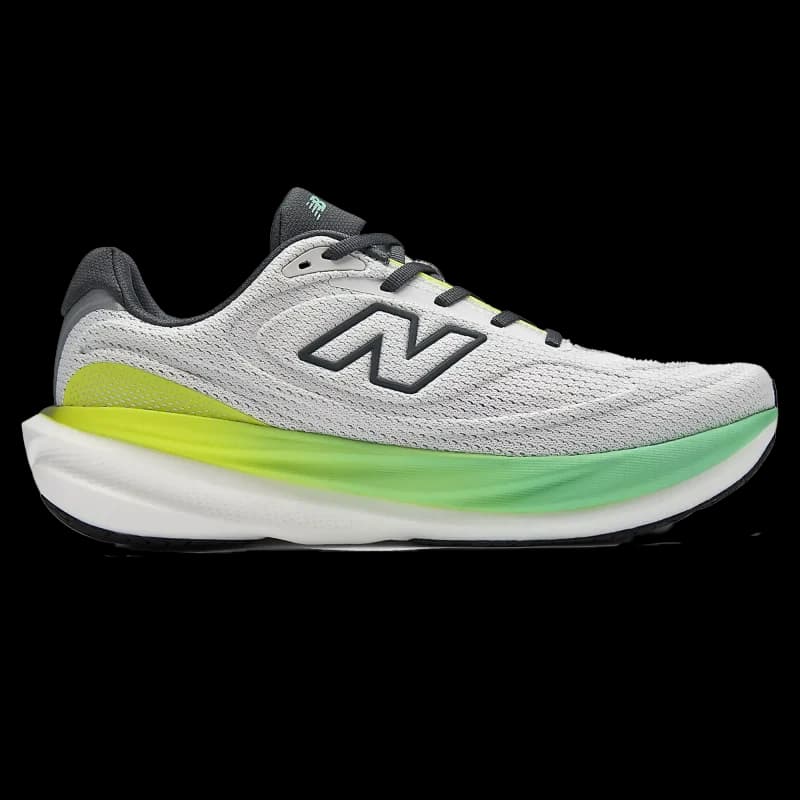
New Balance 1080 v15 review
New Balance swapped Fresh Foam X for Infinion and took weight out. The result is a lighter, more lively 1080, and a shoe reviewers describe in surprisingly different terms.
- Drop
- 6 mm
- Heel stack
- 40 mm
- Forefoot
- 34 mm
- Weight
- 261 g
- Support
- Neutral
- Plate
- None
Our verdict
Lighter, livelier, less forgiving.
The 1080 v15 is a high-stack neutral daily trainer that drops weight and gains rebound with a new Infinion midsole, but loses the quiet stability of its predecessor. It suits neutral runners who land steadily, want protection for easy and long miles, and have a foot that matches its debated fit.
Strong points
- Clearly lighter than the previous version for the same job
- Infinion foam with more rebound than Fresh Foam X
- Smooth heel-to-toe transitions on a long rocker
- Listed in four widths, narrow to extra wide
Weak points
- Now plainly neutral: less stable than before
- Fit splits testers: roomy for some, narrow for others
- Can feel loose without careful lacing
- Measured stack sits below the listed figures
Who it fits
- Neutral runners with a steady landing
- Easy days and long runs
- You want protection without a heavy shoe
- You like a bit of pace in a cushioned shoe
Who should skip it
- Your foot rolls in noticeably
- You loved the v14 exactly as it was
- Your fit tolerance is narrow
Shoe profile
Where the 1080 v15 sits among the 395 shoes in our catalogue, and what changed from the Fresh Foam X 1080 v14.
| Axis | 1080 v15 | Fresh Foam X 1080 v14 | Change |
|---|---|---|---|
| Cushioning | 64 | 43 | +21 |
| Lightness | 54 | 13 | +41 |
| Stability | 30 | 30 | = |
| Drop | 20 | 20 | = |
| Response | 20 | 20 | = |
Fig. 1 · How to read it. Each axis runs from 0 at the centre to 100 at the edge. Cushioning, lightness and drop are the shoe’s rank in the catalogue from listed figures; stability and response are scored from the support type, the plate, the rocker and the intended use. The dotted grey line is the catalogue median. Source: Strideprint catalogue (cat).
Where it sits in the catalogue
Weight261 g, lighter than 51% of shoes
Drop6 mm, lower than 59% of shoes
Heel stack40 mm, higher than 64% of shoes
Forefoot stack34 mm, higher than 69% of shoes
How it feels
Written from 4 published tests. We quote measurements, not impressions we did not have.
Plenty underfoot, softness up for debate. A 40 mm heel stack on new Infinion foam: lab softness reads soft, though one tester found it firmer than before.
Neutral, and more so than before. No posts or rails: mild guidance at best, and testers find it less stable than the v14.
More rebound, smooth roll. A heel bevel and long rocker make transitions easy, with better rebound, but it remains a cushioned trainer rather than a tempo shoe.
Plenty underfoot, softness up for debate. New Balance lists a stack height of 40 mm at the heel and 34 mm at the forefoot, a 6 mm drop. The midsole is now Infinion, replacing Fresh Foam X, and Believe in the Run report about 2 mm more foam than before.
RunRepeat’s durometer reading of 21.5 AC puts it firmly on the soft side, yet Runner’s World Germany felt it as firmer and quicker than the old shoe. Expect protection either way; how plush it feels may depend on your weight and pace.
Neutral, and more so than before. There are no posts or rails. Doctors of Running note mild guidance from the straight last and the filled-in midfoot, plus a small lateral bias at the heel from a groove in the sole.
The v14 had a reputation as a stable neutral shoe; Believe in the Run feel that has gone. RunRepeat go further and warn that runners who need support may find it wobbly.
More rebound, smooth roll. A centred heel bevel and a long rocker make the transitions easy, according to Doctors of Running, who call the ride moderately responsive. Believe in the Run single out the smoother transitions and the foam’s improved rebound.
It is still a cushioned trainer, not a tempo shoe. Runner’s World Germany are the most enthusiastic about its pace, seeing it as a shoe for more ambitious runners.
Read more
Plenty underfoot, softness up for debate. New Balance lists a stack height of 40 mm at the heel and 34 mm at the forefoot, a 6 mm drop. The midsole is now Infinion, replacing Fresh Foam X, and Believe in the Run report about 2 mm more foam than before.
RunRepeat’s durometer reading of 21.5 AC puts it firmly on the soft side, yet Runner’s World Germany felt it as firmer and quicker than the old shoe. Expect protection either way; how plush it feels may depend on your weight and pace.
Neutral, and more so than before. There are no posts or rails. Doctors of Running note mild guidance from the straight last and the filled-in midfoot, plus a small lateral bias at the heel from a groove in the sole.
The v14 had a reputation as a stable neutral shoe; Believe in the Run feel that has gone. RunRepeat go further and warn that runners who need support may find it wobbly.
More rebound, smooth roll. A centred heel bevel and a long rocker make the transitions easy, according to Doctors of Running, who call the ride moderately responsive. Believe in the Run single out the smoother transitions and the foam’s improved rebound.
It is still a cushioned trainer, not a tempo shoe. Runner’s World Germany are the most enthusiastic about its pace, seeing it as a shoe for more ambitious runners.
Which runs it’s for
| Run | Fit | Why | Source |
|---|---|---|---|
| Easy runs | Made for it | Its main job: protected, smooth daily miles. | Doctors of Running, Believe in the Run |
| Long runs | Made for it | Tall cushioning and an easy roll that hold up over distance. | Doctors of Running, RunRepeat |
| Recovery runs | Made for it | Soft enough for tired legs, as long as you don’t need support. | Doctors of Running, RunRepeat |
| Tempo | Can do | Workable for steady faster running, not a dedicated speed shoe. | Doctors of Running, Runner’s World Germany |
| Walking | Can do | Doctors of Running rate it well for walking. | Doctors of Running |
Source: Doctors of Running, Believe in the Run, RunRepeat, Runner’s World Germany
What the tests say
The published reviews agree that the 1080 v15 is lighter and bouncier than the previous version and built for everyday mileage. They part ways on how soft it feels and, above all, on how it fits.
| Test | Type | Our reading | In one sentence | Source |
|---|---|---|---|---|
| Doctors of Running | Review | Mixed | Doctors of Running grade it B+: a light, resilient daily trainer with an improved midsole, held back by an upper that needs tight lacing. | Read |
| RunRepeat | Lab | Positive | RunRepeat score it 91 out of 100 for its plush, shock-absorbing midsole and higher energy return, while warning the ride is polarizing. | Read |
| Believe in the Run | Review | Negative | Believe in the Run rate it C-tier: a dependable daily workhorse with a better midsole, but uninspiring, narrower and longer than before. | Read |
They agree
- A livelier foam than Fresh Foam XDoctors of Running, Believe in the Run and Runner’s World Germany all describe the new Infinion midsole as more resilient and less mushy than the foam it replaces.
- A real weight cutDoctors of Running highlight a significant drop in weight, and RunRepeat measured roughly 10 percent less than the v14.
- Less stable than its predecessorBelieve in the Run place it squarely in the neutral category, unlike its predecessor, and RunRepeat do not recommend it to runners who need support.
They split
- How soft it isRunRepeat measured a very soft foam, about 29 percent softer than the v14. Runner’s World Germany felt the opposite trend: a little less softness, much more responsiveness. Doctors of Running land in between with a moderately soft ride.
- How roomy the upper isDoctors of Running find a high-volume upper with plenty of room that runs slightly wide and needs tight lacing. Believe in the Run and Runner’s World Germany find it narrower than the v14, and Believe in the Run add that it runs a little long.
How it’s built
A tall Infinion midsole with no plate, a premium double-layer upper with a gusseted tongue, and rubber only where the foot strikes.
A tall Infinion midsole with no plate, a premium double-layer upper with a gusseted tongue, and rubber only where the foot strikes. Lockdown is the weak point, and the upper is slow to dry.
| # | Part | Measure |
|---|---|---|
| 1 | Upper | Breathability 67 BR |
| 2 | Tongue | 8.5 mm |
| 3 | Heel | Stiffness 4 / 5 |
| 4 | MidsoleInfinion | Softness 21.5 AC |
| 5 | Insole | 4.3 mm |
| 6 | Outsole | 3.0 mm |
Fig. 3 · Side profile. Stack heights to scale (listed: 40 mm heel, 34 mm forefoot; measured: 3 mm outsole); the split between the two foams is not measured and is drawn at mid-height. Dashed: insole, hidden. Sources: Doctors of Running, RunRepeat, Believe in the Run, Runner’s World Germany. BR: RunRepeat’s breathability scale (not a score out of 100).
Upper. Believe in the Run describe a new double-layer mesh; RunRepeat and Doctors of Running call it a soft, stretchy knit. All agree the materials feel premium. Lockdown is the weak point: Doctors of Running had to tighten the flat laces hard to secure the foot. RunRepeat also found it slow to dry, at 40 percent after their 3-hour test, so it suits hot, sweaty long runs less well.
Tongue. Gusseted and padded with good-quality foam: RunRepeat measured 8.5 mm and note a lace loop that keeps it centred. Doctors of Running find the moderate padding helps offset the roomy fit.
Heel. RunRepeat rate the heel counter firm, 4 on their 5-point scale, wrapped in generous padding, and note there is no pull tab. Doctors of Running point to small sidewalls on both sides of the heel.
Midsole. Infinion replaces Fresh Foam X. RunRepeat describe a supercritical TPEE-based foam blended with 20 percent EVA and measured 65.9 percent energy return at the heel and 69.1 percent at the forefoot; New Balance did not disclose the recipe to Runner’s World Germany. There is no plate or stiffening layer, so the forefoot becomes moderately flexible with wear, and RunRepeat found it more flexible than before, against the trend toward stiffer trainers. A deep groove on the outer heel and a filled-in midfoot give the mild guidance Doctors of Running describe.
Insole. Removable, and 4.3 mm thick in RunRepeat’s lab, within the usual range, so it is easy to swap for your own.
Outsole. The outsole puts two rubber pods under the heel and rubber across the forefoot, with exposed Infinion through the midfoot and long flex grooves. RunRepeat measured 3.0 mm of rubber and solid grip on dry and wet roads. Doctors of Running found the traction decent in both conditions but advise keeping the exposed foam off trails.
Read more
A tall Infinion midsole with no plate, a premium double-layer upper with a gusseted tongue, and rubber only where the foot strikes.
1. Upper. Believe in the Run describe a new double-layer mesh; RunRepeat and Doctors of Running call it a soft, stretchy knit. All agree the materials feel premium. Lockdown is the weak point: Doctors of Running had to tighten the flat laces hard to secure the foot. RunRepeat also found it slow to dry, at 40 percent after their 3-hour test, so it suits hot, sweaty long runs less well.
2. Tongue. Gusseted and padded with good-quality foam: RunRepeat measured 8.5 mm and note a lace loop that keeps it centred. Doctors of Running find the moderate padding helps offset the roomy fit.
3. Heel. RunRepeat rate the heel counter firm, 4 on their 5-point scale, wrapped in generous padding, and note there is no pull tab. Doctors of Running point to small sidewalls on both sides of the heel.
4. Midsole. Infinion replaces Fresh Foam X. RunRepeat describe a supercritical TPEE-based foam blended with 20 percent EVA and measured 65.9 percent energy return at the heel and 69.1 percent at the forefoot; New Balance did not disclose the recipe to Runner’s World Germany. There is no plate or stiffening layer, so the forefoot becomes moderately flexible with wear, and RunRepeat found it more flexible than before, against the trend toward stiffer trainers. A deep groove on the outer heel and a filled-in midfoot give the mild guidance Doctors of Running describe.
5. Insole. Removable, and 4.3 mm thick in RunRepeat’s lab, within the usual range, so it is easy to swap for your own.
6. Outsole. The outsole puts two rubber pods under the heel and rubber across the forefoot, with exposed Infinion through the midfoot and long flex grooves. RunRepeat measured 3.0 mm of rubber and solid grip on dry and wet roads. Doctors of Running found the traction decent in both conditions but advise keeping the exposed foam off trails.
Durability. Average or a little better, on roads. RunRepeat measured an acceptable 1.0 mm of outsole wear but warn that a vented knit is more fragile than mesh. Doctors of Running saw only slight wear at the outer midfoot after 40 miles and expect average to slightly above-average mileage.
Durability. Average or a little better, on roads. RunRepeat measured an acceptable 1.0 mm of outsole wear but warn that a vented knit is more fragile than mesh. Doctors of Running saw only slight wear at the outer midfoot after 40 miles and expect average to slightly above-average mileage.
Specs, listed and measured
Every figure carries its source.
Heel stack, mm
Forefoot stack, mm
Drop, mm
Weight (men’s), g
| Spec | Listed | Measured |
|---|---|---|
| Drop |
|
|
| Heel stack |
|
|
| Forefoot stack |
|
|
| Weight, US M9.5 |
|
|
| Support |
| – |
| Plate |
| – |
| Surface |
| – |
| Release year |
| – |
Fig. 4 · Listed vs measured. Bars start at zero. Sources: Doctors of Running, Believe in the Run, RunRepeat, Runner’s World Germany.
Lab measurements
| Spec | Measured |
|---|---|
| Midsole hardness |
|
| Energy return (heel) |
|
| Heel counter stiffness |
|
| Traction coefficient (forefoot) |
|
| Toe box width |
|
| Toe box height |
|
| Spec | Measured |
|---|---|
| Outsole thickness |
|
| Insole thickness |
|
| Tongue padding thickness |
|
| Flex force |
|
| Torsional rigidity |
|
| Breathability |
|
BR: RunRepeat’s breathability scale (not a score out of 100).
Sizing and fit
Most runners can start with their usual size, but the volume of the upper is genuinely disputed, so try it on if you can.
Length
Mixed reports
Widths
standard, wide, and extra wide
Toe room
Opinions split. Doctors of Running find the upper high in volume with room for the toes to move, while Believe in the Run and Runner’s World Germany found it narrower than before, toe area included. RunRepeat measured an average toe box width of 73.2 mm.
Doctors of Running, RunRepeat, Believe in the Run, Runner’s World Germany
Full sizing notes from testers
RunRepeat’s reader poll and Doctors of Running both point to true to size. Doctors of Running find the upper high in volume and slightly wide, to the point of needing tight lacing to feel secure.
Believe in the Run see the reverse: all three testers found it narrower than the previous version, and two found it a little long. Runner’s World Germany also note a narrower midfoot and toe area and advise trying it on.
Widths help settle it. RunRepeat list narrow, standard, wide (2E) and extra wide (4E). If the standard width feels tight across the forefoot, go wider rather than longer.
Doctors of Running, RunRepeat, Believe in the Run, Runner’s World Germany
Vs Fresh Foam X 1080 v14
A new foam, a new upper and a lot less weight. The v15 is quicker and lighter, and less steady.
| 1080 v15 | Fresh Foam X 1080 v14 | |
|---|---|---|
| Support | Neutral | Neutral |
| Drop | 6 mm | 6 mm |
| Heel stack | 40 mm | 38 mm |
| Forefoot | 34 mm | 32 mm |
| Weight | 261 g | 300 g |
Keep the v14 if you liked its calm, planted ride, need a touch of steadiness or found its fit perfect. Move to the v15 if you are a stable neutral runner who wants a lighter, livelier shoe for the same miles.
Listed figures. Source: Strideprint catalogue (cat).
Version history: Fresh Foam X 1080 v14 to 1080 v15
Infinion replaces Fresh Foam X. The new midsole is more resilient and less mushy, according to the testers. (Doctors of Running, Believe in the Run, Runner’s World Germany)
About 10 percent lighter. RunRepeat measured 255 g against 285 g for the v14. (RunRepeat)
A little more foam. Believe in the Run report about 2 mm extra stack. (Believe in the Run)
Redesigned upper. Double-layer mesh and a gusseted tongue, with a fit that testers now describe very differently. (Doctors of Running, Believe in the Run)
Less stability. The stable-neutral character of the v14 has given way to a plainly neutral shoe. (RunRepeat, Believe in the Run)
Alternatives compared
Each one fixes one thing the 1080 v15 does not do.
| New Balance 1080 v15 | 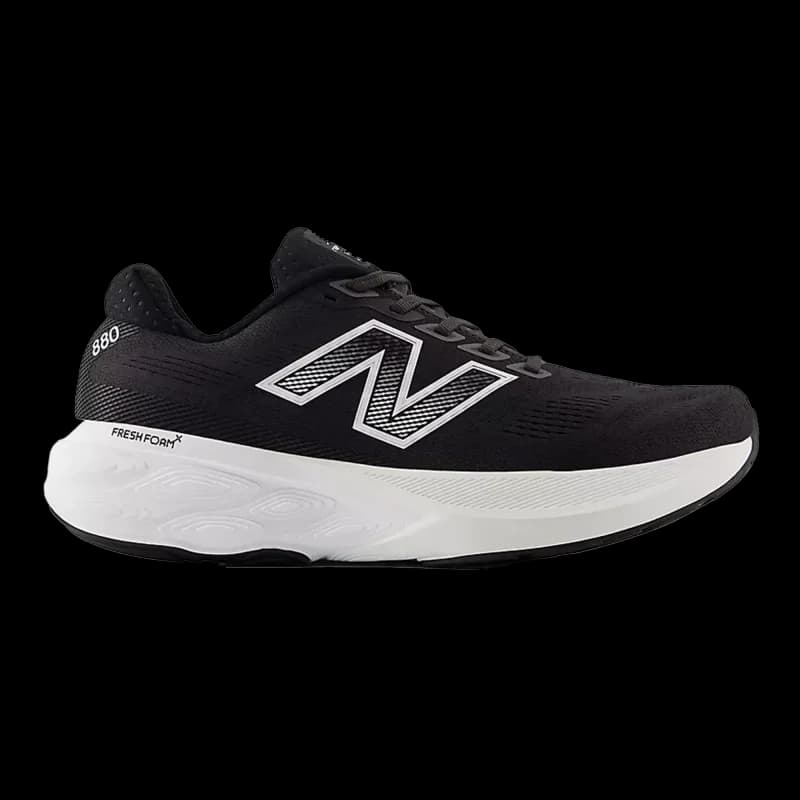 New Balance Fresh Foam X 880 v15 New Balance Fresh Foam X 880 v15 | 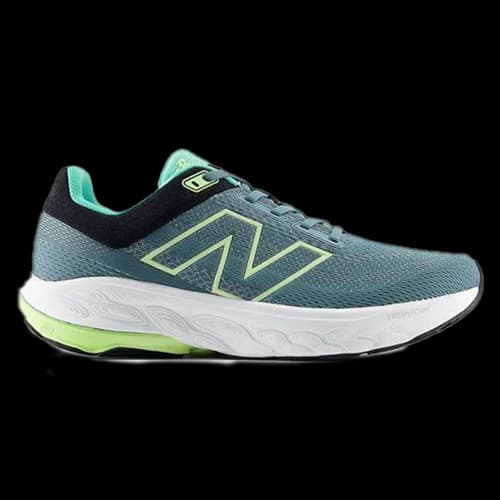 New Balance 860 v15 New Balance 860 v15 | 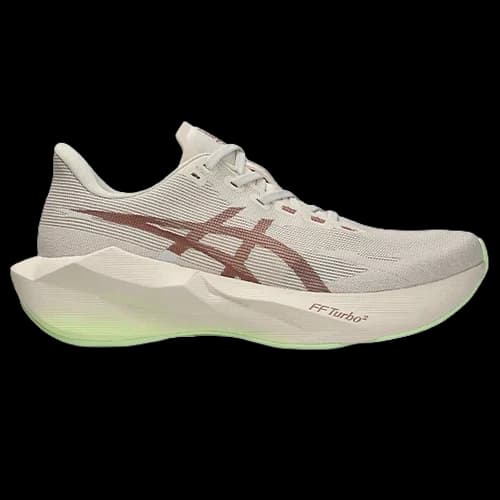 ASICS Novablast 6 ASICS Novablast 6 | 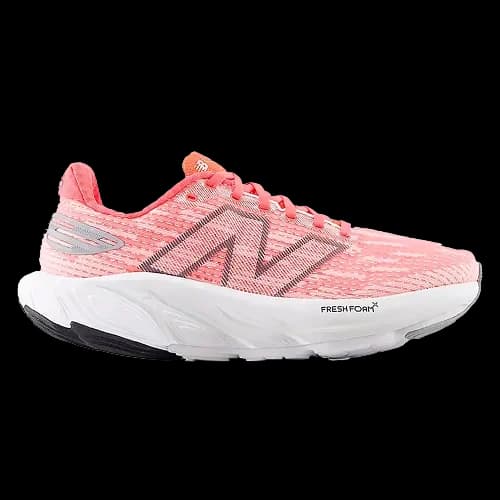 New Balance Fresh Foam X Balos New Balance Fresh Foam X Balos | |
|---|---|---|---|---|---|
| Pick it for | This page | Firmer | More stable | Faster | Same support |
| Drop | 6 mm | 6 mm | 8 mm | 8 mm | 6 mm |
| Heel stack | 40 mm | 40.5 mm | 43 mm | 41.5 mm | 38.5 mm |
| Weight | 261 g | 303 g | 335 g | 249 g | 261 g |
| Support | Neutral | Neutral | Stability | Neutral | Neutral |
Questions runners ask
What changed between the New Balance 1080 v14 and v15?
The 1080 v15 replaces Fresh Foam X with Infinion foam, adds about 2 mm of stack and gets a new upper. RunRepeat measured it about 10 percent lighter than the previous version. Reviewers also agree it is less stable: the v14’s stable-neutral feel has become a plainly neutral ride.
Is the 1080 v15 softer or firmer than the v14?
Reviewers disagree. RunRepeat measured the foam about 29 percent softer than the v14. Runner’s World Germany felt it a little less soft but far more responsive, and Doctors of Running describe it as moderately soft.
Does the New Balance 1080 v15 fit true to size?
For length, mostly yes: RunRepeat’s reader poll and Doctors of Running call it true to size, though Believe in the Run found it slightly long. Volume is the real question: Doctors of Running find it roomy, while Believe in the Run and Runner’s World Germany find it narrower than the v14.
Is the 1080 v15 good for wide feet?
It can be, thanks to the widths. RunRepeat list narrow, standard, wide (2E) and extra wide (4E). Because some testers found the standard version narrower than the v14, runners with a wide forefoot should start with the wide version rather than sizing up.
Is the 1080 v15 good for overpronation?
The 1080 v15 is a neutral shoe with only mild guidance. RunRepeat warn it can feel wobbly for runners who need support, and Believe in the Run note it lost the v14’s stable feel. For a clear inward roll, a guidance shoe such as New Balance’s 860 is the safer place to start.
1080 v15 or 880 v15: which should I choose?
Both are tall, cushioned neutral trainers. RunRepeat measured the 1080 v15 at 21.5 AC and the 880 v15 at 35.5 AC, so the 1080 is much softer and also lighter. Choose the 1080 for a plush, lively ride on easy miles, the 880 if you want a firmer, steadier feel underfoot.
Sources
- Doctors of Running, New Balance 1080 v15 Review. Accessed Oct 9, 2026.
- RunRepeat, New Balance 1080 v15 lab review. Accessed Oct 9, 2026.
- Believe in the Run, New Balance 1080 v15 Review. Accessed Oct 9, 2026.
- Runner’s World Germany, New Balance 1080 v15 im Test. Accessed Oct 9, 2026.
- RunRepeat, New Balance Fresh Foam X 880 v15 lab review. Accessed Oct 9, 2026.
- cat: Strideprint catalogue, 395 shoes
How we review. We read published tests, brand and retailer pages and lab measurements, cross-check the figures and flag where they disagree. We did not test this shoe ourselves. Last updated October 12, 2026.