- Shoes
- New Balance
- 860 v15
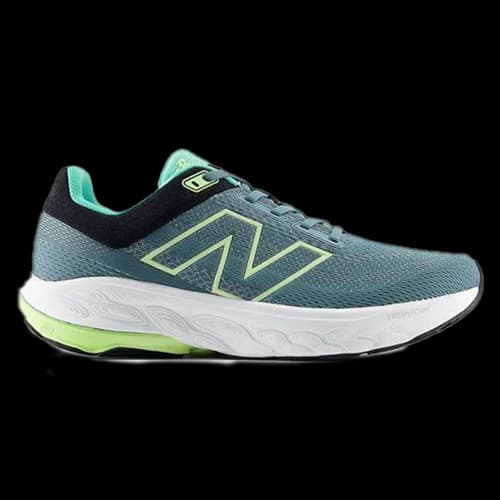
New Balance 860 v15 review
New Balance’s classic stability trainer grows taller and wider, swaps a firm post for a plate that tilts the foot, and gains weight on the way.
- Drop
- 6 mm
- Heel stack
- 40 mm
- Forefoot
- 34 mm
- Weight
- 329 g
- Support
- Stability
- Plate
- No plate
Our verdict
Big, steady, and built for easy miles.
The 860 v15 is a tall, soft stability trainer that guides the foot with a medially wedged plate and a broad base rather than a firm post. It suits runners with a mild to moderate inward roll who run easy, walk or stand a lot, and it asks you to accept one of the heaviest builds in its category.
Strong points
- Very stable: an A for stability at Doctors of Running, 8.5 out of 10 at RTINGS
- Soft top foam: 25.8 AC in RunRepeat’s lab, far softer than average
- Guidance that most testers found gentle rather than corrective
- Sold from narrow to extra-wide, depending on the market
- Durable: no visible outsole wear after 40 miles at Doctors of Running
Weak points
- Heavy: 332 g measured by RunRepeat in a men’s US 9
- Not lively: built for slow paces, not for tempo work
- Very stiff heel counter that hurt a sensitive heel at Doctors of Running
- Low-volume forefoot, with toe guard pressure on the big toe for one tester
Who it fits
- Your foot rolls in mildly or moderately
- Posted shoes never worked for you
- Slow miles, walking and long days on your feet
- Your foot is broad but not tall
Who should skip it
- You want something light or quick
- You need maximum support
- Your foot rolls outward or your ankles turn easily
- Your heel is sensitive at the back
Shoe profile
Where the 860 v15 sits among the 395 shoes in our catalogue, and what changed from the 860 v14.
| Axis | 860 v15 | 860 v14 | Change |
|---|---|---|---|
| Cushioning | 64 | 6 | +58 |
| Lightness | 6 | 9 | −3 |
| Stability | 85 | 85 | = |
| Drop | 20 | 45 | −25 |
| Response | 20 | 6 | +14 |
Fig. 1 · How to read it. Each axis runs from 0 at the centre to 100 at the edge. Cushioning, lightness and drop are the shoe’s rank in the catalogue from listed figures; stability and response are scored from the support type, the plate, the rocker and the intended use. The dotted grey line is the catalogue median. Source: Strideprint catalogue (cat).
Where it sits in the catalogue
Weight329 g, heavier than 97% of shoes
Drop6 mm, lower than 59% of shoes
Heel stack40 mm, higher than 64% of shoes
Forefoot stack34 mm, higher than 69% of shoes
How it feels
Written from 5 published tests. We quote measurements, not impressions we did not have.
Soft on top, tall underneath. Soft Fresh Foam X over a denser base on a 40 mm heel: RunRepeat measured 25.8 AC, far softer than average.
A wedge, not a post. A full-length plate wedged toward the inner side and a wide base guide the foot; Doctors of Running warn it does little for the outer edge.
Bouncier than before, still slow. Energy return of 57.5 percent at the heel and 65.2 at the forefoot per RunRepeat: a smooth rocker, but no speed.
Soft on top, tall underneath. The midsole stacks a softer, less dense Fresh Foam X layer over a denser base. New Balance figures relayed by Marathon Sports and Run and Become give 40 mm at the heel and 34 mm at the forefoot, and RunRepeat measured 39.7 mm and 32.1 mm.
RunRepeat measured the foam at 25.8 on the AC scale, far softer than its 35.5 average, with shock absorption of 134 SA at the heel. Doctors of Running found the ride moderately soft and bouncier than the v14, more so in the forefoot than at the heel.
A wedge, not a post. The Stability Plane is a full-length plate set between the two foams. Doctors of Running describe it as wedged toward the inner side all the way along, helped by a taller inner sidewall and a wider flare on that side, so the foot sits slightly tilted outward rather than being slowed by firm foam.
RunRepeat measured a wide platform, 117.0 mm at the forefoot and 93.4 mm at the heel, and a torsional rigidity of 18.2 Nm, above its 14.4 Nm average. The flip side, per Doctors of Running, is little help for runners who need support on the outer edge.
Bouncier than before, still slow. RunRepeat measured energy return of 57.5 percent at the heel and 65.2 percent at the forefoot, respectable but below New Balance’s neutral trainers. RTINGS finds the forefoot livelier than the heel, without real propulsion.
The rocker does much of the work. Doctors of Running found the steep heel bevel clunky at first and the forefoot rocker smooth but slow, and noted that the forefoot does not flex.
Read more
Soft on top, tall underneath. The midsole stacks a softer, less dense Fresh Foam X layer over a denser base. New Balance figures relayed by Marathon Sports and Run and Become give 40 mm at the heel and 34 mm at the forefoot, and RunRepeat measured 39.7 mm and 32.1 mm.
RunRepeat measured the foam at 25.8 on the AC scale, far softer than its 35.5 average, with shock absorption of 134 SA at the heel. Doctors of Running found the ride moderately soft and bouncier than the v14, more so in the forefoot than at the heel.
A wedge, not a post. The Stability Plane is a full-length plate set between the two foams. Doctors of Running describe it as wedged toward the inner side all the way along, helped by a taller inner sidewall and a wider flare on that side, so the foot sits slightly tilted outward rather than being slowed by firm foam.
RunRepeat measured a wide platform, 117.0 mm at the forefoot and 93.4 mm at the heel, and a torsional rigidity of 18.2 Nm, above its 14.4 Nm average. The flip side, per Doctors of Running, is little help for runners who need support on the outer edge.
Bouncier than before, still slow. RunRepeat measured energy return of 57.5 percent at the heel and 65.2 percent at the forefoot, respectable but below New Balance’s neutral trainers. RTINGS finds the forefoot livelier than the heel, without real propulsion.
The rocker does much of the work. Doctors of Running found the steep heel bevel clunky at first and the forefoot rocker smooth but slow, and noted that the forefoot does not flex.
Which runs it’s for
| Run | Fit | Why | Source |
|---|---|---|---|
| Easy runs | Made for it | Its home pace. RunRepeat rates it highly for daily running and every tester keeps it for relaxed miles. | RunRepeat, Alastair Running, Marathon Sports |
| Long runs | Made for it | RTINGS praises its cushioning for long runs, and Alastair Running found it delayed leg fatigue on long, easy days. | RTINGS, Alastair Running |
| Recovery runs | Made for it | Soft on top, stable underneath, no demands on your legs. | RunRepeat, Alastair Running |
| Walking | Made for it | Doctors of Running recommend it for walking and standing, and Alastair Running uses it as an all-day shoe. | Doctors of Running, Alastair Running |
| Marathon race | Can do | RTINGS thinks it can finish a marathon but will not help you run it fast; the weight is the limit. | RTINGS |
| Tempo | Not for it | RunRepeat scores it 45 for tempo work, and Alastair Running and Marathon Sports both rule out faster sessions. | RunRepeat, Alastair Running, Marathon Sports |
| Light trail | Not for it | Doctors of Running found that the small gap under the heel collects stones; keep it on roads. | Doctors of Running |
Source: RunRepeat, Alastair Running, Marathon Sports, RTINGS, Doctors of Running
What the tests say
Published tests agree the 860 v15 is very stable, well cushioned and heavy, a shoe for slow miles rather than pace. They differ on how roomy it is up front, how warm the upper runs and whether it fits true to size.
| Test | Type | Our reading | In one sentence | Source |
|---|---|---|---|---|
| RunRepeat | Lab | Positive | RunRepeat scores it 85 out of 100: a soft, mildly supportive daily trainer, held back by its weight. | Read |
| RTINGS | Lab | Mixed | RTINGS praises the cushioning and stability but finds it very heavy and short on liveliness. | Read |
| Doctors of Running | Review | Mixed | Doctors of Running give it a B overall: excellent wedge-based stability, but heavy, with a harsh heel counter and a low forefoot. | Read |
| Alastair Running | Review | Positive | Alastair Running sees a reliable stability trainer for runners who put comfort and support ahead of pace. | Read |
They agree
- Very stable underfootRTINGS scores stability 8.5 out of 10 and Doctors of Running give it an A, crediting the wedged plate, the broad base and the taller inner sidewall.
- HeavyRunRepeat weighed 332 g and RTINGS 329.3 g in a men’s US 9. Doctors of Running, Alastair Running and Marathon Sports all flag the weight.
- Made for slow runningRunRepeat scores it 86 for daily running but 45 for tempo, and Alastair Running and Marathon Sports both found it bulky once the pace rises.
- Support that stays in the backgroundAlastair Running describes a gentle guide rather than a correction, Run and Become found it firm without being overbearing, and Doctors of Running say the softer foam keeps it from feeling rigid.
They split
- Does it fit true to size?RTINGS, Alastair Running and Run and Become found the length right. Doctors of Running found it slightly short, and RunRepeat’s readers lean toward half a size small in its sizing poll.
- How much room for the toesAlastair Running and Marathon Sports describe a roomy forefoot. Doctors of Running found it wide but low, with the toe guard pressing on the big toe, and RTINGS rates toe box height only decent.
- Cool or warm upperRunRepeat scored breathability 4 out of 5, above its average. Doctors of Running found the thicker mesh warm, and Alastair Running warns about hot days.
How it’s built
Two layers of Fresh Foam X around a full-length plastic Stability Plane, a wide flared base with a taller inner sidewall, a thick gusseted tongue and a blown rubber outsole.
Soft-over-firm Fresh Foam X around a full-length plastic plate wedged toward the inner side, a wide base, a 9.1 mm tongue and a 3.1 mm blown rubber outsole.
| # | Part | Measure |
|---|---|---|
| 1 | UpperEngineered mesh | Breathability 4 / 5 |
| 2 | Tongue | 9.1 mm |
| 3 | Heel | Stiffness 4 / 5 |
| 4 | MidsoleFresh Foam X, dual density | Hardness 25.8 AC |
| 5 | PlateStability Plane | Torsion 18.2 Nm |
| 6 | Insole | 4.3 mm |
| 7 | OutsoleBlown rubber | 3.1 mm |
Fig. 3 · Side profile. Stack heights to scale (listed: 40 mm heel, 34 mm forefoot; measured: 3.1 mm outsole); the split between the two foams is not measured and is drawn at mid-height. Dashed: insole, hidden. Sources: Marathon Sports, RunRepeat, Doctors of Running, Alastair Running, Run and Become, RTINGS.
Upper. A thicker engineered mesh with overlays. RunRepeat scored breathability 4 out of 5, with airflow mostly at the toe box, while Doctors of Running and Alastair Running found it warm.
Tongue. Heavily padded and gusseted. RunRepeat measured 9.1 mm against a 5.8 mm average, and Doctors of Running found it holds the midfoot well but eats into volume.
Heel. A very stiff counter, 4 out of 5 in RunRepeat’s test, with generous collar padding. Doctors of Running found the heel hold secure but the counter harsh.
Midsole. A softer top layer over a denser bottom layer, the firmer foam more present on the inner side according to Doctors of Running. Marathon Sports notes the foam now includes about 3 percent bio-based material.
Plate. A full-length plastic plate, not carbon, embedded between the two foams and wedged toward the inner side. It replaces the traditional medial post and stiffens the platform: 18.2 Nm in RunRepeat’s torsion test, 20.7 N in its flex test.
Insole. A removable insole of 4.3 mm, in line with RunRepeat’s average. Doctors of Running do not advise this shoe for custom orthotics, since the wedge already shapes the foot’s position.
Outsole. Blown rubber, 3.1 mm thick. RunRepeat measured forefoot traction of 0.58 against a 0.53 average, and Doctors of Running and Marathon Sports found the grip good on wet roads.
Read more
Two layers of Fresh Foam X around a full-length plastic Stability Plane, a wide flared base with a taller inner sidewall, a thick gusseted tongue and a blown rubber outsole.
1. Upper. A thicker engineered mesh with overlays. RunRepeat scored breathability 4 out of 5, with airflow mostly at the toe box, while Doctors of Running and Alastair Running found it warm.
2. Tongue. Heavily padded and gusseted. RunRepeat measured 9.1 mm against a 5.8 mm average, and Doctors of Running found it holds the midfoot well but eats into volume.
3. Heel. A very stiff counter, 4 out of 5 in RunRepeat’s test, with generous collar padding. Doctors of Running found the heel hold secure but the counter harsh.
4. Midsole. A softer top layer over a denser bottom layer, the firmer foam more present on the inner side according to Doctors of Running. Marathon Sports notes the foam now includes about 3 percent bio-based material.
5. Plate. A full-length plastic plate, not carbon, embedded between the two foams and wedged toward the inner side. It replaces the traditional medial post and stiffens the platform: 18.2 Nm in RunRepeat’s torsion test, 20.7 N in its flex test.
6. Insole. A removable insole of 4.3 mm, in line with RunRepeat’s average. Doctors of Running do not advise this shoe for custom orthotics, since the wedge already shapes the foot’s position.
7. Outsole. Blown rubber, 3.1 mm thick. RunRepeat measured forefoot traction of 0.58 against a 0.53 average, and Doctors of Running and Marathon Sports found the grip good on wet roads.
Durability. Mixed lab results, good early wear. The outsole lost 1.4 mm in RunRepeat’s abrasion test, more than its 1.1 mm average, and the toe box and heel padding both scored 3 out of 5. Doctors of Running saw no visible outsole wear after 40 miles and expect high durability.
Durability. Mixed lab results, good early wear. The outsole lost 1.4 mm in RunRepeat’s abrasion test, more than its 1.1 mm average, and the toe box and heel padding both scored 3 out of 5. Doctors of Running saw no visible outsole wear after 40 miles and expect high durability.
Specs, listed and measured
Every figure carries its source.
Drop, mm
Heel stack, mm
Forefoot stack, mm
Weight (men’s), g
| Spec | Listed | Measured |
|---|---|---|
| Drop |
|
|
| Heel stack |
|
|
| Forefoot stack |
|
|
| Weight, US M9 |
|
|
| Support |
| – |
| Surface |
| – |
| Release year |
| – |
Fig. 4 · Listed vs measured. Bars start at zero. Sources: Marathon Sports, Running Warehouse, RunRepeat, RTINGS.
Lab measurements
| Spec | Measured |
|---|---|
| Midsole hardness |
|
| Energy return (heel) |
|
| Torsional rigidity |
|
| Flex force |
|
| Heel counter stiffness |
|
| Traction coefficient |
|
| Spec | Measured |
|---|---|
| Toe box width |
|
| Toe box height |
|
| Tongue thickness |
|
| Insole thickness |
|
| Outsole thickness |
|
Sizing and fit
Most testers stay in their usual size; if you are between sizes or have sensitive toes, half a size up is worth trying.
Length
Mixed reports
Widths
standard, wide, and extra wide
Toe room
Wide but not tall. RunRepeat measured a 75.1 mm toe box, above its 73.2 mm average, with a height of 27.8 mm. RTINGS rates toe box height only decent, and Doctors of Running felt the toe guard on the big toe.
RunRepeat, RTINGS, Doctors of Running
Full sizing notes from testers
RTINGS found the length spot-on, and Alastair Running and Run and Become report a true-to-size fit. Doctors of Running found it runs slightly short, and RunRepeat’s readers lean toward half a size small in its sizing poll.
Volume is the real question. Doctors of Running describe a forefoot that is wide but low, with a stiff toe guard that pressed on the big toe and a thick, gusseted tongue that takes up room, and suggest half a size up for sensitive feet. RunRepeat measured that tongue at 9.1 mm, among the thickest it sees.
Widths vary by market. RunRepeat and Alastair Running list narrow, standard, wide and extra-wide. Run and Become, a UK retailer, offers standard, 2E and 4E for men, while Marathon Sports lists standard and 2E only.
RunRepeat, RTINGS, Doctors of Running, Alastair Running, Marathon Sports, Run and Become
Vs 860 v14
A bigger shoe in every direction: taller, wider, heavier and lower in drop, with the stability plate now built into the midsole as a true wedge.
| 860 v15 | 860 v14 | |
|---|---|---|
| Support | Stability | Stability |
| Drop | 6 mm | 8 mm |
| Heel stack | 40 mm | 29 mm |
| Forefoot | 34 mm | 21 mm |
| Weight | 329 g | 309 g |
Keep the 860 v14 if you liked a lighter, more nimble stability shoe: Alastair Running found the v15 heavier and stiffer and says v14 fans who want that ride should skip it. Move to the v15 if you want more cushioning, a broader base and a lower drop for easy miles.
Listed figures. Source: Strideprint catalogue (cat).
Version history: 860 v14 to 860 v15
A stiffer, truer wedge. The v14 introduced the Stability Plane. On the v15 it sits between the two foam layers as a stiffer plate wedged toward the inner side, according to Doctors of Running and Marathon Sports. (Doctors of Running, Marathon Sports)
More foam, softer on top. A softer top layer over a denser base. RunRepeat measured the heel at 39.7 mm against 36.8 mm on the v14. (RunRepeat, Marathon Sports)
Lower drop. Marathon Sports reports the offset going from 8 mm to 6 mm. (Marathon Sports)
Noticeably heavier. RunRepeat puts the gain at about 12 percent over the v14. At 329 g for a men’s US 9, it is the second heaviest of the 41 road stability shoes weighed in that size in our catalogue. (RunRepeat, Strideprint)
Wider, more rockered platform. Doctors of Running and Run and Become describe a wider base and a more pronounced rocker that helps roll the extra weight forward. (Doctors of Running, Run and Become)
Alternatives compared
Each one fixes one thing the 860 v15 does not do.
| New Balance 860 v15 | 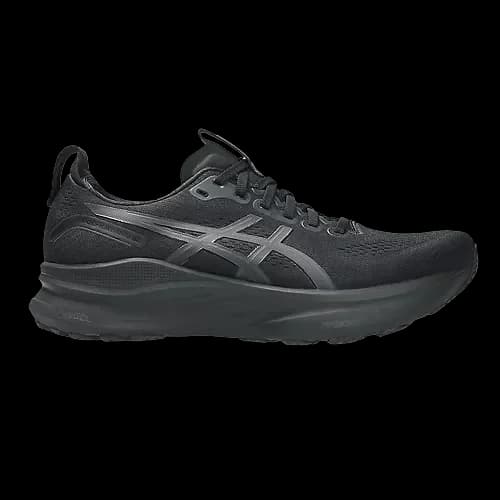 ASICS Gel-Kayano 32 ASICS Gel-Kayano 32 | 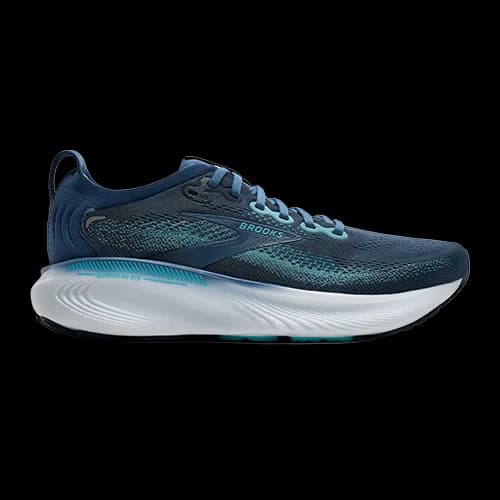 Brooks Adrenaline GTS 25 Brooks Adrenaline GTS 25 | 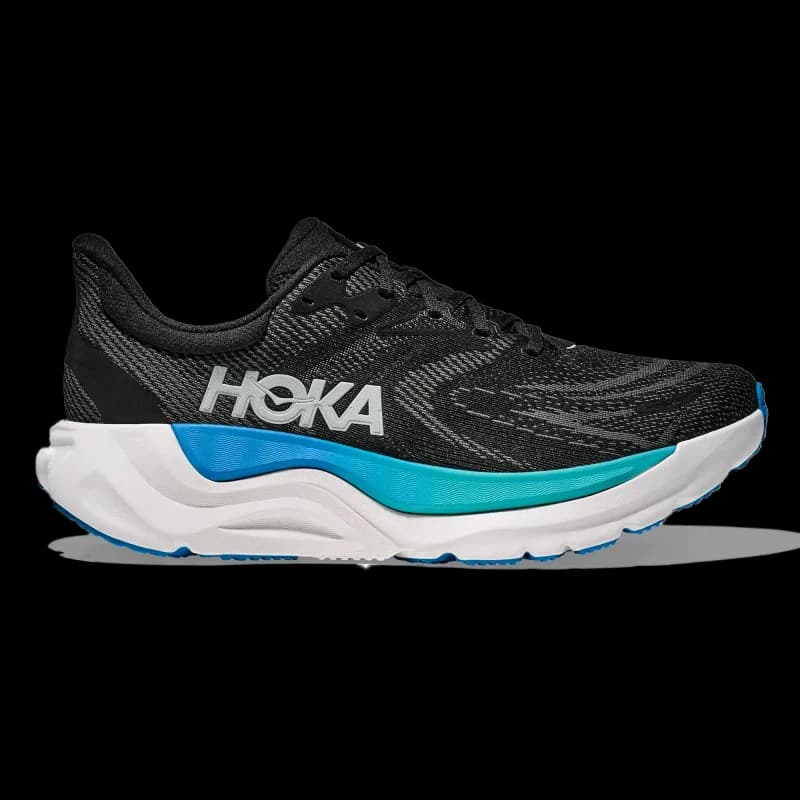 Hoka Arahi 8 Hoka Arahi 8 | 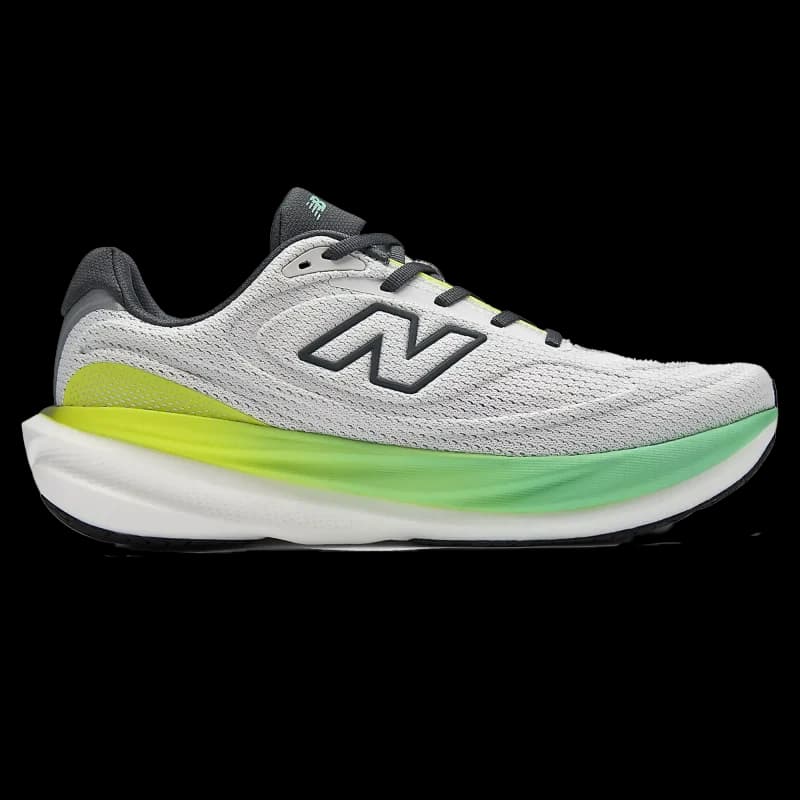 New Balance 1080 v15 New Balance 1080 v15 | |
|---|---|---|---|---|---|
| Pick it for | This page | More stable | Higher drop | Lighter | Less stable |
| Drop | 6 mm | 8 mm | 10 mm | 8 mm | 6 mm |
| Heel stack | 40 mm | 40 mm | 37 mm | 41 mm | 40 mm |
| Weight | 329 g | 298 g | 301 g | 264 g | 261 g |
| Support | Stability | Stability | Stability | Stability | Neutral |
Questions runners ask
Does the New Balance 860 v15 fit true to size?
Mostly. RTINGS, Alastair Running and Run and Become found the length right in the usual size. Doctors of Running found it slightly short with a low forefoot, and RunRepeat’s readers lean toward half a size small. If you are between sizes or your toes are sensitive, half a size up is the safer choice.
860 v14 or 860 v15: what changed?
The New Balance 860 v15 is taller, wider and heavier than the v14, with a lower 6 mm drop instead of 8 mm and a stiffer plate wedged into the midsole. RunRepeat measured the heel up from 36.8 mm to 39.7 mm and the weight up about 12 percent. Runners who liked a lighter, nimbler v14 may prefer to stay with it.
Is the 860 v15 good for flat feet or overpronation?
The New Balance 860 v15 is built for runners whose foot rolls inward, and reviewers place it at a mild to moderate roll. RunRepeat rates the support as moderate and suggests firmer options for runners who need the most. Flat feet do not always mean overpronation, so check how your foot moves first. It is a guidance shoe, not a treatment.
What is the drop of the New Balance 860 v15?
New Balance gives 6 mm, with 40 mm at the heel and 34 mm at the forefoot, as relayed by Marathon Sports and Run and Become. Running Warehouse still lists 8 mm. In the labs, RTINGS measured 6.0 mm and RunRepeat 7.6 mm, so expect something between 6 and 8 mm underfoot.
Does the 860 v15 come in wide?
Yes. RunRepeat and Alastair Running list narrow, standard, wide and extra-wide versions, and Run and Become offers standard, 2E and 4E for men in the UK. Availability depends on the country and retailer: Marathon Sports, for instance, lists only standard and 2E.
860 v15 or 1080 v15?
Choose the New Balance 860 v15 if you want guidance for an inward roll and a broad, planted platform. Choose the 1080 v15 if you run neutral and want something lighter and bouncier: RTINGS finds the 1080 lighter and more natural, while the 860 is more supportive and much heavier.
Is the 860 v15 good for walking?
Yes. Doctors of Running recommend the New Balance 860 v15 for walking and standing, and Alastair Running found it comfortable as an all-day shoe. The weight matters less at walking pace, while the soft top foam and wide base stay useful. Keep it on pavement: Doctors of Running found the heel collects small stones.
Sources
- RunRepeat, New Balance Fresh Foam X 860 v15 lab review (Carlos Sánchez, June 2026). Accessed Oct 13, 2026.
- RTINGS, New Balance Fresh Foam X 860v15 running shoe review. Accessed Oct 13, 2026.
- Doctors of Running, New Balance Fresh Foam X 860 v15 Review (Matt Klein, May 2026). Accessed Oct 13, 2026.
- Alastair Running, New Balance Fresh Foam X 860v15 review (Alastair Dixon, April 2026). Accessed Oct 13, 2026.
- Marathon Sports, New Balance 860 v15 review: a stable and reliable favorite (May 2026). Accessed Oct 13, 2026.
- Marathon Sports, Men’s New Balance Fresh Foam X 860 v15. Accessed Oct 13, 2026.
- Run and Become, New Balance 860v15 review. Accessed Oct 13, 2026.
- Running Warehouse, New Balance Fresh Foam X 860 v15 Men’s Shoes. Accessed Oct 13, 2026.
- Strideprint, Strideprint running shoe catalogue (ranks computed on 2026-10-13). Accessed Oct 13, 2026.
- supwell.com · Release year, listed
- cat: Strideprint catalogue, 395 shoes
How we review. We read published tests, brand and retailer pages and lab measurements, cross-check the figures and flag where they disagree. We did not test this shoe ourselves. Last updated October 13, 2026.