- Shoes
- New Balance
- Fresh Foam X 880 v15
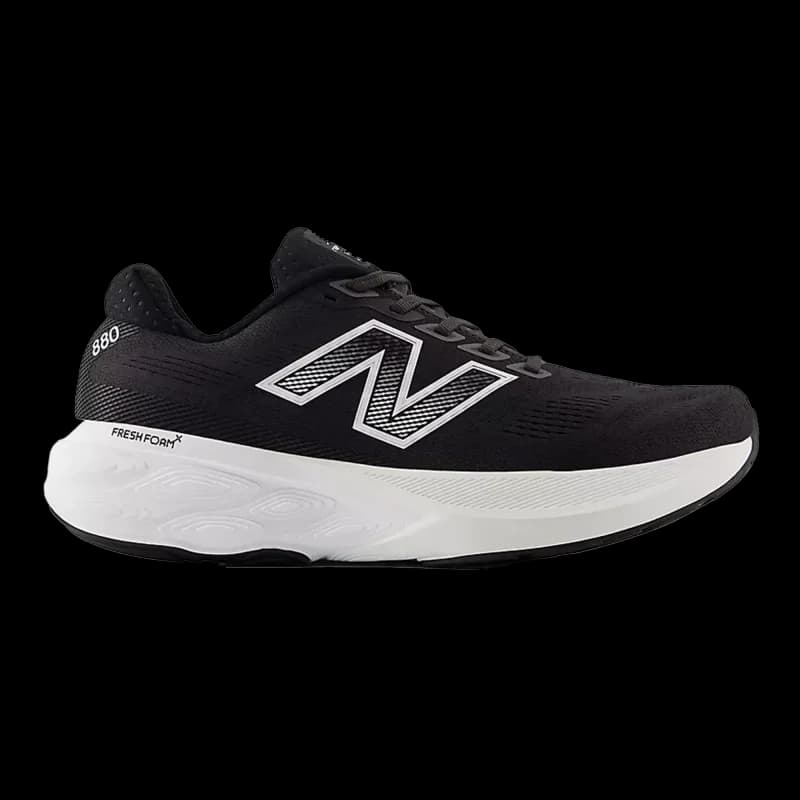
New Balance 880 v15 review
New Balance’s workhorse trainer now stands as tall as its premium sibling. Few full reviews exist yet, and the ones that do describe a very different shoe from the v14.
- Drop
- 6 mm
- Heel stack
- 40.5 mm
- Forefoot
- 34.5 mm
- Weight
- 303 g
- Support
- Neutral
- Plate
- None
Our verdict
Tall, firm, built to protect.
The Fresh Foam X 880 v15 is now a high-stack neutral trainer with a firmer, stiffer ride than its height suggests, and a lower real drop than listed. It suits neutral runners who want lots of protection without a soft, sinking feel, and who land closer to the midfoot.
Strong points
- Much more cushioning than the v14
- Firm, controlled ride despite the tall stack
- Very rigid torsionally: little twist underfoot
- Wide choice of widths, narrow to extra wide
Weak points
- Heavier than the previous version
- Thin outsole rubber, early wear reported
- Runs slightly small according to RunRepeat
- Loses the v14’s low, versatile feel
Who it fits
- You want protection, not softness
- You land on your midfoot
- Your foot needs a specific width
- You run steady miles on the road
Who should skip it
- You loved the low, nimble v14
- You wear outsoles down fast
- You want a flexible, light shoe
Shoe profile
Where the Fresh Foam X 880 v15 sits among the 395 shoes in our catalogue.
| Axis | Fresh Foam X 880 v15 |
|---|---|
| Cushioning | 74 |
| Lightness | 11 |
| Stability | 30 |
| Drop | 20 |
| Response | 20 |
Fig. 1 · How to read it. Each axis runs from 0 at the centre to 100 at the edge. Cushioning, lightness and drop are the shoe’s rank in the catalogue from listed figures; stability and response are scored from the support type, the plate, the rocker and the intended use. The dotted grey line is the catalogue median. Source: Strideprint catalogue (cat).
Where it sits in the catalogue
Weight303 g, heavier than 89% of shoes
Drop6 mm, lower than 59% of shoes
Heel stack40.5 mm, higher than 74% of shoes
Forefoot stack34.5 mm, higher than 76% of shoes
How it feels
Written from 3 published tests. We quote measurements, not impressions we did not have.
Tall stack, measured firmness. A jump to max-stack height with a denser Fresh Foam X, measured firm: expect protection and a controlled feel rather than sink.
Neutral, but it barely twists. No support element, but very high torsional rigidity and a stiff heel counter keep it steady; it is not a guidance shoe.
Stable cruise, little snap. A stiffer, heavier sole cruises steadily at easy pace rather than springing forward, though Fleet Feet still find it responsive.
Tall stack, measured firmness. New Balance list a stack height of 40.5 mm at the heel and 34.5 mm at the forefoot with a 6 mm heel-to-toe drop, against 29 and 21 mm for the v14 on Fleet Feet’s figures. That is a jump into max-stack territory: Fleet Feet note it now stands taller than the 1080 v14, built with a firmer version of the foam.
The midsole is still Fresh Foam X, but RunRepeat measured it at 35.5 AC, noticeably denser than before. Fleet Feet call it a middle-ground cushioning level. Expect protection with a firm, controlled feel rather than sink.
Neutral, but it barely twists. There is no support element. Stability comes from rigidity: RunRepeat rated torsional rigidity 5 out of 5, a level they compare to plated shoes, and gave the heel counter 4 out of 5 for stiffness.
Runnea describe enough firmness and stability for everyday running. For a neutral or slightly uneven stride, that is reassuring; it is not a guidance shoe.
Stable cruise, little snap. RunRepeat measured the sole about 49 percent stiffer than before and the weight up too, and see it losing the versatility of earlier versions.
Fleet Feet still find a responsive underfoot feel for a trainer of this height, and their testers say the lower drop and taller stack make walking and running feel smooth, with the foam softening as it breaks in. It rolls steadily at easy pace rather than springing forward.
Read more
Tall stack, measured firmness. New Balance list a stack height of 40.5 mm at the heel and 34.5 mm at the forefoot with a 6 mm heel-to-toe drop, against 29 and 21 mm for the v14 on Fleet Feet’s figures. That is a jump into max-stack territory: Fleet Feet note it now stands taller than the 1080 v14, built with a firmer version of the foam.
The midsole is still Fresh Foam X, but RunRepeat measured it at 35.5 AC, noticeably denser than before. Fleet Feet call it a middle-ground cushioning level. Expect protection with a firm, controlled feel rather than sink.
Neutral, but it barely twists. There is no support element. Stability comes from rigidity: RunRepeat rated torsional rigidity 5 out of 5, a level they compare to plated shoes, and gave the heel counter 4 out of 5 for stiffness.
Runnea describe enough firmness and stability for everyday running. For a neutral or slightly uneven stride, that is reassuring; it is not a guidance shoe.
Stable cruise, little snap. RunRepeat measured the sole about 49 percent stiffer than before and the weight up too, and see it losing the versatility of earlier versions.
Fleet Feet still find a responsive underfoot feel for a trainer of this height, and their testers say the lower drop and taller stack make walking and running feel smooth, with the foam softening as it breaks in. It rolls steadily at easy pace rather than springing forward.
Which runs it’s for
| Run | Fit | Why | Source |
|---|---|---|---|
| Easy runs | Made for it | A firm, protective platform for everyday miles. | Fleet Feet, Runnea |
| Long runs | Made for it | The tall stack is built for distance and protection. | RunRepeat |
| Recovery runs | Can do | Protective, but less plush than a typical recovery shoe. | RunRepeat, Fleet Feet |
| Tempo | Not for it | Stiff and heavier than before: not a shoe for quick sessions. | RunRepeat |
Source: Fleet Feet, Runnea, RunRepeat
What the tests say
Only three substantial pages review the 880 v15 so far: RunRepeat’s lab test, a Fleet Feet review and a Runnea product review. On that narrow base, they agree it is taller, firmer and heavier than the v14, with a closer fit.
| Test | Type | Our reading | In one sentence | Source |
|---|---|---|---|---|
| RunRepeat | Lab | Positive | RunRepeat praise the secure lockdown and max-stack protection, but flag a much heavier shoe, a thinner outsole and a firmer feel. | Read |
| Fleet Feet | Review | Positive | Fleet Feet recommend it as a versatile daily trainer with reliable durability and protection without a squishy feel, though it runs snugger and stiffer. | Read |
| Runnea | Review | Positive | Runnea is positive about the balanced cushioning and stability, with early outsole wear as the main flaw. | Read |
They agree
- A big jump in stack heightRunRepeat and Fleet Feet both describe a move into high-stack territory, with roughly 10 mm more foam under the forefoot.
- Firmer than it looksRunRepeat find the foam noticeably firmer than before, and Fleet Feet describe a more solid ride than competing trainers.
- Heavier than beforeRunRepeat measured 286 g against 251 g for the v14, and Fleet Feet list more than an ounce of extra weight for men.
- Outsole durability is a questionRunRepeat measured thin outsole rubber, and Runnea report premature wear.
How it’s built
A thick midsole of a denser Fresh Foam X with no plate, under a padded two-layer mesh upper, on a thinner, segmented outsole.
A thick, denser Fresh Foam X midsole with no plate, under a padded two-layer mesh upper and a stiff heel counter. The segmented outsole grips well but is thin, so expect it to wear sooner than the v14’s.
| # | Part | Measure |
|---|---|---|
| 1 | Upper | Breathability 3 / 5 |
| 2 | Tongue | 7.1 mm |
| 3 | Heel | Stiffness 4 / 5 |
| 4 | MidsoleFresh Foam X | Softness 35.5 AC |
| 5 | Insole | 4.7 mm |
| 6 | Outsole | 1.9 mm |
Fig. 3 · Side profile. Stack heights to scale (listed: 40.5 mm heel, 34.5 mm forefoot; measured: 1.9 mm outsole); the split between the two foams is not measured and is drawn at mid-height. Dashed: insole, hidden. Sources: Fleet Feet, RunRepeat, Runnea.
Upper. A thick, soft mesh with large vent holes over a second inner layer, which RunRepeat found limits airflow to an average 3 out of 5. It stretches a little, which helps high-volume feet, and the flat laces run through punched eyelets. Fleet Feet testers found it snugger through the midfoot than earlier 880s.
Tongue. Plush rather than light: RunRepeat measured 7.1 mm of padding and a semi-gusseted design, attached on both sides. Fleet Feet suspect that padding explains part of the closer midfoot feel.
Heel. The heel counter is stiff, 4 out of 5 in RunRepeat’s lab, closer to a stability shoe than a typical daily trainer, with generous padding around it to soften the hold.
Midsole. Still Fresh Foam X, New Balance’s EVA-based foam, but a denser version than in the 1080, as New Balance’s product manager told Fleet Feet. RunRepeat measured 35.5 AC and energy return of 56.4 percent at the heel and 60.1 percent at the forefoot, close to other Fresh Foam X models: dependable cushioning, not a speed foam. There is no plate.
Insole. Removable and not glued in; RunRepeat measured 4.7 mm, which adds a little more cushioning to an already tall stack.
Outsole. Redesigned with slim, wave-like segments in place of the v14’s chunky pods, and more foam exposed in the midfoot. Under the forefoot the segments now run lengthwise instead of diagonally, which Fleet Feet link to the stiff, lever-like toe-off. RunRepeat measured good grip at the forefoot, wet roads included.
Read more
A thick midsole of a denser Fresh Foam X with no plate, under a padded two-layer mesh upper, on a thinner, segmented outsole.
1. Upper. A thick, soft mesh with large vent holes over a second inner layer, which RunRepeat found limits airflow to an average 3 out of 5. It stretches a little, which helps high-volume feet, and the flat laces run through punched eyelets. Fleet Feet testers found it snugger through the midfoot than earlier 880s.
2. Tongue. Plush rather than light: RunRepeat measured 7.1 mm of padding and a semi-gusseted design, attached on both sides. Fleet Feet suspect that padding explains part of the closer midfoot feel.
3. Heel. The heel counter is stiff, 4 out of 5 in RunRepeat’s lab, closer to a stability shoe than a typical daily trainer, with generous padding around it to soften the hold.
4. Midsole. Still Fresh Foam X, New Balance’s EVA-based foam, but a denser version than in the 1080, as New Balance’s product manager told Fleet Feet. RunRepeat measured 35.5 AC and energy return of 56.4 percent at the heel and 60.1 percent at the forefoot, close to other Fresh Foam X models: dependable cushioning, not a speed foam. There is no plate.
5. Insole. Removable and not glued in; RunRepeat measured 4.7 mm, which adds a little more cushioning to an already tall stack.
6. Outsole. Redesigned with slim, wave-like segments in place of the v14’s chunky pods, and more foam exposed in the midfoot. Under the forefoot the segments now run lengthwise instead of diagonally, which Fleet Feet link to the stiff, lever-like toe-off. RunRepeat measured good grip at the forefoot, wet roads included.
Durability. The upper and heel padding held up well in RunRepeat’s abrasion tests. The outsole is the weak point: only 1.9 mm of rubber against 3.4 mm on the previous version, with average wear in their test, and Runnea also report early wear. Fleet Feet are more positive and say it keeps the durability long-time 880 fans expect.
Durability. The upper and heel padding held up well in RunRepeat’s abrasion tests. The outsole is the weak point: only 1.9 mm of rubber against 3.4 mm on the previous version, with average wear in their test, and Runnea also report early wear. Fleet Feet are more positive and say it keeps the durability long-time 880 fans expect.
Specs, listed and measured
Every figure carries its source.
Drop, mm
Heel stack, mm
Forefoot stack, mm
Weight (men’s), g
| Spec | Listed | Measured |
|---|---|---|
| Drop |
|
|
| Heel stack |
|
|
| Forefoot stack |
|
|
| Weight, US M9 |
|
|
| Support |
| – |
| Plate |
| – |
| Surface |
| – |
| Release year |
| – |
Fig. 4 · Listed vs measured. Bars start at zero. Sources: RunRepeat, Fleet Feet, Runnea.
Lab measurements
| Spec | Measured |
|---|---|
| Midsole hardness |
|
| Energy return (heel) |
|
| Torsional rigidity |
|
| Heel counter stiffness |
|
| Breathability |
|
| Traction coefficient (forefoot) |
|
| Spec | Measured |
|---|---|
| Toe box width |
|
| Toe box height |
|
| Outsole thickness |
|
| Insole thickness |
|
| Tongue padding thickness |
|
| Flex force |
|
Sizing and fit
RunRepeat find it slightly small and suggest considering half a size up; check the width before changing the length.
Length
Half a size up
Widths
standard, wide, and extra wide
Toe room
RunRepeat measured the toe box at 74.6 mm at the big-toe area and 28.5 mm high, and rate the fit slightly small. Fleet Feet found the midfoot snugger and narrower than on earlier 880s; wider versions are available.
RunRepeat, Fleet Feet
Full sizing notes from testers
RunRepeat’s fit verdict is slightly small, with a half size up worth considering. Their toe box measured 74.6 mm wide, a little narrower than the previous version’s 76.2 mm, while the toe box height leaves plenty of room above the toes.
Fleet Feet note a slightly narrower midfoot and a more padded tongue than previous versions.
The 880 has an unusually wide range of fits: Fleet Feet and RunRepeat list narrow, standard, wide and extra-wide versions. If the shoe feels short only because it feels tight, try the wider version first.
RunRepeat, Fleet Feet
Vs 880 v14
Not an update but a change of category: from a moderate, versatile trainer to a tall, firm, protective one.
Keep the v14 if you want a lighter, lower, more flexible daily trainer or you are hard on outsoles. Move to the v15 if you want max-stack protection with a firm feel, land on your midfoot and need a specific width.
Version history: 880 v14 to Fresh Foam X 880 v15
Far more foam. RunRepeat measured about 6.7 mm more at the heel and 10.4 mm more at the forefoot than on the v14. (RunRepeat)
Lower drop. Listed drop goes from 8 to 6 mm; RunRepeat measured 4.3 mm. (RunRepeat, Fleet Feet)
Firmer and stiffer. A firmer foam reading and a sole about 49 percent stiffer than before. (RunRepeat)
Heavier. RunRepeat measured 286 g against 251 g for the v14. (RunRepeat)
Less outsole rubber. Outsole thickness down from 3.4 to 1.9 mm in RunRepeat’s lab. (RunRepeat)
Alternatives compared
Each one fixes one thing the Fresh Foam X 880 v15 does not do.
| New Balance Fresh Foam X 880 v15 | 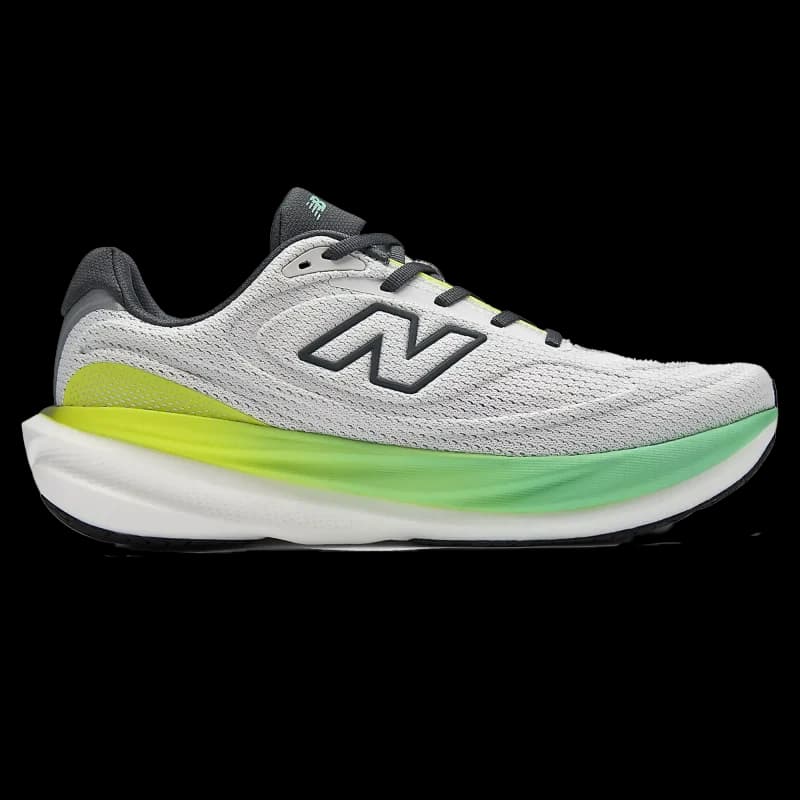 New Balance 1080 v15 New Balance 1080 v15 | 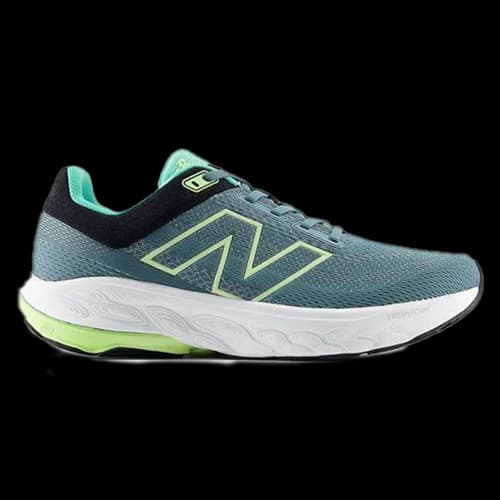 New Balance 860 v15 New Balance 860 v15 | 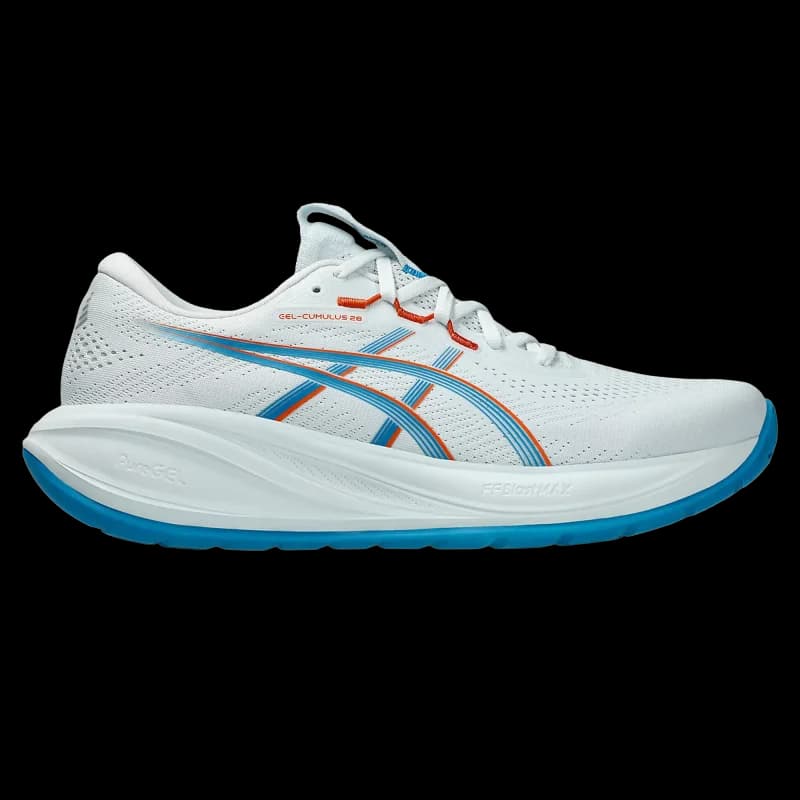 ASICS Gel-Cumulus 28 ASICS Gel-Cumulus 28 | 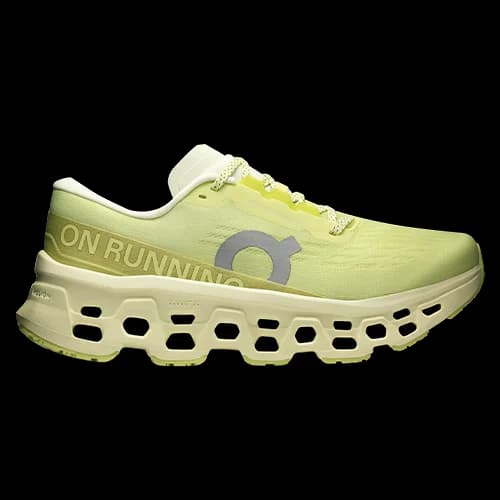 On Cloudmonster 3 On Cloudmonster 3 | |
|---|---|---|---|---|---|
| Pick it for | This page | Softer | More stable | Less cushion | Same support |
| Drop | 6 mm | 6 mm | 8 mm | 8 mm | 6 mm |
| Heel stack | 40.5 mm | 40 mm | 43 mm | 38.5 mm | 40 mm |
| Weight | 303 g | 261 g | 335 g | 258 g | 295 g |
| Support | Neutral | Neutral | Stability | Neutral | Neutral |
Questions runners ask
What changed between the New Balance 880 v14 and 880 v15?
The 880 v15 is much taller: RunRepeat measured 39.7 mm at the heel and 35.4 mm at the forefoot, against 33.0 and 25.0 mm on the v14. It is also firmer, stiffer and heavier (286 g against 251 g in RunRepeat’s lab), with less outsole rubber. Listed drop falls from 8 to 6 mm.
Is the New Balance 880 v15 a max cushion shoe?
By stack height, yes. New Balance list 40.5 mm at the heel and 34.5 mm at the forefoot. By feel, less so: RunRepeat measured the foam at 35.5 AC, a balanced firmness, and Fleet Feet describe a firmer ride than competing trainers.
Does the 880 v15 run small?
RunRepeat find it slightly small and suggest considering half a size up. Its toe box also measured a little narrower than the v14’s. Because the 880 comes in narrow, standard, wide and extra-wide versions, check whether a wider version solves a tight feel before going longer.
880 v15 or 1080 v15: which should I choose?
Both are tall neutral trainers. The 880 v15 is the firmer and stiffer of the two: RunRepeat measured 35.5 AC against 21.5 AC for the 1080 v15. Choose the 880 for firm, controlled protection, the 1080 for a softer, lighter, livelier ride.
What is the real drop of the 880 v15?
New Balance list 6 mm. RunRepeat measured 4.3 mm, with 39.7 mm at the heel and 35.4 mm at the forefoot. Runners who land on the heel get less heel bias than the spec suggests; midfoot strikers get a balanced platform.
Is the 880 v15 durable?
The upper and heel padding scored well in RunRepeat’s lab, but the outsole is a concern: they measured only 1.9 mm of rubber, against 3.4 mm on the v14, and Runnea also report premature outsole wear. High-mileage and heavier runners should watch it closely.
Sources
- RunRepeat, New Balance Fresh Foam X 880 v15 lab review. Accessed Oct 9, 2026.
- Fleet Feet, New Balance Fresh Foam X 880 v15 review. Accessed Oct 9, 2026.
- Runnea, New Balance Fresh Foam X 880 v15. Accessed Oct 9, 2026.
- RunRepeat, New Balance 1080 v15 lab review. Accessed Oct 9, 2026.
- cat: Strideprint catalogue, 395 shoes
How we review. We read published tests, brand and retailer pages and lab measurements, cross-check the figures and flag where they disagree. We did not test this shoe ourselves. Last updated October 13, 2026.