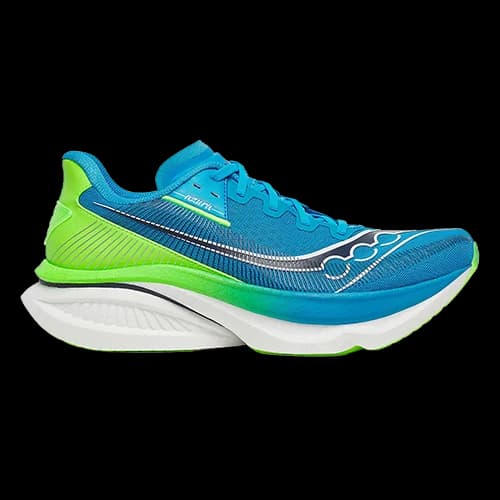
Saucony Endorphin Azura review
Saucony’s plate-free Endorphin: a tall PWRRUN PB midsole and a sharp SpeedRoll rocker, built to cover daily miles and faster work in one shoe.
- Drop
- 8 mm
- Heel stack
- 40 mm
- Forefoot
- 32 mm
- Weight
- 240 g
- Support
- Neutral
- Plate
- None
Our verdict
Firm, stable, and quick once you push.
The Endorphin Azura is a plate-free performance trainer with a firm PEBA foam, a broad platform and a pronounced forefoot rocker that rewards steady and uptempo running. It suits neutral runners who like a firm, guided ride for long runs and tempo days, and testers split on how pleasant it is at slow, easy paces.
Strong points
- Comes alive at tempo and marathon pace, with no plate needed
- Unusually stable for a neutral shoe, thanks to a wide, firm base
- High energy return in RunRepeat’s lab: 70.6% heel, 74.7% forefoot
- True to size for nearly every tester
- Light for its stack: about 240 g in a men’s US 9
Weak points
- Firm underfoot: 40.2 AC, harder than RunRepeat’s 35.5 AC average
- Can feel harsh or long-striding at slow, easy paces
- Tapered forefoot crowded or rubbed some testers’ toes
- Thin 2.3 mm outsole, and durability reports are mixed
- No wide version
Who it fits
- You want one shoe for steady miles and tempo
- You like a firm, guided ride
- You land on your heel
- You run long
Who should skip it
- You want soft, plush cushioning
- Your easy days are very slow
- Your forefoot is broad
Shoe profile
Where the Endorphin Azura sits among the 395 shoes in our catalogue.
| Axis | Endorphin Azura |
|---|---|
| Cushioning | 64 |
| Lightness | 70 |
| Stability | 30 |
| Drop | 45 |
| Response | 20 |
Fig. 1 · How to read it. Each axis runs from 0 at the centre to 100 at the edge. Cushioning, lightness and drop are the shoe’s rank in the catalogue from listed figures; stability and response are scored from the support type, the plate, the rocker and the intended use. The dotted grey line is the catalogue median. Source: Strideprint catalogue (cat).
Where it sits in the catalogue
Weight240 g, lighter than 69% of shoes
Drop8 mm, higher than 45% of shoes
Heel stack40 mm, higher than 64% of shoes
Forefoot stack32 mm, higher than 52% of shoes
How it feels
Written from 8 published tests. We quote measurements, not impressions we did not have.
Plenty of foam, firmly tuned. A tall PWRRUN PB midsole with no plate, measured firm at 40.2 AC by RunRepeat, yet protective enough for long runs.
Neutral on paper, guided in practice. Sold as neutral, but a wide, firm base and sidewalls make it one of the steadier plate-free trainers, per Doctors of Running and RunRepeat.
A rocker that wants pace. High measured energy return and a sharp SpeedRoll rocker give a snappy toe-off at pace, but the rocker can feel stiff when jogging.
Plenty of foam, firmly tuned. The midsole is PWRRUN PB, Saucony’s beaded PEBA foam, with no plate. Doctors of Running list 40 mm at the heel and 32 mm at the forefoot; RunRepeat measured 40.7 and 32.7 mm. On the listed 40 mm heel, 58 of the 207 neutral road shoes in our catalogue have a taller one.
The feel is firmer than that stack suggests. RunRepeat measured 40.2 on the AC scale against a 35.5 average. RTINGS still rates the cushioning highly over long runs, and Runner’s Lab found impact absorption strong enough for a marathon.
Neutral on paper, guided in practice. Saucony files the Azura as neutral, but Doctors of Running found real guidance from the wide, firm platform, the sidewalls and the flared sole. RunRepeat measured a forefoot of 123.4 mm and a heel of 91.6 mm across, and calls the platform very stable.
Believe in the Run’s heaviest tester saw no medial wear on the midsole, which he usually gets in neutral shoes. RTINGS is a little more reserved: it rates stability 7.4 out of 10 and notes a narrower arch that gives less support at midstance.
A rocker that wants pace. RunRepeat measured 70.6 percent energy return at the heel and 74.7 at the forefoot, and RTINGS scores energy return 8.2 out of 10. The SpeedRoll rocker and toe spring do the rest: testers at Fleet Feet and Believe in the Run describe a snappy roll into toe-off.
That geometry is also its limit at slow speeds. Doctors of Running and Marathons.com found the stride long and the rocker stiff when jogging, and one Doctors of Running tester, a physical therapist, found the forefoot shape made her feel she was tipping off the front.
Read more
Plenty of foam, firmly tuned. The midsole is PWRRUN PB, Saucony’s beaded PEBA foam, with no plate. Doctors of Running list 40 mm at the heel and 32 mm at the forefoot; RunRepeat measured 40.7 and 32.7 mm. On the listed 40 mm heel, 58 of the 207 neutral road shoes in our catalogue have a taller one.
The feel is firmer than that stack suggests. RunRepeat measured 40.2 on the AC scale against a 35.5 average. RTINGS still rates the cushioning highly over long runs, and Runner’s Lab found impact absorption strong enough for a marathon.
Neutral on paper, guided in practice. Saucony files the Azura as neutral, but Doctors of Running found real guidance from the wide, firm platform, the sidewalls and the flared sole. RunRepeat measured a forefoot of 123.4 mm and a heel of 91.6 mm across, and calls the platform very stable.
Believe in the Run’s heaviest tester saw no medial wear on the midsole, which he usually gets in neutral shoes. RTINGS is a little more reserved: it rates stability 7.4 out of 10 and notes a narrower arch that gives less support at midstance.
A rocker that wants pace. RunRepeat measured 70.6 percent energy return at the heel and 74.7 at the forefoot, and RTINGS scores energy return 8.2 out of 10. The SpeedRoll rocker and toe spring do the rest: testers at Fleet Feet and Believe in the Run describe a snappy roll into toe-off.
That geometry is also its limit at slow speeds. Doctors of Running and Marathons.com found the stride long and the rocker stiff when jogging, and one Doctors of Running tester, a physical therapist, found the forefoot shape made her feel she was tipping off the front.
Which runs it’s for
| Run | Fit | Why | Source |
|---|---|---|---|
| Tempo | Made for it | Its natural pace. Several testers found it gets livelier as the pace rises. | Doctors of Running, Fleet Feet, Running Warehouse, Marathons.com |
| Long runs | Made for it | Enough protection for long runs, and stable when your form fades late on. | RTINGS, Fleet Feet, Marathons.com |
| Marathon race | Can do | A credible plate-free race option. RTINGS scores it 7.9 for half and full marathons but finds it heavy next to dedicated racers. | RTINGS, Believe in the Run, Running Warehouse |
| Easy runs | Can do | Divides testers: fine for The Run Testers and Believe in the Run, firm and long-striding for Doctors of Running and Marathons.com. | Doctors of Running, Believe in the Run, Marathons.com, The Run Testers |
| Intervals | Can do | It handles them, but RunRepeat points fast interval sessions to the plated Endorphin Speed 5. | RunRepeat, Marathons.com |
| Walking | Not for it | The forefoot rocker tips you forward. Doctors of Running and Marathons.com both advise against it for walking. | Doctors of Running, Marathons.com |
Source: Doctors of Running, Fleet Feet, Running Warehouse, Marathons.com, RTINGS, Believe in the Run, The Run Testers, RunRepeat
What the tests say
Published reviews agree the Azura is a firm, stable, plate-free trainer that feels best at steady to fast paces and fits true to size. They part ways on easy runs, toe room and how long the thin outsole lasts.
| Test | Type | Our reading | In one sentence | Source |
|---|---|---|---|---|
| Doctors of Running | Review | Mixed | Doctors of Running are split: one tester calls it a versatile do-it-all trainer, the other finds it firm and over-rockered for easy miles. | Read |
| RunRepeat | Lab | Positive | RunRepeat scores it 91 out of 100: strong energy return, a very stable build and good value, with a firm ride that will not please everyone. | Read |
| RTINGS | Lab | Positive | RTINGS sees a high-stack, unplated one-shoe trainer with lasting cushioning, scored 8.1 for daily training but heavy for a dedicated racer. | Read |
| Believe in the Run | Review | Positive | Believe in the Run rate it S tier: light, snappy and versatile, now one tester’s favourite non-race Saucony. | Read |
| Marathons.com | Review | Mixed | Marathons.com is positive overall after 200 km, but its second tester missed comfort on easy runs and found the outsole wore early. | Read |
| The Run Testers | Review | Positive | The Run Testers call it a stable, well-balanced all-rounder, though its foam is less lively than the Evo SL’s. | Read |
They agree
- Firm, not plushRunRepeat measured the foam at 40.2 AC, firmer than average, and Doctors of Running, Believe in the Run, Running Warehouse and Marathons.com all describe a firm ride.
- Stable for a neutral shoeDoctors of Running grade its stability A, RunRepeat calls the platform very stable, and The Run Testers find it steadier than the Adidas Evo SL.
- Better as the pace risesDoctors of Running, Fleet Feet, Running Warehouse and Marathons.com all found it at its best at tempo or marathon pace.
- True to sizeRunRepeat’s reader poll, RTINGS, Fleet Feet, Runner’s Lab and The Run Testers all report a true-to-size fit.
They split
- Is it an easy-day shoe?The Run Testers find enough cushioning for easy runs of any length, and a Believe in the Run tester found it friendly at easy paces. One Doctors of Running tester found it harsh on a slow 10-miler, and a Marathons.com tester found it stiff when jogging.
- How much toe room?RTINGS gives toe box height full marks and The Run Testers call the toe box roomy. A Believe in the Run tester and a Fleet Feet reviewer found the forefoot taper crowded their toes.
- Will the outsole last?RunRepeat measured only 0.5 mm of wear and Runner’s Lab rates durability a strength. The Run Testers warn the thin rubber may wear through early, and a Marathons.com tester saw wear after about 100 km.
How it’s built
A plate-free build: a full PWRRUN PB midsole shaped into a SpeedRoll rocker, a light two-layer engineered mesh, a padded gusseted tongue and an XT-900 rubber outsole.
A full PWRRUN PB midsole with no plate, shaped into a SpeedRoll rocker, under a light two-layer mesh, with a thin 2.3 mm XT-900 outsole.
| # | Part | Measure |
|---|---|---|
| 1 | UpperEngineered mesh | Breathability 4 / 5 |
| 2 | Tongue | 4.3 mm |
| 3 | Heel | Stiffness 3 / 5 |
| 4 | MidsolePWRRUN PB and SpeedRoll | Hardness 40.2 AC |
| 5 | Insole | 4.4 mm |
| 6 | OutsoleXT-900 | 2.3 mm |
Fig. 3 · Side profile. Stack heights to scale (listed: 40 mm heel, 32 mm forefoot; measured: 2.3 mm outsole); the split between the two foams is not measured and is drawn at mid-height. Dashed: insole, hidden. Sources: Doctors of Running, RunRepeat, Marathons.com, Runner’s Lab, Saucony, The Run Testers.
Upper. A thin, lightly stretchy two-layer mesh with structural overlays, per Doctors of Running and Runner’s Lab. RunRepeat rates breathability 4 out of 5, and both Marathons.com testers found it very well ventilated, though one wanted a softer, more comfortable feel.
Tongue. Thin and gusseted, with padding only where the laces press. RunRepeat measured 4.3 mm and counts four foam pads.
Heel. A small, stiff counter with a flexible overlay and little padding; one Doctors of Running tester wanted more behind the Achilles. RunRepeat rates the counter 3 out of 5 for stiffness and finds no pull tab.
Midsole. Beaded PEBA foam, with no plate or stiffening rods, shaped into Saucony’s SpeedRoll rocker. RunRepeat measured it at 40.2 AC, with flex at 16.6 N and torsional rigidity at 14.5 Nm, both close to its averages.
Insole. RunRepeat measured 4.4 mm. A Doctors of Running tester found a raised medial wall on the sockliner narrowed the rearfoot uncomfortably for her.
Outsole. XT-900 rubber with broad coverage and a lateral midfoot cutout, per Doctors of Running. It is thin, 2.3 mm in RunRepeat’s lab, and scored 0.51 for traction. Runner’s Lab found it reliable on wet asphalt, while a Doctors of Running tester slipped on wet, sandy roads.
Read more
A plate-free build: a full PWRRUN PB midsole shaped into a SpeedRoll rocker, a light two-layer engineered mesh, a padded gusseted tongue and an XT-900 rubber outsole.
1. Upper. A thin, lightly stretchy two-layer mesh with structural overlays, per Doctors of Running and Runner’s Lab. RunRepeat rates breathability 4 out of 5, and both Marathons.com testers found it very well ventilated, though one wanted a softer, more comfortable feel.
2. Tongue. Thin and gusseted, with padding only where the laces press. RunRepeat measured 4.3 mm and counts four foam pads.
3. Heel. A small, stiff counter with a flexible overlay and little padding; one Doctors of Running tester wanted more behind the Achilles. RunRepeat rates the counter 3 out of 5 for stiffness and finds no pull tab.
4. Midsole. Beaded PEBA foam, with no plate or stiffening rods, shaped into Saucony’s SpeedRoll rocker. RunRepeat measured it at 40.2 AC, with flex at 16.6 N and torsional rigidity at 14.5 Nm, both close to its averages.
5. Insole. RunRepeat measured 4.4 mm. A Doctors of Running tester found a raised medial wall on the sockliner narrowed the rearfoot uncomfortably for her.
6. Outsole. XT-900 rubber with broad coverage and a lateral midfoot cutout, per Doctors of Running. It is thin, 2.3 mm in RunRepeat’s lab, and scored 0.51 for traction. Runner’s Lab found it reliable on wet asphalt, while a Doctors of Running tester slipped on wet, sandy roads.
Durability. Reports differ. RunRepeat measured just 0.5 mm of outsole wear and rates heel padding durability 5 out of 5 but the toe box 2 out of 5. A Marathons.com tester saw edge wear after 200 km and expects about 600 km in total; his colleague noticed wear after roughly 100 km. The Run Testers find the foam long-lasting but warn the thin rubber may go first.
Durability. Reports differ. RunRepeat measured just 0.5 mm of outsole wear and rates heel padding durability 5 out of 5 but the toe box 2 out of 5. A Marathons.com tester saw edge wear after 200 km and expects about 600 km in total; his colleague noticed wear after roughly 100 km. The Run Testers find the foam long-lasting but warn the thin rubber may go first.
Specs, listed and measured
Every figure carries its source.
Drop, mm
Heel stack, mm
Forefoot stack, mm
Weight (men’s), g
| Spec | Listed | Measured |
|---|---|---|
| Drop |
|
|
| Heel stack |
|
|
| Forefoot stack |
|
|
| Weight, US M9 |
|
|
| Support |
| – |
| Plate |
| – |
| Surface |
| – |
| Release year |
| – |
Fig. 4 · Listed vs measured. Bars start at zero. Sources: Doctors of Running, RunRepeat, RTINGS, Running Warehouse.
Lab measurements
| Spec | Measured |
|---|---|
| Midsole hardness |
|
| Energy return (heel) |
|
| Torsional rigidity |
|
| Flex force |
|
| Heel counter stiffness |
|
| Traction coefficient |
|
| Spec | Measured |
|---|---|
| Toe box width |
|
| Toe box height |
|
| Outsole thickness |
|
| Insole thickness |
|
| Tongue thickness |
|
Sizing and fit
Take your usual size; check the forefoot taper if your toes are broad.
Length
True to size
Widths
standard
Toe room
RunRepeat measured a 72.2 mm toe box and a height of 28.3 mm, and RTINGS gives toe box height full marks. The front still tapers: some testers had no issue, others felt crowded on long runs.
RunRepeat, RTINGS, Believe in the Run, Fleet Feet
Full sizing notes from testers
RunRepeat’s readers, RTINGS, Fleet Feet, Runner’s Lab and The Run Testers all found it true to size, and Running Warehouse agrees. One Doctors of Running tester preferred a half size up, as she does in other Endorphin models.
Width is the open question. Running Warehouse finds the midfoot snug for wider feet, and testers at Believe in the Run and Fleet Feet found the forefoot taper crowded their toes. Lockdown is secure with no heel slip, per Doctors of Running and Marathons.com.
There is no wide version: Saucony lists a single medium width for men, and RTINGS and Fleet Feet confirm there is no 2E. RunRepeat also lists a narrow men’s version, which may not be sold in every country.
Doctors of Running, RunRepeat, RTINGS, Believe in the Run, Fleet Feet, Running Warehouse, Marathons.com, Runner’s Lab, The Run Testers, Saucony
Alternatives compared
Each one fixes one thing the Endorphin Azura does not do.
| Saucony Endorphin Azura | 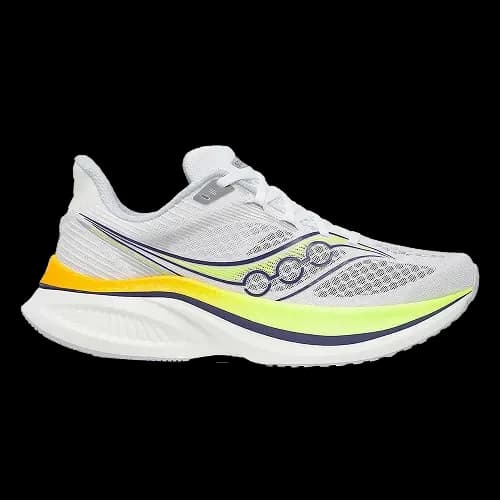 Saucony Endorphin Speed 5 Saucony Endorphin Speed 5 | 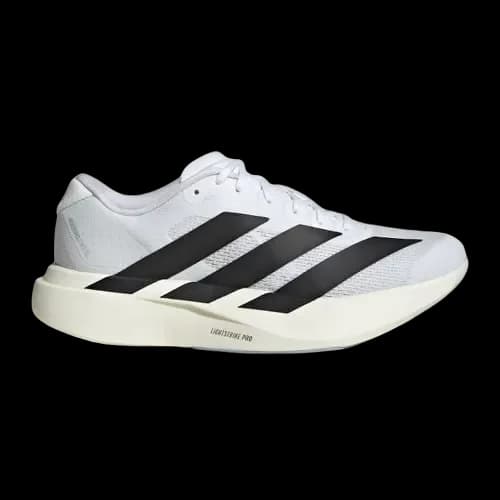 Adidas Adizero Evo SL Adidas Adizero Evo SL | 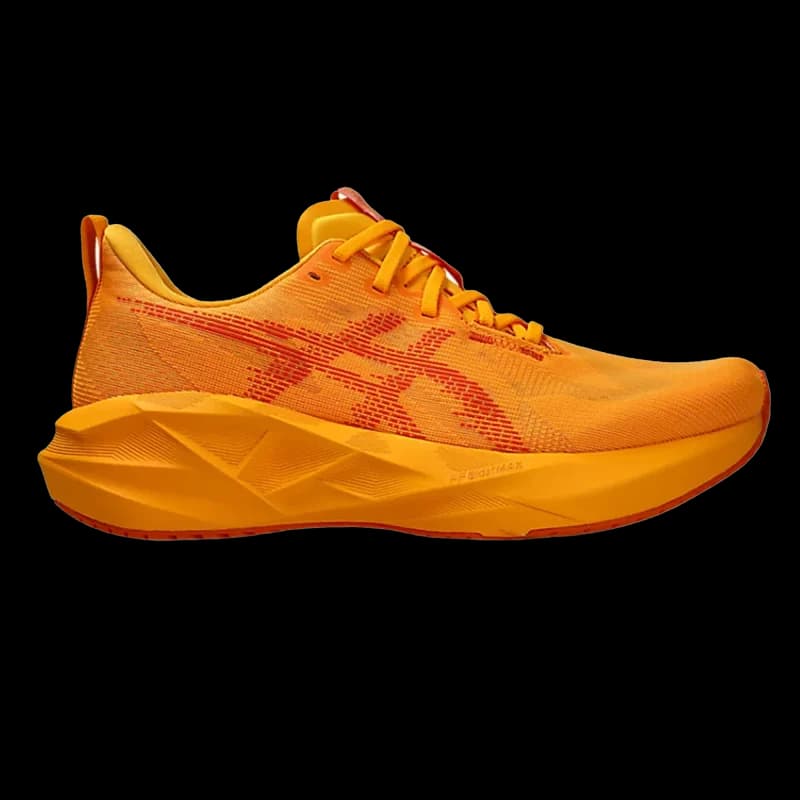 ASICS Novablast 5 ASICS Novablast 5 | 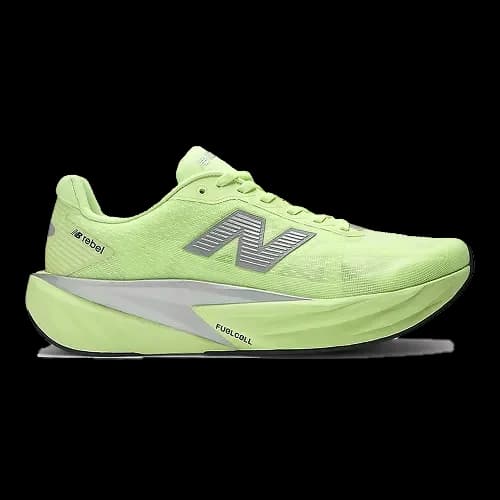 New Balance FuelCell Rebel v5 New Balance FuelCell Rebel v5 | |
|---|---|---|---|---|---|
| Pick it for | This page | Faster | Lighter | Softer | Lower drop |
| Drop | 8 mm | 8 mm | 7 mm | 8 mm | 6 mm |
| Heel stack | 40 mm | 36 mm | 37 mm | 41.5 mm | 35 mm |
| Weight | 240 g | 238 g | 230 g | 252 g | 225 g |
| Support | Neutral | Neutral | Neutral | Neutral | Neutral |
Questions runners ask
Is the Saucony Endorphin Azura true to size?
Yes for most runners. RunRepeat’s reader poll, RTINGS, Fleet Feet, Runner’s Lab and The Run Testers all report a true-to-size fit. The forefoot tapers, though: some Believe in the Run and Fleet Feet testers felt their toes crowded, and one Doctors of Running tester preferred a half size up, as in other Endorphin models.
Endorphin Azura or Endorphin Speed 5: which should I choose?
Choose the Endorphin Speed 5 if fast intervals and target splits matter most: it adds a nylon plate on a lower 36 mm heel, and RunRepeat prefers it for interval work. Choose the Endorphin Azura for a taller, plate-free shoe that Fleet Feet and The Run Testers find more comfortable on relaxed, longer miles.
Is the Endorphin Azura good for easy runs?
It depends how slow your easy runs are. The Run Testers find enough cushioning for easy runs of any length. Doctors of Running and Marathons.com testers found the Endorphin Azura firm, with a rocker that feels long and stiff when jogging. If your recovery days are very slow, a softer shoe may suit them better.
Can you race a marathon in the Endorphin Azura?
Yes, as a plate-free option. Running Warehouse testers name marathon pace as its sweet spot and RTINGS scores it 7.9 out of 10 for half and full marathons. RTINGS also finds it heavy next to dedicated super shoes, so a plated racer remains the faster choice on race day for most runners.
Does the Endorphin Azura come in wide?
No. Saucony lists a single medium width for men, and RTINGS and Fleet Feet confirm there is no wide version. RunRepeat lists a narrow men’s version as well. With a forefoot some testers found tapered, runners with broad feet should try it on before committing.
Is the Endorphin Azura stable enough if my foot rolls in?
The Endorphin Azura is a neutral shoe, not a stability shoe, but reviewers find it unusually steady: Doctors of Running grade its stability A and describe guidance from its wide, firm platform and sidewalls. For a marked inward roll, a dedicated stability shoe is the safer choice. It guides the foot; it does not treat anything.
Is the Endorphin Azura good for walking?
Not really. Doctors of Running do not recommend it for walking or standing, and both Marathons.com testers found the pronounced forefoot rocker pushes you forward awkwardly at walking speed. A flatter, softer daily trainer will be more comfortable for long days on your feet.
Sources
- Doctors of Running, Saucony Endorphin Azura Review (David Salas, Andrea Myers, January 2026). Accessed Oct 13, 2026.
- RunRepeat, Saucony Endorphin Azura lab review. Accessed Oct 13, 2026.
- RTINGS, Saucony Endorphin Azura running shoe review. Accessed Oct 13, 2026.
- Believe in the Run, Saucony Endorphin Azura Review (December 2025). Accessed Oct 13, 2026.
- Fleet Feet, Saucony Endorphin Azura review: fun, fast, cushioned. Accessed Oct 13, 2026.
- Running Warehouse, Saucony Endorphin Azura review (February 2026). Accessed Oct 13, 2026.
- Marathons.com, Saucony Endorphin Azura : test et avis après 200 km (April 2026). Accessed Oct 13, 2026.
- Runner’s Lab, Saucony Endorphin Azura: análisis y opinión. Accessed Oct 13, 2026.
- The Run Testers, Saucony Endorphin Azura review. Accessed Oct 13, 2026.
- Saucony, Endorphin Azura (men’s). Accessed Oct 13, 2026.
- Strideprint, Strideprint running shoe catalogue (ranks computed on 2026-10-13). Accessed Oct 13, 2026.
- cat: Strideprint catalogue, 395 shoes
How we review. We read published tests, brand and retailer pages and lab measurements, cross-check the figures and flag where they disagree. We did not test this shoe ourselves. Last updated October 13, 2026.