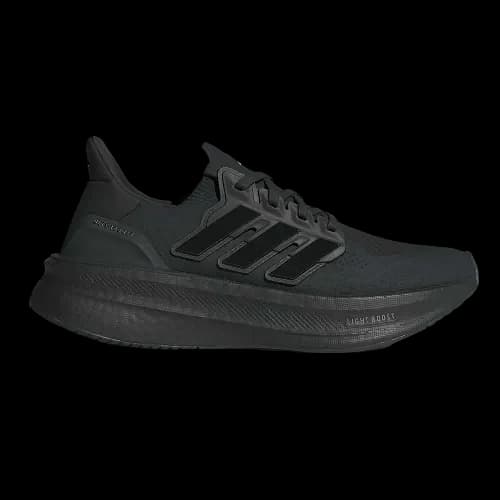
adidas Ultraboost 5 review
The Ultraboost finally behaves more like a running shoe: more Light Boost foam, a roomier Primeknit upper and a Continental outsole, still with a classic 10 mm drop.
- Drop
- 10 mm
- Heel stack
- 39 mm
- Forefoot
- 29 mm
- Weight
- 283 g
- Support
- Neutral
- Plate
- Other
Our verdict
Comfort first, running second, finally a real runner.
The Ultraboost 5 adds foam, room and breathability to the line and holds up very well in wear tests. It suits heel strikers with medium to wide feet who run easy, a few times a week, and like a shoe they can also wear all day. It is heavy and firmer than it looks, and none of the tests recommend it for fast running.
Strong points
- Roomy knit upper: RunRepeat measured a 78.6 mm toe box, wide for a road shoe
- Highly breathable, 5 out of 5 in RunRepeat’s test, up from 3 on the Ultraboost Light
- Durable: 0.8 mm of outsole wear and full marks for heel padding in RunRepeat’s tests
- Strong grip from the Continental rubber in two road tests
- Back to true to size, after the Ultraboost Light ran short
Weak points
- Heavy: RunRepeat weighed 292 g, and Runner’s World Germany lists the same for the men’s shoe
- Not for fast running in any of the tests
- Less cushion than it looks: 35.2 mm measured at the heel against 39 mm listed
- The stretch collar can make it fiddly to put on
Who it fits
- You run easy, a few times a week
- You land on your heel
- Your feet are medium to wide
- You are starting out or you are a heavier runner
Who should skip it
- You want to run fast
- Your feet are narrow
- You want a light or very soft shoe
Shoe profile
Where the Ultraboost 5 sits among the 395 shoes in our catalogue.
| Axis | Ultraboost 5 |
|---|---|
| Cushioning | 52 |
| Lightness | 28 |
| Stability | 30 |
| Drop | 84 |
| Response | 6 |
Fig. 1 · How to read it. Each axis runs from 0 at the centre to 100 at the edge. Cushioning, lightness and drop are the shoe’s rank in the catalogue from listed figures; stability and response are scored from the support type, the plate, the rocker and the intended use. The dotted grey line is the catalogue median. Source: Strideprint catalogue (cat).
Where it sits in the catalogue
Weight283 g, heavier than 72% of shoes
Drop10 mm, higher than 84% of shoes
Heel stack39 mm, higher than 52% of shoes
Forefoot stack29 mm, lower than 65% of shoes
How it feels
Written from 5 published tests. We quote measurements, not impressions we did not have.
More foam than before, less than it looks. Listed at 39 mm at the heel, measured at 35.2 mm by RunRepeat, with a firmer-than-average 38.2 AC foam: protective, not plush.
Steady enough for a neutral shoe. A new Torsion System and wide base give a steady neutral ride; runners who need support are pointed to the Adistar.
Decent rebound, no pace. Energy return of 66.0 percent at the heel and 69.5 at the forefoot, but the weight keeps it at easy paces.
More foam than before, less than it looks. adidas lists 39 mm at the heel and 29 mm at the forefoot of Light Boost foam, and Runner’s World Germany counts about 9 mm more under the heel than on the Ultraboost Light. RunRepeat’s calipers found less: 35.2 mm at the heel and 24.6 mm at the forefoot, about average for a road shoe.
The foam is not as soft as the look suggests. RunRepeat measured 38.2 on its AC scale, firmer than average, and Runner’s World Germany found it softer than the Ultraboost Light but far from plush. Runpack expected a softer, deeper feel.
Steady enough for a neutral shoe. A redesigned Torsion System under the midfoot aims to smooth the move from heel to forefoot. Runpack scored stability 8 out of 10 and felt secure on descents and corners, and Runner’s World Germany’s midfoot strikers liked the support under the midfoot.
It is still a neutral shoe. Runner’s World Germany sends runners who want more support to the Adistar, and RunRepeat flags possible heel slippage for narrower feet.
Decent rebound, no pace. RunRepeat measured energy return of 66.0 percent at the heel and 69.5 percent at the forefoot, above its 61.4 percent forefoot average. On the road it does not feel fast: Runpack felt no real bounce, and RunRepeat finds the 292 g weight holds it back.
It is also stiffer than older Ultraboosts, 17.3 N in RunRepeat’s bending test, which the lab sees as one of the reasons it now runs less like a sneaker.
Read more
More foam than before, less than it looks. adidas lists 39 mm at the heel and 29 mm at the forefoot of Light Boost foam, and Runner’s World Germany counts about 9 mm more under the heel than on the Ultraboost Light. RunRepeat’s calipers found less: 35.2 mm at the heel and 24.6 mm at the forefoot, about average for a road shoe.
The foam is not as soft as the look suggests. RunRepeat measured 38.2 on its AC scale, firmer than average, and Runner’s World Germany found it softer than the Ultraboost Light but far from plush. Runpack expected a softer, deeper feel.
Steady enough for a neutral shoe. A redesigned Torsion System under the midfoot aims to smooth the move from heel to forefoot. Runpack scored stability 8 out of 10 and felt secure on descents and corners, and Runner’s World Germany’s midfoot strikers liked the support under the midfoot.
It is still a neutral shoe. Runner’s World Germany sends runners who want more support to the Adistar, and RunRepeat flags possible heel slippage for narrower feet.
Decent rebound, no pace. RunRepeat measured energy return of 66.0 percent at the heel and 69.5 percent at the forefoot, above its 61.4 percent forefoot average. On the road it does not feel fast: Runpack felt no real bounce, and RunRepeat finds the 292 g weight holds it back.
It is also stiffer than older Ultraboosts, 17.3 N in RunRepeat’s bending test, which the lab sees as one of the reasons it now runs less like a sneaker.
Which runs it’s for
| Run | Fit | Why | Source |
|---|---|---|---|
| Easy runs | Made for it | Its natural job. Runner’s World Germany and Runpack both keep it for relaxed runs. | Runner’s World Germany, Runpack |
| Recovery runs | Made for it | Runpack recommends it for low-intensity runs and warm-ups. | Runpack |
| Walking | Made for it | RunRepeat rates it suitable for daily wear, and Believe in the Run see it as a run and lifestyle shoe. | RunRepeat, Believe in the Run |
| Long runs | Can do | RunRepeat and Runner’s World Germany think the cushioning is enough for long runs; Runpack would not take it that far. | RunRepeat, Runner’s World Germany, Runpack |
| Tempo | Not for it | Too heavy and not lively enough for faster work, according to RunRepeat and Runpack. | RunRepeat, Runpack |
Source: Runner’s World Germany, Runpack, RunRepeat, Believe in the Run
What the tests say
Tests agree the Ultraboost 5 is roomier, more breathable and more of a running shoe than before, but heavy and built for easy paces. They differ on how much cushioning it really offers and whether it works on long runs.
| Test | Type | Our reading | In one sentence | Source |
|---|---|---|---|---|
| RunRepeat | Lab | Positive | RunRepeat scores it 83 out of 100: the most running-ready Ultraboost so far, roomy and durable, but still too heavy. | Read |
| Runner’s World Germany | Review | Positive | Runner’s World Germany sees an everyday trainer that could become a favourite for easy and long runs. | Read |
| Runpack | Review | Mixed | Runpack rates comfort and grip highly but finds the cushioning and rebound modest, fit for short easy runs only. | Read |
| Believe in the Run | Review | Mixed | Believe in the Run call it a real running shoe, if only a passable one, and a strong run and lifestyle pair. | Read |
They agree
- Roomier than any Ultraboost beforeRunRepeat, Runner’s World Germany and Runpack all describe a generous toe box, and RunRepeat measured a wider heel too.
- A shoe for easy pacesRunRepeat, Runpack and Believe in the Run all place it on relaxed running, not workouts.
- Grippy, hard-wearing outsoleRunner’s World Germany saw strong grip and little wear, Runpack scored grip 10 out of 10, and RunRepeat measured below-average outsole wear.
They split
- Enough cushioning for long runs?RunRepeat and Runner’s World Germany think so. Runpack scored cushioning 5 out of 10 and would keep it for short, easy runs.
- How well the heel holdsRunpack found the heel and rearfoot very well held. RunRepeat warns of possible heel slippage, linked to the wider fit.
How it’s built
A Light Boost midsole with a redesigned Torsion System under the midfoot, a Primeknit upper of varying density, a molded heel counter and a Continental rubber outsole.
Light Boost foam with an X-shaped Torsion System, a breathable Primeknit upper, a molded heel counter and partial Continental rubber that wore very little in RunRepeat’s test.
| # | Part | Measure |
|---|---|---|
| 1 | UpperPrimeknit | Breathability 5 / 5 |
| 2 | Tongue | 1.2 mm |
| 3 | Heel | Stiffness 3 / 5 |
| 4 | MidsoleLight Boost and Torsion System | Hardness 38.2 AC |
| 5 | Insole | 3.1 mm |
| 6 | OutsoleContinental rubber | 2.8 mm |
Fig. 3 · Side profile. Stack heights to scale (listed: 39 mm heel, 29 mm forefoot; measured: 2.8 mm outsole); the split between the two foams is not measured and is drawn at mid-height. Dashed: insole, hidden. Sources: RunRepeat, Runner’s World Germany, Carreras de Montaña, Runpack.
Upper. A reworked Primeknit with varying knit density, roomier and more flexible over the forefoot per Runner’s World Germany. RunRepeat scored breathability 5 out of 5, up from 3 on the Ultraboost Light.
Tongue. Barely padded: RunRepeat measured 1.2 mm, very thin for a daily trainer.
Heel. A molded external counter, 3 out of 5 for stiffness in RunRepeat’s test, with a cut-out that Runner’s World Germany says takes pressure off the Achilles. RunRepeat gave the heel padding full marks for durability.
Midsole. Light Boost foam, about 30 percent lighter than the original Boost per RunRepeat, with roughly 9 mm more under the heel than the Ultraboost Light according to Runner’s World Germany. An X-shaped Torsion System sits under the midfoot. RunRepeat measured 38.2 AC.
Insole. A thin 3.1 mm insole in RunRepeat’s measurement.
Outsole. Partial Continental rubber coverage, 2.8 mm thick. RunRepeat measured 0.46 for traction, below its 0.53 average, while Runner’s World Germany and Runpack found grip strong on their runs.
Read more
A Light Boost midsole with a redesigned Torsion System under the midfoot, a Primeknit upper of varying density, a molded heel counter and a Continental rubber outsole.
1. Upper. A reworked Primeknit with varying knit density, roomier and more flexible over the forefoot per Runner’s World Germany. RunRepeat scored breathability 5 out of 5, up from 3 on the Ultraboost Light.
2. Tongue. Barely padded: RunRepeat measured 1.2 mm, very thin for a daily trainer.
3. Heel. A molded external counter, 3 out of 5 for stiffness in RunRepeat’s test, with a cut-out that Runner’s World Germany says takes pressure off the Achilles. RunRepeat gave the heel padding full marks for durability.
4. Midsole. Light Boost foam, about 30 percent lighter than the original Boost per RunRepeat, with roughly 9 mm more under the heel than the Ultraboost Light according to Runner’s World Germany. An X-shaped Torsion System sits under the midfoot. RunRepeat measured 38.2 AC.
5. Insole. A thin 3.1 mm insole in RunRepeat’s measurement.
6. Outsole. Partial Continental rubber coverage, 2.8 mm thick. RunRepeat measured 0.46 for traction, below its 0.53 average, while Runner’s World Germany and Runpack found grip strong on their runs.
Durability. A strong point. RunRepeat’s abrasion test removed only 0.8 mm of outsole, against a 1.1 mm average, the heel padding scored 5 out of 5 and the toe box 3 out of 5. Runner’s World Germany saw minimal outsole wear during its test.
Durability. A strong point. RunRepeat’s abrasion test removed only 0.8 mm of outsole, against a 1.1 mm average, the heel padding scored 5 out of 5 and the toe box 3 out of 5. Runner’s World Germany saw minimal outsole wear during its test.
Specs, listed and measured
Every figure carries its source.
Drop, mm
Heel stack, mm
Forefoot stack, mm
Weight (men’s), g
| Spec | Listed | Measured |
|---|---|---|
| Drop |
|
|
| Heel stack |
|
|
| Forefoot stack |
|
|
| Weight, EU 42 |
|
|
| Support |
| – |
| Plate |
| – |
| Surface |
| – |
Fig. 4 · Listed vs measured. Bars start at zero. Sources: RunRepeat, i-run, Runner’s World Germany.
Lab measurements
| Spec | Measured |
|---|---|
| Midsole hardness |
|
| Energy return (heel) |
|
| Torsional rigidity |
|
| Heel counter stiffness |
|
| Traction coefficient |
|
| Breathability |
|
| Spec | Measured |
|---|---|
| Toe box width |
|
| Toe box height |
|
| Outsole thickness |
|
| Insole thickness |
|
| Tongue thickness |
|
| Flex force |
|
Sizing and fit
Take your usual size: the Ultraboost 5 no longer needs the size up the Light did.
Length
True to size
Widths
standard
Toe room
Lots of it. RunRepeat measured the toe box at 78.6 mm wide and 27.9 mm high, and Runner’s World Germany and Runpack both found plenty of room for the toes.
RunRepeat, Runner’s World Germany, Runpack
Full sizing notes from testers
RunRepeat’s readers vote it true to size, and Runner’s World Germany notes that sizing follows the normal chart again, after the Ultraboost Light that many runners took half a size or a full size up.
The fit is generous. RunRepeat measured a 78.6 mm toe box and a wider heel than before, and calls it the most spacious Ultraboost so far. That is good news for wide feet and less so for narrow ones, which may feel the heel move.
RunRepeat lists a single standard width, and i-run notes the knit adapts to wider feet. The stretch collar can take two hands to get on, per Runner’s World Germany.
RunRepeat, Runner’s World Germany, i-run
Vs Ultraboost Light
More foam, more room, more air and a little less weight: the biggest step toward a real running shoe in the line.
There is little reason to keep looking for the Ultraboost Light unless you prefer a snugger fit or a lower forefoot. The Ultraboost 5 is roomier, more breathable, better cushioned up front and true to size.
Version history: Ultraboost Light to Ultraboost 5
More Light Boost foam. Runner’s World Germany counts about 9 mm more under the heel, and RunRepeat measured the forefoot rising from 18.2 mm to 24.6 mm. (RunRepeat, Runner’s World Germany)
New Primeknit, roomier fit. A wider heel and toe box, and breathability up from 3 to 5 out of 5 in RunRepeat’s test. (RunRepeat, Runner’s World Germany)
Slightly lighter. RunRepeat measured 292 g against 305 g on the Ultraboost Light. (RunRepeat)
Normal sizing again. Runner’s World Germany notes you no longer need to size up as with the Ultraboost Light. (Runner’s World Germany)
Alternatives compared
Each one fixes one thing the Ultraboost 5 does not do.
| Adidas Ultraboost 5 | 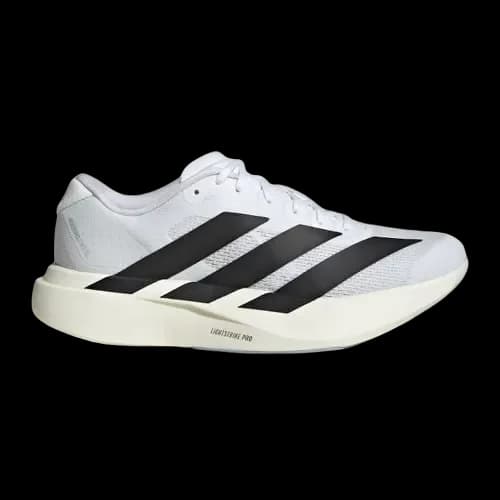 Adidas Adizero Evo SL Adidas Adizero Evo SL | 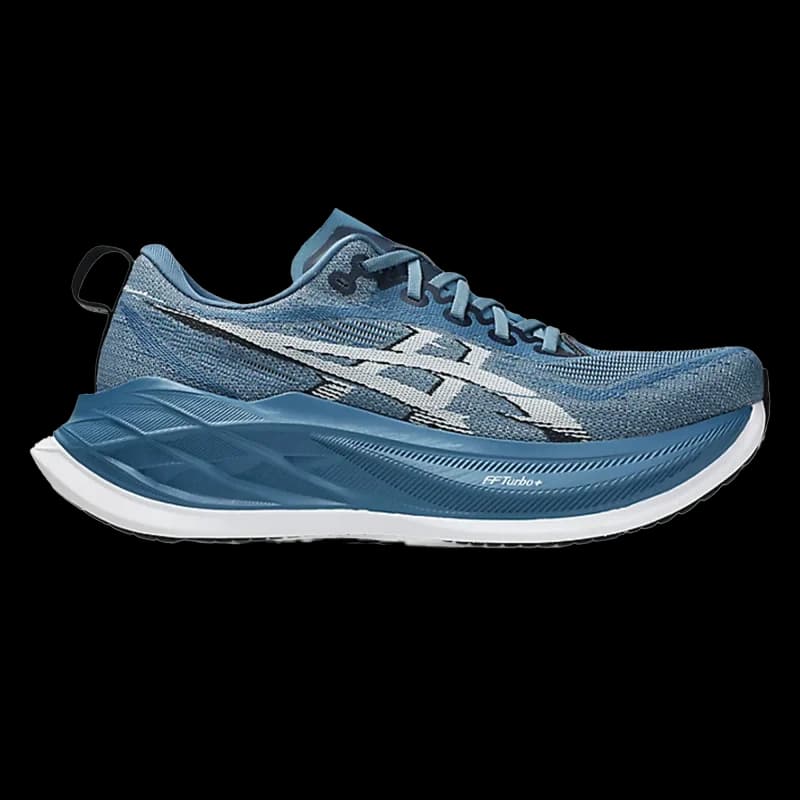 ASICS Superblast 2 ASICS Superblast 2 | 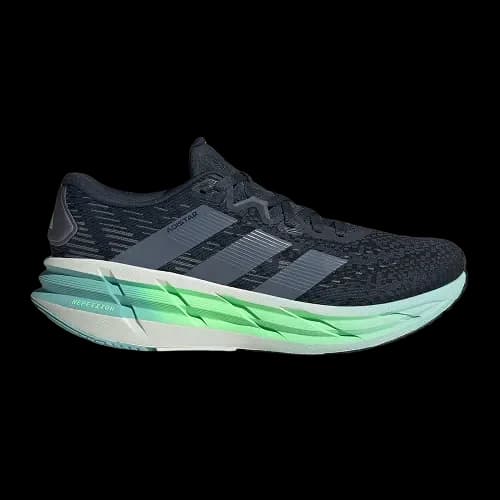 Adidas Adistar 4 Adidas Adistar 4 | 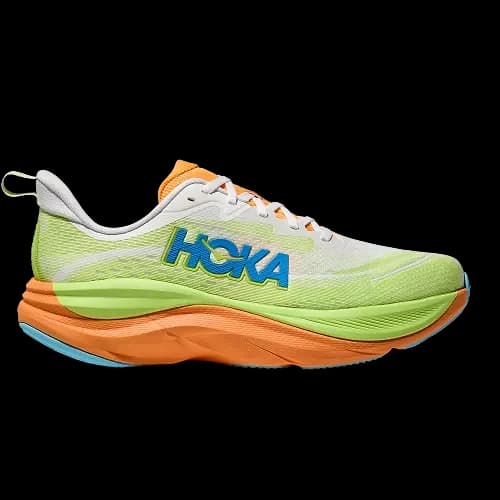 Hoka Skyflow Hoka Skyflow | |
|---|---|---|---|---|---|
| Pick it for | This page | Lighter | Faster | More stable | Lower drop |
| Drop | 10 mm | 7 mm | 8 mm | 5 mm | 5 mm |
| Heel stack | 39 mm | 37 mm | 45 mm | 43 mm | 39 mm |
| Weight | 283 g | 230 g | 247 g | 262 g | 283 g |
| Support | Neutral | Neutral | Neutral | Neutral | Neutral |
Questions runners ask
Does the adidas Ultraboost 5 fit true to size?
Yes. RunRepeat’s readers vote it true to size, and Runner’s World Germany notes it follows the normal size chart again, unlike the Ultraboost Light. The fit is roomy, so narrow feet may feel the heel move.
Is the Ultraboost 5 good for running?
For easy running, yes. RunRepeat calls it the most running-ready Ultraboost so far and Runner’s World Germany a good daily trainer for easy and long runs. No test recommends it for fast sessions.
Ultraboost 5 or Ultraboost Light?
The Ultraboost 5 has more foam, a roomier and more breathable upper, a slightly lower measured weight and normal sizing. RunRepeat and Runner’s World Germany both see it as an improvement.
Is the Ultraboost 5 good for wide feet?
It is one of the better options in a standard width: RunRepeat measured a 78.6 mm toe box and calls it the most spacious Ultraboost yet, and i-run notes the knit adapts to wider feet.
What is the stack height and drop of the Ultraboost 5?
adidas lists 39 mm at the heel and 29 mm at the forefoot, a 10 mm drop. RunRepeat measured 35.2 mm and 24.6 mm, with a 10.6 mm drop. Only 2 of the 234 neutral road shoes in our catalogue list a higher drop.
Is the Ultraboost 5 good for walking?
Yes. RunRepeat rates it suitable for daily wear, and its durable heel padding and grippy outsole suit long days on foot. Believe in the Run see it as one of the better run and lifestyle combinations.
Sources
- RunRepeat, adidas Ultraboost 5 lab review. Accessed Oct 13, 2026.
- Runner’s World Germany, Noch mehr Komfort: Der neue Adidas UB5 (Urs Weber). Accessed Oct 13, 2026.
- Runpack, adidas Ultraboost 5 : test et avis (Gaël Taillandier). Accessed Oct 13, 2026.
- Carreras de Montaña, ADIDAS ULTRABOOST 5 (Sergio Mayayo, July 2024). Accessed Oct 13, 2026.
- Believe in the Run, Adidas Ultraboost 5/5X video review (August 2024). Accessed Oct 13, 2026.
- i-run, adidas UltraBOOST 5 (homme). Accessed Oct 13, 2026.
- Strideprint, Strideprint running shoe catalogue (ranks computed on 2026-10-13). Accessed Oct 13, 2026.
- cat: Strideprint catalogue, 395 shoes
How we review. We read published tests, brand and retailer pages and lab measurements, cross-check the figures and flag where they disagree. We did not test this shoe ourselves. Last updated October 13, 2026.