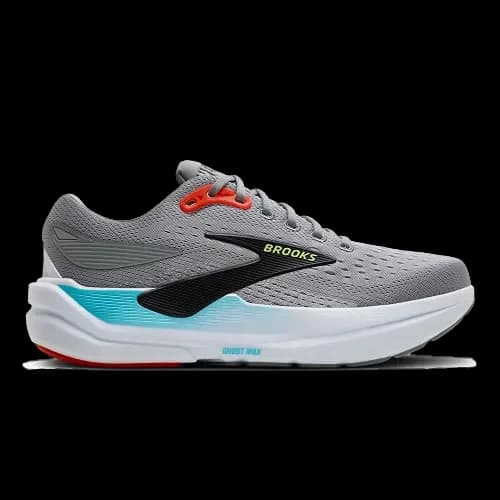
Brooks Ghost Max 3 review
Brooks’s high-cushion Ghost, refitted: the same DNA Loft v3 midsole and 6 mm drop as the Ghost Max 2, under a wider, plusher upper and a smoother rocker.
- Drop
- 6 mm
- Heel stack
- 39 mm
- Forefoot
- 33 mm
- Weight
- 306 g
- Support
- Neutral
- Plate
- None
Our verdict
Roomy, steady, and in no hurry.
The Ghost Max 3 is a heavy, high-cushion neutral trainer with a broad, stable base and a roomy, padded upper that leaves space for orthotics. It suits runners and walkers who land midfoot or forefoot and keep the pace easy, less so heel strikers looking for a plush landing or anyone chasing speed.
Strong points
- Roomy, well-padded upper with space for orthotics
- Wider toe box than the regular Ghost: 73.4 mm in RunRepeat’s lab
- Stable for a neutral shoe, from a broad and torsionally stiff base
- Hard-wearing outsole: only 0.8 mm lost in RunRepeat’s wear test
- Fixes the short fit and clunky heel of the Ghost Max 2
Weak points
- Heavy: 306 g in a men’s US 9; only 4 of 149 neutral road shoes in our catalogue weigh more
- Low energy return: 51.3 percent at the heel in RunRepeat’s lab
- Heel shock absorption trails most max-cushion shoes, per RunRepeat
- Runs warm, and the tongue tends to slide sideways
Who it fits
- You land midfoot or forefoot
- You wear orthotics or spend all day on your feet
- Your foot needs volume
- You want one easy-day shoe that lasts
Who should skip it
- You land hard on your heel
- Your foot is narrow
- You want any speed
Shoe profile
Where the Ghost Max 3 sits among the 395 shoes in our catalogue.
| Axis | Ghost Max 3 |
|---|---|
| Cushioning | 52 |
| Lightness | 10 |
| Stability | 30 |
| Drop | 20 |
| Response | 6 |
Fig. 1 · How to read it. Each axis runs from 0 at the centre to 100 at the edge. Cushioning, lightness and drop are the shoe’s rank in the catalogue from listed figures; stability and response are scored from the support type, the plate, the rocker and the intended use. The dotted grey line is the catalogue median. Source: Strideprint catalogue (cat).
Where it sits in the catalogue
Weight306 g, heavier than 90% of shoes
Drop6 mm, lower than 59% of shoes
Heel stack39 mm, higher than 52% of shoes
Forefoot stack33 mm, higher than 60% of shoes
How it feels
Written from 6 published tests. We quote measurements, not impressions we did not have.
Plenty of foam, more at the front. DNA Loft v3 on a listed 39 mm heel: better protection at the forefoot than at the heel in both labs; the feel splits testers.
Neutral, but planted. A wide sole and a stiff platform, 17.3 Nm in RunRepeat’s torsion test, keep it steady; two testers still felt it give way.
Smooth roll, little return. Energy return about 51 percent in RunRepeat’s lab; the rocker rolls you through rather than the foam springing back.
Plenty of foam, more at the front. A full-length DNA Loft v3 midsole, nitrogen-infused, sits on a listed 39 mm at the heel and 33 mm at the forefoot. That heel height is not extreme by current standards: 78 of the 183 neutral road shoes with a listed heel stack in our catalogue stand taller.
RunRepeat measured the foam at 33.8 on the AC scale, a little softer than its lab average, but found heel shock absorption behind most max-cushion shoes; RTINGS scores cushioning 7.6 at the forefoot against 7.2 at the heel. Doctors of Running felt it soft and compliant; Fleet Feet testers and OutdoorGearLab felt it firm and protective.
Neutral, but planted. There is no post or guide rail. Doctors of Running trace the stability to a wide sole, a deep guidance line, raised sidewalls and a stiff platform, and RunRepeat measured 17.3 Nm of torsional rigidity against 12.6 Nm on the Ghost 17.
Not everyone agrees. OutdoorGearLab found it less supportive than its width suggests, and a heavier Believe in the Run tester felt his foot roll in on one side and saw wear on the inner heel.
Smooth roll, little return. RunRepeat measured energy return of 51.3 percent at the heel and 50.5 percent at the forefoot, both below average, and RTINGS also scores rebound low. Doctors of Running found it heavy for the first 10 to 15 miles before it loosened up.
The GlideRoll geometry does the moving. Doctors of Running describe a smooth heel bevel and an early forefoot rocker that make up for a sole that barely flexes. Believe in the Run’s heavier tester still found it clunky and slappy at times.
Read more
Plenty of foam, more at the front. A full-length DNA Loft v3 midsole, nitrogen-infused, sits on a listed 39 mm at the heel and 33 mm at the forefoot. That heel height is not extreme by current standards: 78 of the 183 neutral road shoes with a listed heel stack in our catalogue stand taller.
RunRepeat measured the foam at 33.8 on the AC scale, a little softer than its lab average, but found heel shock absorption behind most max-cushion shoes; RTINGS scores cushioning 7.6 at the forefoot against 7.2 at the heel. Doctors of Running felt it soft and compliant; Fleet Feet testers and OutdoorGearLab felt it firm and protective.
Neutral, but planted. There is no post or guide rail. Doctors of Running trace the stability to a wide sole, a deep guidance line, raised sidewalls and a stiff platform, and RunRepeat measured 17.3 Nm of torsional rigidity against 12.6 Nm on the Ghost 17.
Not everyone agrees. OutdoorGearLab found it less supportive than its width suggests, and a heavier Believe in the Run tester felt his foot roll in on one side and saw wear on the inner heel.
Smooth roll, little return. RunRepeat measured energy return of 51.3 percent at the heel and 50.5 percent at the forefoot, both below average, and RTINGS also scores rebound low. Doctors of Running found it heavy for the first 10 to 15 miles before it loosened up.
The GlideRoll geometry does the moving. Doctors of Running describe a smooth heel bevel and an early forefoot rocker that make up for a sole that barely flexes. Believe in the Run’s heavier tester still found it clunky and slappy at times.
Which runs it’s for
| Run | Fit | Why | Source |
|---|---|---|---|
| Easy runs | Made for it | What every test points it at: relaxed daily miles with plenty of foam underfoot. | RunRepeat, Doctors of Running, Believe in the Run |
| Recovery runs | Made for it | Believe in the Run sees it as a natural recovery-day shoe; nothing in it asks you to push. | Believe in the Run |
| Long runs | Made for it | At a steady, slow pace. Fleet Feet testers liked it for longer miles, and RunRepeat for longer runs than the regular Ghost. | RunRepeat, Fleet Feet |
| Walking | Made for it | Doctors of Running class it as a daily trainer for running and walking, and RunRepeat says it works as a casual shoe too. | RunRepeat, Doctors of Running, Fleet Feet |
| Marathon race | Can do | i-run pitches it at long distances up to the marathon at an easy pace. For a time goal, RunRepeat and RTINGS both score it low for racing. | RunRepeat, RTINGS, i-run |
| Tempo | Not for it | RunRepeat scores it 43 for tempo work and found the midsole flat once the pace rises. | RunRepeat |
Source: RunRepeat, Doctors of Running, Believe in the Run, Fleet Feet, RTINGS, i-run
What the tests say
Published tests agree the Ghost Max 3 is comfortable, heavy, slow by design and roomy inside. They part ways on how stable it really is, and on whether the extra width is a welcome fit or a loose one.
| Test | Type | Our reading | In one sentence | Source |
|---|---|---|---|---|
| RunRepeat | Lab | Positive | RunRepeat scores it 83 out of 100: a comfort-first, very stable easy-run shoe for midfoot and forefoot strikers, dull at speed. | Read |
| Doctors of Running | Review | Positive | Doctors of Running grade the design B plus: a clear fix of the Ghost Max 2’s fit and heel, heavy and not very responsive. | Read |
| Believe in the Run | Review | Positive | Believe in the Run sees a solid, reliable daily trainer, and its heavier tester calls it the best Ghost Max yet. | Read |
| Fleet Feet | Review | Mixed | Fleet Feet’s testers split: reliably pleasant and good for long days on foot for two, too flat for the third. | Read |
| OutdoorGearLab | Review | Mixed | OutdoorGearLab gives 65 out of 100: protective on easy miles, but clunky and warm, and behind its main rivals. | Read |
They agree
- Heavy for a daily trainerRunRepeat weighed 303 g and RTINGS 302.7 g in a men’s US 9, close to the 306 g Brooks lists according to Doctors of Running.
- Built for easy pacesRunRepeat and RTINGS both measured low energy return, Doctors of Running keep it for easy efforts, and Fleet Feet testers ruled out speed work.
- A comfortable, padded upperRunRepeat, Doctors of Running, Believe in the Run and Fleet Feet all praise the thick tongue and padded collar, and two of them note room for orthotics.
They split
- How stable is it?RunRepeat scores its stability 90 and Doctors of Running grade it A minus as a stable neutral shoe. OutdoorGearLab found it lacking in stability, and Believe in the Run’s heavier tester felt his foot roll in on one side.
- Roomy or sloppyDoctors of Running welcome a slightly wide fit with room to spare. Believe in the Run warns narrow feet off, and OutdoorGearLab calls the fit slightly wide and sloppy.
- Soft or firmDoctors of Running describe a soft, compliant midsole, and RunRepeat measured it slightly softer than its lab average. Fleet Feet testers and OutdoorGearLab felt it firm.
How it’s built
A simple, sturdy build: a padded double jacquard upper, a full-length DNA Loft v3 midsole shaped into Brooks’s GlideRoll rocker, a thick removable insole and a broad rubber outsole.
A padded double jacquard upper, full-length DNA Loft v3 in a GlideRoll rocker shape, a 5.8 mm removable insole and a hard-wearing 3.3 mm rubber outsole.
| # | Part | Measure |
|---|---|---|
| 1 | UpperDouble jacquard mesh | Breathability 3 / 5 |
| 2 | Tongue | 8.8 mm |
| 3 | Heel | Stiffness 4 / 5 |
| 4 | MidsoleDNA Loft v3, GlideRoll | Hardness 33.8 AC |
| 5 | Insole | 5.8 mm |
| 6 | Outsole | 3.3 mm |
Fig. 3 · Side profile. Stack heights to scale (listed: 39 mm heel, 33 mm forefoot; measured: 3.3 mm outsole); the split between the two foams is not measured and is drawn at mid-height. Dashed: insole, hidden. Sources: Believe in the Run, RunRepeat, Doctors of Running, OutdoorGearLab.
Upper. Redesigned for this version, wider and better padded according to Doctors of Running. RunRepeat scored breathability 3 out of 5, below its average, and found the ventilation holes backed by an inner layer; OutdoorGearLab found it warm.
Tongue. Very thick at 8.8 mm, with two lace loops instead of a gusset. Comfortable, but Doctors of Running and OutdoorGearLab both found it sliding sideways.
Heel. A stiff counter, 4 out of 5 in RunRepeat’s test, with generous padding and no pull tab. Doctors of Running warn that sensitive heels may notice the stiffness.
Midsole. Nitrogen-infused DNA Loft v3 runs full length, measured at 33.8 AC by RunRepeat. Doctors of Running explain that the folds cut into the heel and forefoot guide how the foam compresses, for a smoother landing and toe-off. The platform is stiff: 17.3 Nm in torsion and 18.7 N to bend, both above RunRepeat’s averages.
Insole. Thick and removable, 5.8 mm in RunRepeat’s lab, which makes swapping in a custom orthotic easy according to Doctors of Running.
Outsole. Broad rubber coverage with deep flex grooves, 3.3 mm thick. RunRepeat measured wet traction of 0.49, a little below average, while OutdoorGearLab had no grip issues on wet asphalt or gravel.
Read more
A simple, sturdy build: a padded double jacquard upper, a full-length DNA Loft v3 midsole shaped into Brooks’s GlideRoll rocker, a thick removable insole and a broad rubber outsole.
1. Upper. Redesigned for this version, wider and better padded according to Doctors of Running. RunRepeat scored breathability 3 out of 5, below its average, and found the ventilation holes backed by an inner layer; OutdoorGearLab found it warm.
2. Tongue. Very thick at 8.8 mm, with two lace loops instead of a gusset. Comfortable, but Doctors of Running and OutdoorGearLab both found it sliding sideways.
3. Heel. A stiff counter, 4 out of 5 in RunRepeat’s test, with generous padding and no pull tab. Doctors of Running warn that sensitive heels may notice the stiffness.
4. Midsole. Nitrogen-infused DNA Loft v3 runs full length, measured at 33.8 AC by RunRepeat. Doctors of Running explain that the folds cut into the heel and forefoot guide how the foam compresses, for a smoother landing and toe-off. The platform is stiff: 17.3 Nm in torsion and 18.7 N to bend, both above RunRepeat’s averages.
5. Insole. Thick and removable, 5.8 mm in RunRepeat’s lab, which makes swapping in a custom orthotic easy according to Doctors of Running.
6. Outsole. Broad rubber coverage with deep flex grooves, 3.3 mm thick. RunRepeat measured wet traction of 0.49, a little below average, while OutdoorGearLab had no grip issues on wet asphalt or gravel.
Durability. A strong point. The outsole lost 0.8 mm in RunRepeat’s wear test, against a 1.1 mm average, and Doctors of Running saw no visible wear after 30 miles. One Believe in the Run tester did notice midsole wear on the inner heel.
Durability. A strong point. The outsole lost 0.8 mm in RunRepeat’s wear test, against a 1.1 mm average, and Doctors of Running saw no visible wear after 30 miles. One Believe in the Run tester did notice midsole wear on the inner heel.
Specs, listed and measured
Every figure carries its source.
Drop, mm
Heel stack, mm
Forefoot stack, mm
Weight (men’s), g
| Spec | Listed | Measured |
|---|---|---|
| Drop |
|
|
| Heel stack |
|
|
| Forefoot stack |
|
|
| Weight, men’s US 9, brand figure (Doctors of Running, Believe in the Run, Fleet Feet) |
|
|
| Support |
| – |
| Plate |
| – |
| Surface |
| – |
| Release year |
| – |
Fig. 4 · Listed vs measured. Bars start at zero. Sources: Doctors of Running, RunRepeat, RTINGS, OutdoorGearLab.
Lab measurements
| Spec | Measured |
|---|---|
| Midsole hardness |
|
| Energy return (heel) |
|
| Torsional rigidity |
|
| Flex force |
|
| Heel counter stiffness |
|
| Toe box width |
|
| Spec | Measured |
|---|---|
| Toe box height |
|
| Traction coefficient |
|
| Breathability |
|
| Outsole thickness |
|
| Insole thickness |
|
| Tongue thickness |
|
Sizing and fit
Take your usual size; the question is volume, which is generous.
Length
True to size
Widths
standard, wide, and extra wide
Toe room
Generous. RunRepeat measured a 73.4 mm toe box, against 69.6 mm on the Ghost 17, and 28.1 mm of height. Doctors of Running felt a mild taper at first that eased with wear.
RunRepeat, Doctors of Running
Full sizing notes from testers
Doctors of Running and Fleet Feet found it true to size, and RunRepeat’s readers agree in a poll of 139 owners. Doctors of Running note this fixes the Ghost Max 2, which ran short and pinched the toes.
The fit is wide. Doctors of Running found the forefoot and midfoot slightly wide with a stretchy upper, Believe in the Run called it very wide, and OutdoorGearLab needed to cinch the laces hard. The tongue has no gusset and slides sideways on longer runs, per Doctors of Running and OutdoorGearLab; the extra top eyelet allows a runner’s loop for heel lockdown.
RunRepeat lists normal, wide and extra-wide for men, with availability that varies by country. The men’s page we read at i-run lists only the standard width.
RunRepeat, Doctors of Running, Believe in the Run, Fleet Feet, OutdoorGearLab, i-run
Vs Ghost Max 2
On paper almost nothing moved: same foam, same listed stack and drop. On foot, the new upper and a smoother rocker fix what testers disliked about the Ghost Max 2.
Keep the Ghost Max 2 only if its length works for you and you liked its slightly livelier feel, which RTINGS rates above version 3. Note that the line has already moved on: the Ghost Max 4 is lighter, with a higher measured drop and more energy return in RunRepeat’s lab.
Version history: Ghost Max 2 to Ghost Max 3
New double jacquard upper. Wider and better padded, with a cleaner look closer to the regular Ghost. (Doctors of Running, Believe in the Run, Fleet Feet)
Length fixed. Doctors of Running found the Ghost Max 2 ran short and crushed the toes; version 3 fits true to size. (Doctors of Running)
Smoother transitions. Doctors of Running found a smoother heel bevel and a longer forefoot rocker in place of the clunky heel of the Ghost Max 2, and i-run also lists smoother heel-to-toe transitions. (Doctors of Running, i-run)
Same foam, softer feel. Fleet Feet confirm the same DNA Loft v3 midsole and listed stack. Believe in the Run and RTINGS still found version 3 softer and more comfortable, and RTINGS a little less responsive. (Believe in the Run, RTINGS, Fleet Feet)
Alternatives compared
Each one fixes one thing the Ghost Max 3 does not do.
| Brooks Ghost Max 3 | 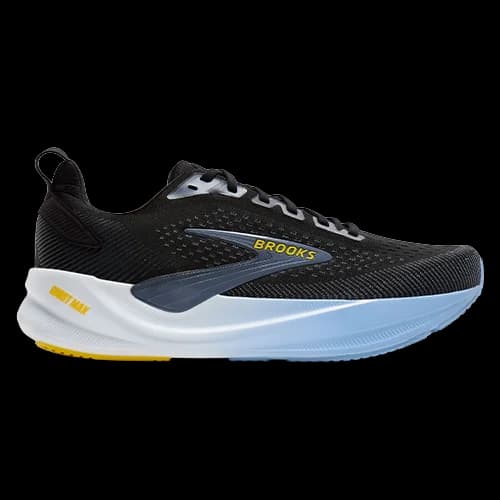 Brooks Ghost Max 4 Brooks Ghost Max 4 | 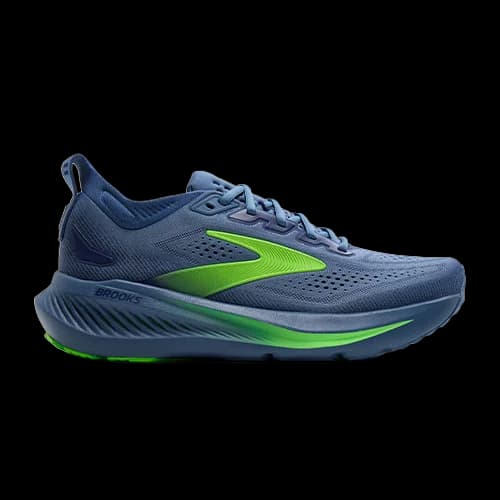 Brooks Glycerin 23 Brooks Glycerin 23 | 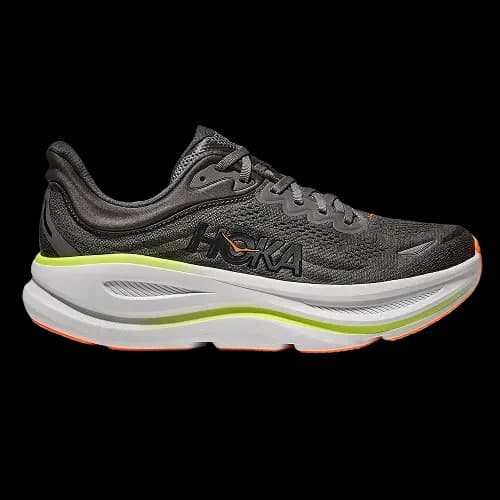 Hoka Bondi 9 Hoka Bondi 9 | 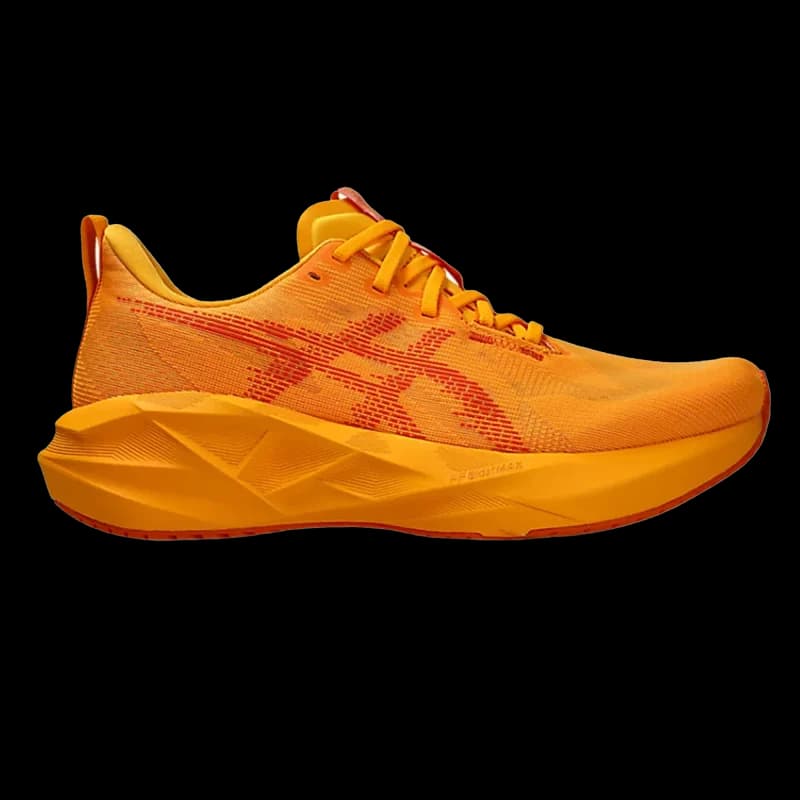 ASICS Novablast 5 ASICS Novablast 5 | |
|---|---|---|---|---|---|
| Pick it for | This page | Lighter | Higher drop | Softer | Faster |
| Drop | 6 mm | 6 mm | 8 mm | 5 mm | 8 mm |
| Heel stack | 39 mm | 40 mm | 38 mm | 43 mm | 41.5 mm |
| Weight | 306 g | 292 g | 301 g | 297 g | 252 g |
| Support | Neutral | Neutral | Neutral | Neutral | Neutral |
Questions runners ask
Is the Brooks Ghost Max 3 true to size?
Yes. Doctors of Running and Fleet Feet found it true to size, and RunRepeat’s poll of 139 owners agrees. It is the volume that stands out: several testers found it wide, so runners with narrow feet should lace it firmly or try it on before committing.
Is the Ghost Max 3 good for wide feet?
It is one of the roomier Brooks trainers. RunRepeat measured a 73.4 mm toe box, wider than the regular Ghost 17, and lists wide and extra-wide versions for men. In Europe, wide sizes are harder to find: the i-run page we read lists only the standard width.
Ghost Max 3 or Ghost Max 4: which should I choose?
The Ghost Max 4 is the newer, lighter shoe: RunRepeat weighed 286 g against 303 g and measured more energy return, and RTINGS finds it more versatile. The Ghost Max 3 keeps slightly more impact protection and a lower measured drop, which suits midfoot landings and easy, slow miles.
Does the Ghost Max 3 work with orthotics or flat feet?
The Ghost Max 3 takes orthotics well: Doctors of Running point to a thick removable insole and a wide, low-arched platform, and a Fleet Feet tester with a custom orthotic had plenty of room. It is a neutral shoe, not a treatment for flat feet; if you have pain, see a professional first.
Is the Ghost Max 3 good for walking or standing all day?
Yes. Doctors of Running review it as a running and walking shoe, a Fleet Feet tester recommends it for long periods on your feet, and RunRepeat rates it as a casual sneaker too. The stiff, rockered sole does the rolling for you, which helps on long days.
Is the Ghost Max 3 good for heel strikers?
Less than for midfoot or forefoot strikers. RunRepeat found its heel shock absorption weaker than most max-cushion shoes and advises heel strikers to look elsewhere, while the forefoot is well protected. If you land hard on your heel, a higher drop shoe such as the Glycerin 23 may feel softer.
Sources
- RunRepeat, Brooks Ghost Max 3 lab review. Accessed Oct 13, 2026.
- Doctors of Running, Brooks Ghost Max 3 Review (Matt Klein, May 2025). Accessed Oct 13, 2026.
- Believe in the Run, Brooks Ghost Max 3 Review. Accessed Oct 13, 2026.
- RTINGS, Brooks Ghost Max 3 running shoe review. Accessed Oct 13, 2026.
- Fleet Feet, Brooks Ghost Max 3 Review: Cruising in Comfort. Accessed Oct 13, 2026.
- OutdoorGearLab, Brooks Ghost Max 3 Review (Nathaniel Bailey, January 2026). Accessed Oct 13, 2026.
- i-run, Brooks Ghost Max 3. Accessed Oct 13, 2026.
- Strideprint, Strideprint running shoe catalogue (ranks computed on 2026-10-13). Accessed Oct 13, 2026.
- brooksrunning.com · Drop, Support, Plate, and Surface, listed
- cat: Strideprint catalogue, 395 shoes
How we review. We read published tests, brand and retailer pages and lab measurements, cross-check the figures and flag where they disagree. We did not test this shoe ourselves. Last updated October 13, 2026.