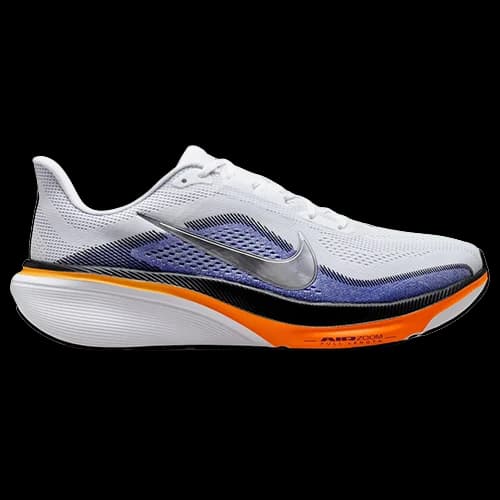
Nike Pegasus 42 review
Nike’s everyday trainer gets its first full-length Air Zoom unit, a roomier toe box and new rubber, on the same 10 mm drop platform.
- Drop
- 10 mm
- Heel stack
- 37 mm
- Forefoot
- 27 mm
- Weight
- 292 g
- Support
- Neutral
- Plate
- None
Our verdict
Built for the heel, firm up front.
The Pegasus 42 is a durable, high-drop daily trainer whose cushioning sits mostly under the heel, with a thin and firm forefoot. It makes sense for runners who land on their heel and run steady, mid-length miles, much less for those who land on the front of the foot. Only 2 of the 234 neutral road shoes in our catalogue list a higher drop.
Strong points
- Heel-biased geometry that rewards a heel landing
- Wider, more anatomical toe box than the Pegasus 41
- Outsole grip nearly doubled in RunRepeat’s traction test
- Firmly held heel and a smoother toe-off
- Wide versions available
Weak points
- Forefoot measured at 22 mm against 27 mm listed
- Limited energy return despite the full-length Air unit
- Among the heavier trainers in its class
- Platform judged not stable enough for heavier runners
- Mesh at the front of the upper scored lowest in RunRepeat’s abrasion test
Who it fits
- You land on your heel
- Your runs are steady and mid-length
- The Pegasus 41 pinched your toes
- You run on wet or mixed surfaces
Who should skip it
- You land midfoot or on your forefoot
- You want bounce or a light shoe
- You are a heavier runner looking for stability
Shoe profile
Where the Pegasus 42 sits among the 395 shoes in our catalogue, and what changed from the Pegasus 41.
| Axis | Pegasus 42 | Pegasus 41 | Change |
|---|---|---|---|
| Cushioning | 33 | 33 | = |
| Lightness | 20 | 28 | −8 |
| Stability | 30 | 30 | = |
| Drop | 84 | 84 | = |
| Response | 6 | 6 | = |
Fig. 1 · How to read it. Each axis runs from 0 at the centre to 100 at the edge. Cushioning, lightness and drop are the shoe’s rank in the catalogue from listed figures; stability and response are scored from the support type, the plate, the rocker and the intended use. The dotted grey line is the catalogue median. Source: Strideprint catalogue (cat).
Where it sits in the catalogue
Weight292 g, heavier than 80% of shoes
Drop10 mm, higher than 84% of shoes
Heel stack37 mm, lower than 58% of shoes
Forefoot stack27 mm, lower than 78% of shoes
How it feels
Written from 3 published tests. We quote measurements, not impressions we did not have.
Soft enough at the back, lean at the front. ReactX over a full-length Air Zoom unit gives moderate cushioning with good ground feel, on the firmer side, and a leaner forefoot.
Neutral, with a well-held heel. No support feature: a firmly held heel and a classic neutral platform. Heavier runners or strong inward rollers will want a broader base.
More nudge than spring. The Air unit gives a nudge rather than a spring, and the stronger rocker smooths toe-off. The lab saw no big jump in energy return.
Soft enough at the back, lean at the front. The midsole pairs ReactX foam with a full-length Air Zoom unit, the first in the Pegasus line. Nike also added 3 mm of foam under the toes by curving the forefoot upward, without changing the stack height.
The result is moderate cushioning with good ground feel rather than plushness. RunRepeat measured the foam at 37.6 on the AC durometer scale, on the firmer side of balanced, and found the forefoot less cushioned than its rivals. Testers describe the Air unit as a gentle push under the ball of the foot, noticeable but subtle.
Neutral, with a well-held heel. There is no support feature. The heel is held firmly, with a heel counter RunRepeat rated 4 out of 5 for stiffness, and Runner’s World Germany praises the heel fit.
Beyond the heel, the platform is a classic neutral one. Runners whose foot rolls in noticeably, or heavier runners, will find more help in a shoe with a broader base or guidance.
More nudge than spring. Nike claims over 15 percent more energy from the full-length Air unit. RunRepeat’s lab did not see a big jump, finding energy return still limited.
What testers do feel is a smoother ride through toe-off from the increased rocker, and Runner’s World Germany found the shoe more enjoyable as the pace went up than at a slow jog.
Read more
Soft enough at the back, lean at the front. The midsole pairs ReactX foam with a full-length Air Zoom unit, the first in the Pegasus line. Nike also added 3 mm of foam under the toes by curving the forefoot upward, without changing the stack height.
The result is moderate cushioning with good ground feel rather than plushness. RunRepeat measured the foam at 37.6 on the AC durometer scale, on the firmer side of balanced, and found the forefoot less cushioned than its rivals. Testers describe the Air unit as a gentle push under the ball of the foot, noticeable but subtle.
Neutral, with a well-held heel. There is no support feature. The heel is held firmly, with a heel counter RunRepeat rated 4 out of 5 for stiffness, and Runner’s World Germany praises the heel fit.
Beyond the heel, the platform is a classic neutral one. Runners whose foot rolls in noticeably, or heavier runners, will find more help in a shoe with a broader base or guidance.
More nudge than spring. Nike claims over 15 percent more energy from the full-length Air unit. RunRepeat’s lab did not see a big jump, finding energy return still limited.
What testers do feel is a smoother ride through toe-off from the increased rocker, and Runner’s World Germany found the shoe more enjoyable as the pace went up than at a slow jog.
Which runs it’s for
| Run | Fit | Why | Source |
|---|---|---|---|
| Easy runs | Made for it | Its main job: steady daily miles at a comfortable pace, heel first. | RunRepeat, Believe in the Run |
| Recovery runs | Made for it | Predictable and secure for an easy jog the day after a hard session. | Believe in the Run |
| Long runs | Can do | Fine for heel strikers, though Believe in the Run sees it at its best below about 8 miles. The thin forefoot shows more as the distance grows. | Believe in the Run, RunRepeat |
| Tempo | Can do | Runner’s World Germany found it livelier at faster paces than at a jog. It is still a heavy shoe for real speed work. | Runner’s World Germany, Believe in the Run |
| Marathon race | Not for it | Too heavy and too firm up front for race day. Train in it, race in something else. | RunRepeat, Believe in the Run |
Source: RunRepeat, Believe in the Run, Runner’s World Germany
What the tests say
RunRepeat, Believe in the Run and Runner’s World Germany agree the Pegasus 42 is a heel-first, durable daily trainer with a firmer forefoot. They read the new Air unit and the faster paces differently.
| Test | Type | Our reading | In one sentence | Source |
|---|---|---|---|---|
| RunRepeat | Lab | Mixed | RunRepeat scores it 80 out of 100, in its Good band, with a safe design, a firmer forefoot and a toe box that tapers noticeably. | Read |
| Believe in the Run | Review | Mixed | Believe in the Run places it in its B tier, calling it probably the best Pegasus in recent memory, with limited range beyond easy runs. | Read |
They agree
- Built around a heel landingRunRepeat’s measurements and Runner’s World Germany’s testers both point to a heel-biased shoe, with most of the cushioning at the back.
- Secure heelRunRepeat rated the heel counter stiff, and Runner’s World Germany singles out the heel fit for praise.
- True to sizeRunRepeat’s reader vote and Believe in the Run both land on your usual size.
They split
- Does the full-length Air unit add pop?RunRepeat’s lab found energy return still limited. Runner’s World Germany enjoyed the shoe more as the pace went up than at a slow jog.
- Weight and stabilityBelieve in the Run counts it among the heavier trainers in its class, and Runner’s World Germany judged the platform not stable enough for heavier runners. RunRepeat found the heel held firmly.
How it’s built
An engineered mesh upper, a midsole of ReactX foam carrying a full-length Air Zoom unit, and high-abrasion rubber in a waffle-inspired pattern underfoot.
Engineered mesh upper, ReactX midsole carrying a full-length Air Zoom unit, no plate, and a high-abrasion rubber outsole in a waffle-inspired pattern with flex grooves.
| # | Part | Measure |
|---|---|---|
| 1 | UpperEngineered mesh | Breathability 87 BR |
| 2 | Tongue | 9.1 mm |
| 3 | Heel | Stiffness 4 / 5 |
| 4 | MidsoleReactX and full-length Air Zoom | 37.6 AC |
| 5 | Insole | 5.0 mm |
| 6 | Outsole | 2.6 mm |
Fig. 3 · Side profile. Stack heights to scale (listed: 37 mm heel, 27 mm forefoot; measured: 2.6 mm outsole); the split between the two foams is not measured and is drawn at mid-height. Dashed: insole, hidden. Sources: Believe in the Run, RunRepeat, Running Warehouse. BR: RunRepeat’s breathability scale (not a score out of 100).
Upper. A light, breathable engineered mesh with 3D-printed details for hold and a midfoot band for lockdown. RunRepeat scored its breathability well above the average of the shoes it tests. The front is wider and more anatomical than on the Pegasus 41.
Tongue. Semi-gusseted, attached partway along the sides, with 9.1 mm of padding in RunRepeat’s measurement and a new loop that keeps it centred. Running Warehouse describes a plush, softly lined tongue and collar.
Heel. A heel counter RunRepeat rated 4 out of 5 for stiffness, under an extended collar with a slight tail that helps you pull the shoe on.
Midsole. ReactX foam acts as the carrier for a full-length Air Zoom unit that is curved for propulsion, encased in foam and tuned in pressure by shoe size. A stronger toe curve adds 3 mm of foam under the toe tips without changing the stack height. There is no plate.
Insole. A removable, molded sockliner, measured at 5.0 mm.
Outsole. High-abrasion rubber in a waffle-inspired pattern with flex grooves. RunRepeat describes three zones: a rubber perimeter, a textured forefoot and an exposed centre, 2.6 mm thick. Its traction score rose to 0.45, from 0.25 on the Pegasus 41.
Read more
An engineered mesh upper, a midsole of ReactX foam carrying a full-length Air Zoom unit, and high-abrasion rubber in a waffle-inspired pattern underfoot.
1. Upper. A light, breathable engineered mesh with 3D-printed details for hold and a midfoot band for lockdown. RunRepeat scored its breathability well above the average of the shoes it tests. The front is wider and more anatomical than on the Pegasus 41.
2. Tongue. Semi-gusseted, attached partway along the sides, with 9.1 mm of padding in RunRepeat’s measurement and a new loop that keeps it centred. Running Warehouse describes a plush, softly lined tongue and collar.
3. Heel. A heel counter RunRepeat rated 4 out of 5 for stiffness, under an extended collar with a slight tail that helps you pull the shoe on.
4. Midsole. ReactX foam acts as the carrier for a full-length Air Zoom unit that is curved for propulsion, encased in foam and tuned in pressure by shoe size. A stronger toe curve adds 3 mm of foam under the toe tips without changing the stack height. There is no plate.
5. Insole. A removable, molded sockliner, measured at 5.0 mm.
6. Outsole. High-abrasion rubber in a waffle-inspired pattern with flex grooves. RunRepeat describes three zones: a rubber perimeter, a textured forefoot and an exposed centre, 2.6 mm thick. Its traction score rose to 0.45, from 0.25 on the Pegasus 41.
Durability. Outsole durability is a strength: the rubber wore only 0.8 mm in RunRepeat’s abrasion test, and the heel padding held well. The weak spot is the mesh at the front of the upper, which scored 1 out of 5 in the same lab’s abrasion test.
Durability. Outsole durability is a strength: the rubber wore only 0.8 mm in RunRepeat’s abrasion test, and the heel padding held well. The weak spot is the mesh at the front of the upper, which scored 1 out of 5 in the same lab’s abrasion test.
Specs, listed and measured
Every figure carries its source.
Drop, mm
Heel stack, mm
Forefoot stack, mm
Weight (men’s), g
| Spec | Listed | Measured |
|---|---|---|
| Drop |
|
|
| Heel stack |
|
|
| Forefoot stack |
|
|
| Weight, US M9 |
|
|
| Support |
| – |
| Plate |
| – |
| Surface |
| – |
Fig. 4 · Listed vs measured. Bars start at zero. Sources: Believe in the Run, RunRepeat, Running Warehouse.
Lab measurements
| Spec | Measured |
|---|---|
| Midsole hardness |
|
| Energy return (heel) |
|
| Torsional rigidity |
|
| Heel counter stiffness |
|
| Traction coefficient |
|
| Breathability |
|
| Spec | Measured |
|---|---|
| Toe box width |
|
| Toe box height |
|
| Outsole thickness |
|
| Insole thickness |
|
| Tongue thickness |
|
| Flex force |
|
BR: RunRepeat’s breathability scale (not a score out of 100).
Sizing and fit
Take your usual size. The toe box is roomier than on the Pegasus 41, and wide versions exist.
Length
True to size
Widths
standard and wide
Toe room
Toe room has improved on the Pegasus 41 but stays moderate. RunRepeat still sees a toe box that tapers notably, while Believe in the Run and Runner’s World Germany both note a more accommodating front.
RunRepeat, Believe in the Run, Runner’s World Germany
Full sizing notes from testers
RunRepeat reports a true-to-size fit from a vote of 111 readers, and Believe in the Run agrees. Running Warehouse describes an average heel and midfoot with a roomy toe box.
Widths depend on the market. RunRepeat lists the men’s shoe in narrow, regular and wide. Running Warehouse only shows the standard D width, while i-run in France lists a dedicated Pegasus 42 Wide. If you need extra room, look for the Wide model by name rather than sizing up.
RunRepeat, Believe in the Run, Running Warehouse, i-run
Vs Pegasus 41
Same drop, same role, new heart: one long Air Zoom unit instead of two, more room for the toes and a much grippier outsole.
| Pegasus 42 | Pegasus 41 | |
|---|---|---|
| Support | Neutral | Neutral |
| Drop | 10 mm | 10 mm |
| Heel stack | 37 mm | 37 mm |
| Forefoot | 27 mm | 27 mm |
| Weight | 292 g | 283 g |
Keep the Pegasus 41 if it already fits you well and you mostly run easy, heel first: the 42 refines it rather than changing what it is. Move to the 42 if the 41 squeezed your toes, slipped on wet roads, or if you need a wide width that is easy to find.
Listed figures. Source: Strideprint catalogue (cat).
Version history: Pegasus 41 to Pegasus 42
Full-length Air Zoom unit. One Air Zoom unit runs the length of the shoe instead of separate pods under heel and forefoot, tuned by size according to Running Warehouse. (Believe in the Run, Running Warehouse)
More foam under the toes. A stronger toe curve adds 3 mm of foam under the toe tips while the listed stack stays the same. (Believe in the Run, Running Warehouse)
Wider toe box. Nike reshaped the front to be wider and more anatomical, giving the toes more space than on the Pegasus 41. (Believe in the Run, Running Warehouse)
New outsole. RunRepeat’s traction score nearly doubled compared with the Pegasus 41. (RunRepeat)
Alternatives compared
Each one fixes one thing the Pegasus 42 does not do.
| Nike Pegasus 42 | 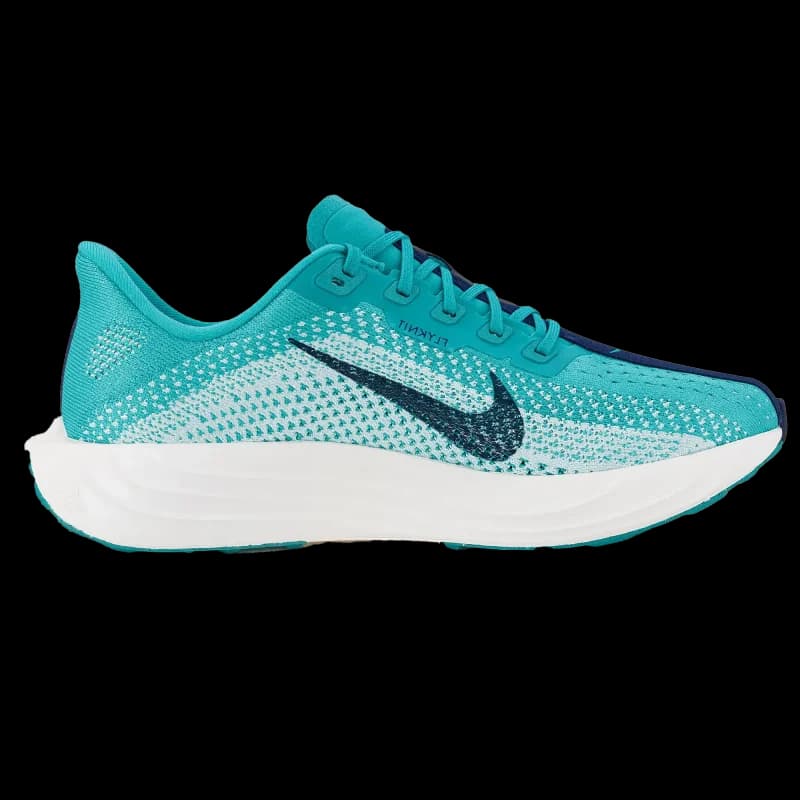 Nike Pegasus Plus Nike Pegasus Plus | 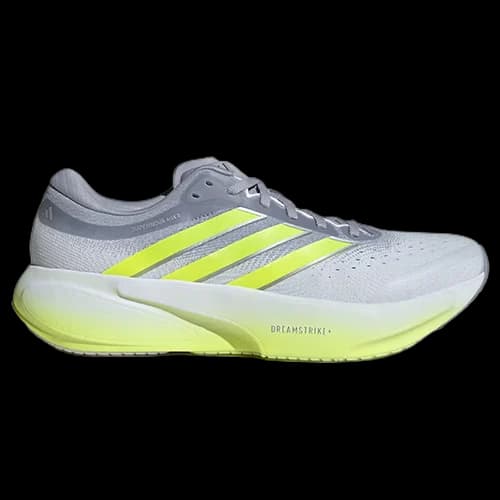 Adidas Supernova Rise 3 Adidas Supernova Rise 3 | 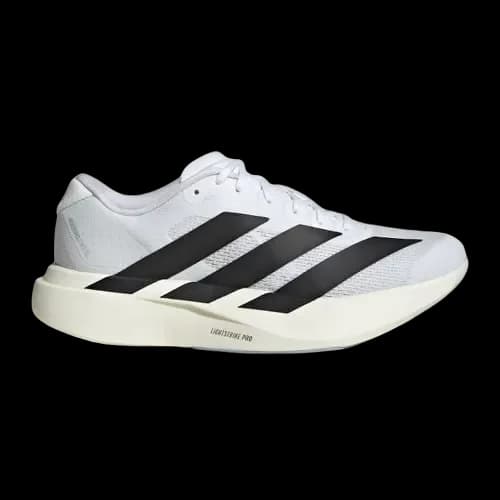 Adidas Adizero Evo SL Adidas Adizero Evo SL | 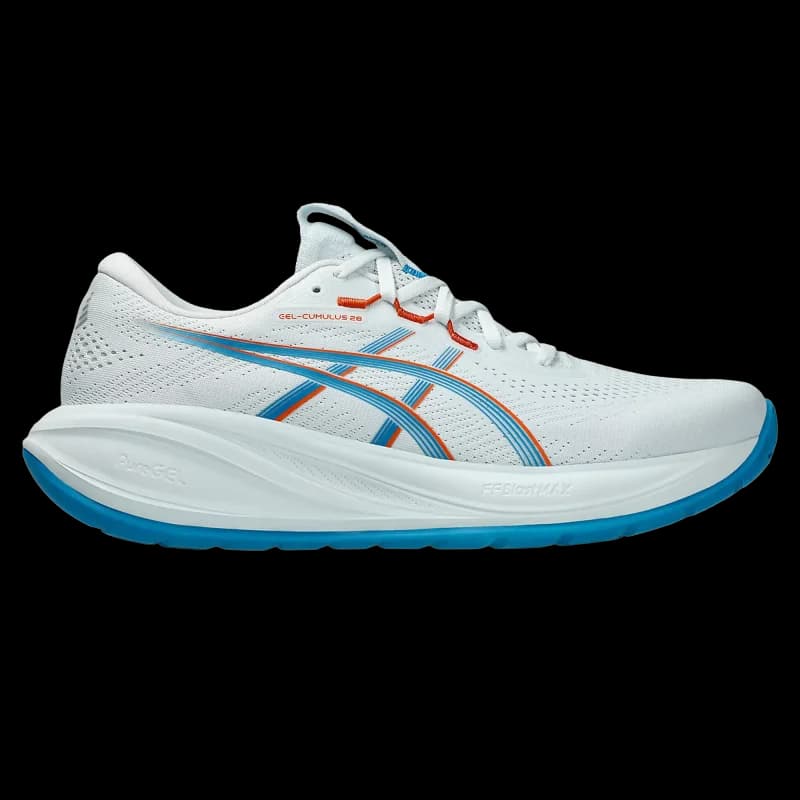 ASICS Gel-Cumulus 28 ASICS Gel-Cumulus 28 | |
|---|---|---|---|---|---|
| Pick it for | This page | Lighter | Lower drop | Faster | More cushion |
| Drop | 10 mm | 10 mm | 8 mm | 7 mm | 8 mm |
| Heel stack | 37 mm | – | 36 mm | 37 mm | 38.5 mm |
| Weight | 292 g | 244 g | 264 g | 230 g | 258 g |
| Support | Neutral | Neutral | Neutral | Neutral | Neutral |
Questions runners ask
What is the real drop of the Nike Pegasus 42?
Nike lists 10 mm, with a stack height of 37 mm at the heel and 27 mm at the forefoot. RunRepeat’s lab measured 36 mm and 22 mm, which gives 14 mm of drop. In practice the Pegasus 42 behaves like a high-drop shoe, which favours heel strikers: only 2 of the 234 neutral road shoes in our catalogue list a higher drop.
Should I keep my Pegasus 41 or get the Pegasus 42?
If the Pegasus 41 fits you and you run easy miles heel first, it remains a sound shoe. The Pegasus 42 is worth the change if you want more toe room, better grip on wet roads or an easy-to-find wide version. Neither is the right pick for forefoot strikers.
Does the Nike Pegasus 42 fit true to size?
Yes. RunRepeat’s reader vote and Believe in the Run both report a true-to-size fit, and the toe box is roomier than on the Pegasus 41. Runners with wide feet should choose the Pegasus 42 Wide rather than going up half a size.
How much does the Nike Pegasus 42 weigh?
Believe in the Run gives 10.2 oz (292 g) for a men’s US 9 and 9.0 oz (255 g) for a women’s US 8. RunRepeat weighed its pair at 286 g. Only 14 of the 149 neutral road shoes in our catalogue weighed in the same size are heavier, so it is not a lightweight shoe.
Does the Pegasus 42 come in wide?
Yes. RunRepeat lists narrow, regular and wide for men, and i-run in France lists the Pegasus 42 Wide. Availability varies by retailer: Running Warehouse only shows the standard D width.
Is the Pegasus 42 good for forefoot or midfoot strikers?
It is not the best match. RunRepeat measured only 22 mm of foam under the forefoot, and Runner’s World Germany found the front thin and firm for midfoot strikers. A shoe with a fuller forefoot and a lower drop will usually feel better.
Can you run a marathon in the Nike Pegasus 42?
You can train for one in it, especially if you land on your heel. For race day, its weight and firm forefoot make it a poor choice next to lighter, more cushioned shoes. Believe in the Run sees it at its best on runs of 6 to 8 miles.
Sources
- RunRepeat, Nike Pegasus 42 lab review. Accessed Oct 9, 2026.
- Believe in the Run, Nike Pegasus 42 Review. Accessed Oct 9, 2026.
- Running Warehouse, Nike Pegasus 42 Men’s Shoes. Accessed Oct 9, 2026.
- Runner’s World Germany, Nike Pegasus 42 im Test. Accessed Oct 9, 2026.
- i-run, Nike Pegasus 42. Accessed Oct 9, 2026.
- Strideprint, Strideprint running shoe catalogue (ranks computed on 2026-10-11). Accessed Oct 11, 2026.
- nike.com · Drop, Support, and Surface, listed
- cat: Strideprint catalogue, 395 shoes
How we review. We read published tests, brand and retailer pages and lab measurements, cross-check the figures and flag where they disagree. We did not test this shoe ourselves. Last updated October 13, 2026.