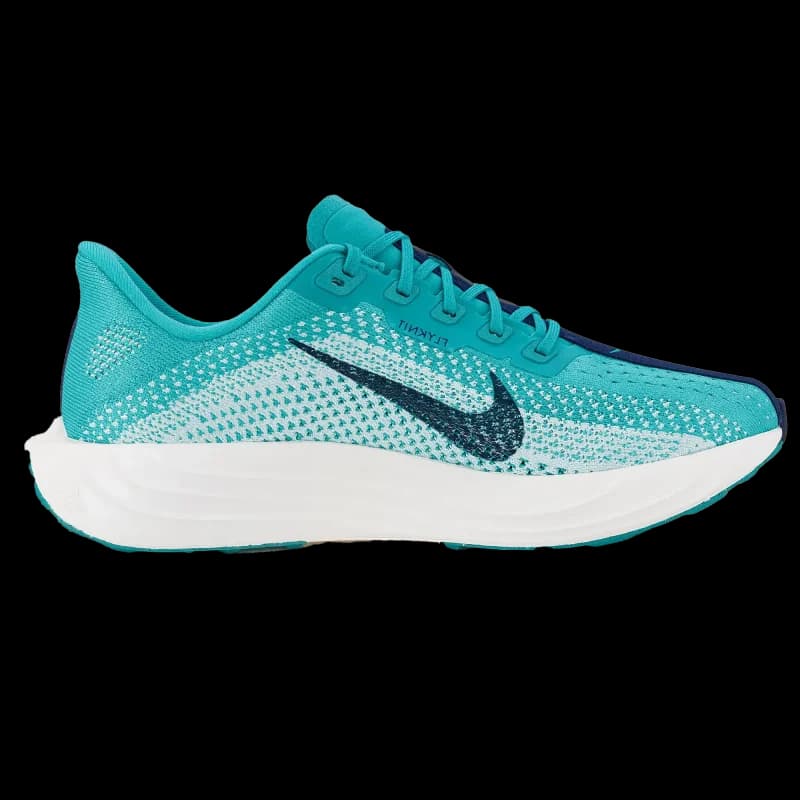
Nike Pegasus Plus review
The Pegasus with a full-length ZoomX midsole and no plate: lighter and livelier than the classic Pegasus, on a lower stack that reviewers find short of protection for long runs.
- Drop
- 10 mm
- Heel stack
- 34 mm
- Forefoot
- 24 mm
- Weight
- 238 g
- Support
- Neutral
- Plate
- None
Our verdict
Quick and light, thin for long miles.
The Nike Pegasus Plus puts a single slab of ZoomX foam under a Flyknit upper, which makes it about 238 g in a men’s US 9 and noticeably more lively than the classic Pegasus. It suits neutral runners, especially heel strikers, who want one shoe for daily runs and tempo work, and it suits runners who need deep cushioning for long runs much less.
Strong points
- Light: about 238 g in a men’s US 9
- High energy return in both labs, 70.8 percent at the forefoot for RunRepeat
- Handles tempo work better than the classic Pegasus 41
- True to size in length, confirmed by a 254-vote poll
- Very flexible forefoot, 10.5 N in RunRepeat’s bend test
Weak points
- Low stack, 34 mm heel and 24 mm forefoot: thin for long runs
- Exposed midfoot ZoomX that tore early in two tests
- Narrow, tapered toe box for some testers
- Below-average grip, 0.42 in RunRepeat’s traction test
Who it fits
- You want one shoe for daily runs and tempo
- You land on your heel
- You are a lighter runner
- You like feeling the road
Who should skip it
- You run long and want protection
- You land on your midfoot or forefoot
- Your foot rolls in a lot
Shoe profile
Where the Pegasus Plus sits among the 395 shoes in our catalogue, and what changed from the Pegasus 41.
| Axis | Pegasus Plus | Pegasus 41 | Change |
|---|---|---|---|
| Cushioning | 15 | 33 | −18 |
| Lightness | 71 | 28 | +43 |
| Stability | 30 | 30 | = |
| Drop | 84 | 84 | = |
| Response | 20 | 6 | +14 |
Fig. 1 · How to read it. Each axis runs from 0 at the centre to 100 at the edge. Cushioning, lightness and drop are the shoe’s rank in the catalogue from listed figures; stability and response are scored from the support type, the plate, the rocker and the intended use. The dotted grey line is the catalogue median. Source: Strideprint catalogue (cat).
Where it sits in the catalogue
Weight238 g, lighter than 70% of shoes
Drop10 mm, higher than 84% of shoes
Heel stack34 mm, lower than 83% of shoes
Forefoot stack24 mm, lower than 90% of shoes
How it feels
Written from 5 published tests. We quote measurements, not impressions we did not have.
Bouncy foam, not much of it. Full-length ZoomX on a 34 mm heel and 24 mm forefoot: bouncy, but RTINGS and two testers find it firm and thin over distance.
Steady at the heel, loose at the arch. Neutral, no support features. RTINGS finds the low platform steady; the narrow base under the arch can feel wobbly for midfoot strikers.
Lively without a plate. High energy return, 70.8 percent at the forefoot for RunRepeat, and a flexible forefoot; no plate, so toe-off is not snappy.
Bouncy foam, not much of it. The whole midsole is ZoomX, Nike’s PEBA-based race foam, with no plate. Doctors of Running and Running Warehouse list 34 mm at the heel and 24 mm at the forefoot. RunRepeat measured 33.0 mm and 23.6 mm. 159 of the 184 neutral road shoes in our catalogue list a taller heel.
That thin layer is the trade-off. RTINGS scores cushioning 5.0 out of 10 and rates both heel and forefoot as firm, while RunRepeat measured the foam at 33.9 AC, a touch softer than its average. Doctors of Running’s second tester found the forefoot firm and lacking protection, Running Shoes Guru found it soft.
Steady at the heel, loose at the arch. It is a neutral shoe with no support features. RTINGS still rates its stability 8.0 out of 10, helped by the firm, low platform. RunRepeat is less convinced and lists limited stability among its cons.
The weak point is the middle of the shoe. RTINGS warns that the narrow outsole under the arch can feel wobbly for midfoot strikers, and Doctors of Running’s second tester found the roomy upper let the foot slide over the narrow midfoot base.
Lively without a plate. RunRepeat measured 70.8 percent energy return at the forefoot and 64.4 percent at the heel, above average, and found it much faster than a regular Pegasus. RTINGS also rates energy return very good, at 7.8.
The forefoot bends easily, 10.5 N in RunRepeat’s test, and Doctors of Running notes an early, mild forefoot rocker. Without a plate or much toe spring, RTINGS finds the toe-off a little sluggish, and Running Shoes Guru struggled to hold a fast pace in it.
Read more
Bouncy foam, not much of it. The whole midsole is ZoomX, Nike’s PEBA-based race foam, with no plate. Doctors of Running and Running Warehouse list 34 mm at the heel and 24 mm at the forefoot. RunRepeat measured 33.0 mm and 23.6 mm. 159 of the 184 neutral road shoes in our catalogue list a taller heel.
That thin layer is the trade-off. RTINGS scores cushioning 5.0 out of 10 and rates both heel and forefoot as firm, while RunRepeat measured the foam at 33.9 AC, a touch softer than its average. Doctors of Running’s second tester found the forefoot firm and lacking protection, Running Shoes Guru found it soft.
Steady at the heel, loose at the arch. It is a neutral shoe with no support features. RTINGS still rates its stability 8.0 out of 10, helped by the firm, low platform. RunRepeat is less convinced and lists limited stability among its cons.
The weak point is the middle of the shoe. RTINGS warns that the narrow outsole under the arch can feel wobbly for midfoot strikers, and Doctors of Running’s second tester found the roomy upper let the foot slide over the narrow midfoot base.
Lively without a plate. RunRepeat measured 70.8 percent energy return at the forefoot and 64.4 percent at the heel, above average, and found it much faster than a regular Pegasus. RTINGS also rates energy return very good, at 7.8.
The forefoot bends easily, 10.5 N in RunRepeat’s test, and Doctors of Running notes an early, mild forefoot rocker. Without a plate or much toe spring, RTINGS finds the toe-off a little sluggish, and Running Shoes Guru struggled to hold a fast pace in it.
Which runs it’s for
| Run | Fit | Why | Source |
|---|---|---|---|
| Easy runs | Made for it | RTINGS scores daily training highest, 7.2 out of 10, and Running Shoes Guru calls it an easy-run shoe first. | RTINGS, Running Shoes Guru |
| Tempo | Made for it | Its strongest suit for RunRepeat and Doctors of Running: light, lively and flexible enough to pick up the pace. | Doctors of Running, RunRepeat, Running Warehouse |
| Intervals | Can do | A Running Warehouse tester used it for speed work, but there is no plate and RTINGS finds toe-off a little sluggish. | RTINGS, Running Warehouse |
| Long runs | Can do | i-run’s tester was happy on long runs, but RTINGS, Running Warehouse and Running Shoes Guru all found it short of protection over distance. | RTINGS, Running Warehouse, Running Shoes Guru, i-run |
| Marathon race | Not for it | RTINGS does not recommend it for marathon racing; the low stack bottoms out on long efforts. | RTINGS |
Source: RTINGS, Running Shoes Guru, Doctors of Running, RunRepeat, Running Warehouse, i-run
What the tests say
Published tests agree the Pegasus Plus is light, lively and true to size, with a lower stack than the classic Pegasus. They disagree on how roomy it is and on whether it has enough cushioning for anything beyond medium distances.
| Test | Type | Our reading | In one sentence | Source |
|---|---|---|---|---|
| Doctors of Running | Review | Mixed | Doctors of Running is split: the lead tester finds it more comfortable than the Pegasus 41, the second will not run in it again because of fit and the heel. | Read |
| RTINGS | Lab | Mixed | RTINGS sees a decent daily trainer with very good stability and rebound, let down by poor impact protection over distance. | Read |
| RunRepeat | Lab | Positive | RunRepeat scores it 84 out of 100: a light, responsive, versatile trainer, though snug and no longer one of a kind. | Read |
| Running Warehouse | Review | Mixed | Running Warehouse’s two testers both give 8 out of 10; one liked its bounce, the other found it short of protection for long runs. | Read |
| Running Shoes Guru | Review | Mixed | Running Shoes Guru gives 7 out of 10: fun and soft for easy runs, held back by limited versatility and build quality. | Read |
They agree
- Light and livelyRunRepeat measured 70.8 percent energy return at the forefoot, well above its average, and RTINGS rates energy return very good. Doctors of Running and Running Warehouse list 238 g for a men’s US 9.
- Short on protection over distanceRTINGS calls the ride harsh on longer runs, Running Warehouse’s first tester stopped at about 13 km, and Running Shoes Guru keeps it for runs under 21 km.
- True to sizeDoctors of Running, RTINGS, Running Warehouse, Running Shoes Guru and i-run all found the length right, and RunRepeat’s 254-vote poll agrees.
They split
- Narrow or roomy?RunRepeat and Running Shoes Guru call the fit narrow with a tapered toe box. Running Warehouse found room for the toes to splay, i-run says narrow feet may need to lace tighter, and RTINGS rates the forefoot roomy but the arch very snug.
- Soft or firm?Running Shoes Guru describes a soft, squishy ride. RTINGS rates the forefoot very firm, and Running Warehouse’s first tester and Doctors of Running’s second tester found it firmer than they expected from ZoomX.
How it’s built
A one-foam build: full-length ZoomX with no plate, a Flyknit upper with a midfoot band, and high-abrasion rubber that leaves the foam exposed under the midfoot.
Full-length ZoomX with no plate, a stretchy Flyknit upper with a thin, ungusseted tongue, and a 2.7 mm rubber outsole that leaves the foam exposed under the midfoot.
| # | Part | Measure |
|---|---|---|
| 1 | UpperFlyknit | Breathability 3 / 5 |
| 2 | Tongue | 2.8 mm |
| 3 | Heel | Stiffness 4 / 5 |
| 4 | MidsoleZoomX | Hardness 33.9 AC |
| 5 | Insole | 4.4 mm |
| 6 | Outsole | 2.7 mm |
Fig. 3 · Side profile. Stack heights to scale (listed: 34 mm heel, 24 mm forefoot; measured: 2.7 mm outsole); the split between the two foams is not measured and is drawn at mid-height. Dashed: insole, hidden. Sources: Doctors of Running, RunRepeat, Running Shoes Guru, Fleet Feet, Running Warehouse.
Upper. A stretchy Flyknit upper that Fleet Feet describes as seamless and perforated. Running Shoes Guru found it thick and not very breathable, and RunRepeat scored breathability 3 out of 5, noting the stripe limits airflow.
Tongue. Thin and not gusseted, 2.8 mm against a 5.8 mm average in RunRepeat’s test, held in place by a lace loop.
Heel. A stiffer than usual heel counter, 4 out of 5 for RunRepeat, but well padded. Doctors of Running warns that seams around the heel can rub without socks.
Midsole. Full-length ZoomX with no plate, stiffener or second foam. RunRepeat measured 33.9 AC, slightly softer than average, and a low torsional rigidity of 3 out of 5.
Insole. Removable, 4.4 mm thick, exactly RunRepeat’s average.
Outsole. High-abrasion rubber in a waffle pattern with ZoomX exposed under the midfoot. RunRepeat measured 2.7 mm of rubber and a traction score of 0.42, below its 0.53 average; Running Warehouse found grip reliable on roads and gravel.
Read more
A one-foam build: full-length ZoomX with no plate, a Flyknit upper with a midfoot band, and high-abrasion rubber that leaves the foam exposed under the midfoot.
1. Upper. A stretchy Flyknit upper that Fleet Feet describes as seamless and perforated. Running Shoes Guru found it thick and not very breathable, and RunRepeat scored breathability 3 out of 5, noting the stripe limits airflow.
2. Tongue. Thin and not gusseted, 2.8 mm against a 5.8 mm average in RunRepeat’s test, held in place by a lace loop.
3. Heel. A stiffer than usual heel counter, 4 out of 5 for RunRepeat, but well padded. Doctors of Running warns that seams around the heel can rub without socks.
4. Midsole. Full-length ZoomX with no plate, stiffener or second foam. RunRepeat measured 33.9 AC, slightly softer than average, and a low torsional rigidity of 3 out of 5.
5. Insole. Removable, 4.4 mm thick, exactly RunRepeat’s average.
6. Outsole. High-abrasion rubber in a waffle pattern with ZoomX exposed under the midfoot. RunRepeat measured 2.7 mm of rubber and a traction score of 0.42, below its 0.53 average; Running Warehouse found grip reliable on roads and gravel.
Durability. The exposed foam is the weak spot. Doctors of Running saw the midfoot ZoomX tear by about 40 to 48 km and worn heel lugs, and Running Shoes Guru found the upper separating from the midsole after 83 km. RunRepeat measured 1.2 mm of outsole wear, close to its average.
Durability. The exposed foam is the weak spot. Doctors of Running saw the midfoot ZoomX tear by about 40 to 48 km and worn heel lugs, and Running Shoes Guru found the upper separating from the midsole after 83 km. RunRepeat measured 1.2 mm of outsole wear, close to its average.
Specs, listed and measured
Every figure carries its source.
Weight (men’s), g
Heel stack, mm
Forefoot stack, mm
Drop, mm
| Spec | Listed | Measured |
|---|---|---|
| Drop |
|
|
| Heel stack |
|
|
| Forefoot stack |
|
|
| Weight, men’s US 9, Doctors of Running and Running Warehouse |
|
|
| Support |
| – |
| Plate |
| – |
| Surface |
| – |
Fig. 4 · Listed vs measured. Bars start at zero. Sources: Running Warehouse, Fleet Feet, RTINGS, RunRepeat, Running Shoes Guru.
Lab measurements
| Spec | Measured |
|---|---|
| Midsole hardness |
|
| Energy return (forefoot) |
|
| Toe box width |
|
| Toe box height |
|
| Flex force |
|
| Spec | Measured |
|---|---|
| Heel counter stiffness |
|
| Traction coefficient |
|
| Outsole thickness |
|
| Insole thickness |
|
| Tongue thickness |
|
Sizing and fit
Take your usual size; the question is volume around the arch and toes, not length.
Length
True to size
Widths
standard
Toe room
RunRepeat measured a 71.6 mm toe box, narrower than its 73.2 mm average, but tall at 29.3 mm. RTINGS rates forefoot height a little low for tall toes, and Doctors of Running felt early pressure on the big and little toes.
Doctors of Running, RTINGS, RunRepeat
Full sizing notes from testers
Doctors of Running, RTINGS, Running Warehouse, Running Shoes Guru and i-run all found the length right, and 254 readers voted true to size in RunRepeat’s poll. Doctors of Running’s lead tester felt the toe box short at first, until the Flyknit broke in.
Volume is where opinions split. RunRepeat and Running Shoes Guru describe a snug, narrow Nike fit that may be tight for average or wide feet. RTINGS found the forefoot roomy but the arch very snug, Running Warehouse had room for the toes to splay, and i-run suggests narrow feet lace tighter.
RunRepeat lists the men’s shoe in a normal width only, with a wide option for women. Fleet Feet lists a single D width for men.
Doctors of Running, RTINGS, RunRepeat, Running Warehouse, Running Shoes Guru, Fleet Feet, i-run
Vs Pegasus 41
The Pegasus Plus is a first-generation model, not a new version of the Pegasus. The useful comparison is the classic Pegasus 41 it launched beside, and Doctors of Running sees it as a return of the old Pegasus Turbo idea.
| Pegasus Plus | Pegasus 41 | |
|---|---|---|
| Support | Neutral | Neutral |
| Drop | 10 mm | 10 mm |
| Heel stack | 34 mm | 37 mm |
| Forefoot | 24 mm | 27 mm |
| Weight | 238 g | 283 g |
Choose the Pegasus 41 if you want one shoe for long, steady miles with more foam underfoot and a little more stability. Choose the Plus if you want a lighter shoe that also handles tempo. RTINGS notes that the Plus has since been replaced by the Pegasus Plus 2.
Listed figures. Source: Strideprint catalogue (cat).
Version history: Pegasus 41 to Pegasus Plus
ZoomX instead of ReactX and Air Zoom. Fleet Feet contrasts the Pegasus 41’s ReactX foam with Air Zoom units against the Plus’s midsole made only of ZoomX. (Fleet Feet)
Lower and lighter. 34 mm at the heel against 37 mm for the Pegasus 41 in our catalogue, and 238 g against 283 g in a men’s US 9. (Doctors of Running, Strideprint)
More lively. Doctors of Running and Running Shoes Guru both find it more energetic and better at uptempo work than the Pegasus 41. (Doctors of Running, Running Shoes Guru)
Less for high mileage. Running Warehouse’s first tester found the Pegasus 41 better suited to long, high-mileage runs, with its higher stack and more pronounced rocker. (Running Warehouse)
Alternatives compared
Each one fixes one thing the Pegasus Plus does not do.
| Nike Pegasus Plus | 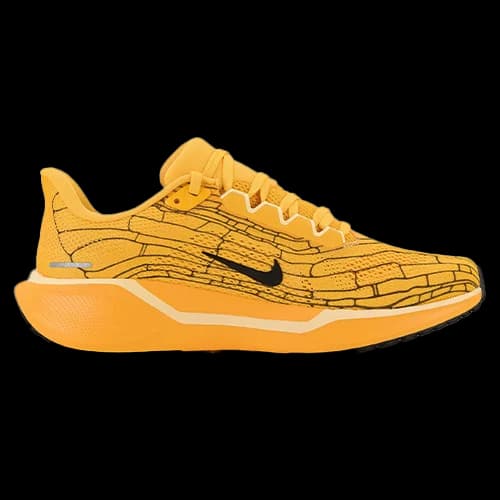 Nike Pegasus 41 Nike Pegasus 41 | 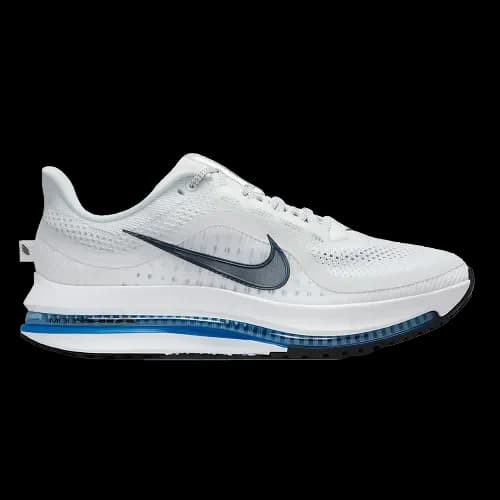 Nike Pegasus Premium Nike Pegasus Premium | 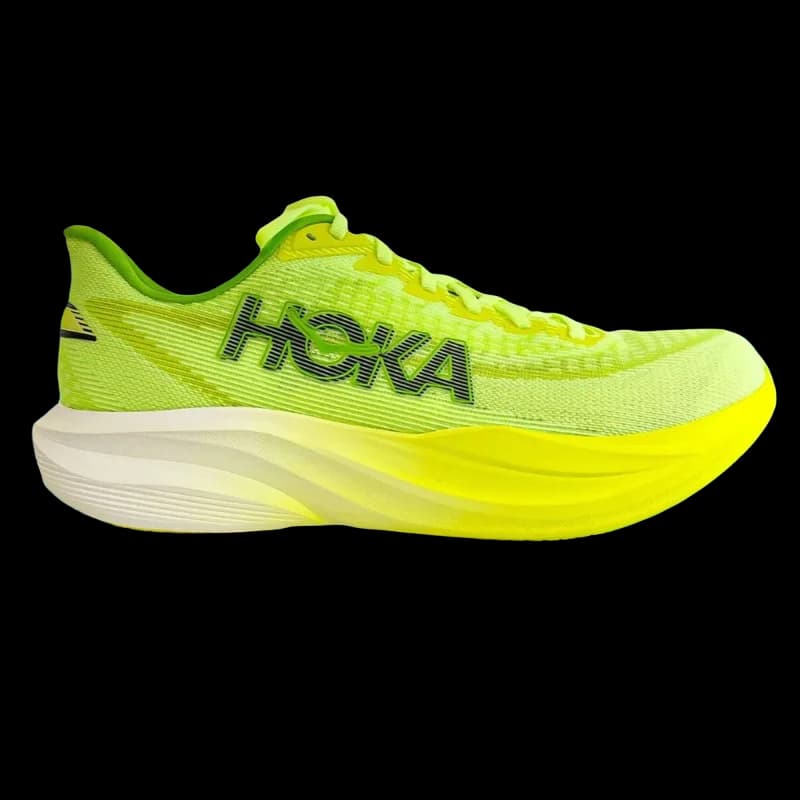 Hoka Mach 7 Hoka Mach 7 | 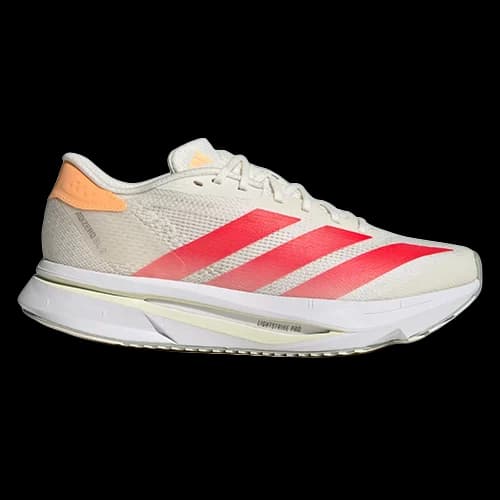 Adidas Adizero SL 2 Adidas Adizero SL 2 | |
|---|---|---|---|---|---|
| Pick it for | This page | More stable | More cushion | Lower drop | Same support |
| Drop | 10 mm | 10 mm | 10 mm | 5 mm | 10 mm |
| Heel stack | 34 mm | 37 mm | 45 mm | 37 mm | 36 mm |
| Weight | 238 g | 283 g | 325 g | 241 g | 236 g |
| Support | Neutral | Neutral | Neutral | Neutral | Neutral |
Questions runners ask
Is the Nike Pegasus Plus true to size?
Yes for length. Doctors of Running, RTINGS, Running Warehouse, Running Shoes Guru and i-run all found it true to size, and 254 readers agreed in RunRepeat’s poll. Volume is the debate: RunRepeat and Running Shoes Guru find it narrow with a tapered toe box, while RTINGS rates the forefoot roomy but the arch very snug.
Pegasus Plus or Pegasus 41: what is the difference?
The Pegasus Plus uses only ZoomX foam, sits lower at 34 mm in the heel against 37 mm, and weighs about 238 g against 283 g in a men’s US 9. Doctors of Running and Running Shoes Guru find it livelier and better for tempo. Running Warehouse finds the Pegasus 41 better for long, high-mileage runs.
What is the stack height and drop of the Pegasus Plus?
Doctors of Running and Running Warehouse list 34 mm at the heel and 24 mm at the forefoot, a 10 mm drop. RunRepeat measured 33.0 mm and 23.6 mm, a 9.4 mm drop, and RTINGS measured a 9.2 mm drop. That is a low stack for a modern trainer.
Is the Pegasus Plus good for long runs or a marathon?
Mostly no. RTINGS rates its impact protection poor, finds it harsh over distance and does not recommend it for marathon racing. A Running Warehouse tester capped it at about 13 km and Running Shoes Guru at 21 km, though i-run’s tester was comfortable on long runs. It is at its best on daily runs and tempo.
Is the Pegasus Plus good for wide feet?
Probably not in the standard version. RunRepeat and Running Shoes Guru say wide, high-volume feet will find it tight, and RTINGS measured a very snug arch. RunRepeat lists the men’s shoe in a normal width only. Some testers did find the forefoot roomy, so try it on before committing.
Is the Pegasus Plus a stability shoe?
No, it is neutral with no support features. RTINGS still finds the low platform steady, but warns that the narrow base under the arch can wobble for midfoot strikers. Running Shoes Guru advises runners whose foot rolls in a lot to choose a stability shoe instead.
Sources
- Doctors of Running, Nike Pegasus Plus Review (Matt Klein, Andrea Myers, September 2024). Accessed Oct 13, 2026.
- RTINGS, Nike Pegasus Plus running shoe review. Accessed Oct 13, 2026.
- RunRepeat, Nike Pegasus Plus lab review. Accessed Oct 13, 2026.
- Running Warehouse, Nike Pegasus Plus review (August 2024). Accessed Oct 13, 2026.
- Running Shoes Guru, Nike Pegasus Plus review (Brandon Law). Accessed Oct 13, 2026.
- Fleet Feet, Men’s Nike Pegasus Plus. Accessed Oct 13, 2026.
- i-run, Nike Pegasus Plus review. Accessed Oct 13, 2026.
- Strideprint, Strideprint running shoe catalogue (ranks computed on 2026-10-13). Accessed Oct 13, 2026.
- cat: Strideprint catalogue, 395 shoes
How we review. We read published tests, brand and retailer pages and lab measurements, cross-check the figures and flag where they disagree. We did not test this shoe ourselves. Last updated October 13, 2026.