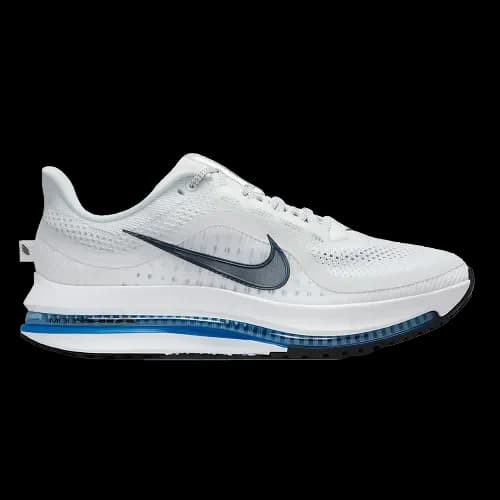
Nike Pegasus Premium review
Nike’s max-cushion Pegasus stacks ZoomX, a full-length Air Zoom unit and ReactX into a 45 mm heel: springy and protective, but heavy, narrow and wobbly for some testers.
- Drop
- 10 mm
- Heel stack
- 45 mm
- Forefoot
- 35 mm
- Weight
- 309 g
- Support
- Neutral
- Plate
- None
Our verdict
Springy, tall and heavy.
The Nike Pegasus Premium sandwiches a full-length Air Zoom unit between ZoomX and ReactX foam, which gives it a bouncy, well-protected ride and a weight of about 309 g in a men’s US 9. It suits neutral runners with a narrow to normal foot who land toward the midfoot and want comfortable easy miles, and it suits heel strikers and anyone needing stability much less.
Strong points
- Springy ride that all five tests describe as fun or bouncy
- High impact protection, 155 SA at the heel for RunRepeat
- Very breathable knit upper, 5 out of 5 at RunRepeat
- Reflective details all the way around the upper
Weak points
- Heavy: about 309 g in a men’s US 9
- Narrow, tapered toe box and a narrow base under the arch
- Unstable heel and narrow platform for RTINGS and Running Shoes Guru
- Very stiff heel counter that irritated a Doctors of Running tester
Who it fits
- You want bounce on easy runs
- You land toward the midfoot
- Your foot is narrow to normal
Who should skip it
- You land on your heel
- You need stability
- Your foot is wide
- You want a light shoe for faster days
Shoe profile
Where the Pegasus Premium sits among the 395 shoes in our catalogue, and what changed from the Pegasus 41.
| Axis | Pegasus Premium | Pegasus 41 | Change |
|---|---|---|---|
| Cushioning | 90 | 33 | +57 |
| Lightness | 9 | 28 | −19 |
| Stability | 30 | 30 | = |
| Drop | 84 | 84 | = |
| Response | 40 | 6 | +34 |
Fig. 1 · How to read it. Each axis runs from 0 at the centre to 100 at the edge. Cushioning, lightness and drop are the shoe’s rank in the catalogue from listed figures; stability and response are scored from the support type, the plate, the rocker and the intended use. The dotted grey line is the catalogue median. Source: Strideprint catalogue (cat).
Where it sits in the catalogue
Weight309 g, heavier than 91% of shoes
Drop10 mm, higher than 84% of shoes
Heel stack45 mm, higher than 90% of shoes
Forefoot stack35 mm, higher than 79% of shoes
How it feels
Written from 5 published tests. We quote measurements, not impressions we did not have.
Three layers, a lot of foam. ZoomX, a full-length Air Zoom unit and ReactX on a 45 mm heel: very protective in both labs, among the tallest in our catalogue.
Tall and narrow. Neutral, on a narrow, tall base. RTINGS and Running Shoes Guru find it wobbly, and the heel is its least stable part.
Spring at easy pace. Springy at relaxed paces, 68.3 percent forefoot energy return for RunRepeat; stiff and heavy when the pace rises.
Three layers, a lot of foam. Nike stacks ZoomX on top, a sculpted full-length Air Zoom unit in the middle and ReactX underneath. Running Warehouse and Doctors of Running list 45 mm at the heel and 35 mm at the forefoot, and only 15 of the 183 neutral road shoes in our catalogue list a taller heel.
RunRepeat measured slightly less, 42.8 mm and 31.0 mm, and RTINGS 43.0 mm at the heel. Both labs found strong protection: 155 SA at the heel for RunRepeat, 8.2 out of 10 for cushioning at RTINGS, with forefoot cushioning that holds up on longer runs.
Tall and narrow. It is a neutral shoe with no stability features, on a narrow base: RunRepeat measured 108.6 mm across the forefoot of the midsole against a 115.1 mm average. RTINGS rates stability 6.3 out of 10 and finds the heel and base unstable, with an Air Zoom unit it finds too pliant.
Doctors of Running noticed the outer ReactX column compressing more than the inner one, which pushed its tester onto the outside of the foot. Running Shoes Guru found the narrow midfoot and rearfoot a challenge for heel and midfoot strikers on longer runs.
Spring at easy pace. Most testers describe a springy, fun ride. RunRepeat measured 68.3 percent energy return at the forefoot against a 61.4 percent average, and Running Shoes Guru found the Air Zoom unit only fully engages below about 5:45 per km.
Pick up the pace and opinions cool. RTINGS finds it unresponsive under higher forces, Doctors of Running found it too heavy for faster work, and RunRepeat measured a stiff 21.2 N flex. Doctors of Running also calls it one of the stiffest shoes its tester has run in.
Read more
Three layers, a lot of foam. Nike stacks ZoomX on top, a sculpted full-length Air Zoom unit in the middle and ReactX underneath. Running Warehouse and Doctors of Running list 45 mm at the heel and 35 mm at the forefoot, and only 15 of the 183 neutral road shoes in our catalogue list a taller heel.
RunRepeat measured slightly less, 42.8 mm and 31.0 mm, and RTINGS 43.0 mm at the heel. Both labs found strong protection: 155 SA at the heel for RunRepeat, 8.2 out of 10 for cushioning at RTINGS, with forefoot cushioning that holds up on longer runs.
Tall and narrow. It is a neutral shoe with no stability features, on a narrow base: RunRepeat measured 108.6 mm across the forefoot of the midsole against a 115.1 mm average. RTINGS rates stability 6.3 out of 10 and finds the heel and base unstable, with an Air Zoom unit it finds too pliant.
Doctors of Running noticed the outer ReactX column compressing more than the inner one, which pushed its tester onto the outside of the foot. Running Shoes Guru found the narrow midfoot and rearfoot a challenge for heel and midfoot strikers on longer runs.
Spring at easy pace. Most testers describe a springy, fun ride. RunRepeat measured 68.3 percent energy return at the forefoot against a 61.4 percent average, and Running Shoes Guru found the Air Zoom unit only fully engages below about 5:45 per km.
Pick up the pace and opinions cool. RTINGS finds it unresponsive under higher forces, Doctors of Running found it too heavy for faster work, and RunRepeat measured a stiff 21.2 N flex. Doctors of Running also calls it one of the stiffest shoes its tester has run in.
Which runs it’s for
| Run | Fit | Why | Source |
|---|---|---|---|
| Easy runs | Made for it | Its natural job: RTINGS scores daily training 7.2 out of 10 and sees it as an easy-miles shoe. | RTINGS |
| Recovery runs | Made for it | Deep, protective cushioning and a bouncy feel for legs that need a soft day. | RTINGS, RunRepeat |
| Long runs | Can do | Running Warehouse and RunRepeat like it for long runs; Running Shoes Guru finds it too unstable once fatigue sets in. | RunRepeat, Running Warehouse, Running Shoes Guru |
| Tempo | Can do | RunRepeat rates tempo 83, but Running Shoes Guru and Doctors of Running find it too heavy for real uptempo work. | Doctors of Running, RunRepeat, Running Shoes Guru |
| Walking | Can do | Doctors of Running rates it somewhat good for walking and good for standing; Running Shoes Guru found it noisy when walking. | Doctors of Running, Running Shoes Guru |
| Marathon race | Not for it | RunRepeat scores racing 54, and RTINGS rules it out for racing. | RTINGS, RunRepeat |
Source: RTINGS, RunRepeat, Running Warehouse, Running Shoes Guru, Doctors of Running
What the tests say
Published tests agree the Pegasus Premium is springy, highly cushioned and heavy, with a narrow fit. They split on how far it can go: Running Warehouse and RunRepeat take it on long runs and tempo, while RTINGS, Running Shoes Guru and Doctors of Running keep it for easy miles.
| Test | Type | Our reading | In one sentence | Source |
|---|---|---|---|---|
| Doctors of Running | Review | Mixed | Doctors of Running finds it does not work yet: bouncy once broken in, but clunky at the heel, stiff and heavy; the second tester could not run in it. | Read |
| RTINGS | Lab | Mixed | RTINGS sees a heavily cushioned shoe for easy, relaxed miles, held back by weight and an unstable heel and base. | Read |
| RunRepeat | Lab | Positive | RunRepeat scores it 83 out of 100: a spring-like, fun super trainer, criticised for its weight and tapered toe box. | Read |
| Running Warehouse | Review | Positive | Both Running Warehouse testers give 9.5 out of 10 for a springy, comfortable, versatile ride, with weight as the main complaint. | Read |
| Running Shoes Guru | Review | Mixed | Running Shoes Guru gives 7 out of 10: fun and springy over short distances, but a niche shoe with little versatility. | Read |
They agree
- Bouncy and protectiveRunRepeat measured 155 SA of heel shock absorption against a 131 SA average, RTINGS scores cushioning 8.2 out of 10, and Running Warehouse’s testers describe a springy midsole.
- HeavyRunRepeat weighed it at 308 g and RTINGS at 310.8 g, close to the 309 g Running Warehouse lists for a men’s US 9. Every test flags the weight.
- Narrow through the middleRunRepeat measured a 91.3 mm fit against a 95.2 mm average, RTINGS rates the arch noticeably narrow, and Running Warehouse and Running Shoes Guru also describe a narrow Nike fit.
They split
- How versatile is it?Running Warehouse’s testers used it from daily jogs to long runs with faster sections, and RunRepeat rates tempo 83. RTINGS keeps it strictly for easy miles, and Running Shoes Guru finds it too heavy for uptempo and too unstable for long runs.
- Soft or firm?Running Warehouse found it between soft and firm, leaning soft. Doctors of Running found it firm and very stiff at first, softening after about 32 km, and RunRepeat measured the foam at 36.9 AC, a little firmer than its average.
How it’s built
A three-layer midsole, ZoomX over a full-length Air Zoom unit over ReactX, under a circular-knit upper with a thick tongue and a very stiff heel counter.
ZoomX on top, a full-length Air Zoom unit in the middle, split ReactX underneath; a breathable circular-knit upper with a 9.9 mm tongue and a rigid heel counter.
| # | Part | Measure |
|---|---|---|
| 1 | UpperCircular knit and mono mesh | Breathability 5 / 5 |
| 2 | Tongue | 9.9 mm |
| 3 | Heel | Stiffness 5 / 5 |
| 4 | MidsoleZoomX, Air Zoom and ReactX | Hardness 36.9 AC |
| 5 | Insole | 2.7 mm |
| 6 | OutsoleWaffle | 3.2 mm |
Fig. 3 · Side profile. Stack heights to scale (listed: 45 mm heel, 35 mm forefoot; measured: 3.2 mm outsole); the split between the two foams is not measured and is drawn at mid-height. Dashed: insole, hidden. Sources: runningwarehouse.com, RunRepeat, Running Shoes Guru, Nike, Doctors of Running.
Upper. Nike lists a circular knit with mono mesh. RunRepeat scored breathability 5 out of 5, and Running Shoes Guru and RunRepeat both note reflective details all around the shoe.
Tongue. Thick and not gusseted: 9.9 mm against a 5.8 mm average in RunRepeat’s test. Doctors of Running had some early slippage, solved with careful lacing.
Heel. A very stiff counter, 5 out of 5 for RunRepeat, with an extended collar. Doctors of Running’s lead tester got heel irritation from it.
Midsole. ZoomX on top, a sculpted full-length Air Zoom unit in the middle and ReactX below, which Doctors of Running describes as split into outer and inner columns. RunRepeat measured 36.9 AC, a torsional rigidity of 4 out of 5 and a stiff 21.2 N flex. No plate.
Insole. Thin and removable, 2.7 mm against a 4.4 mm average in RunRepeat’s test.
Outsole. A waffle outsole in high-abrasion rubber, 3.2 mm thick. RunRepeat measured traction at 0.49, a little below its 0.53 average, while Running Shoes Guru rated grip highly and found the rubber softer than on the Pegasus 41.
Read more
A three-layer midsole, ZoomX over a full-length Air Zoom unit over ReactX, under a circular-knit upper with a thick tongue and a very stiff heel counter.
1. Upper. Nike lists a circular knit with mono mesh. RunRepeat scored breathability 5 out of 5, and Running Shoes Guru and RunRepeat both note reflective details all around the shoe.
2. Tongue. Thick and not gusseted: 9.9 mm against a 5.8 mm average in RunRepeat’s test. Doctors of Running had some early slippage, solved with careful lacing.
3. Heel. A very stiff counter, 5 out of 5 for RunRepeat, with an extended collar. Doctors of Running’s lead tester got heel irritation from it.
4. Midsole. ZoomX on top, a sculpted full-length Air Zoom unit in the middle and ReactX below, which Doctors of Running describes as split into outer and inner columns. RunRepeat measured 36.9 AC, a torsional rigidity of 4 out of 5 and a stiff 21.2 N flex. No plate.
5. Insole. Thin and removable, 2.7 mm against a 4.4 mm average in RunRepeat’s test.
6. Outsole. A waffle outsole in high-abrasion rubber, 3.2 mm thick. RunRepeat measured traction at 0.49, a little below its 0.53 average, while Running Shoes Guru rated grip highly and found the rubber softer than on the Pegasus 41.
Durability. The sole should last: RunRepeat measured 1.0 mm of outsole wear, about average, and Doctors of Running saw only slight wear after about 80 km and expects above-average durability. The weak point is the knit at the toes, which scored 1 out of 5 in RunRepeat’s abrasion test.
Durability. The sole should last: RunRepeat measured 1.0 mm of outsole wear, about average, and Doctors of Running saw only slight wear after about 80 km and expects above-average durability. The weak point is the knit at the toes, which scored 1 out of 5 in RunRepeat’s abrasion test.
Specs, listed and measured
Every figure carries its source.
Weight (men’s), g
Heel stack, mm
Forefoot stack, mm
Drop, mm
| Spec | Listed | Measured |
|---|---|---|
| Drop |
|
|
| Heel stack |
|
|
| Forefoot stack |
|
|
| Weight, men’s US 9, Running Warehouse |
|
|
| Support |
| – |
| Plate |
| – |
| Surface |
| – |
Fig. 4 · Listed vs measured. Bars start at zero. Sources: Nike, Running Warehouse, RunRepeat, RTINGS.
Lab measurements
| Spec | Measured |
|---|---|
| Midsole hardness |
|
| Energy return (forefoot) |
|
| Toe box width |
|
| Toe box height |
|
| Flex force |
|
| Heel counter stiffness |
|
| Spec | Measured |
|---|---|
| Breathability |
|
| Traction coefficient |
|
| Outsole thickness |
|
| Insole thickness |
|
| Tongue thickness |
|
Sizing and fit
Most testers take their usual size, but the toe box is tapered and RunRepeat’s readers find it slightly small.
Length
True to size
Widths
standard
Toe room
Tapered rather than short of height. RunRepeat measured a 70.3 mm toe box width with a tall 29.1 mm height, and RTINGS rates forefoot width and height accommodating. Doctors of Running found the toe box tapered for both testers.
Doctors of Running, RTINGS, RunRepeat
Full sizing notes from testers
Doctors of Running, RTINGS, Running Warehouse and Running Shoes Guru all report a true-to-size length. RunRepeat’s reader poll leans the other way, with 342 votes for slightly small, so check the length if you are between sizes.
The fit is narrow. RunRepeat measured a 70.3 mm toe box against a 73.2 mm average, and RTINGS rates the arch noticeably narrow. Doctors of Running’s second tester could not run in it because of toe pressure, and Running Shoes Guru advises thin socks.
RunRepeat relays narrow, normal and wide versions for men from Nike, but says no wide pair was available for its test, and RTINGS states that no wide width is offered. Check what your country actually stocks.
Doctors of Running, RTINGS, RunRepeat, Running Warehouse, Running Shoes Guru
Vs Pegasus 41
The Pegasus Premium is a first-generation model, not a new version of the Pegasus. RunRepeat calls it the first max-cushioned Pegasus; the useful comparison is the classic Pegasus 41 it launched beside.
| Pegasus Premium | Pegasus 41 | |
|---|---|---|
| Support | Neutral | Neutral |
| Drop | 10 mm | 10 mm |
| Heel stack | 45 mm | 37 mm |
| Forefoot | 35 mm | 27 mm |
| Weight | 309 g | 283 g |
Choose the Pegasus 41 if you want a lighter shoe that Running Shoes Guru finds steadier. Choose the Premium if you want maximum bounce and protection on easy runs and your foot fits its narrow shape.
Listed figures. Source: Strideprint catalogue (cat).
Version history: Pegasus 41 to Pegasus Premium
Much taller. 45 mm at the heel and 35 mm at the forefoot, against 37 mm and 27 mm for the Pegasus 41 in our catalogue. (Running Warehouse, Strideprint)
Heavier. About 309 g against 283 g for the Pegasus 41, both in a men’s US 9. (Running Warehouse, Strideprint)
A three-layer midsole. ZoomX, a full-length Air Zoom unit and ReactX. Running Shoes Guru rates the Pegasus 41 as offering some stability and the Premium as not particularly stable. (Running Shoes Guru, Nike)
Same 10 mm drop, softer rubber. Both list 10 mm, and Running Shoes Guru found the Premium’s rubber softer than the Pegasus 41’s. (Running Shoes Guru, Nike)
Alternatives compared
Each one fixes one thing the Pegasus Premium does not do.
| Nike Pegasus Premium | 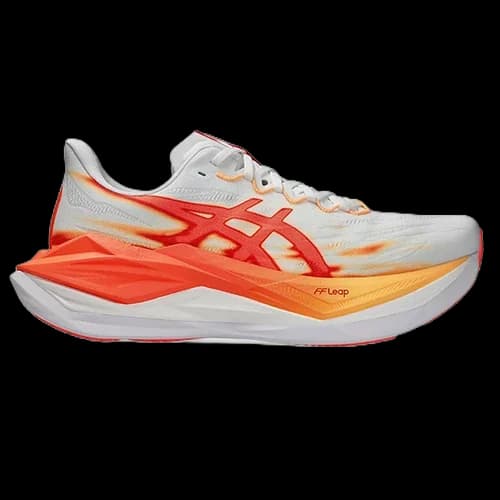 ASICS Superblast 3 ASICS Superblast 3 | 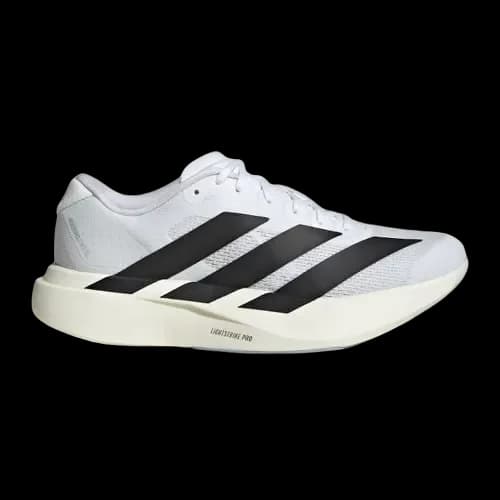 Adidas Adizero Evo SL Adidas Adizero Evo SL | 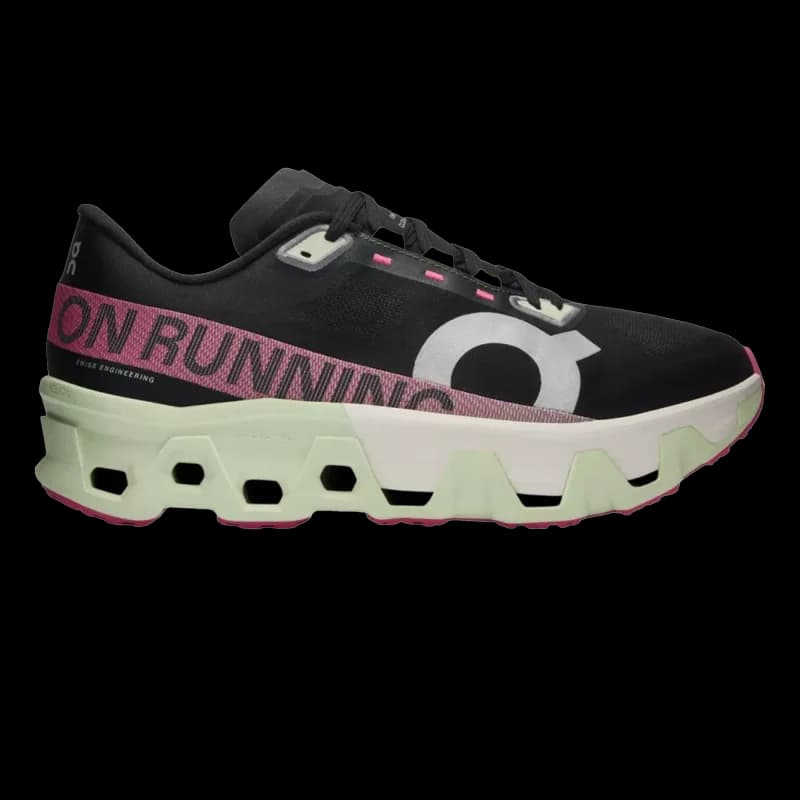 On Cloudmonster Hyper On Cloudmonster Hyper | 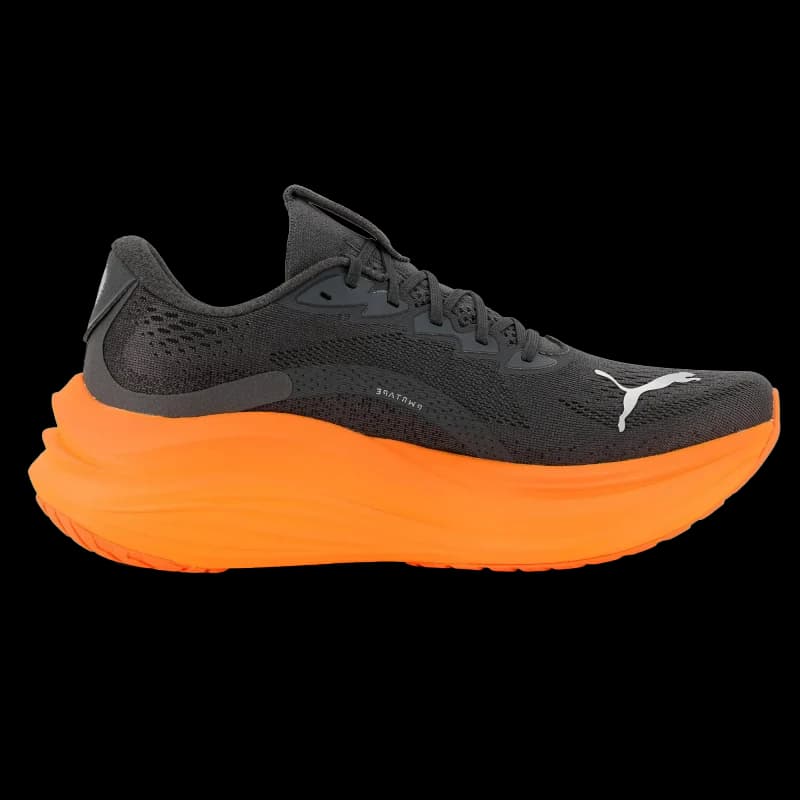 Puma MagMax Nitro Puma MagMax Nitro | |
|---|---|---|---|---|---|
| Pick it for | This page | Lighter | Roomier fit | Lower drop | More cushion |
| Drop | 10 mm | 8 mm | 7 mm | 6 mm | 8 mm |
| Heel stack | 45 mm | 47 mm | 37 mm | 37.5 mm | 47 mm |
| Weight | 309 g | 238 g | 230 g | 265 g | 292 g |
| Support | Neutral | Neutral | Neutral | Neutral | Neutral |
Questions runners ask
Is the Nike Pegasus Premium true to size?
Mostly. Doctors of Running, RTINGS, Running Warehouse and Running Shoes Guru found the length true to size, but 342 readers in RunRepeat’s poll found it slightly small. The fit is narrow with a tapered toe box, so if you have a broad forefoot or sit between sizes, try it on first.
How much does the Pegasus Premium weigh?
Nike lists about 325 g for a men’s US 10. Running Warehouse gives 309 g for a men’s US 9, and the labs agree: 308 g at RunRepeat, 310.8 g at RTINGS. Only 4 of the 150 neutral road shoes weighed in a men’s US 9 in our catalogue are heavier.
Pegasus Premium or Pegasus 41: what is the difference?
The Premium is much taller, 45 mm at the heel against 37 mm, and heavier, about 309 g against 283 g in a men’s US 9. It adds ZoomX and a full-length Air Zoom unit for a springier ride. The Pegasus 41 is lighter and steadier; Doctors of Running sees it as more of an everyday trainer.
Is the Pegasus Premium good for long runs?
It depends who you ask. Running Warehouse enjoyed it on long runs with faster sections, and RunRepeat says it handles long runs. RTINGS keeps it for easy miles, and Running Shoes Guru found it too unstable for long runs. If your form fades late in a run, the narrow base may tire you.
Is the Pegasus Premium good for heel strikers?
Not especially. Doctors of Running found the small heel bevel made landings clunky and recommends the shoe to runners who land further forward. RTINGS also rates the heel unstable. Heel strikers who want a tall, soft shoe may find a broader, more rockered heel easier to roll through.
Does the Pegasus Premium come in wide?
RunRepeat relays narrow, normal and wide men’s versions from Nike, but found no wide pair to test, and RTINGS says no wide width is offered. In practice, expect a standard width only in most countries. Runners with wide feet are better served by a roomier shoe such as the adidas Adizero Evo SL, RunRepeat’s suggestion.
Sources
- Doctors of Running, Nike Pegasus Premium Review (Matt Klein, Andrea Myers, February 2025). Accessed Oct 13, 2026.
- RTINGS, Nike Pegasus Premium running shoe review. Accessed Oct 13, 2026.
- RunRepeat, Nike Pegasus Premium lab review. Accessed Oct 13, 2026.
- Running Warehouse, Nike Pegasus Premium review (January 2025). Accessed Oct 13, 2026.
- Running Shoes Guru, Nike Pegasus Premium review (Brandon Law). Accessed Oct 13, 2026.
- Nike, Nike Pegasus Premium Men’s Road Running Shoes. Accessed Oct 13, 2026.
- Strideprint, Strideprint running shoe catalogue (ranks computed on 2026-10-13). Accessed Oct 13, 2026.
- runningwarehouse.com · Heel stack, Forefoot stack, Support, and Plate, listed
- cat: Strideprint catalogue, 395 shoes
How we review. We read published tests, brand and retailer pages and lab measurements, cross-check the figures and flag where they disagree. We did not test this shoe ourselves. Last updated October 13, 2026.