Best running shoes for heavy runners: 3 picks from the lab data
We put 155 shoes through two lab checks that separate what holds up under a heavier stride from what goes flat. Only 34 passed. Here are the 3 we’d try first, and the popular one we wouldn’t.
In this article
- The 3 shoes we’d try first
- The two numbers that matter most
- Soft or firm foam for heavy runners?
- Where testers disagree: the Glycerin Max 2
- What counts as a heavy runner?
- Width and fit: the fix most lists skip
- Do heavy runners need stability shoes?
- Which shoe for which run?
- Shoes that struggle under heavier runners
- How long do running shoes last for heavy runners?
- Questions
In short
- Start with one of three. Saucony Triumph 24 if you’re neutral, ASICS Gel-Kayano 32 if your foot rolls in, ASICS Gel-Nimbus 27 if you need width.
- Check two numbers. At least 30 mm of foam under the forefoot and 3 mm of outsole rubber.
- Soft or firm matters less than you’d think. Foam firmness barely separated the shoes that work from the ones that don’t.
- Get the width right. A wide or extra wide version often fixes more than a new model does.
The 3 shoes we’d try first
If you’re a heavy runner, we’d start with the Triumph 24, the Gel-Kayano 32 or the Gel-Nimbus 27. All three clear the two checks we explain below. Testers also name each one for bigger runners. Which one you pick depends on your foot, not your weight. Weight is just one part of your runner profile.
Best for most neutral runners: Saucony Triumph 24
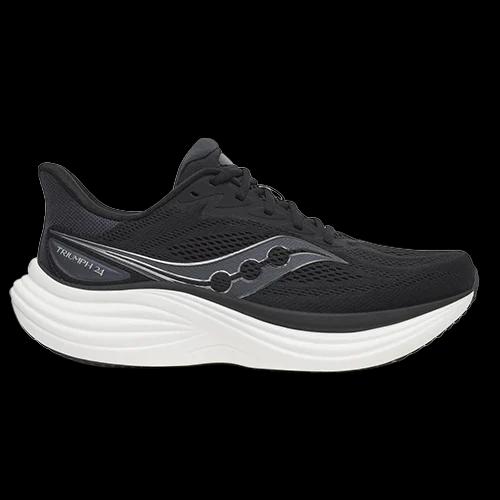
This is the one we’d buy first. RunRepeat measured 33.6 mm of foam under the forefoot and 3.3 mm of outsole. It lost just 0.6 mm in their wear test.
And this pair came in at 258 g, well under the 292 g that’s typical for shoes testers like for heavier runners. RunRepeat’s pair measured an 8 mm drop, below the 10 mm listed.
Believe in the Run had their heavier tester run in it, and that tester rated it highly. Runnea recommends it above 80 kg. The catch is a snug forefoot and less stability than a Kayano. If your feet are broad, go straight to the 2E version.
Best if your foot rolls in: ASICS Gel-Kayano 32
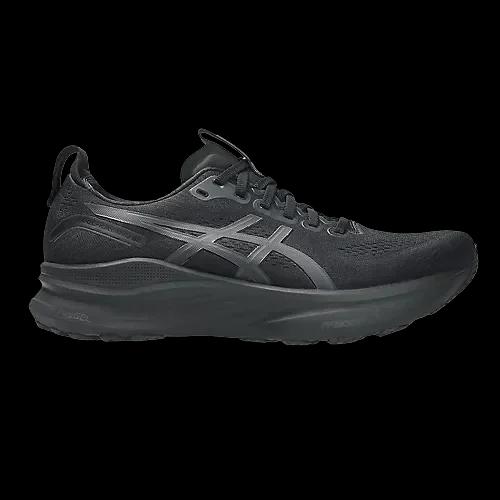
It has one of the thickest outsoles of any shoe that passes. RunRepeat measured 4.5 mm, and it lost only 0.7 mm in their wear test. The foam is firm at 41.3 AC, against a lab average of 35.5.
RTINGS, RunRepeat and Runnea all name heavier runners as a match. It’s not a fun shoe, though. It’s heavy at 295 g and has little energy return. It’s built for easy days and long runs, and men get wide and extra wide.
We’d pick it over the newer Kayano 33. That one is much softer at 32.8 AC, with only 28.3 mm of foam under the forefoot.
Most foam, wider fit: ASICS Gel-Nimbus 27
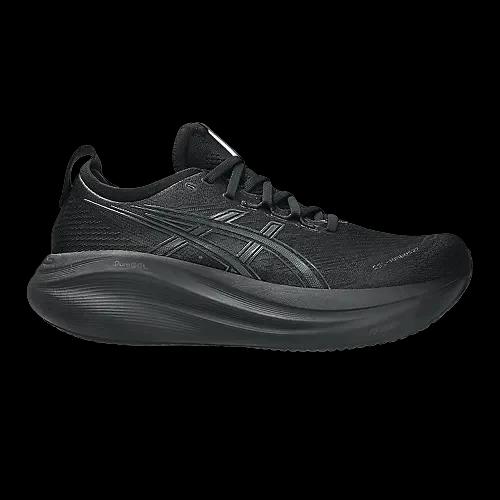
It has 34.4 mm of foam up front. It’s also firmer than that height suggests, at 39.3 AC. So you get depth without the sink. The outsole is 3 mm, right on our line. It has more toe room than past versions and comes in three widths.
Expect a calm ride, not a bouncy one. It weighed 299 g in the lab. Want the same foam in a lighter shoe? The Nimbus 28 also clears both checks at 278 g. We just haven’t found a tester who tried it with heavier runners in mind.
| Shoe | Type | Forefoot foam | Outsole | Firmness | Drop | Weight |
|---|---|---|---|---|---|---|
| Saucony Triumph 24 | Neutral | 33.6 mm | 3.3 mm | 37.5 AC | 8 mm | 258 g |
| ASICS Gel-Kayano 32 | Stability | 30.6 mm | 4.5 mm | 41.3 AC | 9.3 mm | 295 g |
| ASICS Gel-Nimbus 27 | Neutral | 34.4 mm | 3 mm | 39.3 AC | 8.3 mm | 299 g |
 Saucony Hurricane 26 | Stability | 32.4 mm | 3.1 mm | 33.8 AC | 5.9 mm | 272 g |
 Puma MagMax Nitro | Neutral | 33.3 mm | 3.5 mm | 41.3 AC | 9.6 mm | 291 g |
 On Cloudmonster 3 | Neutral | 32.2 mm | 3.2 mm | 49.9 AC | 6.4 mm | 301 g |
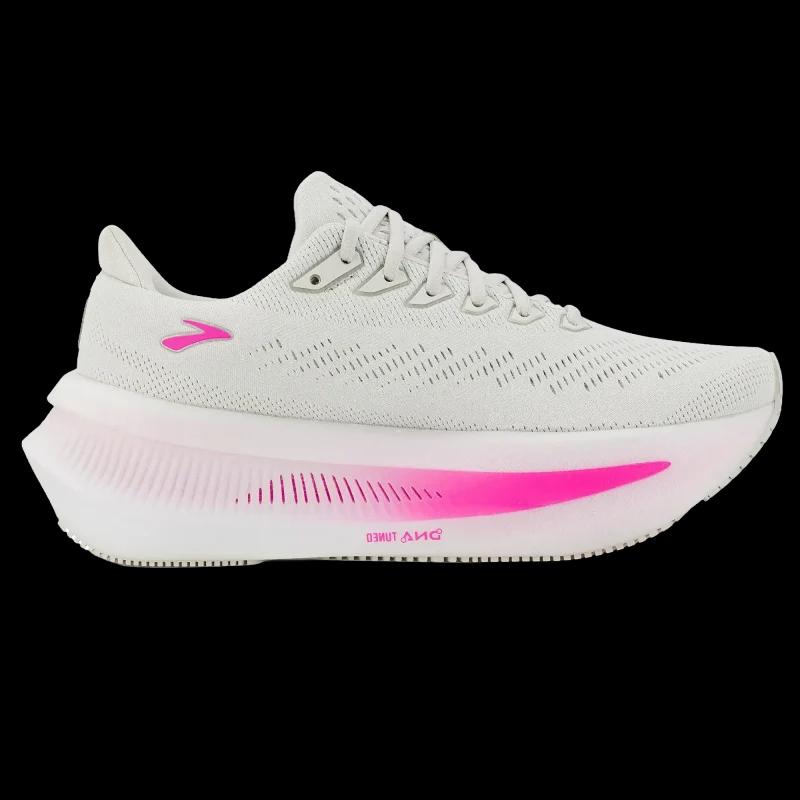 Brooks Glycerin Max 2 | Neutral | 37.3 mm | 3.5 mm | 30.9 AC | 8.1 mm | 318 g |
Source: RunRepeat lab reviews, read for our catalogue in 2026
The two numbers that matter most
Foam under the forefoot and rubber on the outsole are what split the shoes that hold up from the ones that don’t. We found that by comparing lab data across our catalogue with what testers actually say.
One 220-pound reader told Believe in the Run that some popular shoes were done at around 175 miles. That’s the problem in one comment. A shoe can feel great in the store and be flat a few months later.
So we took the 155 shoes in our catalogue with both measurements from the same lab. Then we split them by what testers wrote. For the shoes they point to for heavier runners, the median forefoot foam is 32.3 mm. For the shoes they warn heavier runners about, it’s 26.6 mm.
The outsole shows the same split: a median of 3.3 mm against 2.6 mm. We set a line at 30 mm of forefoot foam and 3 mm of rubber. Only 34 of the 155 shoes clear both.
0 of 31
Soft or firm foam for heavy runners?
Firm isn’t the enemy, and soft isn’t the answer. The usual advice is “bigger runner, more cushion”. The midsole foam is where that gets messy.
Firmness barely moved in our data. The shoes testers like for heavier runners had a median of 34.4 AC, and the shoes they warn about had 35.4 AC. That gap is tiny next to the gap in foam height.
Why would height beat softness? RTINGS explains it well: some shoes feel plush under light pressure but bottom out when you land with more force. Bottoming out means the foam gets squashed flat before your stride ends. RTINGS tests cushioning up to 2,050 newtons, which it says matches a 100 kg runner moving fast.
Solereview goes further. It says firm foam makes bottoming out less likely, and that a midsole bottoming out may raise vertical impact forces.
There’s some science that fits. In a trial of 848 recreational runners, the firmer version of one shoe went with more injuries, but mostly in lighter runners. Heavier runners didn’t show that pattern.
That’s one shoe in two versions, and it can’t prove cause. It doesn’t say firm shoes protect you. It does suggest you don’t need to run scared of a firmer ride.
Where testers disagree: the Glycerin Max 2
Lists that all recommend the same shoe are hiding an argument. The Brooks Glycerin Max 2 is the clearest case. It clears both our checks with the most forefoot foam in our table.
RunRepeat and Runnea recommend it for heavier runners. Solereview puts it on its list of shoes heavier runners should avoid, along with the Nike Vomero Premium and the New Balance 1080 v15.
Our call: it’s not a first pick. At 30.9 AC it’s softer than average, and at 318 g it’s the heaviest shoe in the table. The rocker is smooth, though, and a heel striker who wants maximum protection on easy days may love it. Try it somewhere you can return it.
What counts as a heavy runner?
There’s no official number, but most guides start between 80 and 90 kg for men. Running Shoes Guru uses over 80 kg (180 lbs) for men and over 70 kg (155 lbs) for women. Solereview says 190 lbs. Believe in the Run says “very generally speaking” over 200 lbs.
Your body weight is only part of it. Running Shoes Guru notes that your joints take 3 to 5 times your bodyweight with each step. So a long stride, a hard landing or a lot of weekly mileage can load a shoe like extra kilos do.
Treat these as a rough guide. If your shoes go flat early or your forefoot feels dead after a few weeks, this article is for you, whatever the scale says. This guide sticks to road shoes. New to running? Start with our guide for beginners.
Width and fit: the fix most lists skip
If your shoes feel tight, buy a wider version before you buy a different shoe. Few lists tell you how widths work, and fewer tell you which versions exist. All three of our picks run true to size for testers, so start with your usual size.
RunRepeat lays out the labels. For men, D is standard, 2E is wide and 4E is extra wide. For women, B is standard, D is wide and 2E is extra wide. So a women’s D and a men’s D aren’t the same fit.
Toe box shape counts too. RunRepeat’s toe box figure for the Kayano 32 is 73.9 mm, near the top of our shortlist. The Triumph 24 is 71.4 mm, and testers call it tapered. Doctors of Running rate the Kayano’s knit best for normal to narrow feet, so broad feet should go wide.
The upper can hurt you as much as the sole. Look for room at the toes and a secure midfoot.
Our guide to running shoes for wide feet goes deeper on this. Width availability varies by country, so check it before you fall for a model.
Comfort still gets the last word. A shoe that clears every check is the wrong shoe if it isn’t comfortable on your foot. Run in it for a few easy sessions, and ask the shop if you can swap it.
A 2025 analysis of 527 runners, led by the same researcher as the trial above, linked liking your shoe with fewer injuries. Decathlon co-funded that study, so read it with care.
Do heavy runners need stability shoes?
No. Weight doesn’t decide whether you need a stability shoe. Support features limit how far your foot rolls in. That’s about how you move. Your weight can’t tell you that.
Of the 37 shoes our notes flag for heavier runners, 24 are neutral and 13 are stability shoes. Filter by stability alone and you’d lose most of them. A wide platform also steadies you without any guidance tech, which is why so many neutral shoes make this list.
Does your foot roll in a lot? That’s a separate question about overpronation, and a video from behind can show it.
Which shoe for which run?
Use the heavy, stable stuff for most of your miles, and treat fast shoes as a special case. Here’s how we’d split it.
- Daily training: the Triumph 24, or the Hurricane 26 if you want guidance. RunRepeat says its firm frame means there’s no way it bottoms out. It also called the platform the widest it had measured, at 129.8 mm up front, and praised its shock absorption for heavier runners.
- Long runs: the Nimbus 27 or the Kayano 32.
- Recovery runs: this is where a soft max cushion shoe makes sense. The Fresh Foam X More v6 won over a 95 kg WearTesters reviewer on easy runs. Just know its outsole is only 1.9 mm, so don’t expect it to last like a Kayano.
- The Hoka Bondi 9 is the other classic here, with a listed 43 mm of stack height at the heel on a broad platform.
- Race day: be careful. RunRepeat and RTINGS both warn heavier runners off the Nike Vaporfly 4.
- Solereview’s avoid list also has carbon-plated racers like the Adidas Adios Pro 4 and the Metaspeed Sky Tokyo. The Adizero Prime X3 Strung goes the other way. Believe in the Run’s larger tester rates it close to perfect for long, steady miles.
Shoes that struggle under heavier runners
Thin foam and thin rubber show up again and again in testers’ warnings.
- RunRepeat says the Adizero Adios 9 suits lightweight runners, because its thin foam slab bottoms out under heavier strides.
- Tall doesn’t always save you. RTINGS found the forefoot cushioning on the Ghost Max 4 falls off significantly under heavier loads. Doctors of Running saw noticeable wear on the Clifton 11 after about 80 miles and rate it low for heavier heel strikers.
Weight is the price you pay for avoiding all that. Of the shoes testers like for heavier runners, the median RunRepeat weight is 292 g. For the ones they warn about, it’s 224 g. The extra weight is normal, so don’t let it scare you off.
How long do running shoes last for heavy runners?
Often less than the number on the box, so go by feel and by what you can see. RunDreamAchieve suggests 300 to 500 miles for heavier men, and notes it can be less if the foam flattens early. That one reader’s 175 miles shows how wide the range is.
Press your thumb into the forefoot foam. Look at the outsole under your big toe. If the front feels flat, or the rubber has gone, it’s time. And if something hurts when you run, see a health professional before you change shoes. Running shoes can’t promise you’ll stay injury-free.
The rest of our shortlist
- Saucony Hurricane 26Stability for long, easy miles, on a very wide base. Runnea points heavier runners to it.
- Puma MagMax NitroClears both checks, and RunRepeat rates it for larger runners. Doctors of Running found the heel clunky for heavy heel strikers.
- On Cloudmonster 3The firmest in our table at 49.9 AC. Believe in the Run’s heavier tester found it steady. Better if you land midfoot.
 Hoka Bondi 9Doctors of Running like it for heavier runners at easy paces, and it comes in 2E and 4E. We don’t have a lab forefoot figure for it, so it’s outside our check.
Questions runners ask
What are the best running shoes for heavy runners?
Try the Saucony Triumph 24 if you’re neutral and the ASICS Gel-Kayano 32 if your foot rolls in. Try the ASICS Gel-Nimbus 27 if you need width. All three have at least 30 mm of foam under the forefoot and 3 mm of outsole in RunRepeat’s lab.
What are the best running shoes for heavy men and big guys?
The same three are a good start, and men get the most width choices. The Kayano 32 comes in wide and extra wide, and so does the Nimbus 27. If you’re a bigger guy with broad feet, try a 2E or 4E before you switch models. Fit decides more than the label does.
What are good running shoes for overweight beginners?
Pick something steady with plenty of foam, and don’t rush. The Nimbus 27 and the Triumph 24 both suit easy miles. Walk-run sessions are a fine way to start, and comfort should have the final say. Our guide for beginners covers your first pair, and a health professional can help if something hurts.
Do heavier runners need more cushioning?
They need foam that doesn’t go flat, which isn’t always the softest foam. In our data, forefoot height split good and bad shoes far better than firmness did. In a trial of 848 runners, the firmer shoe was linked to more injuries mostly among lighter runners, not heavier ones.
Do heavy runners need stability shoes?
Not because of weight. Stability shoes address how far your foot rolls in, and your weight can’t tell you that. Of the 37 shoes our notes flag for heavier runners, 24 are neutral and 13 are stability. Check your foot movement with a video from behind, not with a scale.
Do running shoes wear out faster if you’re heavy?
Often, yes. One 220-pound reader told Believe in the Run some popular shoes were done at around 175 miles. Doctors of Running saw noticeable wear on the Clifton 11 after about 80 miles. Look for at least 3 mm of outsole, and retire a pair when the forefoot feels flat.
Sources
- Shoe cushioning influences the running injury risk according to body mass: a randomized controlled trial involving 848 recreational runnersAmerican Journal of Sports Medicine, 2020
- The best running shoes for heavy runnersRTINGS
- Best running shoes for heavy runnersSolereview
- Best running shoes for heavy runners (with reader comments)Believe in the Run
- Best running shoes for heavy menRunRepeat
- Best running shoes for heavy runnersRunning Shoes Guru
- Best running shoes for heavy menRunDreamAchieve
- Saucony Triumph 24 lab reviewRunRepeat
- ASICS Gel Kayano 32 lab reviewRunRepeat
- ASICS Gel Nimbus 27 lab reviewRunRepeat
- Brooks Glycerin Max 2 lab reviewRunRepeat