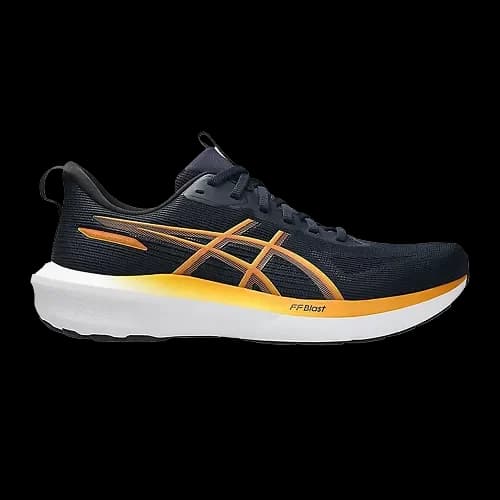
ASICS GT-1000 14 review
The entry point to ASICS’s stability range, now on FF Blast foam with the 3D Guidance System: a steady, durable shoe for short and medium runs.
- Drop
- 8 mm
- Heel stack
- 34.5 mm
- Forefoot
- 26.5 mm
- Weight
- 265 g
- Support
- Stability
- Plate
- None
Our verdict
Steady, durable, and a bit warm.
The GT-1000 14 swaps FlyteFoam for FF Blast and keeps a mild guidance system. In RunRepeat’s lab it scores high for stability and outsole durability, but low for breathability and energy return, and its drop measured 9.6 mm against a listed 8 mm. It suits easy runs of short to medium length for runners who want light support.
Strong points
- Stable: 92 for stability in RunRepeat’s test
- Durable outsole: 4.5 mm thick, only 0.7 mm lost in the wear test
- Better grip and foam than the GT-1000 13
- Thick, comfortable tongue
Weak points
- Warm: 2 out of 5 for breathability
- Little energy return from the FF Blast foam
- Runs slightly small for RunRepeat’s readers
- Not for long distances, per i-run
Who it fits
- You want light support for daily runs
- You land on your heel
- You run short to medium distances
Who should skip it
- You run in hot weather
- You want bounce or long-run cushioning
Shoe profile
Where the GT-1000 14 sits among the 395 shoes in our catalogue.
| Axis | GT-1000 14 |
|---|---|
| Cushioning | 17 |
| Lightness | 48 |
| Stability | 85 |
| Drop | 45 |
| Response | 6 |
Fig. 1 · How to read it. Each axis runs from 0 at the centre to 100 at the edge. Cushioning, lightness and drop are the shoe’s rank in the catalogue from listed figures; stability and response are scored from the support type, the plate, the rocker and the intended use. The dotted grey line is the catalogue median. Source: Strideprint catalogue (cat).
Where it sits in the catalogue
Weight265 g, heavier than 52% of shoes
Drop8 mm, higher than 45% of shoes
Heel stack34.5 mm, lower than 82% of shoes
Forefoot stack26.5 mm, lower than 83% of shoes
How it feels
Written from 1 published test. We quote measurements, not impressions we did not have.
Moderate cushioning, softer foam. A lower build than most stability shoes, 34.5 mm at the heel, with softer FF Blast but below-average shock absorption in RunRepeat’s lab.
Light guidance that works. 3D Guidance from a wide base, no post; RunRepeat scores stability 92 with average torsional stiffness.
Better than before, still modest. Light for a stability shoe at 265 g on the brand figure, but only about 54 percent energy return in RunRepeat’s lab.
Moderate cushioning, softer foam. ASICS list 34.5 mm at the heel and 26.5 mm at the forefoot, as RunRepeat report; its lab measured 35.4 and 25.8 mm. On the brand figure, 31 of the 40 stability road shoes in our catalogue list a taller heel.
The new FF Blast foam measured 33.7 AC, slightly softer than the 35.5 average, but heel shock absorption came in below average at 122 SA. RunRepeat sees it as right for runs up to about 16 km.
Light guidance that works. The 3D Guidance System relies on a wide base and a guiding shape rather than a post, per i-run. RunRepeat scores stability 92.
The platform is not especially stiff: 13.9 Nm in RunRepeat’s torsion test, close to the 14.4 average, with a medium heel counter at 3 out of 5.
Better than before, still modest. Energy return improved on the GT-1000 13, which stayed under 50 percent, but remains low: RunRepeat reports 54.4 percent at the heel and 53.1 at the forefoot, against a 61.4 average.
RunRepeat weighed 272 g against a brand figure of 265 g. On that brand figure, only 6 of the 37 stability road shoes weighed in a men’s US 9 in our catalogue are lighter.
Read more
Moderate cushioning, softer foam. ASICS list 34.5 mm at the heel and 26.5 mm at the forefoot, as RunRepeat report; its lab measured 35.4 and 25.8 mm. On the brand figure, 31 of the 40 stability road shoes in our catalogue list a taller heel.
The new FF Blast foam measured 33.7 AC, slightly softer than the 35.5 average, but heel shock absorption came in below average at 122 SA. RunRepeat sees it as right for runs up to about 16 km.
Light guidance that works. The 3D Guidance System relies on a wide base and a guiding shape rather than a post, per i-run. RunRepeat scores stability 92.
The platform is not especially stiff: 13.9 Nm in RunRepeat’s torsion test, close to the 14.4 average, with a medium heel counter at 3 out of 5.
Better than before, still modest. Energy return improved on the GT-1000 13, which stayed under 50 percent, but remains low: RunRepeat reports 54.4 percent at the heel and 53.1 at the forefoot, against a 61.4 average.
RunRepeat weighed 272 g against a brand figure of 265 g. On that brand figure, only 6 of the 37 stability road shoes weighed in a men’s US 9 in our catalogue are lighter.
Which runs it’s for
| Run | Fit | Why | Source |
|---|---|---|---|
| Easy runs | Made for it | Its main job: RunRepeat scores it 84 for daily running. | RunRepeat |
| Walking | Can do | i-run’s buyers mostly praise its comfort; no test rates walking directly. | i-run |
| Long runs | Not for it | RunRepeat keeps it to about 16 km, and i-run rules out longer routes. | RunRepeat, i-run |
| Tempo | Not for it | RunRepeat scores it 42 for tempo runs. | RunRepeat |
Source: RunRepeat, i-run
What the tests say
Only one full test is published so far, RunRepeat’s lab review. It finds a stable, durable trainer held back by a warm upper and low energy return. Retailer listings agree on the 8 mm drop and light support, but Runnea files it as neutral.
| Test | Type | Our reading | In one sentence | Source |
|---|---|---|---|---|
| RunRepeat | Lab | Positive | RunRepeat scores it 81 out of 100: dependable support and durability, but warm and short on energy return. | Read |
They agree
- 8 mm drop, light supportRunRepeat and i-run both list 8 mm, and both describe moderate guidance from the 3D Guidance System.
They split
- Stability or neutral?RunRepeat and i-run class it as a stability shoe, while Runnea’s listing files it under neutral pronation.
How it’s built
A simple guidance build: FF BLAST foam with PureGEL in the heel and the 3D Guidance System, a closed mesh upper with a padded tongue, and a thick, hard-wearing rubber outsole.
FF Blast with PureGEL and 3D Guidance, a warm mesh with a thick 8.1 mm tongue, and a 4.5 mm outsole that barely wore in RunRepeat’s test.
| # | Part | Measure |
|---|---|---|
| 1 | UpperEngineered mesh | Breathability 2 / 5 |
| 2 | Tongue | 8.1 mm |
| 3 | Heel | Stiffness 3 / 5 |
| 4 | MidsoleFF BLAST, PureGEL and 3D Guidance System | Hardness 33.7 AC |
| 5 | Insole | 5.2 mm |
| 6 | Outsole | 4.5 mm |
Fig. 3 · Side profile. Stack heights to scale (listed: 34.5 mm heel, 26.5 mm forefoot; measured: 4.5 mm outsole); the split between the two foams is not measured and is drawn at mid-height. Dashed: insole, hidden. Sources: RunRepeat, i-run.
Upper. A reworked mesh, per i-run, that RunRepeat found runs warm: 2 out of 5 for breathability.
Tongue. Thick and plush at 8.1 mm, unchanged from the GT-1000 13, but without a gusset, per RunRepeat.
Heel. A medium-stiff counter, 3 out of 5 at RunRepeat, with a finger loop.
Midsole. FF BLAST replaces FlyteFoam, measured at 33.7 AC, with PureGEL in the heel. The 3D Guidance System uses a wide base and a guiding shape, per i-run.
Insole. Removable, 5.2 mm thick, per RunRepeat.
Outsole. A thick 4.5 mm rubber layer with a new compound, per i-run. Forefoot traction rose from 0.35 to 0.50 in RunRepeat’s test.
Read more
A simple guidance build: FF BLAST foam with PureGEL in the heel and the 3D Guidance System, a closed mesh upper with a padded tongue, and a thick, hard-wearing rubber outsole.
1. Upper. A reworked mesh, per i-run, that RunRepeat found runs warm: 2 out of 5 for breathability.
2. Tongue. Thick and plush at 8.1 mm, unchanged from the GT-1000 13, but without a gusset, per RunRepeat.
3. Heel. A medium-stiff counter, 3 out of 5 at RunRepeat, with a finger loop.
4. Midsole. FF BLAST replaces FlyteFoam, measured at 33.7 AC, with PureGEL in the heel. The 3D Guidance System uses a wide base and a guiding shape, per i-run.
5. Insole. Removable, 5.2 mm thick, per RunRepeat.
6. Outsole. A thick 4.5 mm rubber layer with a new compound, per i-run. Forefoot traction rose from 0.35 to 0.50 in RunRepeat’s test.
Durability. A strength: RunRepeat’s wear test removed only 0.7 mm, against a 1.1 mm average, from a 4.5 mm outsole.
Durability. A strength: RunRepeat’s wear test removed only 0.7 mm, against a 1.1 mm average, from a 4.5 mm outsole.
Specs, listed and measured
Every figure carries its source.
Drop, mm
Heel stack, mm
Forefoot stack, mm
Weight (men’s), g
| Spec | Listed | Measured |
|---|---|---|
| Drop |
|
|
| Heel stack |
|
|
| Forefoot stack |
|
|
| Weight |
|
|
| Support |
| – |
| Plate |
| – |
| Surface |
| – |
Fig. 4 · Listed vs measured. Bars start at zero. Sources: RunRepeat, i-run.
Lab measurements
| Spec | Measured |
|---|---|
| Midsole hardness |
|
| Torsional rigidity |
|
| Energy return (forefoot) |
|
| Heel counter stiffness |
|
| Traction coefficient |
|
| Breathability |
|
| Spec | Measured |
|---|---|
| Toe box width |
|
| Toe box height |
|
| Outsole thickness |
|
| Insole thickness |
|
| Tongue thickness |
|
| Flex force |
|
Sizing and fit
Few reports so far: RunRepeat’s readers find it slightly small, so try it on or consider half a size up.
Length
Mixed reports
Widths
standard, wide, and extra wide
Toe room
Wide but low. RunRepeat measured a 74.1 mm toe box, above the 73.2 average, with 26.2 mm of height, below the 27.0 average.
RunRepeat
Full sizing notes from testers
In RunRepeat’s sizing poll, 40 readers rate it slightly small. Its lab found a little more room in the upper than on the GT-1000 13.
RunRepeat lists standard, wide and extra-wide for men, and standard and wide for women.
RunRepeat
Vs GT-1000 13
A foam upgrade above all: FF Blast replaces FlyteFoam, with better grip and a slightly taller heel.
Little reason to keep the 13 unless you prefer its fit: RunRepeat found the 14 better on foam and grip, with a nearly identical fit.
Version history: GT-1000 13 to GT-1000 14
FF Blast foam. FF Blast replaces FlyteFoam; RunRepeat measured better energy return than on the 13, which stayed under 50 percent. (RunRepeat)
Better grip. Forefoot traction rose from 0.35 to 0.50 in RunRepeat’s test, with a new outsole compound per i-run. (RunRepeat, i-run)
A little more foam. RunRepeat measured the heel at 35.4 mm against 33.7 mm, and the shoe about 1.5 percent lighter. (RunRepeat)
Alternatives compared
Each one fixes one thing the GT-1000 14 does not do.
| ASICS GT-1000 14 | 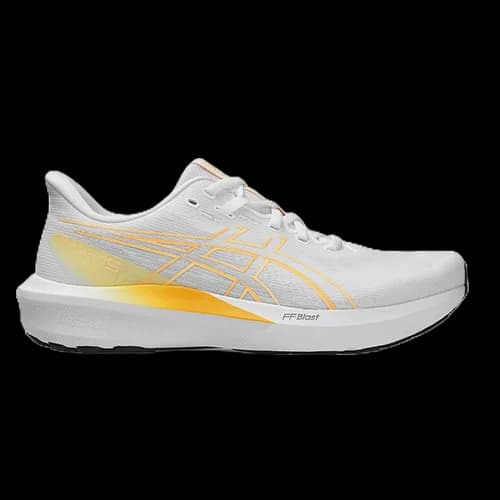 ASICS GT-1000 15 ASICS GT-1000 15 | 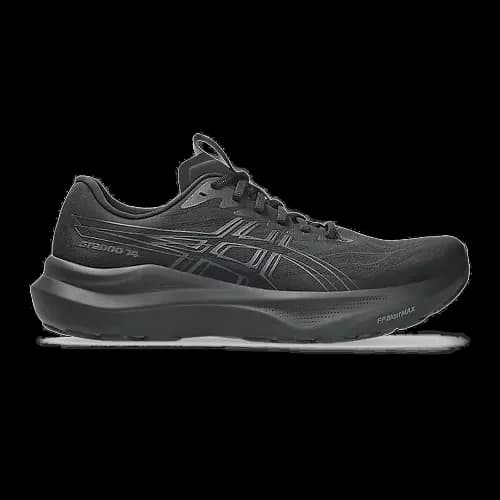 ASICS GT-2000 14 ASICS GT-2000 14 | 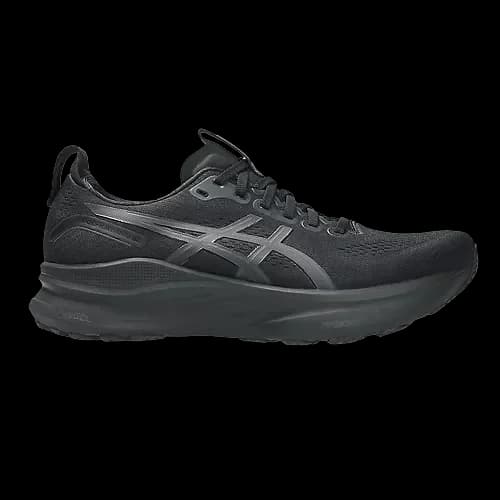 ASICS Gel-Kayano 32 ASICS Gel-Kayano 32 | 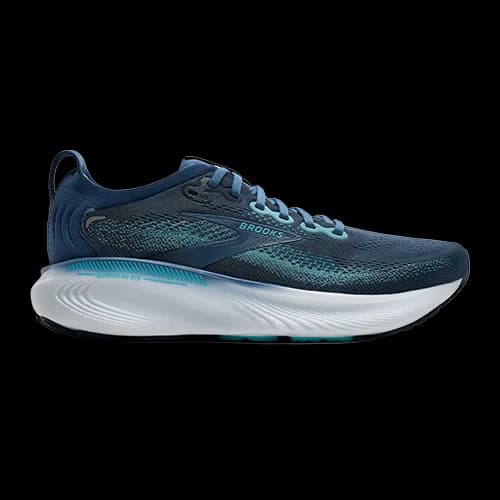 Brooks Adrenaline GTS 25 Brooks Adrenaline GTS 25 | |
|---|---|---|---|---|---|
| Pick it for | This page | Lighter | More cushion | More stable | Higher drop |
| Drop | 8 mm | 8 mm | 8 mm | 8 mm | 10 mm |
| Heel stack | 34.5 mm | – | 36.5 mm | 40 mm | 37 mm |
| Weight | 265 g | 261 g | 269 g | 298 g | 301 g |
| Support | Stability | Stability | Stability | Stability | Stability |
Questions runners ask
Does the ASICS GT-1000 14 run small?
Slightly, according to 40 RunRepeat readers. With few published tests so far, trying it on before choosing your usual size is the safest option.
Is the GT-1000 14 a stability shoe?
Yes, a light one. RunRepeat and i-run describe moderate guidance from the 3D Guidance System, though Runnea’s listing files it as neutral. It is a guidance shoe, not a treatment.
GT-1000 14 or GT-2000 14?
The GT-2000 sits higher in ASICS’s range, with a taller 36.5 mm heel listed in our catalogue against 34.5 mm. Choose the GT-1000 for short runs and light support, the GT-2000 if you want more cushion.
Is the GT-1000 14 good for long runs?
Not really. RunRepeat sees it as right for runs up to about 16 km, and i-run does not recommend it for longer routes.
Does the GT-1000 14 come in wide?
Yes. RunRepeat lists wide and extra-wide for men, and wide for women. Availability varies by country.
Sources
- RunRepeat, ASICS GT 1000 14 lab review. Accessed Oct 13, 2026.
- i-run, Asics GT-1000 14. Accessed Oct 13, 2026.
- Runnea, ASICS GT-1000 14. Accessed Oct 13, 2026.
- Run and Become, Asics GT-1000 15. Accessed Oct 13, 2026.
- Strideprint, Strideprint running shoe catalogue (ranks computed on 2026-10-13). Accessed Oct 13, 2026.
- cat: Strideprint catalogue, 395 shoes
How we review. We read published tests, brand and retailer pages and lab measurements, cross-check the figures and flag where they disagree. We did not test this shoe ourselves. Last updated October 13, 2026.