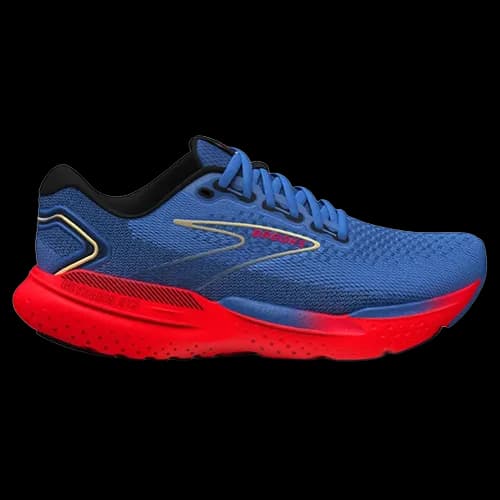
 Brooks
Glycerin GTS 21
10 mm drop · 28 mm heel · 297 gBrooks Glycerin GTS 21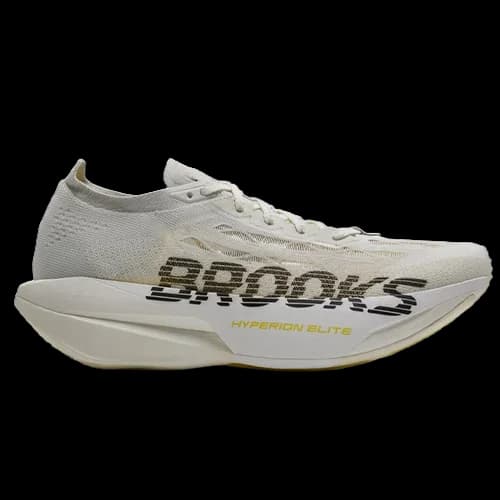 Brooks
Hyperion Elite 6
7 mm drop · 40 mm heel · 198 gBrooks Hyperion Elite 6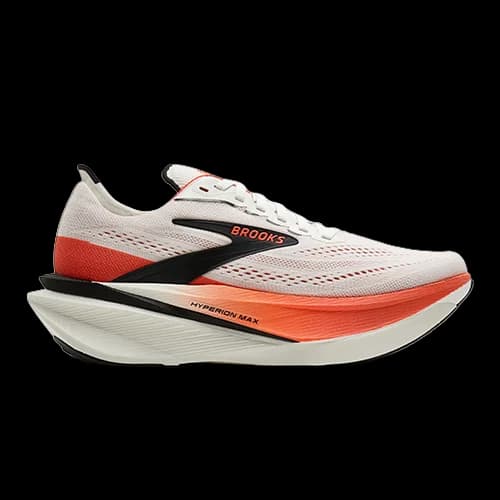 Brooks
Hyperion Max 4
6 mm drop · 45 mm heel · 286 gBrooks Hyperion Max 4AI stride analysis
Which pair is your perfect fit?
10 seconds of video from behind. Your stride, measured. Your pairs, ranked.
Find my perfect fit- No app
- Any phone
- Report in minutes
Where to start.
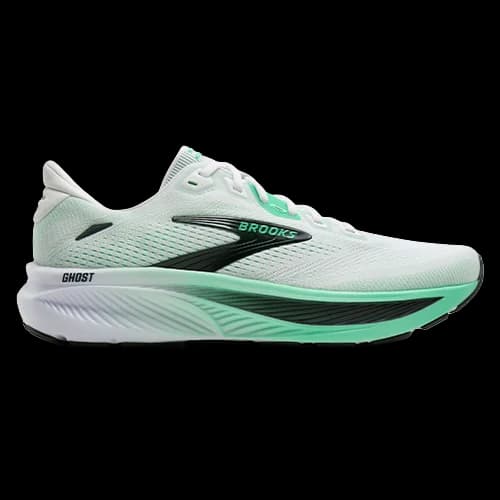 The everyday trainerBrooks Ghost 18
Brooks’s standard neutral daily trainer, closer to the ground than the Glycerin.[3]
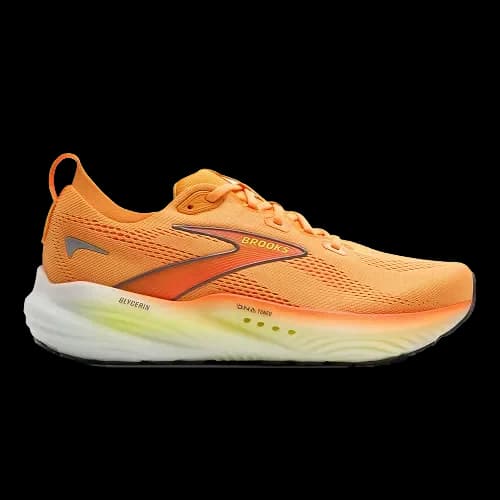 The cushioned neutralBrooks Glycerin 22
A maximalist neutral daily trainer for heel strikers who like a high drop at easy paces.[4]
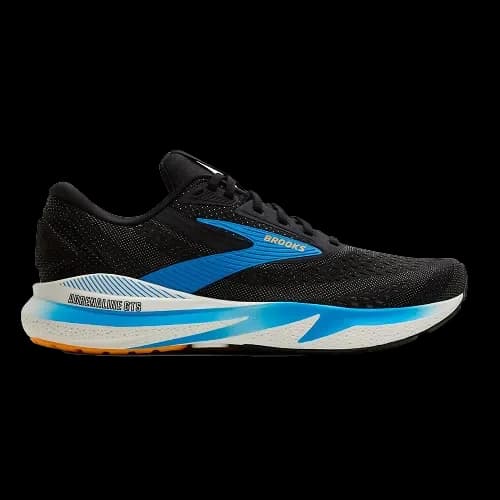 The support shoeBrooks Adrenaline GTS 24
Brooks’s signature stability trainer: GuideRails plus a medial post, for easy miles.[2]
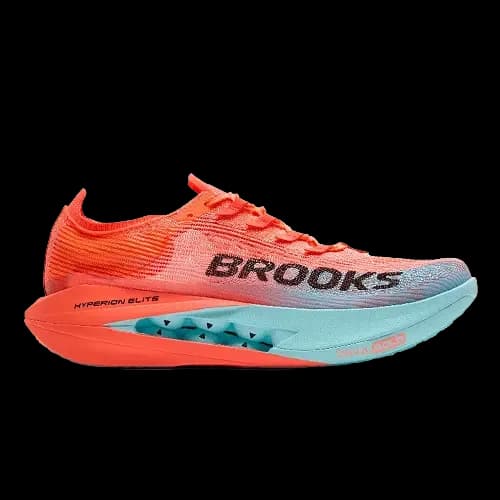 The race shoeBrooks Hyperion Elite 5
A carbon-plated racer on DNA Gold foam, for 5K to marathon.[5]
A running-only brand
Brooks was founded in Philadelphia in 1914 and is based in Seattle. In 2001 it cut its product line by more than half to focus on running, and two of its lines have been around for decades: the Adrenaline GTS since 1994 and the Ghost since 2008.[1]
How the Brooks range is built
Ghost is the standard neutral daily trainer, with a nitrogen-infused DNA Loft v3 midsole and a traditionally high drop. Glycerin sits above it with more cushioning; the Glycerin 22 moved to DNA Tuned, a dual-density version of that foam. Adrenaline GTS is the support shoe, and GTS versions of other lines add the same idea. Launch and Hyperion are the faster options, up to the carbon-plated Hyperion Elite racers.
Brooks builds support with GuideRails: raised sidewalls that keep the heel and foot on track. On the Adrenaline GTS 24 they work with a long medial post and a wider sole.[2][3][4][5]
Where Brooks suits your stride
Most Brooks trainers carry a high heel-to-toe drop and a cushioned heel, which favours heel strikers. Reviewers describe the Glycerin 22 as a strong pick for heel strikers at easy paces, and the Adrenaline GTS for runners who want posted support for heel and midfoot control. Even the Hyperion Elite 5 race shoe suits heel strikers better than forefoot strikers, who may find its forefoot thin.[2][4][5]
Ghost or Adrenaline: let the video decide
Ghost and Adrenaline feel alike at first: similar drop, similar cushioning. The difference is support, and whether you need it depends on how much your foot rolls in after landing. A fitting from a short video of you running shows that, so you do not end up with support you do not use, or without it when you need it.
The same goes for Glycerin and Glycerin GTS: same cushioning idea, with or without support.
The lines, explained.
- Daily training
Ghost
The standard neutral daily trainer, nitrogen-infused DNA Loft v3 and a familiar, predictable ride.[3]
- Max cushioning
Glycerin
More cushioning than the Ghost for neutral runners; GTS versions add support.[3][4]
- Support
Adrenaline GTS
Brooks’s signature stability trainer, with GuideRails and a medial post.[1][2]
- Speed and racing
Launch and Hyperion
The faster side of Brooks, up to the carbon-plated Hyperion Elite on DNA Gold foam.[2][5]
Launch 11, Hyperion 3, Hyperion Max 4, Hyperion Elite 5, Hyperion Elite 6
AI stride analysis
Which pair is your perfect fit?
10 seconds of video from behind. Your stride, measured. Your pairs, ranked.
Find my perfect fit- No app
- Any phone
- Report in minutes

Questions runners ask.
What does GTS mean on Brooks running shoes?
GTS marks the Brooks shoes built for support. The best known is the Adrenaline GTS, Brooks’s signature stability trainer, which combines GuideRails, raised sidewalls that keep the foot on track, with a long medial post. Other lines, like the Glycerin, also come in GTS versions.[2]
What is the difference between the Brooks Ghost and Glycerin?
Both are neutral daily trainers. The Glycerin is the more cushioned of the two, and the Ghost feels closer to the ground. The Glycerin 22 uses DNA Tuned, a dual-density version of the nitrogen-infused DNA Loft v3 foam found in the Ghost.[3][4]
Brooks Ghost or Adrenaline GTS: which should I choose?
The Ghost is neutral; the Adrenaline GTS adds GuideRails and a medial post for runners who want support through heel and midfoot. If your foot rolls in noticeably after landing, the Adrenaline is the one to try. If not, the Ghost is lighter on structure.[2][3]
Are Brooks running shoes good for heel strikers?
Generally yes. Most Brooks trainers have a high drop and a cushioned heel. Reviewers single out the Glycerin 22 for heel strikers at easy paces, and the Ghost keeps a traditionally high drop. Forefoot strikers may find some models thin under the forefoot.[3][4][5]
What are GuideRails?
GuideRails are the Brooks support system: raised sidewalls around the heel and along the foot that keep it on track. On the Adrenaline GTS 24 they sit alongside a long medial post and a wider sole, rather than relying on one hard block of firm foam.[2]
Keep looking.
Sources
- Wikipedia, Brooks Sports
- Doctors of Running, Brooks Adrenaline GTS 24 Review
- Doctors of Running, Brooks Ghost 16 Review
- RunRepeat, Brooks Glycerin 22 review
- RunRepeat, Brooks Hyperion Elite 5 review
Other brands we fit
Which Brooks? Ask your stride.
Ten minutes on your phone. $39, once.
Start your fitting