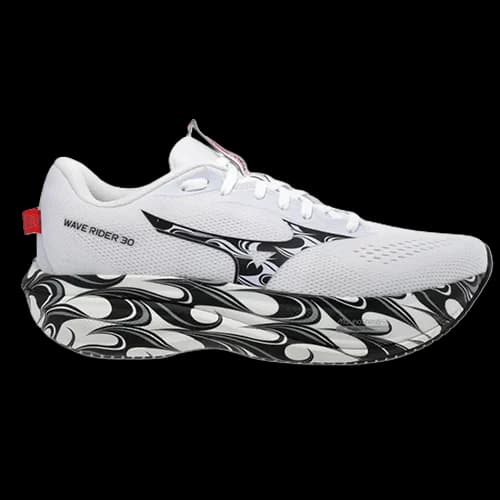
Mizuno Wave Rider 30 review
For its thirtieth edition, Mizuno rebuilt the Wave Rider from the sole up: more foam, a lower drop, a broader base and, for the first time, a full-length Wave plate.
- Drop
- 8 mm
- Heel stack
- 42.5 mm
- Forefoot
- 34.5 mm
- Weight
- 266 g
- Support
- Neutral
- Plate
- Other
Our verdict
A softer, steadier Rider.
The Wave Rider 30 is a cushioned neutral daily trainer that stays unusually stable for its height, thanks to a much wider midfoot and a full-length plate. It suits neutral runners, heel strikers included, who want comfort and protection for easy and long miles more than pop.
Strong points
- Much more cushioning than the Wave Rider 29
- Stable for a tall neutral shoe, thanks to a wider base
- Smooth transitions from heel to toe
- Weight barely moves despite the extra foam
Weak points
- Energy return judged disappointing in the lab
- Better at easy pace than in structured workouts
- Low toe box for some feet
- Lower drop than past Riders may need a short adjustment
Who it fits
- Neutral runners who like a planted feel
- You land on your heel
- Your easy and long runs fill the week
- Newer runners and a range of body weights
Who should skip it
- You want maximum energy return
- Your week is built on hard workouts
- You loved the classic high-drop, low Rider
Shoe profile
Where the Wave Rider 30 sits among the 395 shoes in our catalogue, and what changed from the Wave Rider 29.
| Axis | Wave Rider 30 | Wave Rider 29 | Change |
|---|---|---|---|
| Cushioning | 82 | 43 | +39 |
| Lightness | 47 | 58 | −11 |
| Stability | 30 | 30 | = |
| Drop | 45 | 84 | −39 |
| Response | 6 | 40 | −34 |
Fig. 1 · How to read it. Each axis runs from 0 at the centre to 100 at the edge. Cushioning, lightness and drop are the shoe’s rank in the catalogue from listed figures; stability and response are scored from the support type, the plate, the rocker and the intended use. The dotted grey line is the catalogue median. Source: Strideprint catalogue (cat).
Where it sits in the catalogue
Weight266 g, heavier than 53% of shoes
Drop8 mm, higher than 45% of shoes
Heel stack42.5 mm, higher than 82% of shoes
Forefoot stack34.5 mm, higher than 76% of shoes
How it feels
Written from 4 published tests. We quote measurements, not impressions we did not have.
Taller, softer, still composed. Taller stack at 42.5 mm heel and 8 mm drop, with a dual Enerzy NXT midsole that feels soft yet composed underfoot.
A neutral shoe that stays upright. A much wider midfoot keeps this neutral shoe steady despite the extra height, though it is not a guidance shoe.
A smooth roller, pop up for debate. The full-length plate gives a smooth, willing roll, but reviewers disagree on how much spring it adds.
Taller, softer, still composed. Mizuno list a stack height of 42.5 mm at the heel and 34.5 mm at the forefoot, for an 8 mm offset. The midsole pairs nitrogen-infused Enerzy NXT on top with a non-infused Enerzy NXT layer below.
RunRepeat measured the foam at 33.7 AC, a little softer than average. Underfoot, testers describe soft landings without the shoe sinking under them.
A neutral shoe that stays upright. The base is the story: Mizuno widened the midfoot by 14 mm over the Wave Rider 29. RunRepeat report only a very small loss of stability despite the extra height, and Runner’s World Germany find more support through the stride than before.
Doctors of Running see it as more neutral than past Riders, kept steady by the wide base, gentle flaring and a secure upper. Good news for neutral and mildly uneven strides; not a guidance shoe.
A smooth roller, pop up for debate. The new full-length plate inside the midsole adds rigidity at the transition points while the forefoot still bends, as Believe in the Run describe it.
How much spring that gives is where reviews differ. RunRepeat measured modest energy return; Runner’s World Germany held quick paces in it. Expect a smooth, willing ride rather than an explosive one.
Read more
Taller, softer, still composed. Mizuno list a stack height of 42.5 mm at the heel and 34.5 mm at the forefoot, for an 8 mm offset. The midsole pairs nitrogen-infused Enerzy NXT on top with a non-infused Enerzy NXT layer below.
RunRepeat measured the foam at 33.7 AC, a little softer than average. Underfoot, testers describe soft landings without the shoe sinking under them.
A neutral shoe that stays upright. The base is the story: Mizuno widened the midfoot by 14 mm over the Wave Rider 29. RunRepeat report only a very small loss of stability despite the extra height, and Runner’s World Germany find more support through the stride than before.
Doctors of Running see it as more neutral than past Riders, kept steady by the wide base, gentle flaring and a secure upper. Good news for neutral and mildly uneven strides; not a guidance shoe.
A smooth roller, pop up for debate. The new full-length plate inside the midsole adds rigidity at the transition points while the forefoot still bends, as Believe in the Run describe it.
How much spring that gives is where reviews differ. RunRepeat measured modest energy return; Runner’s World Germany held quick paces in it. Expect a smooth, willing ride rather than an explosive one.
Which runs it’s for
| Run | Fit | Why | Source |
|---|---|---|---|
| Easy runs | Made for it | Easy daily running: where every reviewer says it shines. | Doctors of Running, Believe in the Run |
| Long runs | Made for it | Cushioned and steady enough to go long. | RunRepeat, Doctors of Running |
| Recovery runs | Made for it | Soft landings on a stable base suit tired legs. | RunRepeat, Believe in the Run |
| Tempo | Can do | It can shift gears on progression runs; testers disagree on how much pace it really holds. | Believe in the Run, Runner’s World Germany |
| Light trail | Can do | Runner’s World Germany include firm trails in its range. | Runner’s World Germany |
Source: Doctors of Running, Believe in the Run, RunRepeat, Runner’s World Germany
What the tests say
The reviews agree the Wave Rider 30 is a ground-up rebuild: taller, softer and more comfortable than the 29, and still a dependable daily trainer. They differ on how lively it is and how much room the toe box offers.
| Test | Type | Our reading | In one sentence | Source |
|---|---|---|---|---|
| RunRepeat | Lab | Positive | RunRepeat praise the cushioning, stability and much better grip, but find the energy return disappointing and the higher stack a risk for longtime fans. | Read |
| Doctors of Running | Review | Positive | Doctors of Running grade it A- and rank it among their favorite training shoes of the year, with an especially roomy fit. | Read |
| Believe in the Run | Review | Positive | Believe in the Run rate it A-tier and call it a solid daily trainer for easy running, less suited to speed work. | Read |
They agree
- A deep redesignRunRepeat, Doctors of Running, Believe in the Run and Runner’s World Germany all describe a new sole: full-length Wave plate, new foam, lower drop and more stack.
- More cushioning and comfort than the 29RunRepeat measured a heel more than 5 mm taller, and Runner’s World Germany and Doctors of Running describe softer, more comfortable landings.
- Smooth transitionsBelieve in the Run and Runner’s World Germany both find the heel-to-toe roll smoother than before, helped by the plate and the rocker.
- Weight kept in checkRunRepeat measured 266 g and Believe in the Run note a similar weight to the 29 despite the extra foam.
They split
- How lively it isRunRepeat call the energy return disappointing. Runner’s World Germany found much more reactivity than before, and Doctors of Running describe a soft and bouncy ride. Believe in the Run sit in between: responsive, not bouncy.
- Toe box roomDoctors of Running find it especially spacious compared with earlier Riders. One Believe in the Run tester found the toe box low and narrow, and RunRepeat measured a slightly low toe box height.
How it’s built
Two layers of Mizuno Enerzy NXT foam with a full-length Mizuno Wave Plate between them, under a mesh upper with a padded, gusseted tongue and an X10 carbon rubber outsole.
Two layers of Enerzy NXT foam sandwich a full-length Wave Plate, under a mesh upper with a padded gusseted tongue. The X10 carbon rubber outsole grips better than on the 29, but wears at a normal pace.
| # | Part | Measure |
|---|---|---|
| 1 | Upper1BY1 mesh | – |
| 2 | Tongue | 7.9 mm |
| 3 | Heel | Stiffness 3 / 5 |
| 4 | MidsoleMizuno Enerzy NXT, dual density | Softness 33.7 AC |
| 5 | PlateMizuno Wave Plate | Torsional rigidity 15.2 Nm |
| 6 | Insole | 5.3 mm |
| 7 | OutsoleX10 carbon rubber | 2.7 mm |
Fig. 3 · Side profile. Stack heights to scale (listed: 42.5 mm heel, 34.5 mm forefoot; measured: 2.7 mm outsole); the split between the two foams is not measured and is drawn at mid-height. Dashed: insole, hidden. Sources: Mizuno, RunRepeat, Doctors of Running, Believe in the Run, Runner’s World Germany, Running Warehouse.
Upper. Mizuno describe a 1BY1 mesh upper with a simple design and a snug heel shape. Doctors of Running found it soft and plush yet breathable; two Believe in the Run testers found it warm in hot, humid weather. The laces are flat and threaded through rounded eyelets, with enough length for a runner’s loop.
Tongue. Gusseted and generously padded: RunRepeat measured 7.9 mm of thickness and noted large perforations for airflow. Runner’s World Germany add that elastic bands tie it to the midsole, which keeps it in place and stops lace bite.
Heel. RunRepeat rate the heel counter moderately stiff, 3 on their 5-point scale, a good match if rigid counters bother you. Doctors of Running and Believe in the Run describe a well-padded heel collar.
Midsole. The top layer is nitrogen-infused Mizuno Enerzy NXT, a supercritical EVA foam meant for soft cushioning and energy return. Below it sits an EVA-based Enerzy NXT layer without nitrogen, which Mizuno use for stability and Runner’s World Germany for structure that lasts over the miles.
Plate. For the first time in 30 years of Wave Riders, the Wave Plate runs the full length of the shoe, sandwiched between the two foam layers. Running Warehouse give Pebax Rnew, a plant-based TPU, as its material. Mizuno told Believe in the Run the plate stiffens the transition while leaving flex where it is not needed, and RunRepeat measured the shoe stiffer than the Wave Rider 29.
Insole. Removable and not glued down. RunRepeat measured it at 5.3 mm, a little thicker than usual, which is worth knowing if you swap in your own insole or orthotic.
Outsole. Mizuno and Running Warehouse describe X10, Mizuno’s most durable carbon rubber, placed where impact is highest. The pattern is new, especially under the forefoot. RunRepeat measured much better traction than on the 29 on dry and wet surfaces, though one Believe in the Run tester still slipped in the rain.
Read more
Two layers of Mizuno Enerzy NXT foam with a full-length Mizuno Wave Plate between them, under a mesh upper with a padded, gusseted tongue and an X10 carbon rubber outsole.
1. Upper. Mizuno describe a 1BY1 mesh upper with a simple design and a snug heel shape. Doctors of Running found it soft and plush yet breathable; two Believe in the Run testers found it warm in hot, humid weather. The laces are flat and threaded through rounded eyelets, with enough length for a runner’s loop.
2. Tongue. Gusseted and generously padded: RunRepeat measured 7.9 mm of thickness and noted large perforations for airflow. Runner’s World Germany add that elastic bands tie it to the midsole, which keeps it in place and stops lace bite.
3. Heel. RunRepeat rate the heel counter moderately stiff, 3 on their 5-point scale, a good match if rigid counters bother you. Doctors of Running and Believe in the Run describe a well-padded heel collar.
4. Midsole. The top layer is nitrogen-infused Mizuno Enerzy NXT, a supercritical EVA foam meant for soft cushioning and energy return. Below it sits an EVA-based Enerzy NXT layer without nitrogen, which Mizuno use for stability and Runner’s World Germany for structure that lasts over the miles.
5. Plate. For the first time in 30 years of Wave Riders, the Wave Plate runs the full length of the shoe, sandwiched between the two foam layers. Running Warehouse give Pebax Rnew, a plant-based TPU, as its material. Mizuno told Believe in the Run the plate stiffens the transition while leaving flex where it is not needed, and RunRepeat measured the shoe stiffer than the Wave Rider 29.
6. Insole. Removable and not glued down. RunRepeat measured it at 5.3 mm, a little thicker than usual, which is worth knowing if you swap in your own insole or orthotic.
7. Outsole. Mizuno and Running Warehouse describe X10, Mizuno’s most durable carbon rubber, placed where impact is highest. The pattern is new, especially under the forefoot. RunRepeat measured much better traction than on the 29 on dry and wet surfaces, though one Believe in the Run tester still slipped in the rain.
Durability. Expect normal mileage rather than exceptional. RunRepeat found slightly above-average wear after their abrasion test, on an outsole 0.3 mm thinner than the 29’s, and rated toe box durability as poor. Doctors of Running, after their own test miles, still expect great durability.
Durability. Expect normal mileage rather than exceptional. RunRepeat found slightly above-average wear after their abrasion test, on an outsole 0.3 mm thinner than the 29’s, and rated toe box durability as poor. Doctors of Running, after their own test miles, still expect great durability.
Specs, listed and measured
Every figure carries its source.
Heel stack, mm
Forefoot stack, mm
Drop, mm
Weight (men’s), g
| Spec | Listed | Measured |
|---|---|---|
| Drop |
|
|
| Heel stack |
|
|
| Forefoot stack |
|
|
| Weight, US M9 |
|
|
| Support |
| – |
| Plate |
| – |
| Surface |
| – |
| Release year |
| – |
Fig. 4 · Listed vs measured. Bars start at zero. Sources: Mizuno, Running Warehouse, RunRepeat, Runner’s World Germany.
Lab measurements
| Spec | Measured |
|---|---|
| Midsole hardness |
|
| Energy return (heel) |
|
| Heel counter stiffness |
|
| Traction coefficient |
|
| Toe box width |
|
| Toe box height |
|
| Spec | Measured |
|---|---|
| Outsole thickness |
|
| Insole thickness |
|
| Tongue padding thickness |
|
| Flex force |
|
| Torsional rigidity |
|
Sizing and fit
Go with your usual size; runners with a tall or wide forefoot should check the toe box or the wide version.
Length
True to size
Widths
standard and wide
Toe room
Roomy for most feet: Doctors of Running find the forefoot more spacious than earlier Riders, and RunRepeat measured an average width of 73.3 mm. The toe box is slightly low at 25.0 mm, and one Believe in the Run tester found it tapered.
RunRepeat, Doctors of Running, Believe in the Run
Full sizing notes from testers
RunRepeat, Doctors of Running and Believe in the Run call it true to size. RunRepeat describe a balanced, medium fit, and Running Warehouse rate heel, midfoot and toe box as average.
Toe room is the open question. Doctors of Running find it more spacious than earlier Riders, while one Believe in the Run tester found the toe box low and tapered and suggested a half size up. RunRepeat measured an average toe box width but a slightly low height.
RunRepeat list a standard and a wide version; Running Warehouse only show the standard D width on the page we read.
RunRepeat, Doctors of Running, Believe in the Run, Running Warehouse
Vs Wave Rider 29
Mizuno kept the name and rebuilt the shoe: more foam, less drop, a broader base and a full-length plate.
| Wave Rider 30 | Wave Rider 29 | |
|---|---|---|
| Support | Neutral | Neutral |
| Drop | 8 mm | 10 mm |
| Heel stack | 42.5 mm | 38 mm |
| Forefoot | 34.5 mm | 28 mm |
| Weight | 266 g | 258 g |
Keep the Wave Rider 29 if you like a firmer, lower shoe with a 10 mm drop and a lively, ground-close feel. Move to the 30 if you want more cushioning and comfort on a wider, steadier base, especially for long easy miles.
Listed figures. Source: Strideprint catalogue (cat).
Version history: Wave Rider 29 to Wave Rider 30
Full-length Wave plate. A first in the series, replacing a partial plate. (Mizuno, Believe in the Run)
Taller stack. RunRepeat measured the heel more than 5 mm higher than on the 29. (RunRepeat)
Drop from 10 to 8 mm. A move away from the line’s traditional high-drop geometry. (Doctors of Running, Believe in the Run, Runner’s World Germany)
Broader midfoot. Mizuno widened the midfoot by 14 mm for a steadier platform. (Mizuno, Runner’s World Germany)
New dual-layer foam. Nitrogen-infused Enerzy NXT on top, a non-infused layer below. (Mizuno, Runner’s World Germany)
Alternatives compared
Each one fixes one thing the Wave Rider 30 does not do.
| Mizuno Wave Rider 30 | 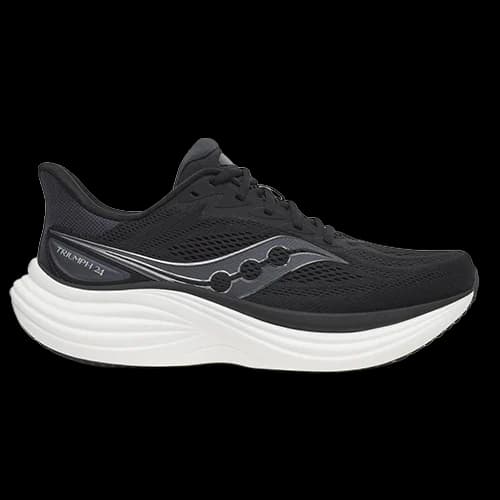 Saucony Triumph 24 Saucony Triumph 24 | 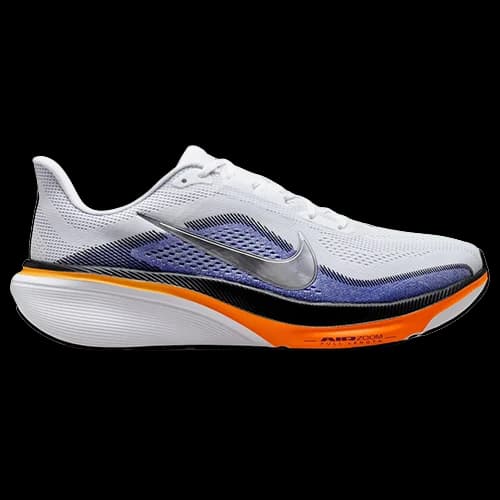 Nike Pegasus 42 Nike Pegasus 42 | 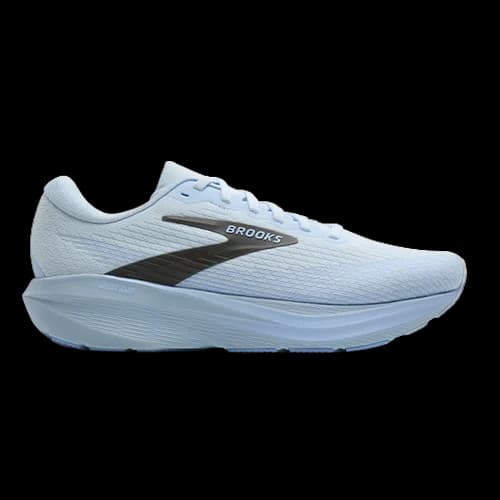 Brooks Ghost Amp Brooks Ghost Amp | 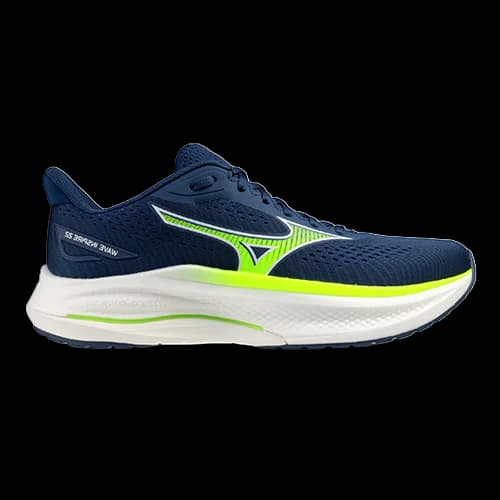 Mizuno Wave Inspire 22 Mizuno Wave Inspire 22 | |
|---|---|---|---|---|---|
| Pick it for | This page | Faster | Higher drop | Lower drop | More stable |
| Drop | 8 mm | 10 mm | 10 mm | 6 mm | 10 mm |
| Heel stack | 42.5 mm | 43 mm | 37 mm | 37 mm | 37 mm |
| Weight | 266 g | 250 g | 292 g | 255 g | 281 g |
| Support | Neutral | Neutral | Neutral | Neutral | Stability |
Questions runners ask
What changed between the Wave Rider 29 and the Wave Rider 30?
The Wave Rider 30 gets a full-length Wave plate for the first time, a new dual-layer Enerzy NXT midsole, a midfoot 14 mm wider and a drop lowered from 10 to 8 mm. RunRepeat measured a heel stack height more than 5 mm taller than on the 29, with a similar weight.
Does the Mizuno Wave Rider 30 fit true to size?
Yes for most runners. RunRepeat, Doctors of Running and Believe in the Run call it true to size. One Believe in the Run tester found the toe box low and suggested a half size up, so runners with a tall forefoot should try it on or look at the wide version.
Is the Wave Rider 30 good for overpronation?
The Wave Rider 30 is a neutral shoe, but a stable one: its wider base and full-length plate keep it upright, and RunRepeat rank it among the steadiest neutral trainers. That can suit a mild inward roll. For a marked one, a guidance shoe such as the Wave Inspire is a better start.
Is the Wave Rider 30 good for marathon training?
For the easy and long miles of a marathon block, yes: reviewers rate its comfort and protection over distance, and Runner’s World Germany found it could hold quicker paces. RunRepeat found the energy return modest, so many runners will pair it with a lighter shoe for workouts.
Does the Wave Rider 30 come in wide?
RunRepeat list standard and wide versions. Running Warehouse only show the standard D width on its product page, so width availability may depend on the market.
Will the lower 8 mm drop take time to get used to?
Possibly, if you come from older Riders at 10 to 12 mm. RunRepeat still measured 9.1 mm in the lab, so the change is smaller than it looks on paper. If your calves or Achilles are sensitive to drop changes, ease in with a few shorter runs.
Sources
- Mizuno, Wave Rider 30 product page. Accessed Oct 9, 2026.
- RunRepeat, Mizuno Wave Rider 30 lab review. Accessed Oct 9, 2026.
- Doctors of Running, Mizuno Wave Rider 30 Review (David Salas, July 2026). Accessed Oct 9, 2026.
- Believe in the Run, Mizuno Wave Rider 30 Review. Accessed Oct 9, 2026.
- Runner’s World Germany, Mizuno Wave Rider 30 im Test. Accessed Oct 9, 2026.
- Running Warehouse, Mizuno Wave Rider 30 Men’s Shoes. Accessed Oct 9, 2026.
- runningwarehouse.com · Support, listed
- runoregonblog.com · Release year, listed
- cat: Strideprint catalogue, 395 shoes
How we review. We read published tests, brand and retailer pages and lab measurements, cross-check the figures and flag where they disagree. We did not test this shoe ourselves. Last updated October 12, 2026.