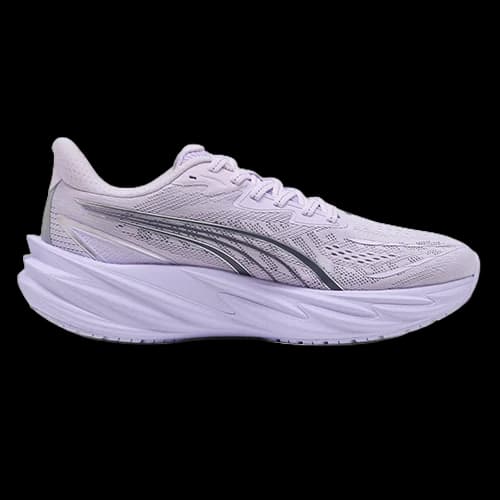
Puma Velocity Nitro 5 review
The Puma Velocity Nitro 5 moves to a two-layer Nitro midsole: lighter on its feet than most daily shoes, softer than before, and still cut narrow.
- Drop
- 8 mm
- Heel stack
- 33 mm
- Forefoot
- 25 mm
- Weight
- 244 g
- Support
- Neutral
- Plate
- None
Our verdict
Light, lively, cut narrow.
The Velocity Nitro 5 is a lightweight, flexible neutral trainer that handles easy days and the odd faster session without fuss. It suits runners with normal to narrow feet and a mid-foot or light heel landing; its real drop is lower than the label says.
Strong points
- Lightweight for a daily trainer, with a flexible, natural ride
- Soft new foam that still feels responsive
- Covers easy runs and uptempo days
- Secure lockdown and improved traction
Weak points
- Narrow through the heel and midfoot
- Measured drop well under the listed 8 mm
- A little less energy return than the Velocity Nitro 4
- Modest stack for long, slow miles
Who it fits
- Your feet are normal to narrow
- You land mid-foot or lightly on the heel
- You want one shoe for most of the week
- You are a lighter runner
Who should skip it
- Your feet are wide
- You are used to a high drop and land hard on your heel
- You want maximum cushioning
Shoe profile
Where the Velocity Nitro 5 sits among the 395 shoes in our catalogue, and what changed from the Velocity Nitro 4.
| Axis | Velocity Nitro 5 | Velocity Nitro 4 | Change |
|---|---|---|---|
| Cushioning | 13 | 24 | −11 |
| Lightness | 67 | 66 | +1 |
| Stability | 30 | 30 | = |
| Drop | 45 | 84 | −39 |
| Response | 6 | 20 | −14 |
Fig. 1 · How to read it. Each axis runs from 0 at the centre to 100 at the edge. Cushioning, lightness and drop are the shoe’s rank in the catalogue from listed figures; stability and response are scored from the support type, the plate, the rocker and the intended use. The dotted grey line is the catalogue median. Source: Strideprint catalogue (cat).
Where it sits in the catalogue
Weight244 g, lighter than 66% of shoes
Drop8 mm, higher than 45% of shoes
Heel stack33 mm, lower than 85% of shoes
Forefoot stack25 mm, lower than 89% of shoes
How it feels
Written from 3 published tests. We quote measurements, not impressions we did not have.
Softer than the numbers suggest. Two layers of Nitro foam feel closer to a 40 mm shoe than the stack suggests, favouring comfort and impact absorption over propulsion.
Neutral, lightly structured. Clearly neutral, with a gentle flare and small sidewalls for some structure. Nothing here guides a marked inward roll.
Lively, slightly less than before. Slightly less lively than version 4, but the flexible sole keeps the ride natural as the pace rises.
Softer than the numbers suggest. The midsole now uses two layers of Nitro foam instead of one. RunRepeat measured the main layer at 40.5 AC and a softer secondary layer at 34.9 AC. Doctors of Running describes a soft, compliant foam that feels closer to a 40 mm shoe than its actual stack height.
It favours comfort and impact absorption over propulsion: cushioned underfoot without feeling flat at easy paces.
Neutral, lightly structured. Doctors of Running calls it a clearly neutral shoe, with a gentle sole flare and small sidewalls for some structure. Running Warehouse customers mention solid lateral stability. There is nothing here to guide a marked inward roll.
Lively, slightly less than before. RunRepeat measured 64.0 percent energy return at the heel and 69.3 percent at the forefoot, a little below the Velocity Nitro 4. It still found the shoe responsive and fun, and the flexible sole (9.3 N in its test) keeps the ride natural when the pace rises.
RunRepeat links the small drop in bounce to the new two-layer design. Doctors of Running still feels a gentle bounce from the foam, though it is better at absorbing load than at springing you forward.
Read more
Softer than the numbers suggest. The midsole now uses two layers of Nitro foam instead of one. RunRepeat measured the main layer at 40.5 AC and a softer secondary layer at 34.9 AC. Doctors of Running describes a soft, compliant foam that feels closer to a 40 mm shoe than its actual stack height.
It favours comfort and impact absorption over propulsion: cushioned underfoot without feeling flat at easy paces.
Neutral, lightly structured. Doctors of Running calls it a clearly neutral shoe, with a gentle sole flare and small sidewalls for some structure. Running Warehouse customers mention solid lateral stability. There is nothing here to guide a marked inward roll.
Lively, slightly less than before. RunRepeat measured 64.0 percent energy return at the heel and 69.3 percent at the forefoot, a little below the Velocity Nitro 4. It still found the shoe responsive and fun, and the flexible sole (9.3 N in its test) keeps the ride natural when the pace rises.
RunRepeat links the small drop in bounce to the new two-layer design. Doctors of Running still feels a gentle bounce from the foam, though it is better at absorbing load than at springing you forward.
Which runs it’s for
| Run | Fit | Why | Source |
|---|---|---|---|
| Easy runs | Made for it | Where Doctors of Running found it at its best. | Doctors of Running |
| Tempo | Can do | Capable of uptempo work, though not built for it. | RunRepeat, Doctors of Running |
| Long runs | Can do | Runnea places it up to long weekend runs; the modest stack is the limit. | Runnea |
| Recovery runs | Made for it | Soft and comfortable for very easy days. | Doctors of Running, Runnea |
| Half marathon race | Can do | Runnea lists distances from 10K to the marathon for training; for racing, a lighter plated shoe makes more sense. | Runnea |
Source: Doctors of Running, RunRepeat, Runnea
What the tests say
The few published tests agree it is a lightweight, versatile and narrow daily trainer. They read the change from version 4 differently.
| Test | Type | Our reading | In one sentence | Source |
|---|---|---|---|---|
| RunRepeat | Lab | Positive | RunRepeat scores it 89 out of 100, in its Superb band, while noting that the snug toe box allows little toe splay. | Read |
| Doctors of Running | Review | Positive | Doctors of Running gives A minus and calls it a traditional-ride neutral daily trainer, light and soft, with a fit that runs a touch narrow. | Read |
| Runnea | Review | Positive | Runnea is clearly positive: a refined daily trainer for neutral runners with comfort and durability across paces, improving on version 4 without reinventing it. | Read |
They agree
- Narrow fitRunRepeat and Doctors of Running both describe a narrow shoe, especially at the heel and midfoot, and RunRepeat does not recommend it for wide feet.
- Versatile daily trainerRunRepeat and Doctors of Running agree it handles easy runs and some faster work, and Runnea places it across most daily training.
- Flexible, traditional rideRunRepeat measured a flexible sole, and Doctors of Running describes a classic ride with a flexible forefoot and a beveled heel.
They split
- Better or worse than version 4?Doctors of Running finds the new foam softer and more plush. RunRepeat measured slightly less energy return and about 6 percent more weight than the v4. One Running Warehouse customer felt it slightly firmer, without being sure.
- Stack heightDoctors of Running and Running Warehouse list 33 mm at the heel; RunRepeat’s brand figures and Runnea list 35 mm. RunRepeat measured 31.3 mm.
How it’s built
An engineered Jacquard mesh upper with a padded, semi-gusseted tongue sits on a two-layer NITROFOAM midsole with a traditional, flexible geometry and a generous PUMAGRIP rubber outsole.
An engineered Jacquard mesh upper with a padded, semi-gusseted tongue, a two-layer NITROFOAM midsole with a traditional, flexible geometry, and a generous PUMAGRIP rubber outsole.
| # | Part | Measure |
|---|---|---|
| 1 | UpperEngineered Jacquard mesh | – |
| 2 | Tongue | 9.3 mm |
| 3 | Heel | Stiffness 2 / 5 |
| 4 | MidsoleNITROFOAM, two layers | 40.5 AC |
| 5 | Insole | 4.4 mm |
| 6 | OutsolePUMAGRIP | 3.6 mm |
Fig. 3 · Side profile. Stack heights to scale (listed: 33 mm heel, 25 mm forefoot; measured: 3.6 mm outsole); the split between the two foams is not measured and is drawn at mid-height. Dashed: insole, hidden. Sources: Running Warehouse, RunRepeat, Doctors of Running.
Upper. A new engineered mesh with extra padding around the collar and tongue. Doctors of Running finds the Jacquard mesh comfortable and fairly plush for how breathable it is, with a fit that stays narrow at the heel and midfoot.
Tongue. Semi-gusseted on both sides and much thicker than before: RunRepeat measured 9.3 mm of padding against 4.1 mm on the Velocity Nitro 4. Doctors of Running had no lace bite.
Heel. A well padded collar with a pull tab and a reflective piece for night runs. Testers read the heel counter differently: Doctors of Running felt a firm counter that locks the heel in, while RunRepeat rated it 2 out of 5 for stiffness, unobtrusive but offering little support.
Midsole. Puma replaces the single slab of A-TPU-based Nitro foam with two layers: a main layer RunRepeat measured at 40.5 AC, the same foam as last year, over a softer 34.9 AC layer. The geometry stays traditional, with no pronounced rocker, a beveled heel and a flexible forefoot. In RunRepeat’s freezer test the foam changed by only about 10 percent after 20 minutes.
Insole. Removable, 4.4 mm thick and contoured. RunRepeat notes that swapping it for a flat insole would slightly change how the shoe holds the foot.
Outsole. PUMAGRIP rubber with more coverage than on the Velocity Nitro 4, plus new lengthwise channels in the forefoot that let water escape and help the shoe flex. RunRepeat measured 3.6 mm of rubber and a friction coefficient of 0.78 on wet concrete, 0.13 higher than the previous model.
Read more
An engineered Jacquard mesh upper with a padded, semi-gusseted tongue sits on a two-layer NITROFOAM midsole with a traditional, flexible geometry and a generous PUMAGRIP rubber outsole.
1. Upper. A new engineered mesh with extra padding around the collar and tongue. Doctors of Running finds the Jacquard mesh comfortable and fairly plush for how breathable it is, with a fit that stays narrow at the heel and midfoot.
2. Tongue. Semi-gusseted on both sides and much thicker than before: RunRepeat measured 9.3 mm of padding against 4.1 mm on the Velocity Nitro 4. Doctors of Running had no lace bite.
3. Heel. A well padded collar with a pull tab and a reflective piece for night runs. Testers read the heel counter differently: Doctors of Running felt a firm counter that locks the heel in, while RunRepeat rated it 2 out of 5 for stiffness, unobtrusive but offering little support.
4. Midsole. Puma replaces the single slab of A-TPU-based Nitro foam with two layers: a main layer RunRepeat measured at 40.5 AC, the same foam as last year, over a softer 34.9 AC layer. The geometry stays traditional, with no pronounced rocker, a beveled heel and a flexible forefoot. In RunRepeat’s freezer test the foam changed by only about 10 percent after 20 minutes.
5. Insole. Removable, 4.4 mm thick and contoured. RunRepeat notes that swapping it for a flat insole would slightly change how the shoe holds the foot.
6. Outsole. PUMAGRIP rubber with more coverage than on the Velocity Nitro 4, plus new lengthwise channels in the forefoot that let water escape and help the shoe flex. RunRepeat measured 3.6 mm of rubber and a friction coefficient of 0.78 on wet concrete, 0.13 higher than the previous model.
Durability. Good from top to bottom in RunRepeat’s tests: the outsole lost only 0.9 mm of material, 5 out of 5 for the heel padding and 3 out of 5 for the toe box. Doctors of Running also expects good durability.
Durability. Good from top to bottom in RunRepeat’s tests: the outsole lost only 0.9 mm of material, 5 out of 5 for the heel padding and 3 out of 5 for the toe box. Doctors of Running also expects good durability.
Specs, listed and measured
Every figure carries its source.
Drop, mm
Heel stack, mm
Forefoot stack, mm
Weight (men’s), g
| Spec | Listed | Measured |
|---|---|---|
| Drop |
|
|
| Heel stack |
|
|
| Forefoot stack |
|
|
| Weight, US M9 |
|
|
| Support |
| – |
| Plate |
| – |
| Surface |
| – |
Fig. 4 · Listed vs measured. Bars start at zero. Sources: Running Warehouse, RunRepeat, Doctors of Running.
Lab measurements
| Spec | Measured |
|---|---|
| Midsole hardness |
|
| Energy return (heel) |
|
| Torsional rigidity |
|
| Heel counter stiffness |
|
| Traction coefficient |
|
| Toe box width |
|
| Spec | Measured |
|---|---|
| Toe box height |
|
| Outsole thickness |
|
| Insole thickness |
|
| Tongue thickness |
|
| Flex force |
|
Sizing and fit
Take your usual size; the question is width, not length.
Length
True to size
Widths
standard and wide
Toe room
Toe room is modest. RunRepeat measured the toe box as snug and secure with little room for toe splay, and Doctors of Running describes a normal forefoot width but a fit that runs a touch narrow through the midfoot and forefoot.
RunRepeat, Doctors of Running
Full sizing notes from testers
RunRepeat and Doctors of Running both found it true to size. Doctors of Running describes a narrow heel and midfoot with a normal forefoot, and RunRepeat measured the toe box at 72.1 mm.
Width is where it gets tricky. RunRepeat lists normal and wide versions, while Running Warehouse only stocks the standard D. Running Warehouse customers note the fit is better than on the v4, which some found far too narrow.
If your feet are wide, look for the wide version by name, or choose another shoe rather than sizing up.
RunRepeat, Doctors of Running, Running Warehouse
Vs Velocity Nitro 4
A new two-layer midsole, more tongue padding and better grip. Softer, slightly heavier and a little less springy according to the lab.
| Velocity Nitro 5 | Velocity Nitro 4 | |
|---|---|---|
| Support | Neutral | Neutral |
| Drop | 8 mm | 10 mm |
| Heel stack | 33 mm | 36 mm |
| Forefoot | 25 mm | 26 mm |
| Weight | 244 g | 245 g |
Keep the Velocity Nitro 4 if you liked its springier, lighter feel and it fitted you well. Move to the 5 if you want a softer landing, better grip or a less constricting upper.
Listed figures. Source: Strideprint catalogue (cat).
Version history: Velocity Nitro 4 to Velocity Nitro 5
Two layers of Nitro foam. RunRepeat reports a move from one density to two, with a softer secondary layer; Doctors of Running describes a new foam that feels more plush. (RunRepeat, Doctors of Running)
More padding at the tongue. RunRepeat measured 9.3 mm of tongue padding against 4.1 mm on the previous model. (RunRepeat)
Better traction. RunRepeat found grip improved on wet and dry surfaces. (RunRepeat)
A bit heavier, a bit less spring. RunRepeat measured about 6 percent more weight and slightly lower energy return than the v4. (RunRepeat)
A wider platform and a better fit. Runnea reports a wider platform, and Running Warehouse customers find the fit better than the narrow v4. (Running Warehouse, Runnea)
Alternatives compared
Each one fixes one thing the Velocity Nitro 5 does not do.
| Puma Velocity Nitro 5 | 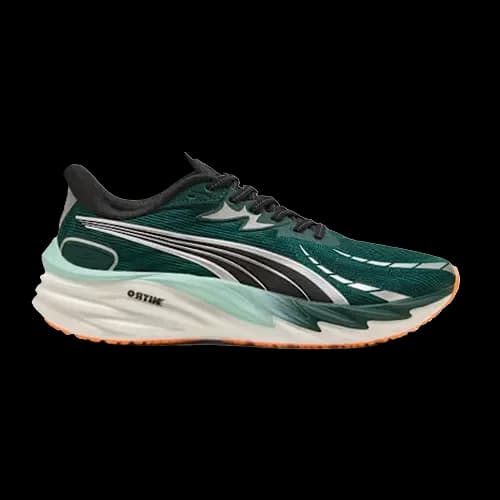 Puma Velocity Nitro 4 Puma Velocity Nitro 4 | 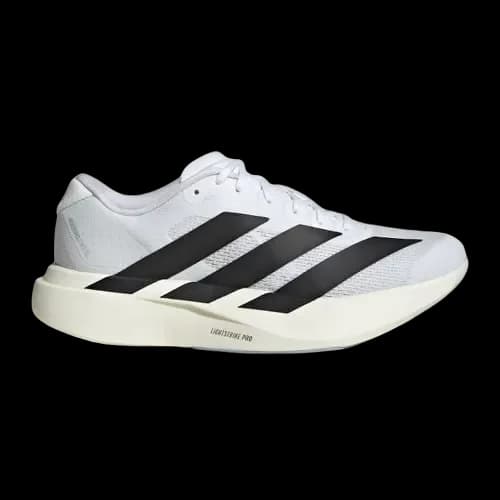 Adidas Adizero Evo SL Adidas Adizero Evo SL | 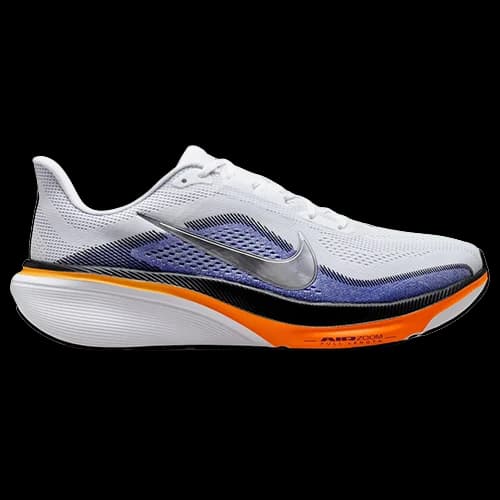 Nike Pegasus 42 Nike Pegasus 42 | 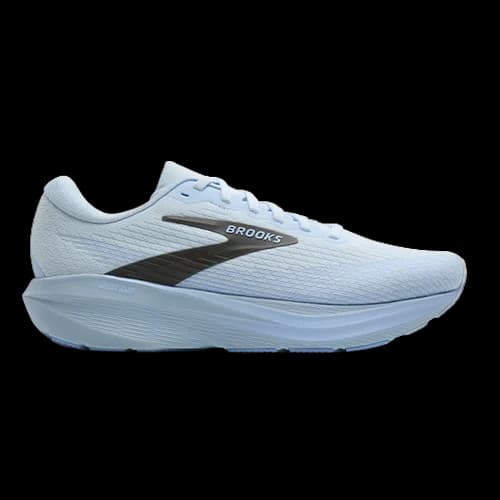 Brooks Ghost Amp Brooks Ghost Amp | |
|---|---|---|---|---|---|
| Pick it for | This page | Lighter | Faster | Higher drop | More cushion |
| Drop | 8 mm | 10 mm | 7 mm | 10 mm | 6 mm |
| Heel stack | 33 mm | 36 mm | 37 mm | 37 mm | 37 mm |
| Weight | 244 g | 245 g | 230 g | 292 g | 255 g |
| Support | Neutral | Neutral | Neutral | Neutral | Neutral |
Questions runners ask
Does the Puma Velocity Nitro 5 run true to size?
Yes. RunRepeat and Doctors of Running both found the Velocity Nitro 5 true to size. The fit is narrow at the heel and midfoot, so wide feet should look for the wide version rather than sizing up.
What is the real drop of the Velocity Nitro 5?
Puma lists 8 mm, and Running Warehouse and Doctors of Running repeat it. RunRepeat measured 5.2 mm in its lab, so the shoe behaves closer to a low-drop trainer. Runners used to 10 mm or more may want to ease in.
What changed between the Velocity Nitro 4 and 5?
The Velocity Nitro 5 gets a two-layer Nitro midsole with a softer lower layer, more tongue padding and better traction. RunRepeat measured slightly more weight and slightly less energy return than the v4; Doctors of Running finds it more plush.
Is the Velocity Nitro 5 good for tempo runs?
It can handle them. RunRepeat rates it a responsive daily trainer and Doctors of Running found it capable of uptempo work, while best at easy paces. For regular hard sessions, a dedicated tempo shoe will feel quicker.
Is the Velocity Nitro 5 good for wide feet?
Not in the standard width. RunRepeat advises wide feet to look elsewhere and Doctors of Running suggests trying it on first. RunRepeat lists a wide version, but Running Warehouse only shows the standard D.
How long does the Velocity Nitro 5 last?
RunRepeat rates its durability well. Runnea estimates up to about 800 km on road, an estimate rather than a measurement. Your weight, stride and surfaces change that figure a lot.
Sources
- RunRepeat, PUMA Velocity Nitro 5 lab review. Accessed Oct 9, 2026.
- Doctors of Running, Puma Velocity Nitro 5 Review (David Salas, August 2026). Accessed Oct 9, 2026.
- Running Warehouse, PUMA Velocity Nitro 5 Men’s Shoes. Accessed Oct 9, 2026.
- Runnea, Puma Velocity Nitro 5. Accessed Oct 9, 2026.
- Strideprint, Strideprint running shoe catalogue (ranks computed on 2026-10-11). Accessed Oct 11, 2026.
- eu.puma.com · Drop, Support, and Plate, listed
- us.puma.com · Surface, listed
- cat: Strideprint catalogue, 395 shoes
How we review. We read published tests, brand and retailer pages and lab measurements, cross-check the figures and flag where they disagree. We did not test this shoe ourselves. Last updated October 12, 2026.