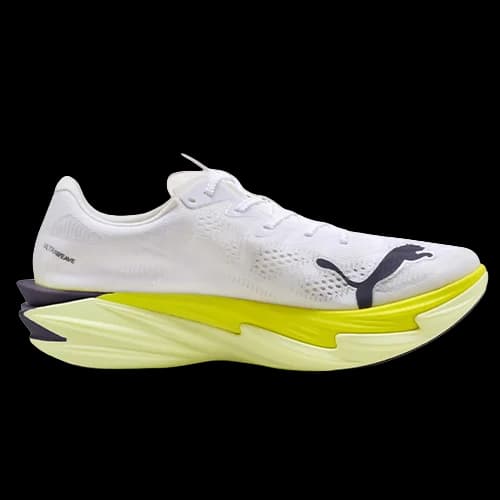
Puma Deviate Nitro Elite 4 review
Puma’s friendlier carbon racer, now much lighter, with a roomier toe box and a calmer shape than its Fast-R sibling.
- Drop
- 8 mm
- Heel stack
- 40 mm
- Forefoot
- 32 mm
- Weight
- 170 g
- Support
- Neutral
- Plate
- Carbon
Our verdict
The super shoe that forgives.
The Deviate Nitro Elite 4 pairs Nitrofoam Elite and a full-length carbon plate with a simpler, less aggressive shape than Puma’s Fast-R, at about 170 g for a men’s US 9. It suits heel and midfoot strikers racing from 5K to the marathon who want speed without a demanding ride, while reviewers split on how stable its narrow heel really is.
Strong points
- Very light: only 6 of the 171 neutral road shoes in our catalogue weigh less in a US 9
- Energy return of 77.4 percent at the heel in RunRepeat’s lab, far above average
- Toe box widened to 74.8 mm, from 69.5 mm on the Elite 3
- Reliable grip on wet roads despite little rubber
- True to size for nearly every tester
Weak points
- Narrow heel platform that limits stability
- Stiff plate and early rocker feel awkward for forefoot landings
- Rubber under the inner heel removed, a worry for heavy heel strikers
- Thin, barely padded heel counter that can rub sensitive heels
- Too bouncy and unsteady for easy running
Who it fits
- You land on your heel or midfoot
- You want a super shoe that stays out of the way
- You are racing a marathon, not only a 10K
- Your feet are normal to slightly narrow
Who should skip it
- You land on the forefoot and want to sprint
- You need a planted heel
- You are a heavy heel striker
- You want one shoe for easy days too
Shoe profile
Where the Deviate Nitro Elite 4 sits among the 395 shoes in our catalogue, and what changed from the Deviate Nitro Elite 3.
| Axis | Deviate Nitro Elite 4 | Deviate Nitro Elite 3 | Change |
|---|---|---|---|
| Cushioning | 64 | 64 | = |
| Lightness | 97 | 93 | +4 |
| Stability | 30 | 30 | = |
| Drop | 45 | 45 | = |
| Response | 60 | 80 | −20 |
Fig. 1 · How to read it. Each axis runs from 0 at the centre to 100 at the edge. Cushioning, lightness and drop are the shoe’s rank in the catalogue from listed figures; stability and response are scored from the support type, the plate, the rocker and the intended use. The dotted grey line is the catalogue median. Source: Strideprint catalogue (cat).
Where it sits in the catalogue
Weight170 g, lighter than 96% of shoes
Drop8 mm, higher than 45% of shoes
Heel stack40 mm, higher than 64% of shoes
Forefoot stack32 mm, higher than 52% of shoes
How it feels
Written from 7 published tests. We quote measurements, not impressions we did not have.
Firm and bouncy, close to the ground for a racer. Nitrofoam Elite around a carbon plate: firm and bouncy for Doctors of Running, 37.0 AC in RunRepeat’s lab, with more ground feel than most marathon racers per RTINGS.
Calm for a racer, narrow at the heel. Neutral and calmer than most carbon racers for several testers, but RunRepeat measured a narrow 78.8 mm heel and RTINGS scores stability 5.5 out of 10.
Lively, with a stiff plate. Energy return of 77.4 percent in RunRepeat’s lab and a stiff plate at 21.1 N; snappy at speed, awkward for forefoot landings per Doctors of Running.
Firm and bouncy, close to the ground for a racer. Nitrofoam Elite, a nitrogen-infused A-TPU foam according to RunningXpert, wraps a full-length carbon plate. Brand figures relayed by RunRepeat give 40 mm at the heel and 32 mm at the forefoot; Running Warehouse lists 38 and 30 mm.
RunRepeat measured the foam at 37.0 on the AC scale, a little firmer than its 35.5 average, with 37.2 mm at the heel and 28.3 mm at the forefoot. Doctors of Running describe a firm, bouncy ride, RunningXpert a subtly soft one, and RTINGS notes that the lower forefoot gives more ground feel than most marathon super shoes.
Calm for a racer, narrow at the heel. Both Doctors of Running testers class it as neutral and grade its stability B. The Run Testers find it more stable than most carbon shoes, Supwell describes a planted platform, and Marathons.com found the heel slightly supportive late in a marathon.
The lab numbers temper that. RunRepeat measured a heel platform 78.8 mm wide against a 91.1 mm average, and RTINGS scores stability 5.5 out of 10, warning that it feels less secure in corners or when fatigued. Doctors of Running also felt the midfoot wobble at slow speeds.
Lively, with a stiff plate. RunRepeat measured energy return of 77.4 percent at the heel and 77.2 percent at the forefoot, against a lab average near 61 percent. The plate is stiff too: 21.1 N in RunRepeat’s bend test, where the average is 15.5 N.
Doctors of Running found it snappy from tempo pace upward but awkward on the forefoot, with an early, aggressive rocker that left one tester’s feet sore. The Run Testers felt less rocker and bounce than in many carbon racers, and Marathons.com found the plate slightly less curved than on version 3.
Read more
Firm and bouncy, close to the ground for a racer. Nitrofoam Elite, a nitrogen-infused A-TPU foam according to RunningXpert, wraps a full-length carbon plate. Brand figures relayed by RunRepeat give 40 mm at the heel and 32 mm at the forefoot; Running Warehouse lists 38 and 30 mm.
RunRepeat measured the foam at 37.0 on the AC scale, a little firmer than its 35.5 average, with 37.2 mm at the heel and 28.3 mm at the forefoot. Doctors of Running describe a firm, bouncy ride, RunningXpert a subtly soft one, and RTINGS notes that the lower forefoot gives more ground feel than most marathon super shoes.
Calm for a racer, narrow at the heel. Both Doctors of Running testers class it as neutral and grade its stability B. The Run Testers find it more stable than most carbon shoes, Supwell describes a planted platform, and Marathons.com found the heel slightly supportive late in a marathon.
The lab numbers temper that. RunRepeat measured a heel platform 78.8 mm wide against a 91.1 mm average, and RTINGS scores stability 5.5 out of 10, warning that it feels less secure in corners or when fatigued. Doctors of Running also felt the midfoot wobble at slow speeds.
Lively, with a stiff plate. RunRepeat measured energy return of 77.4 percent at the heel and 77.2 percent at the forefoot, against a lab average near 61 percent. The plate is stiff too: 21.1 N in RunRepeat’s bend test, where the average is 15.5 N.
Doctors of Running found it snappy from tempo pace upward but awkward on the forefoot, with an early, aggressive rocker that left one tester’s feet sore. The Run Testers felt less rocker and bounce than in many carbon racers, and Marathons.com found the plate slightly less curved than on version 3.
Which runs it’s for
| Run | Fit | Why | Source |
|---|---|---|---|
| Marathon race | Made for it | RunRepeat, RTINGS and The Run Testers back it for the full distance; Doctors of Running keep it for runners who can handle a stiff racer. | Doctors of Running, RunRepeat, RTINGS, The Run Testers |
| Half marathon race | Made for it | Its sweet spot for Doctors of Running, who see it from 5K to the half. Marathons.com lists it for 5 km to the marathon. | Doctors of Running, Marathons.com |
| Tempo | Made for it | Marathons.com used it for threshold and tempo sessions, and RunRepeat scores it 89 for tempo. | RunRepeat, Marathons.com |
| Intervals | Made for it | Doctors of Running liked it for intervals and uptempo work, though sprinting on the forefoot felt awkward. | Doctors of Running |
| Long runs | Can do | Fine for long runs at marathon pace, as Marathons.com did. Not for slow mileage. | Doctors of Running, Marathons.com |
| Easy runs | Not for it | Too bouncy and wobbly at slow paces for Doctors of Running; RunRepeat scores it 50 for daily running. | Doctors of Running, RunRepeat |
| Walking | Not for it | Doctors of Running rate it unsuitable for walking or standing. | Doctors of Running |
Source: Doctors of Running, RunRepeat, RTINGS, The Run Testers, Marathons.com
What the tests say
Published reviews agree the Deviate Nitro Elite 4 is a clear step up from version 3: lighter, roomier and easier to run in than Puma’s Fast-R racer. They disagree on how stable it is and on how aggressive its stiff plate and rocker feel.
| Test | Type | Our reading | In one sentence | Source |
|---|---|---|---|---|
| Doctors of Running | Review | Positive | Both Doctors of Running testers grade the overall design A minus: a true successor to the original, held back by its stiffness and a thin heel counter. | Read |
| RunRepeat | Lab | Positive | RunRepeat scores it 89 out of 100 and makes it a top marathon pick, with the narrow heel as its main reservation. | Read |
| RTINGS | Lab | Positive | RTINGS gives it 8.4 out of 10: excellent for marathon racing, limited by stability. | Read |
| The Run Testers | Review | Positive | The Run Testers call it a great racing shoe and a sensible partner to the Fast-R 3, though they miss the inner heel rubber. | Read |
| Marathons.com | Review | Positive | Marathons.com rates it 9.4 out of 10 after about 200 km and a 2h38 London Marathon, with a slightly flat rocker as the main reservation. | Read |
They agree
- Much lighter than the Elite 3RunRepeat weighed 173 g against 204 g for version 3, RTINGS 169.1 g, and Supwell reports a fall from 194 g to 170 g in brand figures.
- Easier than the Fast-R Nitro Elite 3Doctors of Running, The Run Testers, Supwell and Marathons.com all describe a calmer, more natural shape than the Fast-R, better suited to heel and midfoot landings.
- True to sizeDoctors of Running, RunRepeat’s reader poll, RTINGS and Marathons.com found the usual size right. The Run Testers advise the smaller size if you are between two.
- Grips in the wetDoctors of Running and The Run Testers found traction strong on wet roads, and RunRepeat measured 0.63 against a 0.53 lab average.
They split
- How stable is it?RTINGS scores stability 5.5 out of 10 and RunRepeat flags the narrow heel. The Run Testers find it more stable than most carbon shoes, Supwell calls it planted, and RunningXpert sees it as fine for runners with mild stability needs.
- Aggressive or flat?Doctors of Running found the plate very stiff and the forefoot rocker early and aggressive. The Run Testers and Marathons.com describe less rocker than other super shoes, and Marathons.com even finds it a little flat.
- Firm or soft?Doctors of Running describe a firm, bouncy ride and RunRepeat measured the foam slightly firmer than average, while RunningXpert finds it subtly soft.
How it’s built
A race build: Nitrofoam Elite around a full-length PWRPLATE carbon plate, an ULTRAWEAVE upper with PWRTAPE, and a minimal PUMAGRIP outsole with no rubber under the inner heel.
Nitrofoam Elite around a stiff PWRPLATE, a very breathable ULTRAWEAVE upper, a padded tongue, a minimal heel counter and a thin PUMAGRIP outsole that still grips well.
| # | Part | Measure |
|---|---|---|
| 1 | UpperULTRAWEAVE, PWRTAPE | Breathability 5 / 5 |
| 2 | Tongue | 3.8 mm |
| 3 | Heel | Stiffness 1 / 5 |
| 4 | MidsoleNITROFOAM Elite | Hardness 37.0 AC |
| 5 | PlatePWRPLATE | Flex 21.1 N |
| 6 | Insole | 2.6 mm |
| 7 | OutsolePUMAGRIP | 2.1 mm |
Fig. 3 · Side profile. Stack heights to scale (listed: 40 mm heel, 32 mm forefoot; measured: 2.1 mm outsole); the split between the two foams is not measured and is drawn at mid-height. Dashed: insole, hidden. Sources: RunRepeat, Doctors of Running, Running Warehouse, The Run Testers, RunningXpert, PUMA, Marathons.com.
Upper. A very thin, breathable woven upper with PWRTAPE reinforcements for lockdown. RunRepeat scored breathability 5 out of 5 and Doctors of Running found it cold in winter, but the toe box scored only 1 out of 5 in RunRepeat’s durability test.
Tongue. Now padded along its full length, 3.8 mm thick in RunRepeat’s measurement, and not gusseted. Version 3 had padding only in a small central section, per RunRepeat.
Heel. A minimal counter, 1 out of 5 for stiffness at RunRepeat, with no heel tab. Doctors of Running found the thin, unpadded counter can irritate sensitive heels.
Midsole. Nitrogen-infused A-TPU foam, measured at 37.0 AC by RunRepeat, with energy return above 77 percent at heel and forefoot. Running Warehouse says Puma changed the foam’s hardness in the midfoot.
Plate. A full-length carbon fibre plate. RunRepeat measured 21.1 N in its bend test and 16.7 Nm in torsion, both stiffer than its averages.
Insole. Thin at 2.6 mm. RunRepeat lists it as removable, while Doctors of Running found it is not and rate the shoe unsuited to orthotics.
Outsole. Only 2.1 mm thick, with the inner heel patch removed to save weight. It still scored 0.63 in RunRepeat’s traction test, above the 0.53 average, and testers found it grippy in the wet.
Read more
A race build: Nitrofoam Elite around a full-length PWRPLATE carbon plate, an ULTRAWEAVE upper with PWRTAPE, and a minimal PUMAGRIP outsole with no rubber under the inner heel.
1. Upper. A very thin, breathable woven upper with PWRTAPE reinforcements for lockdown. RunRepeat scored breathability 5 out of 5 and Doctors of Running found it cold in winter, but the toe box scored only 1 out of 5 in RunRepeat’s durability test.
2. Tongue. Now padded along its full length, 3.8 mm thick in RunRepeat’s measurement, and not gusseted. Version 3 had padding only in a small central section, per RunRepeat.
3. Heel. A minimal counter, 1 out of 5 for stiffness at RunRepeat, with no heel tab. Doctors of Running found the thin, unpadded counter can irritate sensitive heels.
4. Midsole. Nitrogen-infused A-TPU foam, measured at 37.0 AC by RunRepeat, with energy return above 77 percent at heel and forefoot. Running Warehouse says Puma changed the foam’s hardness in the midfoot.
5. Plate. A full-length carbon fibre plate. RunRepeat measured 21.1 N in its bend test and 16.7 Nm in torsion, both stiffer than its averages.
6. Insole. Thin at 2.6 mm. RunRepeat lists it as removable, while Doctors of Running found it is not and rate the shoe unsuited to orthotics.
7. Outsole. Only 2.1 mm thick, with the inner heel patch removed to save weight. It still scored 0.63 in RunRepeat’s traction test, above the 0.53 average, and testers found it grippy in the wet.
Durability. Better than version 3, but built for racing. The outsole lost 0.8 mm in RunRepeat’s wear test, less than average, and Doctors of Running saw only slight abrasion after about 50 miles. Marathons.com found it in good shape after more than 250 km, while one Run Testers reviewer tore off a heel rubber patch. Puma’s European page gives an average lifespan of 500 km.
Durability. Better than version 3, but built for racing. The outsole lost 0.8 mm in RunRepeat’s wear test, less than average, and Doctors of Running saw only slight abrasion after about 50 miles. Marathons.com found it in good shape after more than 250 km, while one Run Testers reviewer tore off a heel rubber patch. Puma’s European page gives an average lifespan of 500 km.
Specs, listed and measured
Every figure carries its source.
Drop, mm
Heel stack, mm
Forefoot stack, mm
Weight (men’s), g
| Spec | Listed | Measured |
|---|---|---|
| Drop |
|
|
| Heel stack |
|
|
| Forefoot stack |
|
|
| Weight, US M9 |
|
|
| Support |
| – |
| Plate |
| – |
| Surface |
| – |
Fig. 4 · Listed vs measured. Bars start at zero. Sources: PUMA, RunRepeat, RTINGS, Running Warehouse, Doctors of Running.
Lab measurements
| Spec | Measured |
|---|---|
| Midsole hardness |
|
| Energy return (heel) |
|
| Flex force |
|
| Torsional rigidity |
|
| Heel counter stiffness |
|
| Traction coefficient |
|
| Spec | Measured |
|---|---|
| Breathability |
|
| Toe box width |
|
| Toe box height |
|
| Outsole thickness |
|
| Insole thickness |
|
| Tongue thickness |
|
Sizing and fit
Take your usual size; if you are between two, The Run Testers suggest the smaller one.
Length
True to size
Widths
standard
Toe room
Roomier than before: RunRepeat measured the toe box at 74.8 mm, up from 69.5 mm on the Elite 3 and above its 73.2 mm average, though only 26.5 mm tall. Doctors of Running describe it as tapered but roomy.
Doctors of Running, RunRepeat
Full sizing notes from testers
Doctors of Running, RTINGS and Marathons.com all ran in their normal size, and RunRepeat’s readers vote true to size. RTINGS adds that the shoe could be slightly longer.
Volume is moderate. Doctors of Running found the width slightly snug and best for narrow to normal feet, while RunningXpert calls the forefoot wide. The heel is snug, with a thin counter that may irritate sensitive heels.
Running Warehouse lists only a standard D width for men, and RTINGS says no wide version is offered.
Doctors of Running, RunRepeat, RTINGS, The Run Testers, Marathons.com, RunningXpert, Running Warehouse
Vs Deviate Nitro Elite 3
A refinement rather than a rebuild: the same foam family, plate and drop, but much lighter, roomier and less aggressive.
| Deviate Nitro Elite 4 | Deviate Nitro Elite 3 | |
|---|---|---|
| Support | Neutral | Neutral |
| Drop | 8 mm | 8 mm |
| Heel stack | 40 mm | 40 mm |
| Forefoot | 32 mm | 32 mm |
| Weight | 170 g | 194 g |
Keep the Elite 3 if you liked its stiffer, more aggressive ride, which Doctors of Running call the stiffest of the series, or if you land hard on your heel and want the inner heel rubber that RunRepeat misses on version 4. Doctors of Running do note that the Elite 3 outsole wore poorly.
Listed figures. Source: Strideprint catalogue (cat).
Version history: Deviate Nitro Elite 3 to Deviate Nitro Elite 4
About 30 g lighter. RunRepeat weighed 173 g against 204 g for the Elite 3; Supwell gives 170 g against 194 g in brand figures. (RunRepeat, Supwell)
Wider toe box, new upper. The toe box grew from 69.5 to 74.8 mm in RunRepeat’s measurement, under a redesigned ULTRAWEAVE upper and a fully padded tongue. (RunRepeat)
Less rubber. The patch under the inner heel is gone, which The Run Testers and RunRepeat would rather Puma had kept. (RunRepeat, The Run Testers, Supwell)
A gentler ride. Marathons.com found the plate slightly less curved and the rocker less aggressive, and The Run Testers a slightly softer, springier foam. Running Warehouse notes a change of foam hardness in the midfoot. (The Run Testers, Marathons.com, Running Warehouse)
Alternatives compared
Each one fixes one thing the Deviate Nitro Elite 4 does not do.
| Puma Deviate Nitro Elite 4 | 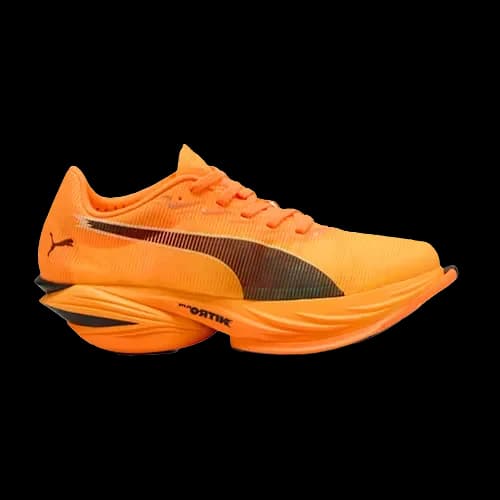 Puma Fast-R Nitro Elite 3 Puma Fast-R Nitro Elite 3 | 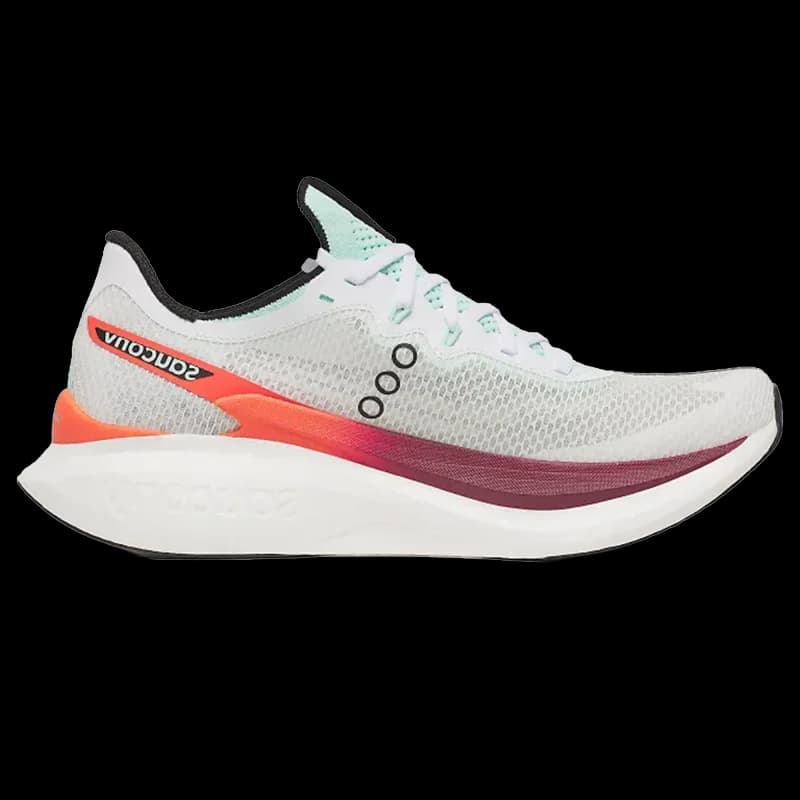 Saucony Endorphin Pro 5 Saucony Endorphin Pro 5 | 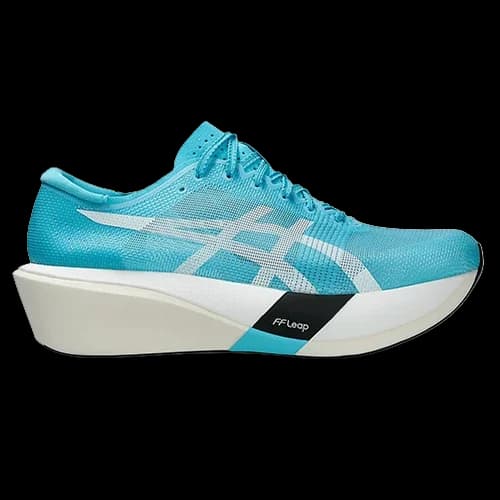 ASICS Metaspeed Edge Tokyo ASICS Metaspeed Edge Tokyo | 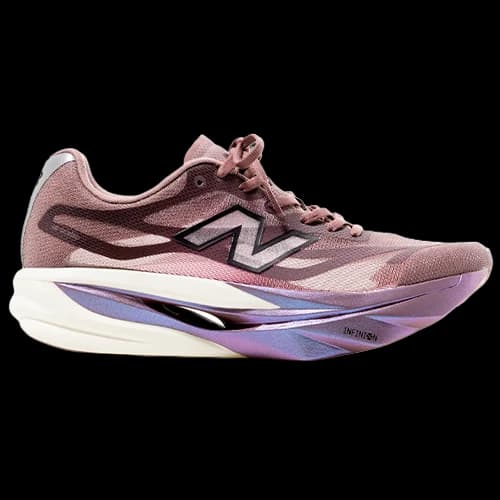 New Balance SuperComp Elite v6 New Balance SuperComp Elite v6 | |
|---|---|---|---|---|---|
| Pick it for | This page | Faster | More stable | Lower drop | Same support |
| Drop | 8 mm | 8 mm | 8 mm | 5 mm | 8 mm |
| Heel stack | 40 mm | 39 mm | 39.5 mm | 39.5 mm | 39 mm |
| Weight | 170 g | 170 g | 206 g | 170 g | 184 g |
| Support | Neutral | Neutral | Neutral | Neutral | Neutral |
Questions runners ask
Is the Puma Deviate Nitro Elite 4 true to size?
Yes. Doctors of Running, RTINGS and Marathons.com ran in their usual size, and RunRepeat’s readers vote true to size. The Run Testers suggest going down if you sit between two sizes. The fit is snug through the midfoot and heel, and Running Warehouse lists only a standard width for men.
Is the Deviate Nitro Elite 4 good for a marathon?
Most reviewers think so. RunRepeat makes it a top marathon pick, RTINGS rates it excellent for marathon racing, and Marathons.com ran a 2h38 London Marathon in it. Doctors of Running are more cautious: best from 5K to the half, and the full marathon for runners who can handle a stiff racer.
Deviate Nitro Elite 4 or Fast-R Nitro Elite 3?
Choose the Deviate Nitro Elite 4 if you land on your heel or midfoot and want a calmer, more natural racer. The Fast-R Nitro Elite 3 is more aggressive, heavily rockered and built for midfoot and forefoot landings, according to Doctors of Running and Supwell. The Run Testers find the two about equally light.
What changed from the Deviate Nitro Elite 3?
The Deviate Nitro Elite 4 is about 30 g lighter, 173 g against 204 g in RunRepeat’s lab, with a toe box widened from 69.5 to 74.8 mm, a new ULTRAWEAVE upper and a fully padded tongue. Puma removed the rubber under the inner heel, and testers find the ride less aggressive than before.
Does the Deviate Nitro Elite 4 come in wide?
Not for men. Running Warehouse lists a standard D width only and RTINGS says no wide version is offered. The toe box is roomier than on version 3, 74.8 mm in RunRepeat’s measurement, but Doctors of Running still find the shoe best for narrow to normal feet.
Is the Deviate Nitro Elite 4 good for heel strikers?
In shape, yes: Doctors of Running and Supwell find it friendliest to heel and midfoot landings. The caveat is the rear of the shoe. RunRepeat advises heavy heel strikers against it, because the inner heel rubber is gone and the heel platform is narrow.
Can you train in the Deviate Nitro Elite 4?
For fast sessions, yes. Marathons.com used it for threshold work and marathon-pace long runs, and RunRepeat scores it 89 for tempo. For easy running, no: Doctors of Running found it too bouncy and unsteady at slow paces, and RunRepeat scores it 50 for daily running.
Sources
- Doctors of Running, Puma Deviate Nitro Elite 4 Review (Andrea Myers, Matt Klein, March 2026). Accessed Oct 13, 2026.
- RunRepeat, PUMA Deviate Nitro Elite 4 lab review. Accessed Oct 13, 2026.
- RTINGS, PUMA Deviate NITRO Elite 4 review. Accessed Oct 13, 2026.
- The Run Testers, Puma Deviate Nitro Elite 4 review. Accessed Oct 13, 2026.
- Marathons.com, PUMA Deviate Nitro Elite 4 : test et avis après 200 km (Clément Laborieux, May 2026). Accessed Oct 13, 2026.
- Supwell, Puma Deviate Nitro Elite 4 overview and first run review (January 2026). Accessed Oct 13, 2026.
- RunningXpert, Test: Puma Deviate Nitro 4 and Deviate Nitro Elite 4 (March 2026). Accessed Oct 13, 2026.
- Running Warehouse, PUMA Deviate Nitro Elite 4 Men's Shoes. Accessed Oct 13, 2026.
- PUMA, Deviate NITRO Elite 4 Running Shoes (Men). Accessed Oct 13, 2026.
- Strideprint, Strideprint running shoe catalogue (ranks computed on 2026-10-13). Accessed Oct 13, 2026.
- us.puma.com · Surface, listed
- cat: Strideprint catalogue, 395 shoes
How we review. We read published tests, brand and retailer pages and lab measurements, cross-check the figures and flag where they disagree. We did not test this shoe ourselves. Last updated October 13, 2026.